


The Acuson S3000 from Siemens manages to merge 3D images in a single click
The Siemens company has created the Acuson S3000 device with which Computed Tomography or Magnetic Resonance images are fused, with ultrasounds using the scanner map as a pattern to know where the lesion is located and thus perform the puncture through echo.
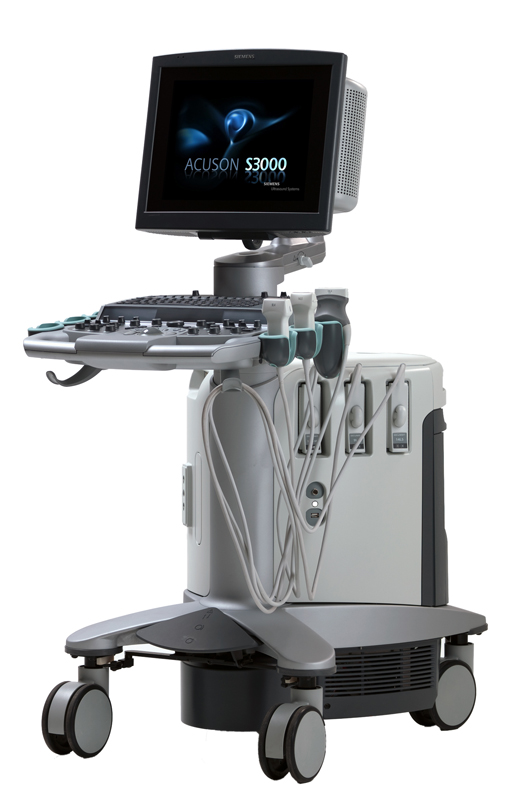 The main objective of advances in diagnostic imaging is to obtain higher image quality to be able to diagnose with increasing precision.. In this sense, the numerous benefits of computed tomography image fusion (TC) o Magnetic Resonance (RM) with ultrasound indicate that the future of medical imaging lies in the consolidation of this technique. This has been revealed at the XXXI Congress of the Spanish Society of Medical Radiology (SCARY), which is celebrated in Granada.
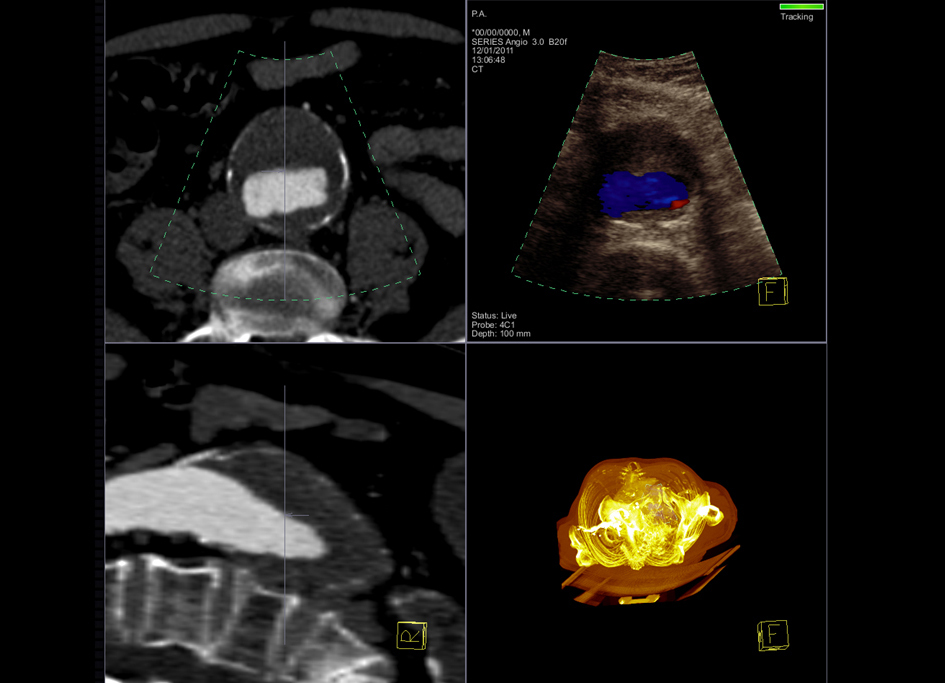
Often, with a primary technique such as CT or MRI, it is difficult to diagnose an injury or pathology accurately. However, by adding images from different techniques, a higher quality image is obtained and, therefore, a much more reliable diagnosis. In addition to facilitating a more accurate decision about the injury or pathology, image fusion, has important advantages in terms of security, comfort and cost savings when performing a biopsy. When CT images are fused with ultrasound, The scan map is used as a pattern to know where the lesion is located and thus perform the puncture through echo. Thus, This avoids exposing the patient to radiation again and reduces waiting lists and the high costs of tests such as CT or MRI..
Nevertheless, Current fusion techniques require manual registration of CT or MR images, a process that is slow. The patient is also required to lie still and remain motionless throughout the entire scan to avoid manual realignments.. To overcome these limitations, Siemens Healthcare has launched its latest ultrasound platform, the Acuson S3000 equipment. This new ultrasound system represents an important advance for this field, which Siemens is pioneering with its patented eSie Fusion technology. This system allows automatic fusion of computed tomographic images (TC) in 3D with real-time ultrasound with a single click. Thus, CT image registration is reduced to a few seconds and manual registration techniques are significantly simplified, thereby optimizing the workflow during MRI volume registration..
Dr. Dirk-André Clevert, associate professor and section head of the Interdisciplinary Ultrasound Center at the Grosshadern University Hospital in Munich (Germany), and one of the first doctors to test the eSie Fusion system, has noted that “the application of the new eSie Fusion image acquisition technology allows us to significantly accelerate our workflow. Previously, the success of the interventions was monitored by CT follow-up. Nevertheless, facing the new ultrasound fusion solution, It would be possible to reduce the number of follow-ups that must be done with CT. The use of fusion allows us to improve clinical information without increasing radiation. This is a great advantage, for both the patient and the healthcare professional.".
First equipment that integrates MRI and PET
Siemens has successfully developed the Biograph mMR, first Magnetic Resonance system (RM) Fully integrated whole-body molecular with simultaneous data acquisition technology. This revolutionary system consists of a scanner 3 Teslas and an integrated positron emission tomography detection system (PET), with a structure with which they function as a single team. The new Biograph mMR device manages to simultaneously capture MRI and PET data for the first time.
This technology is designed to provide new opportunities for imaging techniques. While MRI provides precise morphological and functional details of human tissue, PET goes further and studies the human body at the level of cellular activity and metabolism. This innovative system has the potential to be especially useful in identifying neurological conditions, oncological and cardiac aspects of the disease and facilitate the planning of appropriate treatments. The Biograph mMR also creates new opportunities for research, such as the development of new biomarkers or new therapeutic strategies.
Did you like this article?
Subscribe to our NEWSLETTER and you won't miss anything.
Related articles
 DAS Audio helps merge gastronomy and technology in Katsin
 The sound of EM Acoustics allows innovation to merge with tradition
 ISE and Llum BCN once again merge art and technology at ISE 2025
 Crestron helps merge education and esports at universities
 Econocom presents an initiative for the retail market that seeks to merge the shopping experience with the brand
 Zytronic technology allows the physical and online world of ebebek to merge
 Dnp screens allow the action of sporting events and gastronomy to merge
Qmatic Click & Collect: renewed solution for retail that allows connection with digital signage
Dnp screens allow the action of sporting events and gastronomy to merge
Qmatic Click & Collect: renewed solution for retail that allows connection with digital signage
 Panasonic TX y TW: brilliant projections and great images just 75 cm. away
 Panasonic helps merge sound and visual environment for 'The Great Animal Orchestra'
Surreal Vision technology will allow Oculus to merge the real world with virtual scenarios
At the University of Glasgow they design a single-pixel camera to create 3D images
Panasonic helps merge sound and visual environment for 'The Great Animal Orchestra'
Surreal Vision technology will allow Oculus to merge the real world with virtual scenarios
At the University of Glasgow they design a single-pixel camera to create 3D images
 Quanmax's QDSP-2060 Box PC achieves Scala certification
 AMX MVP-9000i Touch Panel Achieves Cisco CCX Certification