


Vioso calibrates ST Engineering's advanced simulator Antycip for autonomous vehicles
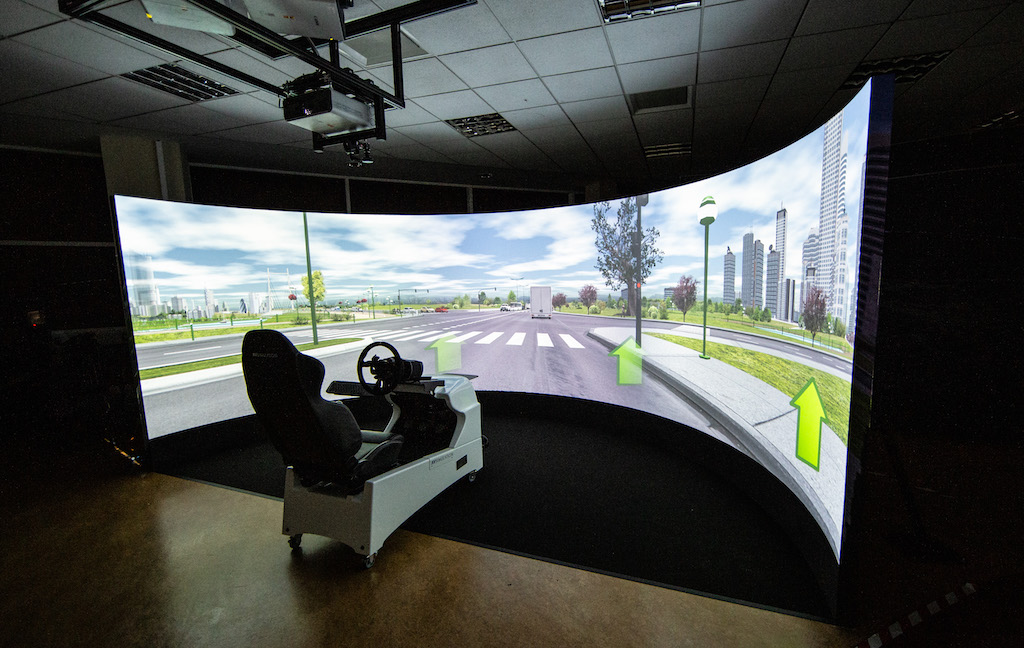
ST Engineering Antycip has contributed a custom-designed simulator, that uses projectors Canon and calibration software Vioso, to the investigation of human interactions with autonomous vehicles in the Cardiff University (United Kingdom).
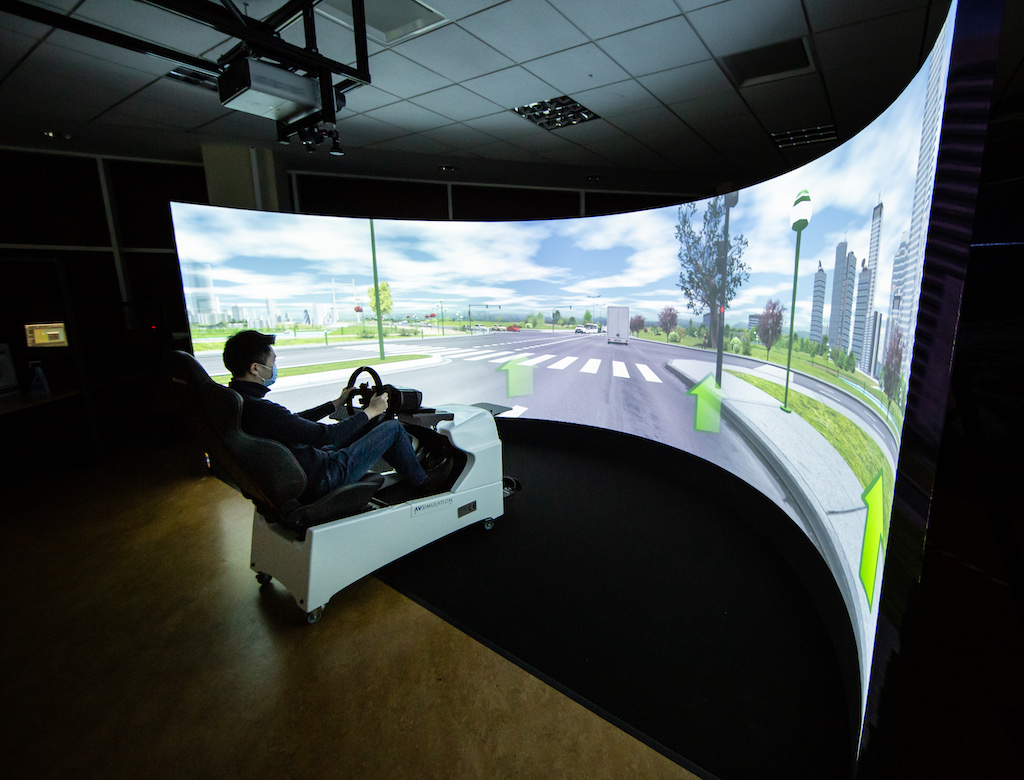
This pioneering research on autonomous driving, that is carried out in the unit Cardiff University of the Cardiff University, has the technology of ST Engineering Antycip to create a custom transport simulator, composed of three projectors Canon calibrated with software Anyblend VR&SIM of Vioso to achieve an immersive screen.
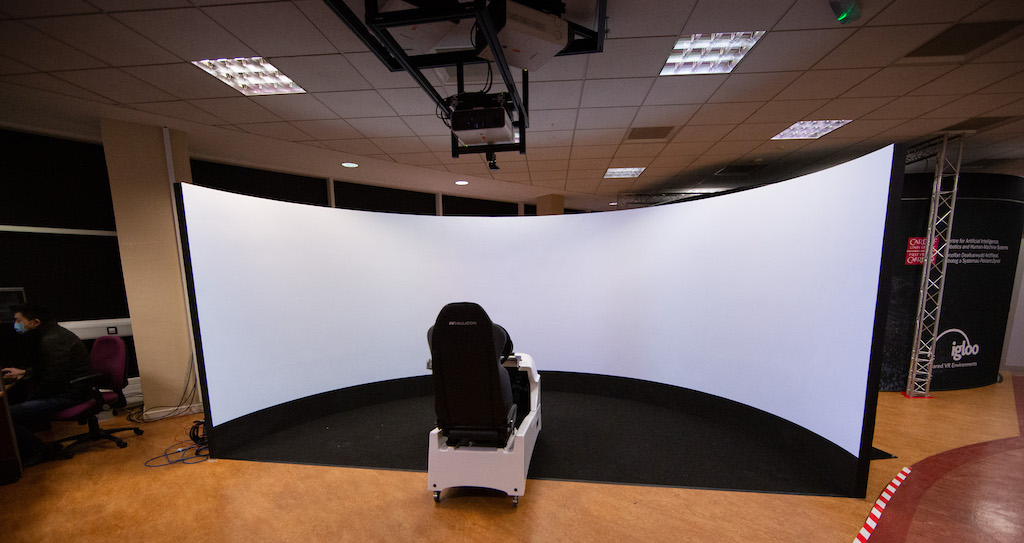
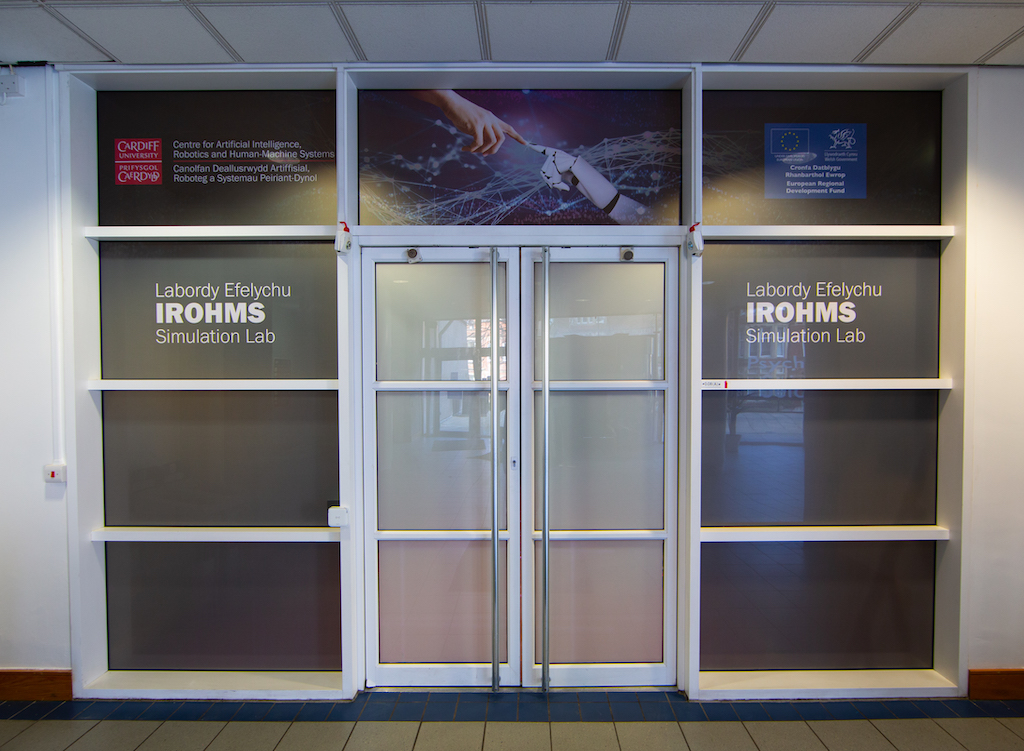
This new simulator allows for in-depth analysis and precise human-centered experimentation, whose purpose is to investigate how it perceives and interacts with autonomous vehicles. The research is promoted by an organization funded by the UE, called Artificial Intelligence Center, robotics and man-machine systems (Irohms) from this university, supervised by Phil Morgan, professor and research director of this center.
“One of the things we are interested in is how people attribute blame in an accident between people and self-driving cars - explains Morgan -. To study this from a practical perspective, It is crucial to carry out experiments with simulations and, when possible, with AV prototypes, along with surveys and the like, to collect complementary data on subjective perceptions”.
This means measuring, both cognitively and emotionally, how humans behave in relation to autonomous transportation, particularly during situations where blame may be assigned.
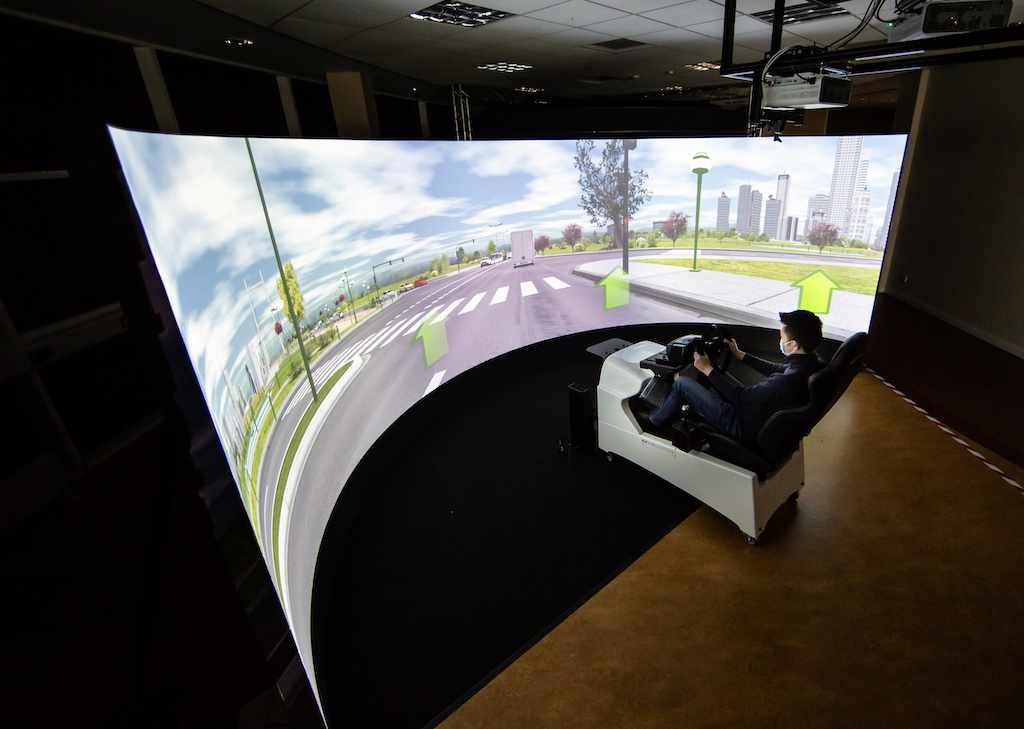
For this reason, Morgan adds., “we have to simulate some situations that people cannot yet encounter in the real world and evaluate a technology that is not fully developed, all in a safe environment. let us know, There is no other driving simulator with these capabilities in Wales and we want to link it with the few that exist in the United Kingdom, such as the Bristol Robotics Laboratory research center”.
Qiyuan Zhang, professor of human behavior at Cardiff University, remember the beginning of the project: “They had spoken very well to us about ST Engineering Antycip, as well as the simulation software provider. They stood out among their competitors in the market for their long history of good services and their high level of professionalism.. Although the process lasted more than a year, it was worth it, as we knew the final product would be fit for purpose”.
For your part, John Mould, Business Development Director at ST Engineering Antycip, underlines the company's long history in providing immersive visualization solutions. “The university needed a system that would work in its specific room space and accommodate a future full-size vehicle or driving simulation equipment., So we use our experience to understand and meet your requirements and provide the perfect solution accordingly.”.
Specifically, ST Engineering Antycip provided three of the projectors Canon XEED 500ST, each with a luminosity of 5.000 lumens, WUXGA resolution and lenses 0,56:1, which were used to map the screen surface. To do this, they were mounted from the ceiling using a customized mechanical support..
Video signals are transmitted from the image generators via HDMI cables. 15 metros, while Ethernet is used for communications of each projector and have total remote control.
While these components were relatively common, the screen was completely custom made. “We wanted a screen substrate that was inherently more stable than a standard tensioned fabric system., to reduce thermal and air pressure effects within the room space over time”, John Mold points out.
For this reason, The ST Engineering Antycip team proposed a “more artisanal approach to the screen, with a rigid structure that offered good stability for the images that would be captured on its surface. Our technology partners and manufacturer Visual Displays were contracted to support this installation, working closely with our engineers to create bespoke cylindrical screen surface”.
Cardiff University staff were trained on how the technology works by ST Engineering Antycip during the start-up phases, testing and delivery. Besides, “You can request our support ad-hoc to help them if they encounter unforeseen difficulties with the system in the future”, assures Mold.
Although Covid restrictions have meant that the Irohms team has to carry out their research online for the time being, They are looking forward to the opportunity to launch the new simulator for this research.
“The development of this technology must be based on knowledge - says Zhang -, to understand how humans will respond and ensure that the design of human-machine interfaces adapt to the limited cognitive capacity of humans. The mere functionality of a system is useless if humans cannot use it. The best way to do this is through simulation, and we are very happy that soon we will”.
Did you like this article?
Subscribe to our NEWSLETTER and you won't miss anything.
Related articles
 ST Engineering Antycip upgrades UCL London VR lab
 ST Engineering Antycip integrates its MyIG simulator with VR-Forces
 ST Engineering Antycip promotes the first Cave laboratory in Romania
 ST Engineering Antycip provides North Africa's first Cave VR
 ST Engineering Antycip transforms the educational landscape at the University of Liverpool
 ST Engineering Antycip designs a portable 3D Cave for the artistic work 'Atom'
 Vioso configures an innovative cylindrical Cave for the Kaist headquarters in Korea
 Digital Projection and Vioso join forces at ISE 2023 to offer creative mapping
 ST Engineering Antycip provides 360º visual simulation to HR Wallingford
 ST Engineering Antycip provides its VR technology to Renault Group
 Vioso provides immersive projection to create life-size plan maps
 ST Engineering Antycip delivers the largest port simulator in its history
 AG Neovo TBX: vehicle digital signage screens
 Trigital launches the Starups and self-employed program to acquire audiovisual equipment at the lowest price