


Brown University Library Adds Video Wall to Enhance Educational Experience
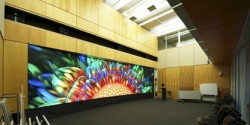
La biblioteca de la Universidad de Brown, en el estado de Rhode Island (EU), ha abierto recientemente su laboratorio Patrick Ma Digital Scholarship, donde se ha implementado un enorme videowall creado con pantallas LED que permite mostrar una única imagen de casi cinco metros y con una resolución extraordinaria, o bien unir distintos monitores táctiles de grupos o clases que trabajan en proyectos de colaboración.
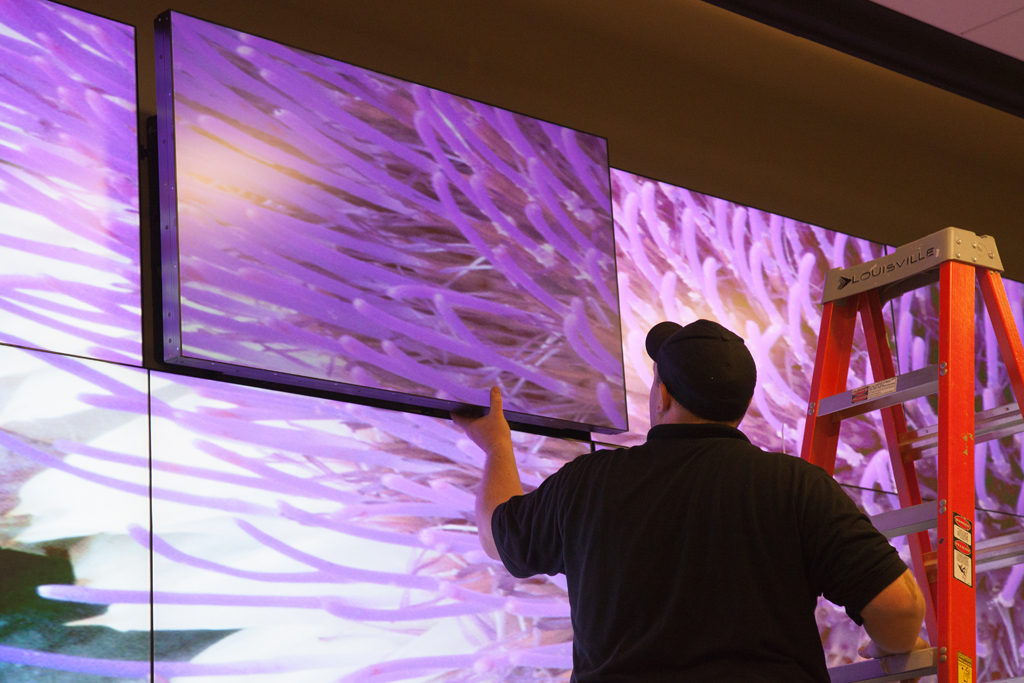
La biblioteca de la Universidad de Brown acaba de inaugurar su nuevo laboratorio Patrick Ma Digital Scholarship, un centro que ofrece a los estudiantes acceso al software utilizado por una variedad de disciplinas en un entorno de visualización y audio de vanguardia. La pieza central del laboratorio es un videowall formado por 12 pantallas LED de 55 inches, que se pueden utilizar juntas para mostrar una sola imagen de 7 pies por 16 pies o vídeo a una resolución de 24 megapixels, o vinculadas a los distintos monitores táctiles para grupos o clases que trabajan en proyectos de colaboración. El videowall también está preparado para videoconferencia, lo que facilitará eventos como reuniones de grupo y conferencias de larga distancia.
La visualización que permite este muro, tanto por su tamaño como por su resolución, es imposible conseguirla con un proyector. Besides, al dejar que los usuarios puedan controlar partes del videowall, abre todo un mundo de posibilidades y metodologías en campos como la educación, the investigation, la enseñanza y el aprendizaje.
Existen distintas formas de colaboración, ha explicado Patrick Rashleigh, coordinador de visualización de datos de esta biblioteca: se puede tener a un gran grupo de personas observando el mismo “artefacto visual” en la pantalla, o se puede hacer que varias personas utilicen sus propios artilugios y que todo el mundo pueda verlos y trabajar en conjunto.
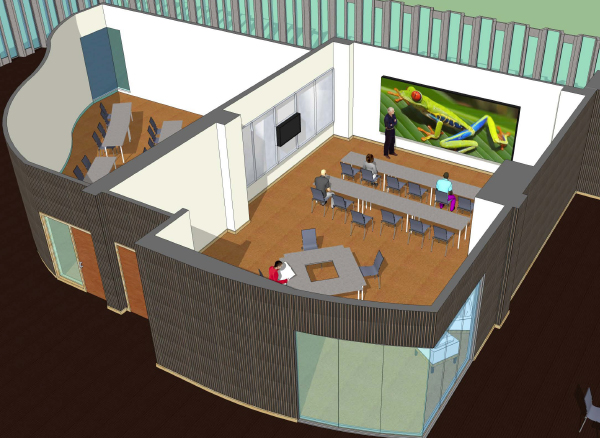
Espacio enriquecedor
Harriette Hemmasi, bibliotecaria de esta universidad, ha comentado que las posibilidades que van a tener los estudiantes de mostrar las imágenes, los datos y los textos que han recogido, y enseñarselos al resto del grupo del laboratorio, harán de este lugar un espacio muy enriquecedor para todos.
La idea de crear este laboratorio surgió cuando la biblioteca adquirió un Microsoft Surface –ahora conocido como PixelSense- y éste se pudo conectar a una pantalla grande, que funcionaba como “pantalla esclava”. A partir de ahí la universidad se dio cuenta de que era necesario un lugar donde trabajar de forma individual y en grupo, “un lugar en el que la gente pudiera hablar y las máquinas también” –concreta Harriette Hemmasi.
Este laboratorio se concibió, explica la bibliotecaria, como un espacio que fuese útil para diversas disciplinas, desde las humanidades a la biomedicina, y en el que los estudiantes y profesores pudieran dejarse caer de vez en cuando y encontrar la manera de utilizar el sistema.
El papel de las bibliotecas universitarias siempre ha sido el de aportar a los estudiantes y profesores los recursos y herramientas necesarios para interactuar con las diversas formas de conocimiento, explica Hemmasi, pero la forma y el alcance han cambiado considerablemente. Ahora existen nuevas tecnologías y las bibliotecas están muy interesadas en formar parte de este entorno. Cree Hemmasi que el futuro de estas bibliotecas está en trabajar con los descubrimientos tecnológicos y las nuevas metodologías de enseñanza que vayan surgiendo.
Did you like this article?
Subscribe to our NEWSLETTER and you won't miss anything.
Related articles
 The University of Greenwich chooses Alfalite for its VP XR educational solution
 Yealink and Kramer team up to improve the AV experience in hybrid meeting spaces
 The Avixa Congress advances its conference program to improve the educational experience
 Frost Brown Todd incorporates RGB Spectrum technology into its new video wall
 EllaFitting Room: smart and personalized fitting rooms to improve the shopping experience
 Valencia CF creates an audiovisual system at Mestalla to improve the fan experience
 Geolocation to improve the user experience in museums, airports, hospitals and retail
 Fractalia REMData incorporates data analysis to improve the shopping experience
Shop&Music: new Musicam service to improve customer experience via Twitter
Fractalia REMData incorporates data analysis to improve the shopping experience
Shop&Music: new Musicam service to improve customer experience via Twitter
 Telefónica invests in an innovation platform to improve the digital experience
 Qmatic develops Spotlight to improve customer experience in waiting areas
 A video wall built with MicroTiles is used by Stanford University as an educational tool
 Water24: flesh and blood online salesperson to improve the customer shopping experience
 The virtual platform of the University of Navarra incorporates a videoconferencing tool to improve teaching communication