


A new system makes 'teleportation' possible’ in remote meetings
La combinación de robótica, vídeo y numerosos sensores y tecnologías de visualización del proyecto ‘Beaming’ permite que una serie de personas separadas físicamente por miles de kilómetros pueda tener la sensación de compartir un mismo espacio virtual en el que pueden interactuar entre ellos.
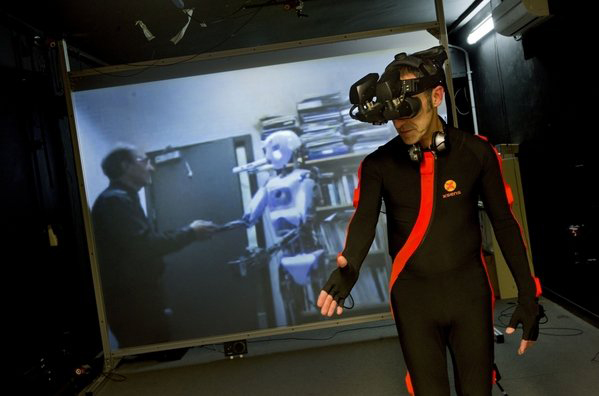
Un equipo de científicos europeos ha desarrollado, en el marco del proyecto ‘Beaming’, un sistema para teleconferencias que aumenta exponencialmente el realismo de estos encuentros. Utilizando tecnologías pertenecientes a la realidad virtual inmersiva, los investigadores han conseguido simular la sensación de estar en otro lugar. Thus, quedan en el pasado las conexiones de sonido ruidosas o las imágenes desenfocadas propias de las teleconferencias, según informa la web Tendencias 21.
El proyecto está siendo desarrollado por un consorcio de once empresas y grupos de tecnología I+D y neurociencia procedentes de 7 países europeos y coordinados por la entidad española Starlab: Universitat de Barcelona (Spain), Consorci Institut d’Investigacions Biomediques August Pi i Sunyer (Spain), University College London (Gran Bretaña), Eidgenössische Technische Hochschule Zürich (Swiss), Scuola Superiore di Studi Universitari e di Perfezionamento Sant’ Anna (Italia), Technion – Israel Institute of Technology (Israel), Interdisciplinary Center Herzliya (Israel), IBM Haifa Research Lab (Israel), Aalborg Universitet (Denmark) y Technische Universitaet Muenchen (Germany).
“Cuando nos encontramos con gente en carne y hueso es posible extraer información sutil de expresiones faciales, peculiaridades o quién observa a quién” ha explicado Stephen Dunne de Starlab. “Existe una enorme cantidad de comunicación no verbal que se pierde incluso con la tecnología de videoconferencia de mayor calidad. No es posible dar un apretón de manos o decidir explorar la habitación, For example", continúa.
En realidad no se trata de una teletransportación en sentido estricto, sino que el proyecto Beaming (‘Teletransportación con medios aumentados aplicados a reuniones naturales en red’) utiliza técnicas y tecnologías pertenecientes a la realidad virtual inmersiva para simular la sensación de estar en otro lugar. Al otro lado de la línea, el usuario es representado por un avatar -un robot a tamaño natural, For example- que realiza la labor de los ojos, los oídos y la boca. El “viajero” teletransportado cuenta con numerosos sensores y su cabeza queda cubierta por una pantalla envolvente. Este proyector permite ver y oír todo lo que el avatar robótico ve mediante su videocámara, escuchar por sus micrófonos y además contestar como si se estuviese en su lugar.
Un movimiento de la cabeza desplaza también la del robot y la voz se reproduce de forma idéntica. Hay sensores de movimiento situados en los brazos que detectan los movimientos para que los del robot los repita. Si alguien toca las manos del robot, la presión se transmite hacia una almohadilla de presión colocada en la mano del conferenciante.
La tecnología se ha probado en la práctica en una entrevista pionera realizada entre un científico del proyecto y un periodista de la BBC situados respectivamente en España y en el University College de Londres (United Kingdom). El periodista logró entrevistar al científico e incluso “chocar sus cinco” al final de la exhibición.
La tecnología actual crea el mercado del futuro
“Lo que hemos logrado es una demostración real de lo que es posible con las tecnologías disponibles en la actualidad”, ha agregado Dunne. “Utilizamos productos disponibles comercialmente y los combinamos de manera innovadora. No se trata de un desarrollo tecnológico pionero, pero sí que es innovador por cuanto demuestra la gran capacidad que ofrece la coordinación de distintos canales de comunicación para lograr resultados apasionantes”.
Una de las tareas de mayor envergadura de los socios de Beaming fue el desarrollo de un marco de arquitectura de datos para el sistema. En él se define la compresión y la transmisión de los datos visuales, sonoros, de movimiento y presión entre el “viajero” y su entorno remoto. También establece la forma en la que el modelo tridimensional remoto debe generarse para que el “viajero” logre transmitir una sensación de presencia intensa. “El objetivo del marco consiste en lograr que Beaming sea completamente independiente del hardware o del software utilizado”, explicó el Sr. Dunne. “Se podrá utilizar cualquier tipo de robot o sensor, For example. También nos hemos propuesto definir la cantidad mínima de datos necesaria para que la experiencia de Beaming no deje de ser completamente inmersiva”.
Información emocional
A pesar de que los dispositivos para la cabeza, las almohadillas de presión y las interfaces gráficas tridimensionales son capaces de generar una sensación intensa de encontrarse en otra ubicación, es necesario además conocer lo que sienten al otro lado de la línea, For example, aquellos sentados alrededor de una mesa que han de interactuar con el avatar. Hablar a un robot con voz humana puede resultar desconcertante.
“Le dimos importancia a lograr que la interacción fuese lo más natural posible. Con independencia de si se interactúa con un robot o con otro tipo de avatar virtual queríamos proporcionar una experiencia natural que no se interpusiese a la comunicación normal”, ha explicado Dunne.
Una mejora sencilla fue dotar al robot de unos rasgos faciales más expresivos. El equipo sustituyó los ojos mecánicos del robot por una pantalla LCD. “Utilizamos gráficos para los ojos y la boca porque aparentan mucha más naturalidad. La sensación de tranquilidad que transmite un robot es mayor si se le mira a los ojos y éstos son normales. Es más sencillo pasar por alto que están tratando con una máquina”, ha aclarado Dunne.
La investigación sigue en marcha dedicada a estudiar formas de registrar y transmitir datos sobre el estado fisiológico y emocional entre los participantes de la comunicación. Con este fin se llevaron a cabo experimentos para conocer hasta qué punto la frecuencia cardíaca, las expresiones faciales e incluso las ondas cerebrales del comunicante son capaces de transmitir información sobre su estado emocional. La tecnología actual puede programarse para aprovechar esta información y reconocer estados emocionales básicos como por ejemplo la diferencia entre el estrés y la tranquilidad. El reto ahora pasa por comunicar las señales a todos los implicados mediante el avatar.
¿Quedarán los viajes relegados al pasado?
“No estamos diciendo que Beaming cambiará radicalmente las reuniones o que permitirá ahorrar millones de toneladas de dióxido de carbono debido a que ya no será necesario viajar -ha indicado Dunne-, pero creemos que la idea de “teletransportar” a alguien a otra ubicación en la que pueden moverse e interactuar mediante un robot podría ser útil inicialmente en algunas aplicaciones muy concretas”.
“Es ideal para trasladar a una persona con capacidades o conocimientos específicos a otro lugar”, ha continuado Dunne. “Permite una inmersión física total en el destino, sentir dicho entorno e interactuar con él. Consideramos que podría ser eficaz para que cirujanos de primera línea se “teletransporten” a quirófanos de todo el mundo y compartan sus capacidades y conocimientos e incluso lleven a cabo operaciones”. “Como proyecto, nuestro objetivo es demostrar que este tipo de viaje e interacción virtual es posible. Ahora corresponde a cada socio convertir los resultados en aplicaciones y productos reales. Nos alejamos del ámbito de la curiosidad científica para estudiar los servicios posibles”, concluye el investigador.
[youtube]http://www.youtube.com/watch?v=F5hXItCA-vQ[/youtube]
Did you like this article?
Subscribe to our NEWSLETTER and you won't miss anything.
Related articles
 INFiLED makes it possible at ISE 2025 “project dreams” of your clients
 Crestron technology makes San Diego's One Safe Place project possible
 Barco projection makes the 3D experience of the Schloss Hessen center possible
 Christie Pandoras Box makes Maxin10sity mapping possible at the Schlosslichtspiele Festival
 Digital Projection makes Mongolian fountain show possible
 Digital Projection makes Pasteur Mapping projection possible
 Extron Introduces New Collaboration System for HC Meeting Spaces 402
 Unitecnic's audiovisual engineering makes the staging of El Somni possible
 Panasonic makes one of the most spectacular 3D mapping possible at the Venetian Macao resort
 Spanish technology makes hyperspectral imaging possible for remote sensing
 ClearSea by Charmex makes room video conferencing possible on tablets and mobiles
 Dataton Watchout makes a spectacular exhibition possible with a display of 228 metros
 Christie makes the world's largest 3D projection possible
 AIDO makes it possible to visit museums without leaving home