


They develop a touch screen to bring electronic medical records to the hospital bedside
El Grupo de Investigación SoftLab de la Universidad Carlos III de Madrid, e IonIDE Telematics, una empresa de base tecnológica creada como start up de la compañía Quantion y empresa del Vivero del Parque Científico UC3M, colaboran juntos en un proyecto innovador de pantalla táctil que permite a los pacientes de los hospitales con algún tipo de discapacidad (visual por ejemplo) acceder a servicios de ocio digital y de comunicaciones, así como consultar la historia clínica del enfermo.
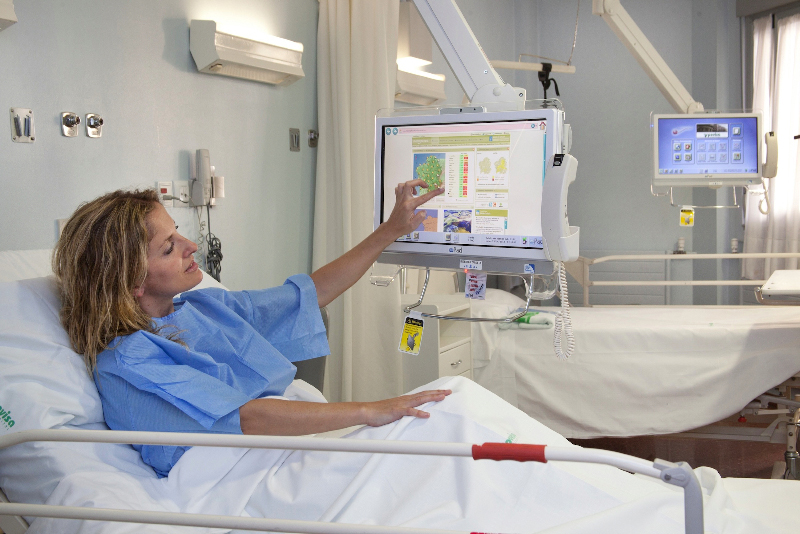
Researchers from the Carlos III University of Madrid (UC3M) colaboran con la empresa IonIDE en el desarrollo de un sistema que permite a los pacientes de los hospitales con algún tipo de discapacidad acceder a servicios de ocio digital y de comunicaciones mediante un terminal inteligente acoplado a las camas, que también permite consultar la historia clínica del enfermo. El potencial de las Tecnologías de la Información y las Comunicaciones (TIC) en el área de la salud es importante, según los investigadores. “Las TIC van a contribuir a un cambio de enfoque en los servicios asistenciales y sanitarios”, comenta Jesús Espinosa, CEO de IonIDE Telematics.
Según las asociaciones de acreditación y estandarización, España está a la cabeza en la gestión de los procesos clínicos, ya que tiene el mayor número de hospitales que han adoptado la historia clínica electrónica (HCE). Este registro informatizado de los datos sociales, preventivos y médicos de un paciente permite centralizar toda esta información en un sistema integrado multimedia y acceder a ella cuando se precisa, en caso de urgencias, atención primaria o ingresos hospitalarios, For example.
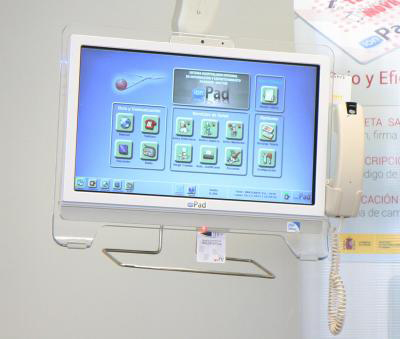
In this case, IonIDE trata de colocar la HCE a pie de cama del paciente. For this, proponen cambiar el tradicional televisor que se puede encontrar en muchas habitaciones de los hospitales, por una pantalla táctil que se puede manejar con la voz a través de la que acceder a toda la información clínica del paciente, sin olvidar otros servicios vinculados a las TIC, como el ocio y las comunicaciones. In fact, ya han colaborado con el Grupo Hospitalario Povisa para desplegar este sistema por medio de un terminal integrado multifuncional (data, voz y TV), denominado IonPAD, que se coloca en un extremo de un brazo articulado adaptado. Ahora los investigadores del Centro de Innovación para la Discapacidad y Dependencia de la UC3M han dotado al dispositivo de una interfaz de usuario para personas con algún grado de discapacidad.
Luis Puente, del grupo de investigación SoftLab de la UC3M y del Centro Español de Subtitulado y Audiodescripción (CESyA), que opera en el Parque Científico de la Universidad, has explained: “Hemos desarrollado un sistema de reconocimiento del habla que permite manejar el IonPAD a través de la voz y un sistema de síntesis del habla que facilita a las personas con alguna discapacidad visual entender lo que hay en la pantalla. Sorprendentemente – apunta – no existía ninguna solución que permitiera a una persona con discapacidad acceder a este tipo de servicio”. At the moment, el sistema en la fase de pruebas tiene un porcentaje de acierto del 81 percent, aunque con un filtrado posterior y un entrenamiento específico, los investigadores esperan alcanzar tasas finales cercanas al 95 percent. “Lo más complicado – apunta Luis Puente – ha sido conseguir una interfaz accesible para la mayoría de discapacidades y que a la vez el equipo sea asequible económicamente, porque nos hemos tenido que basar en equipos comerciales adaptados y software abierto y de desarrollo propio”.
 Para médicos y pacientes
Este novedoso terminal multitáctil puede ser utilizado por el personal médico y de enfermería para acceder a la historia clínica electrónica, introducir las constantes vitales, informar sobre los tratamientos o ver informes de pruebas realizadas, como resonancias, x-rays, etc. Besides, los pacientes lo pueden utilizar para hacer uso de los servicios del hospital (avisos a enfermería, selección del menú dietético, recibir información, etc.), para el ocio personal (television, games, etc.) y para comunicarse (telephone, video conference, email, etc.). Con la introducción del terminal accesible, los pacientes con incapacidades motoras o sensoriales podrán utilizarlo (gracias a los comandos de voz, la audiodescripción y los subtitulos) y salvar las barreras habituales que tienen para acceder a las tecnologías de la información.
La innovación consiste en dotar al sistema de audiodescripción de los contenidos de las diferentes pantallas y de la ejecución de comandos por voz. Roberto Peña, director técnico de IonIDE, has pointed: “Una persona invidente podrá saber qué contenidos se ofrecen y seleccionar el que le interese simplemente hablando con el equipo; o alguien que tiene los brazos escayolados podrá cambiar de canal de televisión diciéndoselo al terminal ionPAD, sin requerir la hasta ahora imprescindible ayuda de un acompañante o una enfermera. This way, no solo mejoramos la integración de los discapacitados, sino que además mejoramos la eficacia de los recursos clínicos, lo que permitirá que estas personas dediquen más tiempo a sus tareas puramente sanitarias”.
[youtube]http://www.youtube.com/watch?v=y5B5GLMv97s[/youtube]
Did you like this article?
Subscribe to our NEWSLETTER and you won't miss anything.
Related articles
 Rate ARC: industrial touch screen panels for harsh environments
 RTI will exhibit the KX4 touch screen for meeting spaces at InfoComm
 Powersoft Mover helps tell the story of electronic music with an immersive experience
 Leyard and Planar develop the first seamless LED touch screen 196 inches and 0,9 mm
 Underwater touch screen for dolphins to interact and investigate their behavior
 3M C6587PW: 65 PCAP multi-touch screen″ para digital signage
Now 7001LT: interactive touch screen 70 inches for digital signage
Jung Smart-Panel KNX 5.1: touch screen for controlling KNX systems
3M C6587PW: 65 PCAP multi-touch screen″ para digital signage
Now 7001LT: interactive touch screen 70 inches for digital signage
Jung Smart-Panel KNX 5.1: touch screen for controlling KNX systems
 Droiders achieves the world's first application for Google Glass that integrates the patient's medical history
Central Washington University installs a touch video wall to share the history of its faculty
Droiders achieves the world's first application for Google Glass that integrates the patient's medical history
Central Washington University installs a touch video wall to share the history of its faculty
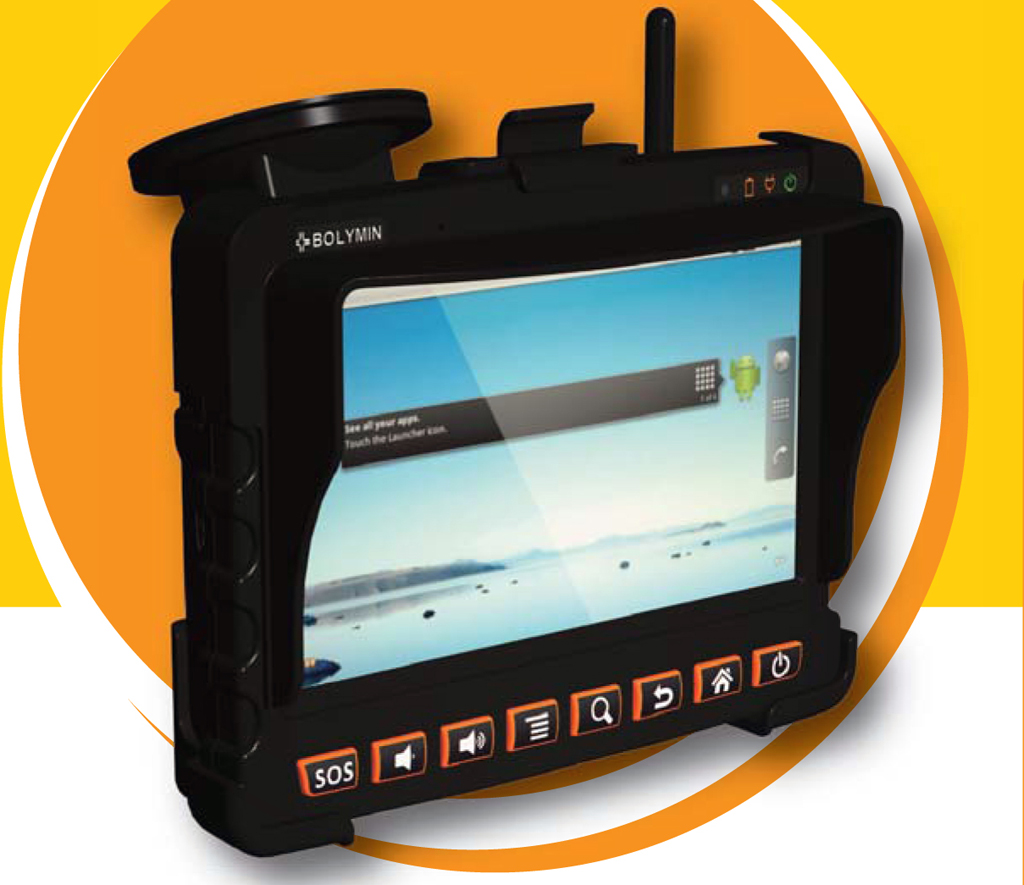 Bolymin touch screen terminal to transmit location information
 JM Aiphone: video intercom for professional access control with 7” touch screen
 They create a touch screen for patients that improves hospital efficiency
 They develop an innovative interactive screen to manage holograms in the air