


Sahel Project: telemedicine services for sub-Saharan Africa
Indra has put its experience in the health field at the service of the 'Sahel' project (Satellite African eHealth validation), which aims to support the implementation and extension of viable telemedicine services in Africa through the integrated use of ICT and satellite technology.
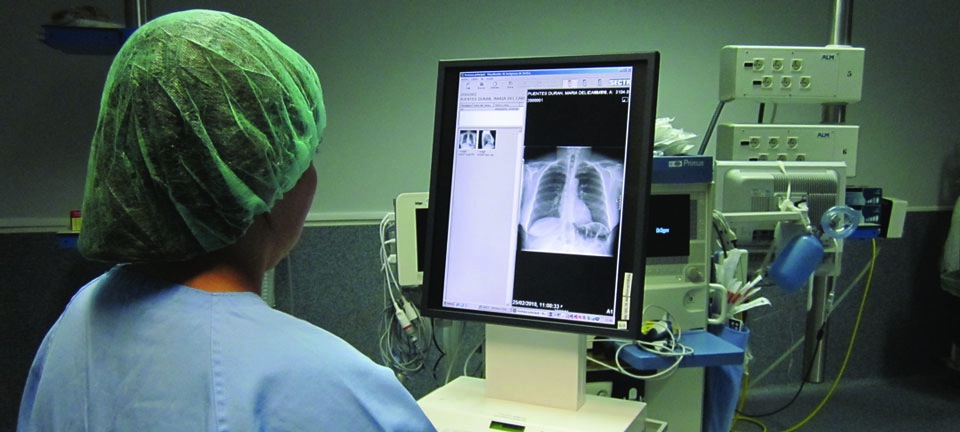
'Sahel' is an initiative managed from the European Space Agency (ESA) and co-financed by the European Commission for Sub-Saharan Africa, in which Indra brings his telemedicine experience, with services such as digital medical history, telediagnosis and training of health professionals.
Thanks to this project, it has been possible to define and implement a pilot that connects remote areas of sub-Saharan African countries with hospitals and medical centers of excellence.
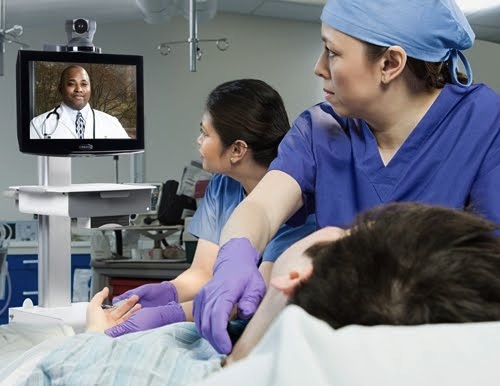 This is the first step in setting up a comprehensive telehealth system (eHealth) including telemedicine services, epidemiological control and continuous training of health personnel, as basic pillars on which other future services will be articulated.
A consortium of companies and entities, led by EADS CASA, has been in charge of carrying out this initiative in which Indra has participated by implementing its telemedicine platform Telemed and its health information system Health Network.
SES ASTRA has collaborated in the consortium (Luxembourg) in the definition of the service and the provision of fixed broadband access via satellite; the French-speaking Digital University of Health and Sports Sciences (UNF3S), providing medical e-learning content in French; y ONG African Medican Research Foundation (AMREF), that provides eLearning content in English.
The experience and technologies used will be put at the service of AMREF itself., a Kenya-based center of excellence in health services development in Africa; y of Le Kinkeliba, an NGO that has been working in the area of health in eastern Senegal for more than fifteen years.
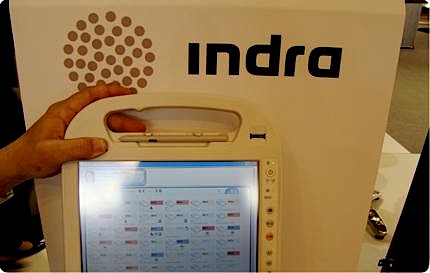 Indra Health Network y Telemed
Indra's collaboration in 'Sahel' is based on the implementation of its Health Network and Telemed health management system, a modular and adaptable management platform on which different services can be articulated.
This system allows remote diagnosis as part of health services, offering real-time assistance to staff to resolve clinical conditions with the help of specialists.
Added to this is the digital medical history service, that facilitates many of the tasks associated with the health care provided and patient monitoring, since health programs can also be designed adapted to the priority needs in sub-Saharan Africa (maternal health, children's).
 This service favors the generation of epidemiological reports, disease monitoring and creation of statistics for internal use, to facilitate the monitoring and control of the most devastating pathologies for the population of these regions (malaria, tuberculosis, HIV).
The platform incorporates an e-Learning service for the continuous training of health professionals in rural environments, with courses in the most demanded specialties, online seminars, etc. facilitated by UMVF and AMREF.
Pilots in Senegal and Kenya
 The 'Sahel' pilot has been implemented in three primary and secondary care centers in Kenya and Senegal, connecting them with reference centers in both countries: Kenyatta National Hospital, Nairobi, and the African Telemedicine Center in Dakar, respectively.
Thanks to the 'Sahel' platform, Doctors in rural centers and more remote areas can directly request help from specialists in reference centers. The eLearning service improves the preparation of medical personnel in these areas.
The results of the 'Sahel' project represent a qualitative step in the progressive adoption of telemedicine services in sub-Saharan Africa, which is expected to continue in a new phase.
Did you like this article?
Subscribe to our NEWSLETTER and you won't miss anything.
Related articles
 Telefónica Servicios Audiovisuales develops the HUSAL surgical image project
 Mutua Universal installs Panasonic PTZ cameras for its telemedicine service
 Samsung and Telefónica join their technologies to develop products and services for IoT
 Iecisa and the Althaia Foundation develop a telemedicine platform for chronic patients
Atos and Worldline collaborate on the Alfred project to develop a virtual butler for seniors
eHealt strengthens its telemedicine services with the help of Capita cloud solutions
Sony SRG Cameras, network video surveillance for education, videoconferencing and telemedicine
Iecisa and the Althaia Foundation develop a telemedicine platform for chronic patients
Atos and Worldline collaborate on the Alfred project to develop a virtual butler for seniors
eHealt strengthens its telemedicine services with the help of Capita cloud solutions
Sony SRG Cameras, network video surveillance for education, videoconferencing and telemedicine
 Indra coordinates the first test of the European R&D project Perseus for maritime control and video surveillance
 Project Slogans: 3D avatar to interpret sign language in tourism and transportation
 Project Sherlock: high-precision locator and sensors for risky professions
 Indra designs an urban platform to manage the services provided by cities
 The Nisa Pardo Hospital presents its Medibaby pediatric telemedicine service for mothers
 Radiotrans becomes wholesaler for Radwin's Iberia and Northwest Africa
 Telefónica and SARquavitae will collaborate on a joint telemedicine and telecare project