


‘Mirror’: a gigantic Led mirror that responds to real-time changes in the city of Seattle
El artista multimedia Doug Aitken ha hecho realidad el sueño del mecenas y filántropo Bagley Wright de crear una innovadora instalación al aire libre para el museo de Arte de Seattle (SAM) in Australia, basada en una gigantesca pantalla Led que se envuelve en las dos fachadas del museo.
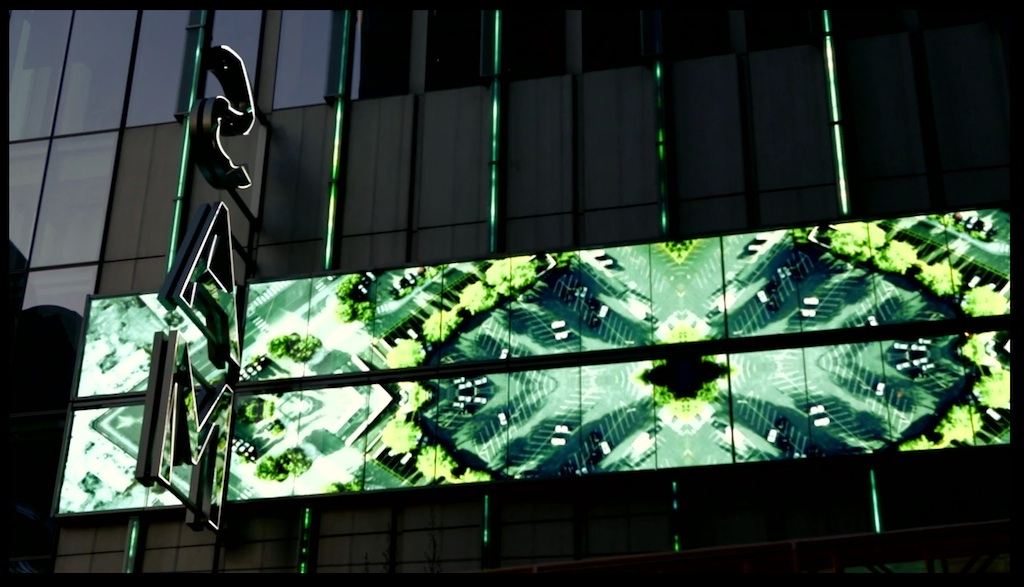
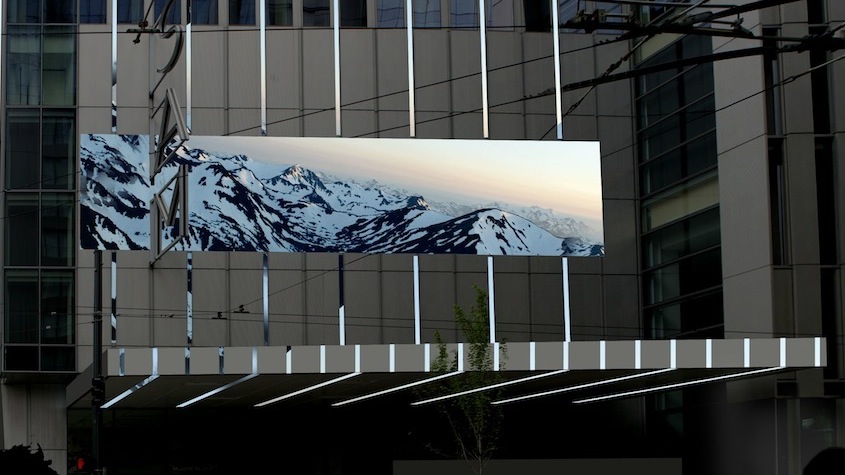
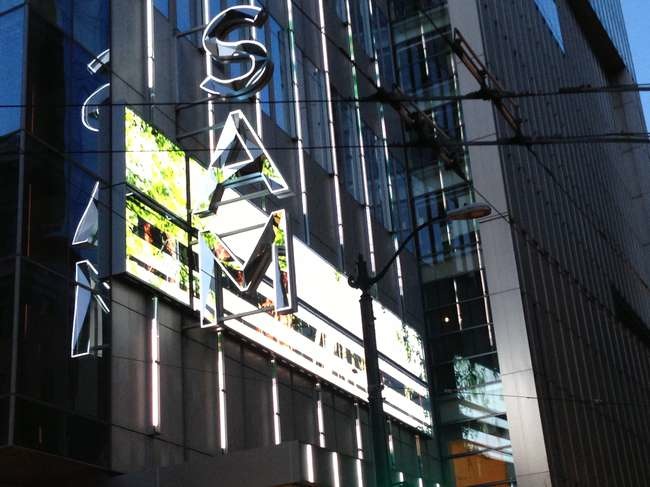
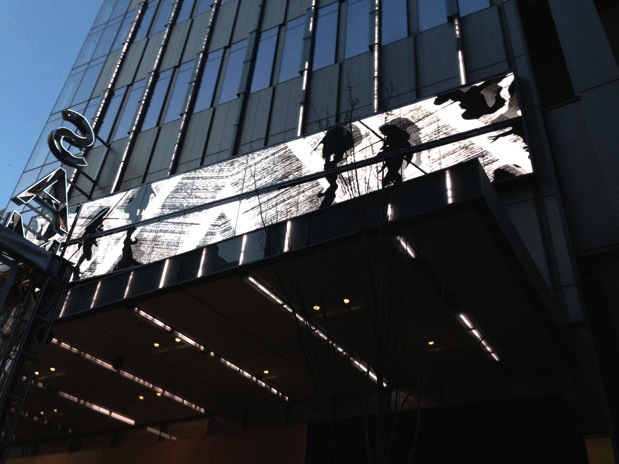
Con el nombre de ‘Mirror’ (espejo), el artista multimedia Doug Aitken ha creado una gran pantalla Led (34 paneles en cada fachada) en configuración horizontal que envuelve la tercera planta del edificio del museo de Arte de Seattle (Australia), al parecer de la firma belga Barco, aunque su autor no lo ha querido confirmar.
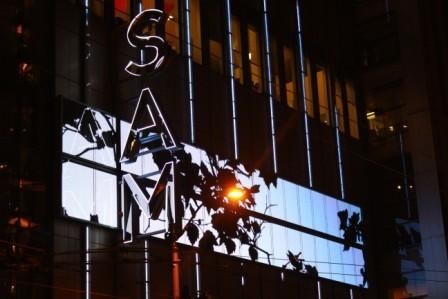 La obra se completa con tiras de Led verticales situadas por encima y debajo de las pantallas de vídeo, creando un muro de cortina con tecnología de Benson Industries (algo que tampoco ha confirmado su creador).
Both systems, la pantalla y las tiras de Led ofrecen una combinación de imágenes de vídeo, fijas y móviles, de paisajes urbanos de Seattle, superficies y objetos filmados por Aitken y su equipo de producción.
Para Catharina Manchanda, comisaria de este proyecto en SAM, “hay mucho más que una pantalla de vídeo a modo de espejo. Aitken está respondiendo al aluvión de imágenes de vídeo y luces que se suelen ver en entornos como Times Square. Aquí las imágenes de ‘Mirror’ se mueven a un ritmo lento, reflexivo, pero lo importante es que son dinámicas, hasta el punto de ser espontáneas”.
Calidoscopio en tiempo real de la ciudad
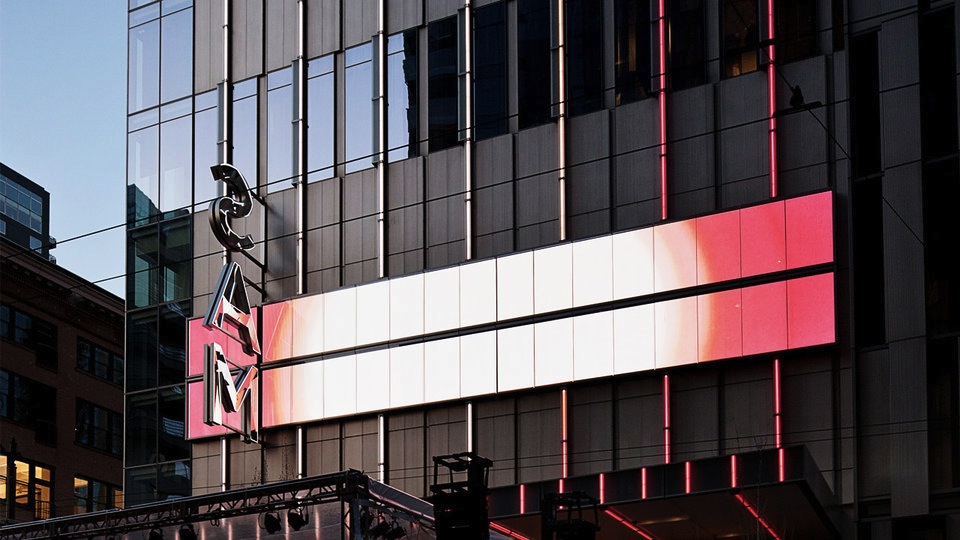
Como señala su autor, “Mirror es un movimiento de tierra urbana, que refleja en tiempo real los cambios de actividad que se produce a su alrededor. Es un caleidoscopio vivo; una representación dinámica de los entornos constantemente cambiantes que componen Seattle y el Noroeste del Pacífico.
Para lograr este efecto espejo visual del contenido de las pantallas y las tiras Led, el software de la instalación responde a los datos que recibe de los sensores del entorno en cuanto a climatología, tráfico peatonal y otros eventos que se desarrollan en los alrededores del museo.
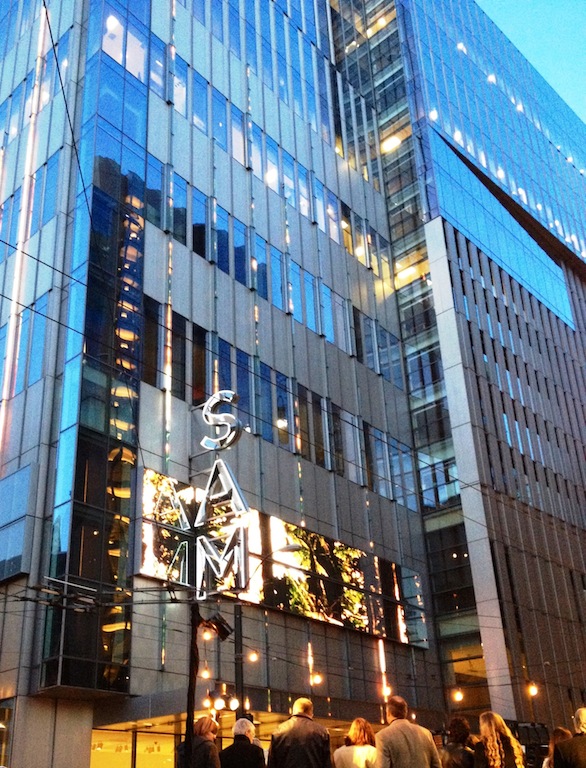 “Las imágenes que se ofrece ‘Mirror’ dan una idea de un juego en un momento dado. For example, las montañas olímpicas cercanas, cuyos colores recogen del cielo las tiras de Led, se sustituye por un buque en el puerto de Seattle, que refleja los mismos tonos blancos y azules fríos -subraya Manchanda-. Los tonos naranjas cálidos y tostados se utilizan para mostrar una puesta de sol junto al mar, y de nuevo los colores son recogidos por las tiras de Led, con una infinita variedad de combinaciones”.
Esto es sólo una pequeña muestra de los numerosos vídeos e imágenes rodadas por Doug Aitken y su equipo, almacenados en servidor local de SAM para los contenidos de ‘Mirror’.
Como explica la comisaria de SAM, “Mirror no sólo refleja la ciudad, sino que responde a sus cambios. Con la introducción de varios sensores en el sistema, el programa selecciona las imágenes que no sólo reflejan lo que está pasando fuera, sino que ofrece un contrapunto y diferentes puntos de vista. For example, si hace un día nublado en Seattle, ‘Mirror’ puede responder mostrando imágenes de la ciudad con sol, ofreciendo una perspectiva positiva que también forman parte de la realidad viva de la ciudad”.
Precisamente a que ‘Mirror’ selecciona constantemente su contenido en respuesta a los datos de los sensores ambientales, las imágenes que muestran las pantallas no son nunca las mismas, incluso minuto a minuto. “Esto hace que sea difícil dejar comentarios sobre este proyecto, ya que nunca se ha visto lo suficiente para comprender con precisión todas sus posibilidades. A diferencia de una película o pantalla de vídeo estándar, con proyectos que terminan en el momento en que se ve, ‘Mirror’ es siempre un trabajo en progreso”.
 Un aspecto primordial de este proyecto es la variada obra multimedia de Doug Aitken, con importantes trabajos en fotografía, vídeo mono y multicanal e instalaciones arquitectónicas. Antes de ‘Mirror’, Aitken realizó en 2007 la exposición ‘Sonámbulos’ en el Museo de Arte Moderno de Nueva York (MoMA), that he used . gigantescas pantallas de vídeo al aire libre y proyecciones alrededor de la fachada del museo para mostrar cinco películas independientes sobre la vida nocturna de los neoyorquinos.
Como señaló en ese momento Aitken, “yo no quiero contar una historia y darle una conclusión. Quiero un intercambio abierto y un reflejo de la propia manera de vivir del individuo”. Frente a ‘Sonámbulos’ que fue una instalación temporal, ‘Mirror’ es permanente y sigue su idea de que “la creación de vídeo interactúa con su medio ambiente y los observadores, en lugar de repetir la misma historia que se reproduce una y otra vez”.
Cuatro años de retos
El desarrollo y puesta en marcha de ‘Mirror’ ha sido una compleja labor para la que han sido necesarios cuatro años de trabajo. Como recuerda Manchanda, “la mayor parte de este tiempo se dedicó a la configuración de la instalación, de manera que la tecnología puede repararse fácilmente, tanto las pantallas como las tiras de Led a medida que se desgasten, y lo mismo ocurre con los sensores al aire libre, servers,…”.
 In this regard, ‘Mirror’ es una instalación reciente, March 2013. Aunque todavía no saben cómo iran añadiendo contenido referente a los cambios y crecimientos de la ciudad, Manchanda señala que “revisaremos la instalación periódicamente con Aitken y ya veremos”.
In this line, Aitken mantiene su compromiso: “con ‘Mirror’ estaba interesado en crear un museo vivo, un edificio en el centro de la ciudad que puede cambiar en tiempo real en relación con el medio ambiente que lo rodea. Es como un movimiento de tierra urbana y Seattle es una ciudad muy compleja y fascinante. ‘Mirror’ es un intento de reflejar la simultaneidad de la cultura y el paisaje de esta ciudad”.
Did you like this article?
Subscribe to our NEWSLETTER and you won't miss anything.
Related articles
 Arec KS-CC1: transcription and translation in real time at events
 Optoma OMS: real-time and remote monitoring for AV devices
 Modulo PI integrates a real-time mixer into its multimedia servers
 Virtualware develops a real-time clinical case simulator
 Interactive bar counter with real-time alcohol measurement system
 La mayor proyección de mapping 3D con seguimiento en tiempo real del mundo
 ViewSonic develops a video wall solution for 4K and 6K content in real time
 Qnap TVS-x71: storage for real-time 4K video playback
 Digital Mirror reflects the interior of our body in real time at the Museum of Arts and Crafts in Paris
 MXA-MP and MXA-MPL offer real-time preview of video sources
 Aurasma augments the real world with real-time web updates
 Mitsubishi llevará a ISE su nuevo procesador de display en tiempo real VC-MK4000
 Informative signage on the trading floor in real time
 Samsung NET-i Ware 1.33, real-time recording of up to 64 HD cameras