

The National Library of Spain renews its agreement for the digitization of works with Telefónica
After digitizing in the last six years 25 million pages of 150.000 works from the National Library of Spain, esta institución ha renovado su acuerdo con Telefónica para continuar ‘virtualizando’ sus fondos y haciéndolos accesibles de forma abierta y gratuita.
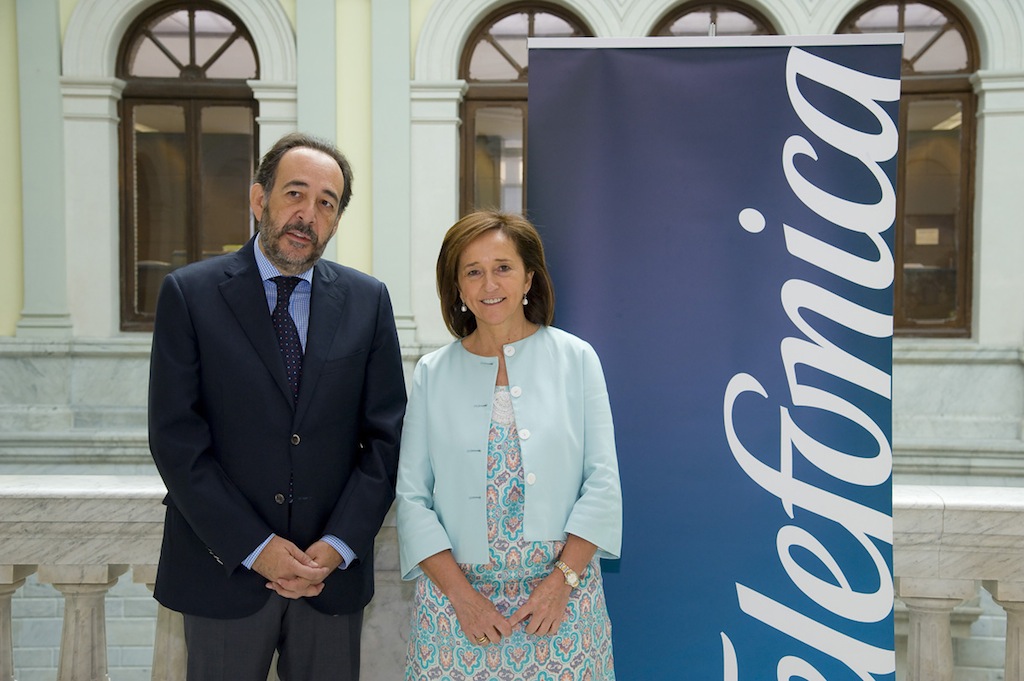
El plan de digitalización sistemática que inició con la Biblioteca Nacional de España in the year 2008 con Telefónica acaba de renovarse con un nuevo acuerdo firmado hoy (ver imagen adjunta) por Ana Santos Aramburo, directora de la BNE, y Carlos López Blanco, director de asuntos públicos y regulación de Telefónica.
Estos fondos, accesibles libre y gratuitamente desde los portales de la Biblioteca Digital Hispánica (BDH) y la Hemeroteca Digital (para la consulta específica de la prensa histórica), represent 25.000.000 de páginas digitalizadas, gracias a lo que se ha conseguido que 150.000 títulos de los diferentes tipos de materiales que se encuentran en la BNE (dibujos, grabados, fotografías, partituras, libros impresos y manuscritos, registros sonoros, material cartográfico, revistas y periódicos,…) estén al alcance de cualquier ciudadano en todo el mundo.
El proceso de digitalización de la BNE se centra fundamentalmente en los fondos de dominio público, that is to say, aquellos que están libres de derechos de autor. Con la firma de este nuevo convenio entre ambas entidades se mantiene el proceso de digitalización de fondos y se potencia la difusión de estos materiales de libre disposición. El reto actual es lograr que todo este patrimonio sea conocido, consultado y abierto a la sociedad.

Próximas fases
La digitalización de fondos se centrará en autores que en los próximos años pasan al dominio público como Ramón y Cajal, Lorca, Valle Inclán, Unamuno, Ramiro de Maeztu o Pedro Muñoz Seca, así como en grandes autores de los que aún faltan obras emblemáticas por incorporar a la BDH, como Clarín, Espronceda, Rosalía de Castro, Juan Valera o José Zorrilla…
También se digitalizarán obras de las que la BNE alberga el único ejemplar que se conserva y cuya preservación es clave. Also, se seguirá con las líneas ya iniciadas y se digitalizarán obras de todo tipo, entre las que hay que destacar los 6.500 rollos de pianola digitalizados con un escáner único diseñado por la Universidad Autónoma de Barcelona.
 A partir de ahora se realizarán desarrollos de apps con colecciones destacadas de la BDH, búsqueda de nuevos usuarios y otros desarrollos como pasapáginas, líneas de tiempo y geolocalización de obras.
La media anual de visitas desde el año 2012 is from 440.000, con una duración de 9 minutes; lo que ha supuesto 31.000 usuarios mensuales de 163 countries (21% desde América y se registra un auge importante de China en 2014). En total entre 2008-2013 se han descargado más de 15.000.000 de documentos.
Telefónica respalda también el liderazgo por parte de la BNE de la Biblioteca Digital del Patrimonio Iberoamericano (BDPI), creada para dar acceso a las colecciones digitales que en los dos años con esta labor ofrece acceso a 210.340 recursos digitales y 112.00 usuarios de 132 countries. La biblioteca digital se ha consolidado como la iniciativa más importante de cooperación bibliotecaria en este ámbito geográfico y cuenta ya con ocho bibliotecas nacionales participantes a las que pronto se sumarán nuevos socios.
 Integrada por las bibliotecas nacionales de Brasil, Colombia, Chile, El Salvador, Spain, Panamá, Uruguay y Portugal, el futuro de la BDPI pasa por la incorporación de nuevas bibliotecas y la integración de nuevos servicios para convertirse en uno de los proyectos centrales en el mundo de la cultura digital, junto con la Europeana o la Digital Public Library of America, así como un modelo de cooperación y de difusión del patrimonio común de estos países.
En el marco de la Asociación de Estados Iberoamericanos para el Desarrollo de las Bibliotecas Nacionales de los países de Iberoamérica (ABINIA) y con tecnologías de código abierto, su desarrollo ha sido liderado por la Biblioteca Nacional de España partiendo de la experiencia adquirida en los diferentes proyectos en los que participa, lo que abre múltiples vías de cooperación, coordinación y reutilización de información con el resto del mundo cultural.
Did you like this article?
Subscribe to our NEWSLETTER and you won't miss anything.
Related articles
 SeeSound signs a distribution agreement with Extron for Spain and Portugal
 MCRPro and Adam Hall sign a strategic distribution agreement in Spain
 EET renews its strategic collaboration agreement with iiyama
 Telefónica España ofrece una alternativa para reuniones con la IA de MoonBack
 Magnetrón and Xilica announce their distribution agreement in Spain
 Tech Data extends its European agreement with SoftApp to Spain
 Vodafone Plaza renueva la solución de digitalización de la zona de recepción
 The Bertelsmann Space is committed to digitalization and renews its audiovisual equipment
 The National Football Stadium in Windsor Park renews its display equipment with Absen
 Telefónica aumentó un 13,8% su inversión en I+D+i en España durante 2014
 Interactive visit to the National Museum of Natural Sciences with the Telefónica app
 Telefónica and Verizon close an agreement to use the Cisco TelePresence telepresence system
 La Biblioteca Nacional instala videoconferencia y streaming para divulgar su actividad cultural
 LMInteractiva renueva su acuerdo de colaboración con la Real Sociedad