


The Sistine Chapel visually recovers Michelangelo's frescoes with LED lighting technology
La restauración de la Capilla Sixtina ha tenido como protagonista la tecnología de iluminación LED y un nuevo sistema de climatización para recuperar la espectacular obra pictórica de Miguel Ángel, coincidiendo con los 450 años de la muerte del artista florentino, que ha contado con las soluciones del fabricante alemán Osram.
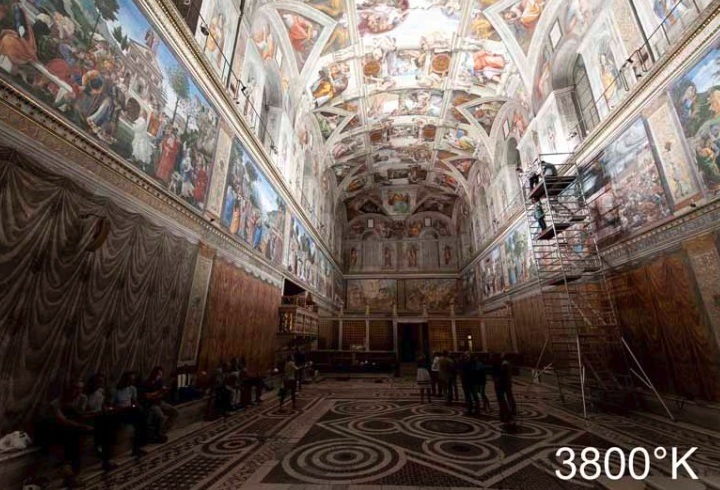
“Nueva luz y nuevo oxígeno para la Capilla Sixtina”, tal y como ha definido el director de los Museos Vaticanos, Antonio Paolucci, el complejo y laborioso proyecto de restauración, casi quinientos años después, de la excepcional obra pictórica realizada por Miguel Ángel, que a partir del próximo 31 de octubre los miles de visitantes (casi seis millones anuales) podrán ver, apreciar y disfrutar de forma homogénea y con un nivel de detalle preciso de los frescos renacentistas del artista florentino.
La elección de esta fecha responde a que el 31 October 1512, el papa Julio II descubrió la bóveda con los frescos de La Creación, según ha explicado Paolucci durante la presentación en la oficina de prensa de la Santa Sede del congreso internacional ‘La Capilla Sixtina veinte años después: nueva respiración, nueva luz’, que se celebra precisamente del 30 al 31 October.
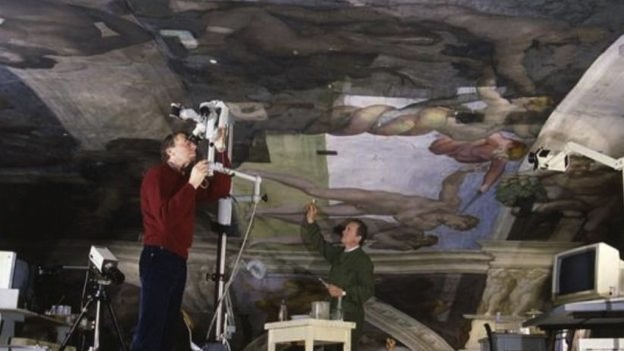
El fabricante de lámparas Osram ha sido responsable de la nueva solución de iluminación, basada en la tecnología LED, de la Capilla Sixtina en Roma, que ha tomado como base las rigurosas y precisas especificaciones de luz que esta compañía ha realizado ya en el museo Lenbachhaus, en la ciudad alemana de Múnich, tal y como ha señalado Peter Laier, director de tecnología de Osram.
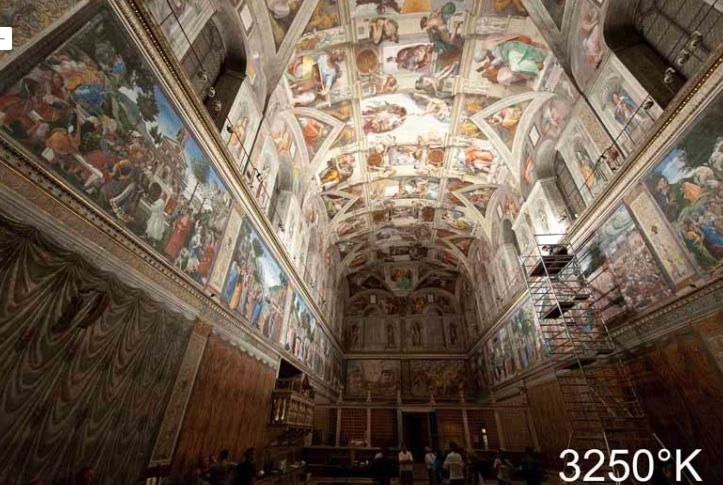
Para lograr una iluminación homogénea y precisa de la Capilla Sixtina se han instalado unos 7.000 LED (of 50 a 100 lux), que cumplen los estrictos requisitos de protección y conservación de las obras de arte, tal y como se puede apreciar en las fotos cedidas por el Gobernatorato dello Stato della Città del Vaticano.
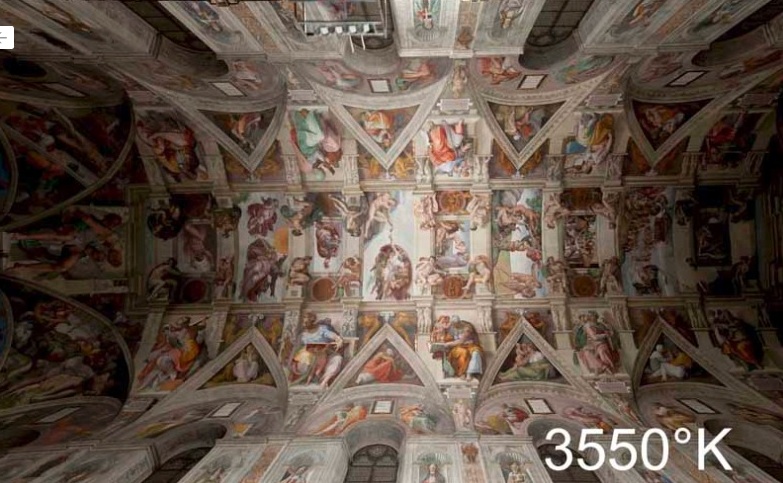
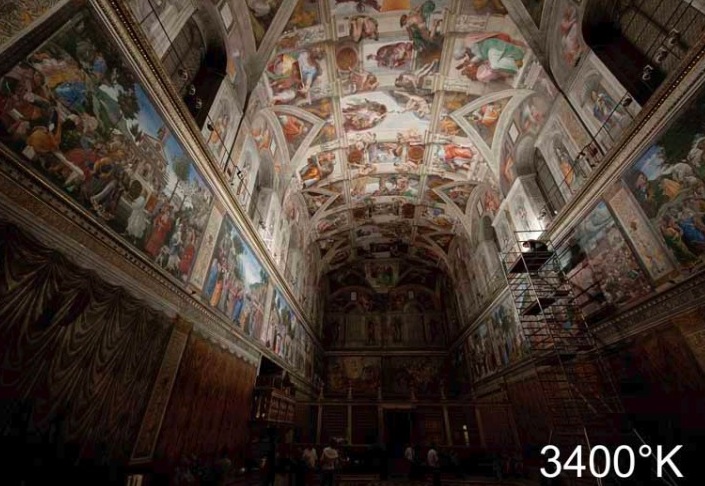
In this sense, las luminarias RGB desarrolladas por Osram emiten dos tipos de luz blanca (una cálida y otra fría), así como cinco canales de color controlados de manera independiente para ajustar su temperatura, que en el caso de la Capilla Sixtina oscila entre los 3.000 y 4.000 Kelvin.
Estas luminarias están especialmente diseñadas para su instalación a diez metros de altura y su reducido tamaño permite su instalación oculta en salientes, cornisas o elementos de la estructura, tal y como ha sucedido en este caso. Specifically, se han desplegado cuarenta luminarias LED con disipador de calor, distribuidas en hileras de veinte a ambos lados de la capilla, en grupos de cuatro dispositivos, cada uno de los cuales proporciona 140 puntos RGB y luz blanca.
Besides, también se han instalado en las ventanas de la capilla en torno a treinta luminarias LED de 50 watts, que están programadas para cuando se celebren eventos especiales, tales como conciertos o galas, según ha anunciado recientemente el propio Papa Francisco.
Energy efficiency
Además de aumentar la calidad de la iluminación de manera homogénea en todo el espectro, otro de los beneficios de la implantación de esta tecnología es que consume un 60% menos de energía respecto al sistema de luminarias anterior y reduce hasta en un 50% la emisión de calor a los frescos.
Otro de los proyectos que han formado parte de la restauración de la Capilla Sixtina es el de climatización, realizado por el fabricante norteamericano Carrier, tras tres años de estudio de las condiciones para controlar los parámetros necesarios de temperatura y humedad de las obras, así como reducir y controlar el nivel del anhídrido de carbono que produce la masiva presencia diaria de visitantes.
La iluminación de la Capilla Sixtina es un proyecto piloto, conocido hasta ahora como ‘LED4Art’, subvencionado por la Unión Europea, y en el que ha trabajado un consorcio de empresas especializadas, coordinado por Osram; diseñadores de iluminación, conservadores y técnicos de medición de luz y energía, cuyo objetivo es demostrar las nuevas posibilidades que ofrece la tecnología LED en relación con la eficiencia energética y la calidad de la luz.
Did you like this article?
Subscribe to our NEWSLETTER and you won't miss anything.
Related articles
 Eurovision 2025 shined with Robe lighting technology
 Microsoft recupera con IA la antigua Olimpia en 3D y realidad aumentada
 Digital Projection Technology Visually Revitalizes Roshen Cake Factory
 “At Digital Projection we have developed the projection technology of the future”, says Miguel Ceresuela
 Miguel Ángel López assumes the presidency of Siemens Spain
 Art and spectacle merge in a spectacular projection of the work of Michelangelo
 El Museo de Arqueología de Cataluña recupera virtualmente en 3D la ciudad ibérica de Ullastret
Mahou San Miguel refuerza la imagen de su fábrica de Málaga con tecnología Led outdoor
El Museo de Arqueología de Cataluña recupera virtualmente en 3D la ciudad ibérica de Ullastret
Mahou San Miguel refuerza la imagen de su fábrica de Málaga con tecnología Led outdoor
 The Roman Theater of Guadix recovers its historical splendor with three tactile information tables
 Panasonic projection technology visually reconstructs the 'Forum of Augustus'’ in Rome
 The Mercado de San Miguel in Madrid uses Alzinia technology for its digital signage projects
 El Palazzo Vecchio de Florencia y el David de Miguel Ángel se vistieron de viola
 Earpro ofrece la tecnología más novedosa en iluminación LED
 Pulpa Creative Content, contenidos frescos para digital signage