


El uso de tablets aumenta un 28% la productividad de los profesionales españoles, según Panasonic
¿Se han convertido los tablets una herramienta de trabajo indispensable? ¿Mejoran la productividad de los profesionales? Estas son algunas de las cuestiones planteadas en el estudio realizado por Dynamic Markets por encargo de Panasonic en nueve países europeos.
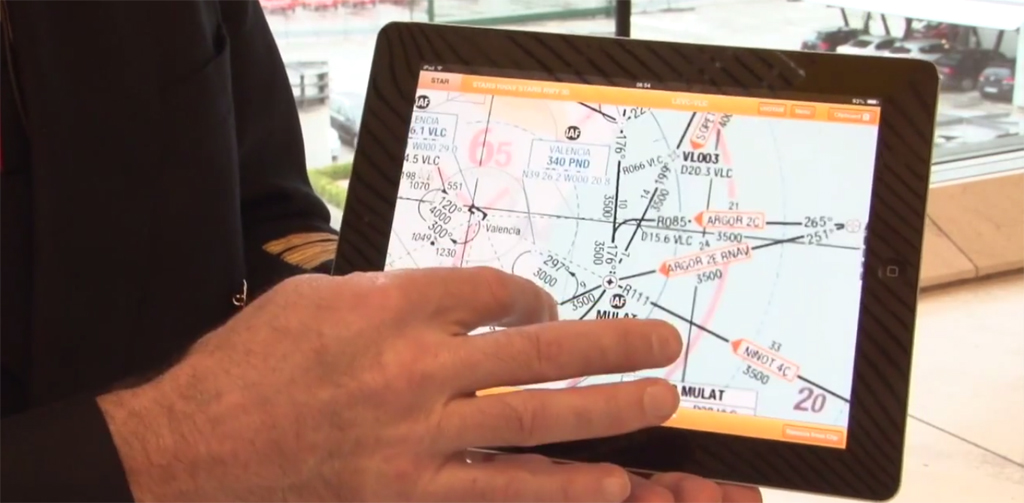
El uso de la tablet como herramienta de trabajo en las compañías españolas está provocando poco menos que una revolución en la productividad: he 74% de los empleados entrevistados por Dynamic Markets por encargo de Panasonic afirmó observar mejoras sustanciales en su productividad utilizando este dispositivo. In fact, de media, los profesionales españoles encuestados estiman que la productividad con el uso de tablets en su día a día ha aumentado en un 28%.
Para elaborar su estudio, Dynamic Markets ha entrevistado a más de 2.300 responsables de IT de distintas compañías y profesionales en empresas con más de 50 empleados en nueve territorios europeos, incluyendo España, United Kingdom, France, Germany, Italia, Russia, Türkiye, Polonia y Benelux.
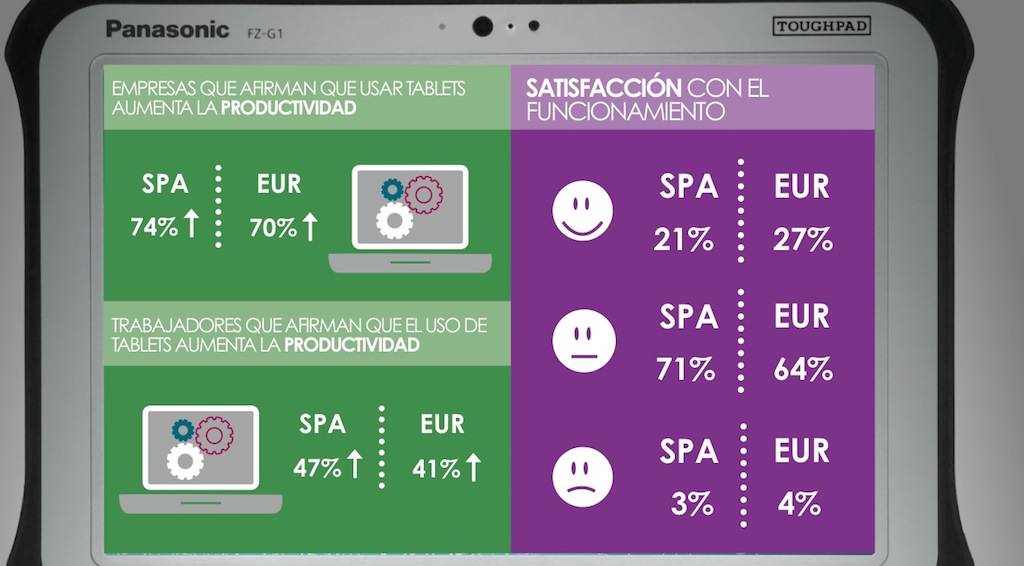 En el análisis de datos obtenidos en los distintos países de Europa encuestados, las compañías más convencidas en que la utilización de tablets mejora la productividad han sido las de Turquía (80%), Russia (79%), Italia (77%) y España (74%).
However, de las empresas que creen que su utilización aumenta la productividad destacan las de Reino Unido, que cifran su incremento en un 44%; Türkiye, with a 42% y Polonia con un 43%. Estos porcentajes se sitúan por encima del 33% del promedio europeo y son sensiblemente superiores al de España, con una media del 28%.
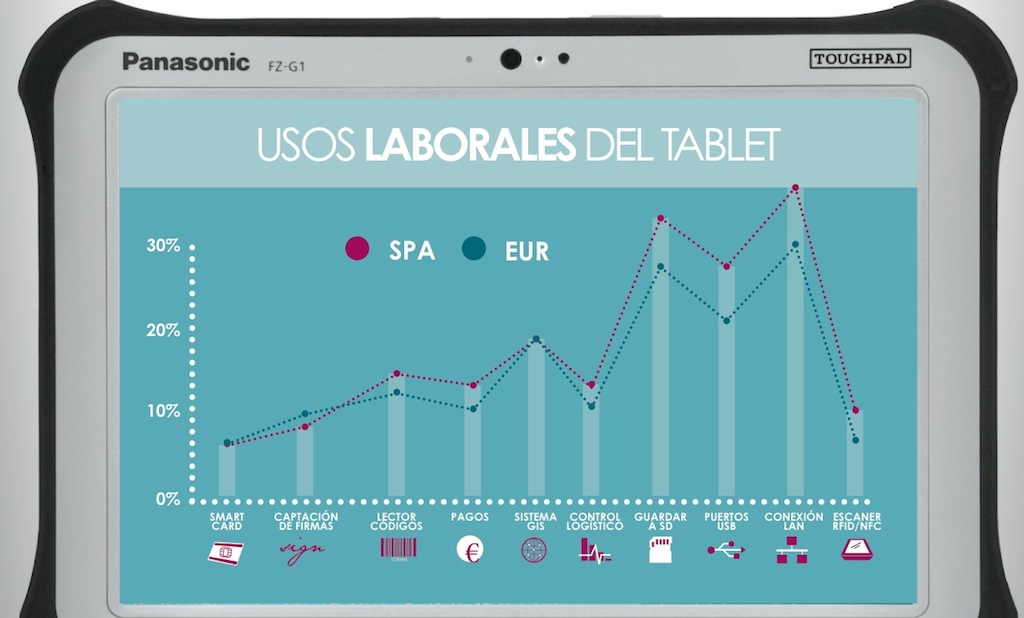
 En cuanto a sectores productivos se refiere, el uso de los tablets también es un elemento cada vez más utilizado. Según los datos del estudio, and 13% de los usuarios españoles encuestados emplea su tablet como lector de código de barras, he 26% lo conecta a escáneres, impresoras o cámaras a través de USB u otros puertos de serie y el 12% lo usa para el seguimiento de las operaciones de logística, while a 18% lo emplea como sistema de información geográfica, he 7% para capturar firmas, he 12% para pagos de clientes, he 6% para la autenticación de smart cards y un 9% para escanear RFID y etiquetas NFC.
El estudio ha identificado también otra tendencia: los empleados en los países que perciben los mayores incrementos de productividad (Italia, Spain, Russia and Türkiye) son también los que utilizan tablets para una mayor gama de especialidades.
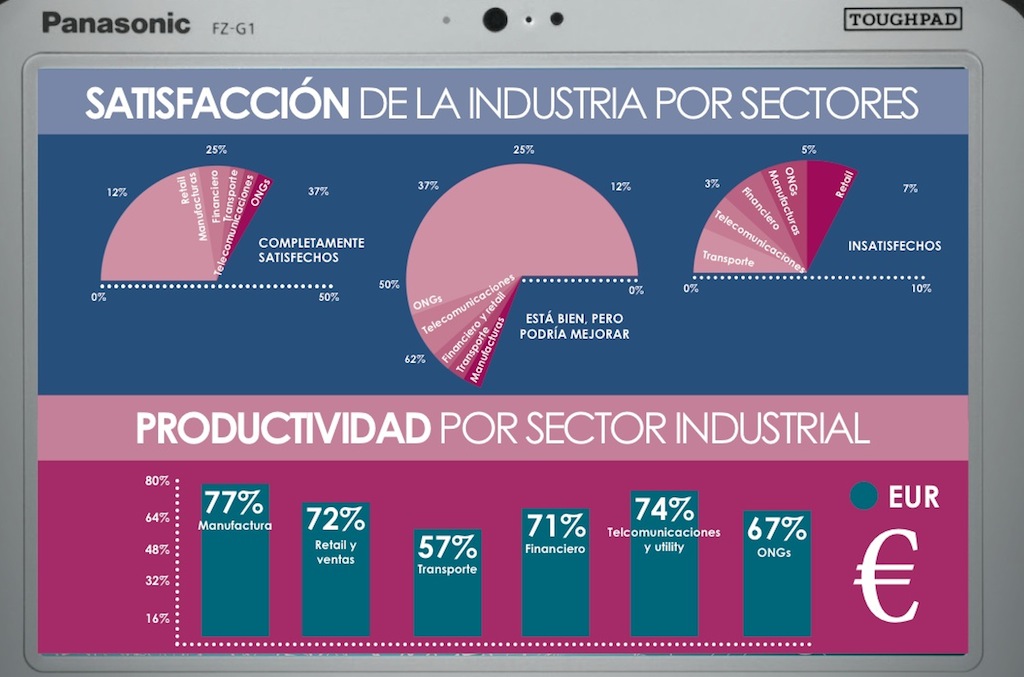
 A pesar de constatar el aumento de la productividad, los profesionales señalan que todavía existe margen de mejora, como refleja un 74% de profesionales españoles encuestados que señala no estar “completamente satisfecho” con el rendimiento de su tablet para todas las actividades relacionadas con su trabajo.
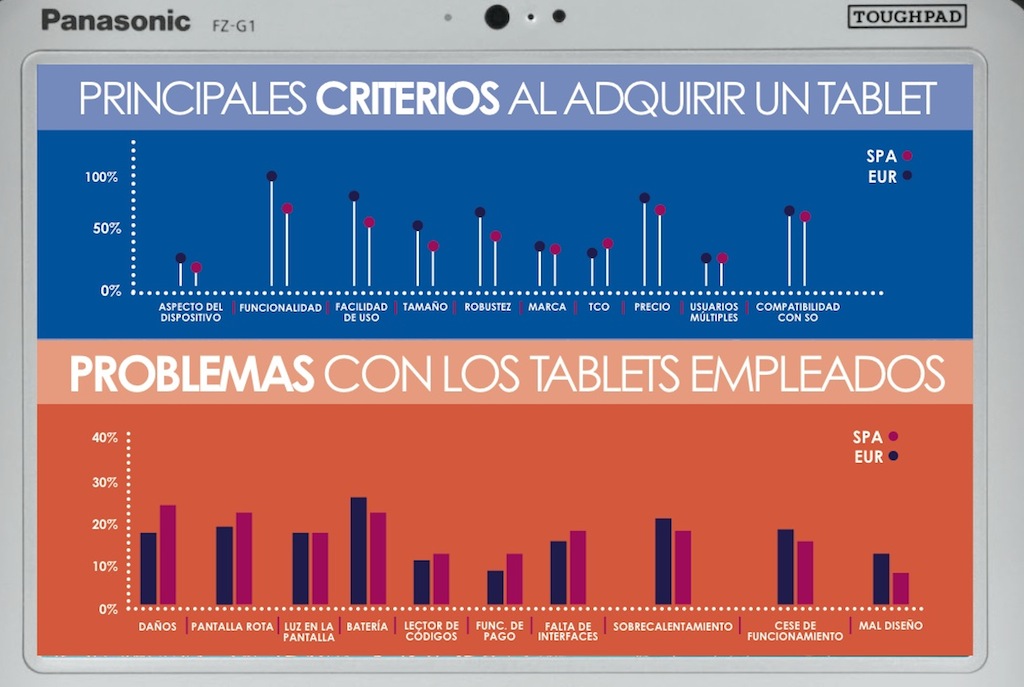
Un punto en común es que todas las compañías encuestadas puntualiza que sus trabajadores han tenido problemas con los tablets en los últimos dos años y un 92% alega problemas causados por un diseño o funcionalidad deficiente. En la lista de problemáticas más comunes con este dispositivo, el estudio destaca daños (24%), pantallas rotas (23%), problemas de batería (22%), mala visibilidad de las pantallas a la luz del día (18%) y falta de interfaces compatibles (18%).
Diseño y funcionalidad
 Para Jan Kaempfer, general manager marketing de Panasonic Computer Product Solutions, los resultados de este estudio “apuntan a una revolución de la productividad como resultado de la implementación del uso de tablets en el lugar de trabajo. However, el mercado de los tablets profesionales es todavía relativamente joven y las opiniones de los usuarios sugieren que la productividad podría mejorar de manera significativa, abordando algunas de las necesidades de diseño y funcionalidad que señalan”.
In this sense, Kaempfer destaca la labor de Panasonic para cubrir estas necesidades “desde la duración de la batería con la introducción de baterías intercambiables en caliente hasta nuestra tecnología de pantallas, que son perfectamente visibles bajo la luz del día. In addition, nuestra capacidad de adaptación de los dispositivos a las necesidades de los clientes mediante dispositivos modulares integrados, como lectores de códigos de barras, puertos específicos, escáneres o cámaras de fotos integradas, nos permite ser actualmente líderes en este mercado”.
Cinco criterios para elegir un tablet profesional
- Funcionalidad (66%).
- Precio (57%)
- Compatibilidad con el sistema operativo (53%).
- Ease of use (51%).
- Robustez (45%).
Did you like this article?
Subscribe to our NEWSLETTER and you won't miss anything.
Related articles
 Intel NUC: Productivity and reliable performance for professional projects
 AED Group adds Panasonic's professional AV solutions to its portfolio
 Panasonic SQE2 y CQE2: nueva generación de pantallas LCD 4K profesionales
 Panasonic expands its offering of professional 4K LCD displays with the EQ2 series
 Los centros educativos españoles adoptan la tecnología 4K de Panasonic
 Philips 272B1G gives professionals productivity, comfort and sustainability
 MCR distributes Panasonic's audiovisual solutions for professional environments
 Aena modernizes the advertising facilities at Spanish airports with Panasonic screens
 Panasonic leads Europe in sales of professional rugged tablets
 Two professional displays and a Panasonic projector, awarded for quality by the AV industry
 More than 200 professionals participate in the Panasonic Visual Experience Roadshow as it passes through Spain
 Panasonic amplía su programa Offset for Life a su gama de pantallas profesionales
 Panasonic amplía su serie 20 de plasmas profesionales Full HD
 Panasonic will exhibit its line of professional LCD displays at Total Media