


The 'Sarcophagus of the Spouses'’ comes to life thanks to 3D videomapping and holographic techniques
Utilizando una pirámide holográfica de tres lados y un sistema de proyección de vídeomapping 3D, apoyado por las soluciones de Panasonic, el Museo de Historia de Bolonia ha recreado la historia de un monumento funerario de más de 2.500 years of history, el Sarcófago de los esposos.
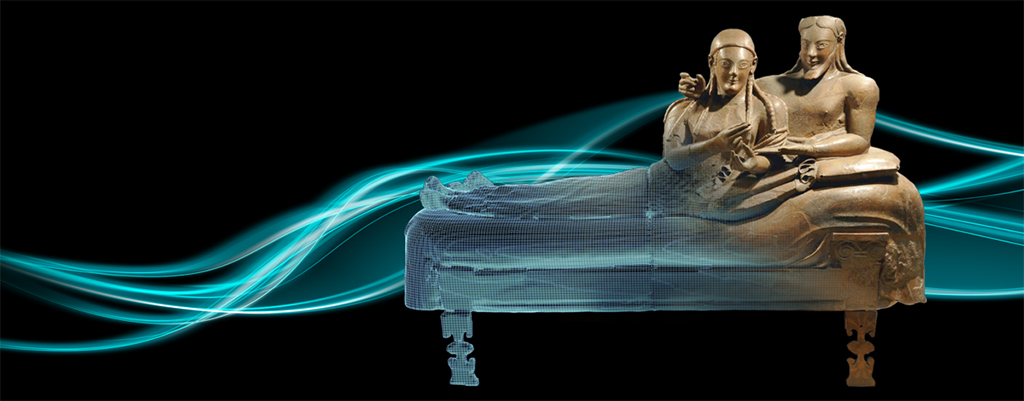
En el Museo de Historia de Bolonia se ha realizado una exposición que. haciendo uso de las técnicas de videomapping 3D, propone una reconstrucción del pasado una mirada retrospectiva a la civilización etrusca, concretamente al año 520 a.C.
Para la muestra ‘El viaje tras la vida. Los etruscos y el más allá entre las obras maestras y la realidad virtual’ (The journey after life. The Etruscans and the afterworld between masterpieces and virtual reality) se ha creado una pirámide holográfica de tres lados del Sarcófago de los esposos con ayuda 10 proyectores láser de Panasonic.
Esta producción, desarrollada por Cineca bajo la supervisión técnica de Franz Fischnaller y la dirección de Giosuè Boetto Cohen y con la producción de Acuson, combina técnicas holográficas, proyecciones de vídeomapping 3D y sonido envolvente para crear un entorno narrativo audiovisual envolvente.
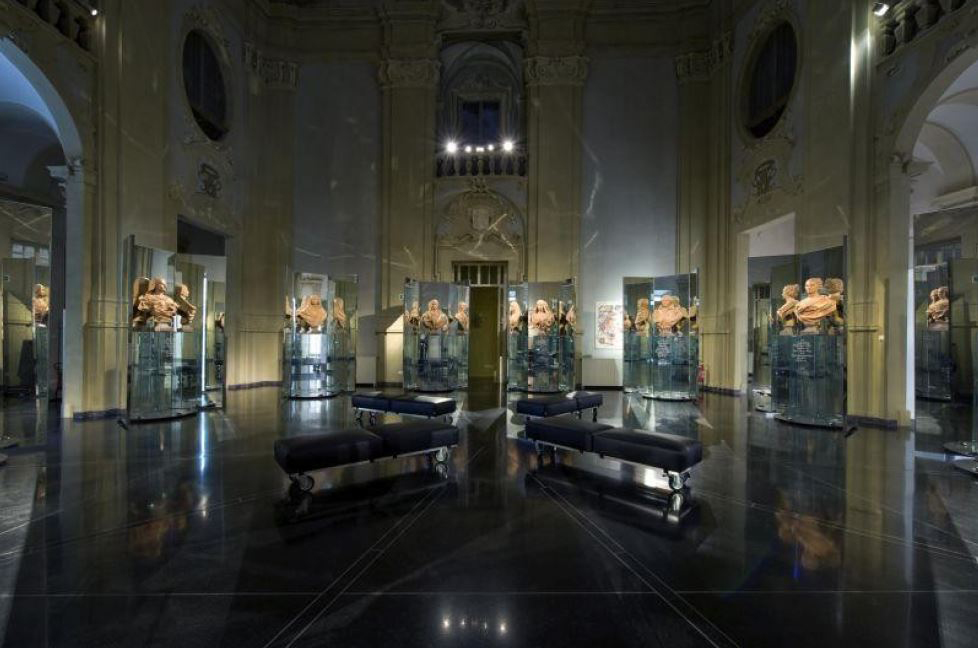
El primer paso fue digitalizar al máximo detalle este monumento funerario de más de 2.500 años de antigüedad y suministrar a Cineca los datos digitales que se precisaban para generar un modelo virtual a tamaño natural en el que se narra la historia del Sarcófago.
“La grabación digital del sarcófago fue una operación compleja solo posible gracias a que la urna pudo retirarse de su vitrina de protección y abrirse. Esta circunstancia hizo posible el descubrimiento y la documentación de nueva información que podrá utilizarse en restauraciones futuras. Para capturar los datos, un grupo de investigadores del Centro de investigación nacional de Italia, la Universidad de Bolonia y la Fundación Bruno Kessler recurrieron a técnicas de fotogrametría y digitalización láser. Dos personas se encargaron principalmente del seguimiento de las tareas de recopilación y procesamiento de los datos.”, explica Antonella Guidazzoli, directora del laboratorio de información visual (VisiT Lab) de Cineca.
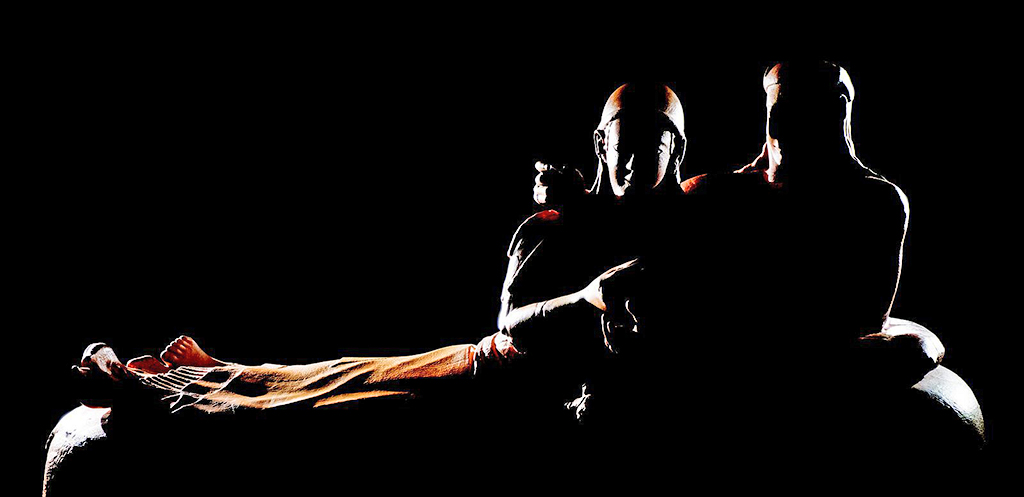
Tras esto, la instalación requería una producción de imágenes 3D a tamaño natural, reduciendo las barreras tecnológicas entre la exposición y los visitantes. Además esta creación debía permitir su transporte, que pudiera reproducirse a otros espacios de exposición.
Videomapping 3D y holografía
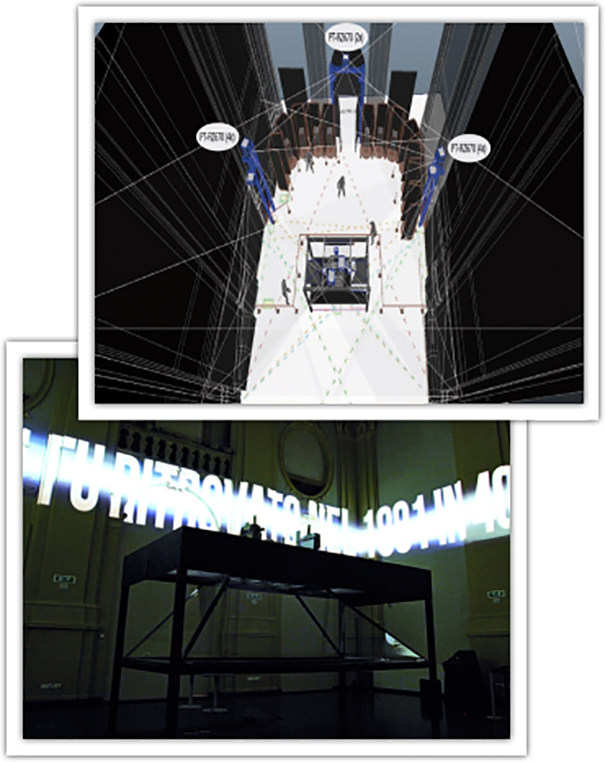 Se decidió utilizar una solución integrada que combina proyección de vídeomapping 3D y holografía. El efecto 3D resultante que envuelve a los visitantes se basa en más de 400 fragmentos encontrados que una vez reconstruidos insuflan vida al Sarcófago de los esposos. Los usuarios se sienten sobrecogidos por la experiencia de encontrarse de repente, al entrar en la sala, en medio de una explosión de cientos de pequeños fragmentos.
“Como la tecnología autoesteroscópica no está suficientemente madura, la instalación utiliza una pirámide holográfica de tres lados y un sistema de proyección de vídeomapping 3D para cubrir un área total de 360 m2. El efecto es creado por una matriz de proyectores de Panasonic que, en conjunto, generan una imagen con una resolución de 2.000×8.000 píxeles y transmiten vida a una enorme superficie combinada que alcanza los 12 meters high. La proyección en su conjunto se basa en un único cálculo de gran volumen que es subdividido para cada unidad y gestionado por dos servidores sincronizados, cada uno de ellos con seis canales de salida, lo que suma un total de 12 canales”, aclara Gabriele Magagna, de Acuson.
Para este proyecto se utilizaron 10 proyectores Panasonic PT-RZ670 y lentes de zoom 0.8-1:1 gran angular HD. Mediante la combinación de proyección apilada y fusión de bordes, se ha logrado transmitir vida a la reconstrucción estereoscópica de la urna funeraria.
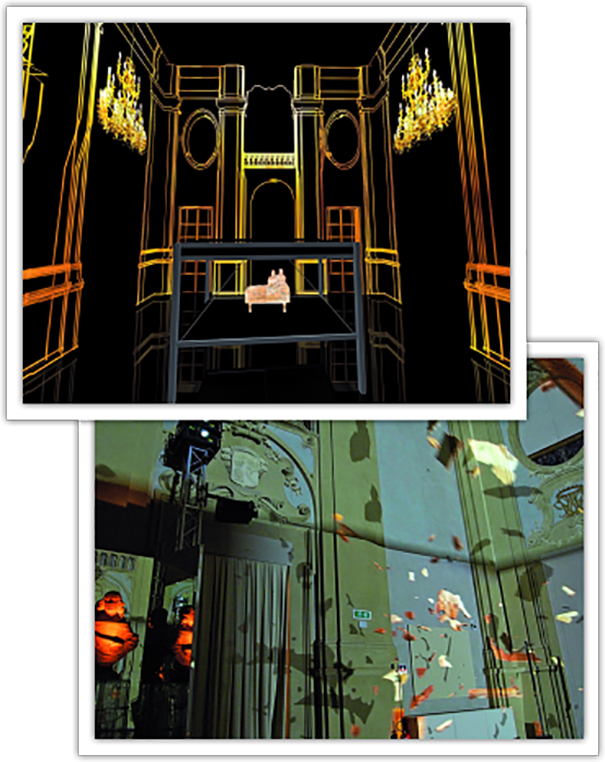 La salida de luz de 6.500 lúmenes ANSI y el bajo coste total de propiedad conseguido, asociado a la ausencia de mantenimiento han sido dos importantes motivos para elegir este modelo y utilizarlos en un entorno de museo. La fuente de luz del proyector tiene una vida certificada de 20.000 hours.
“La elección de proyectores de vídeo láser no fue arbitraria, dadas las ventajas que ofrece como que no es necesario sustituir las lámparas ni los filtros. Para un entorno como el de un museo que recibe un flujo diario constante de cientos de visitantes, reducir el mantenimiento al mínimo representa una importante ventaja, ya que evita interrumpir el servicio. In addition, la salida de luz de estos proyectores no disminuye y no se pierde color con el tiempo. El resultado final son imágenes brillantes de gran nitidez con reproducción de alta resolución”, aclara Magagna.
Did you like this article?
Subscribe to our NEWSLETTER and you won't miss anything.
Related articles
 El espacio de conferencias de Flogistix cobra vida con un videowall Led de Daktronics
 La ciudad de la fantasía de Henan cobra vida con el diseño y gestión de Dante
 The National Museum of Korea comes to life with Christie technology
 La última atracción de Walt Disney World Resort cobra vida con la proyección 4K de Panasonic
 Navidalia vive las tradiciones navideñas en una experiencia inmersiva que cobra vida con Panasonic
 The animated short film ‘Dawit’ comes to life with NEC SpectraView monitors
 El Festival de Montecarlo reconoce una producción de TVE basada en técnicas de videomapping
 La Bruixa d’Or cobra vida gracias a la tecnología de Innovae Vision
 El Renault Megane III cobra vida de la mano del Watchout de Dataton
 El antiguo Pekín cobra vida de la mano de los proyectores de Panasonic
 The Arriaga Theater in Bilbao comes to life thanks to Perla28's mapping techniques
 Blancanieves cobra vida con el Magic Book AR de Cubensis
 Grandma's pottery comes to life thanks to augmented reality
 La fachada del Ayuntamiento de Algeciras cobra vida gracias al video mapping