


La Universidad de Stanford renueva sus centros deportivos con Meyer Sound
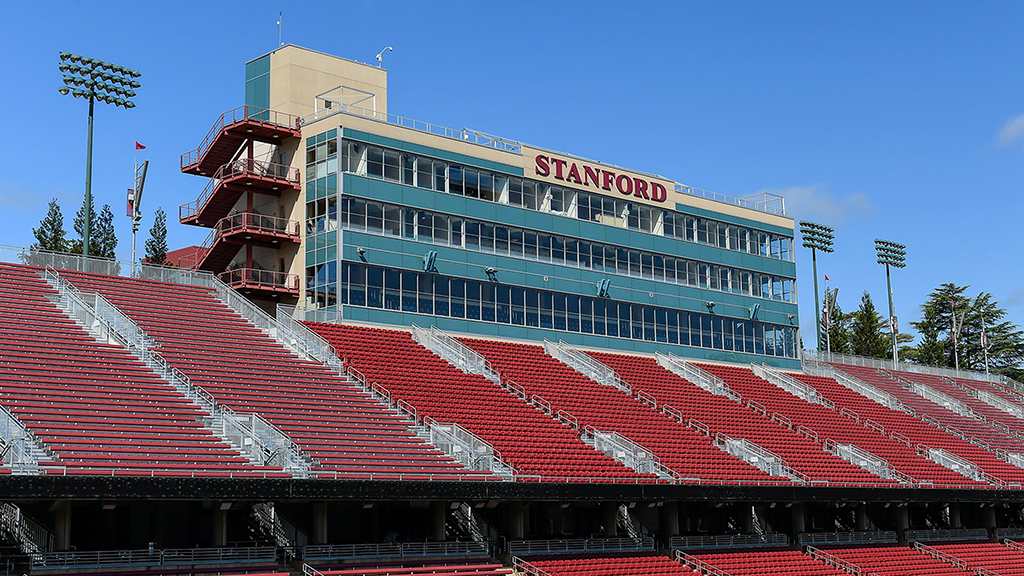
En una primera fase se han actualizado las instalaciones del Stanford Stadium, el Avery Aquatic Center y el Boyd and Jill Smith Family Stadium. A total of 85 altavoces de columna CAL proporcionan potencia e inteligibilidad en estos recintos.

The Universidad de Stanford, en California (EE.UU), ha completado la primera fase de un importante programa de mejora de los sistemas de refuerzo sonoro en sus instalaciones deportivas.
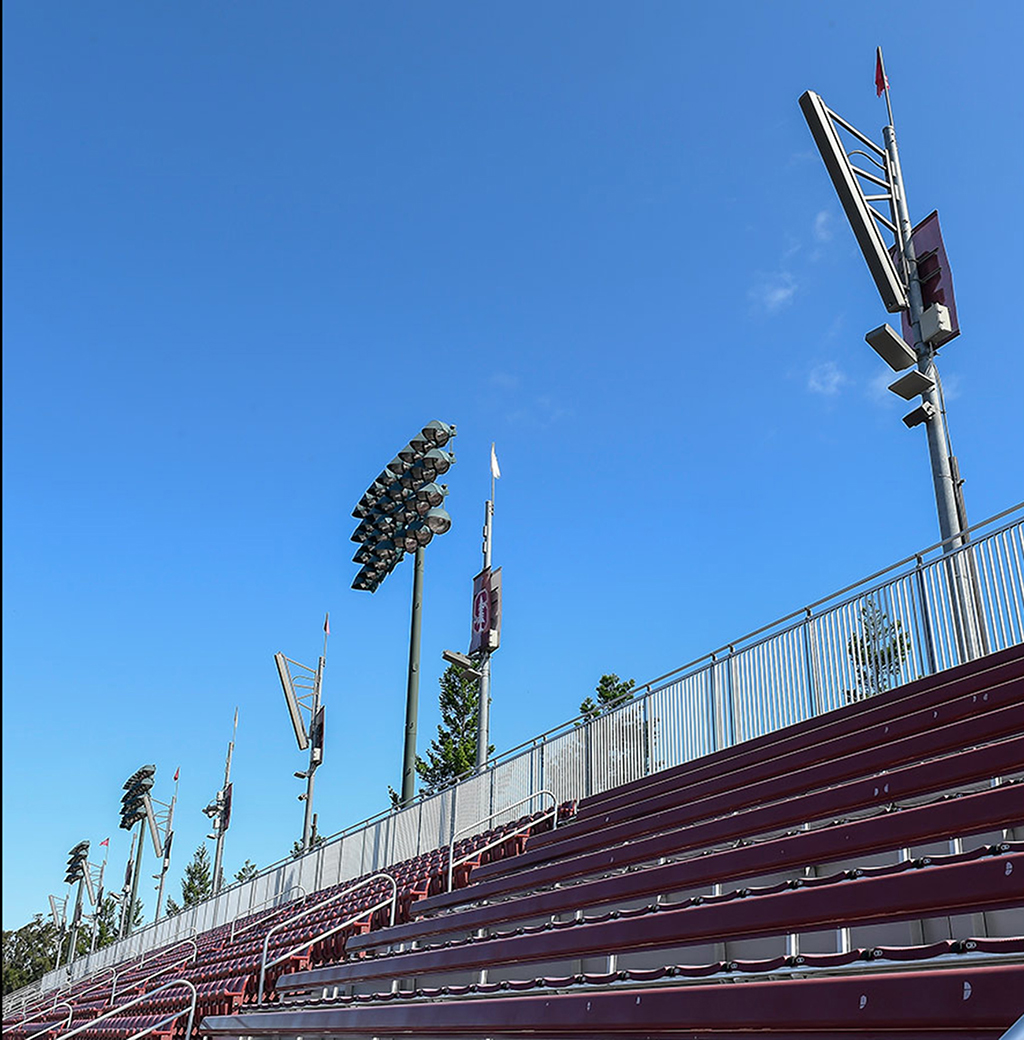 A principios del verano, los sistemas Meyer Sound, basados en altavoces de columna (CAL), estaban instalados en el Stanford Stadium, with capacity for 50.000 personas, el Avery Aquatic Center y el Boyd and Jill Smith Family Stadium, campo de juego para el equipo de softball de la escuela.
El Stanford Stadium y el Avery Aquatic Center fueron diseñados y equipados por Diversified, un proveedor global de soluciones tecnológicas.
Los servicios de diseño de Meyer Sound colaboraron con la consultora WJHW durante la fase de diseño para todas las instalaciones, proporcionando supervisión y guía en los sistemas de estadios de fútbol y centros acuáticos.
El Stanford Stadium, sede del equipo de fútbol americano Cardinal, fue construido en los años 20 como un gigantesco recinto con capacidad para más de 89.000 spectators. In 2006 sería reconstruido como un estadio de dos pisos para ofrecer una experiencia más cercana a los aficionados.
El sistema instalado tras la reconstrucción, basado en altavoces convencionales, se quedó obsoleto y tenía evidentes limitaciones acústicas.
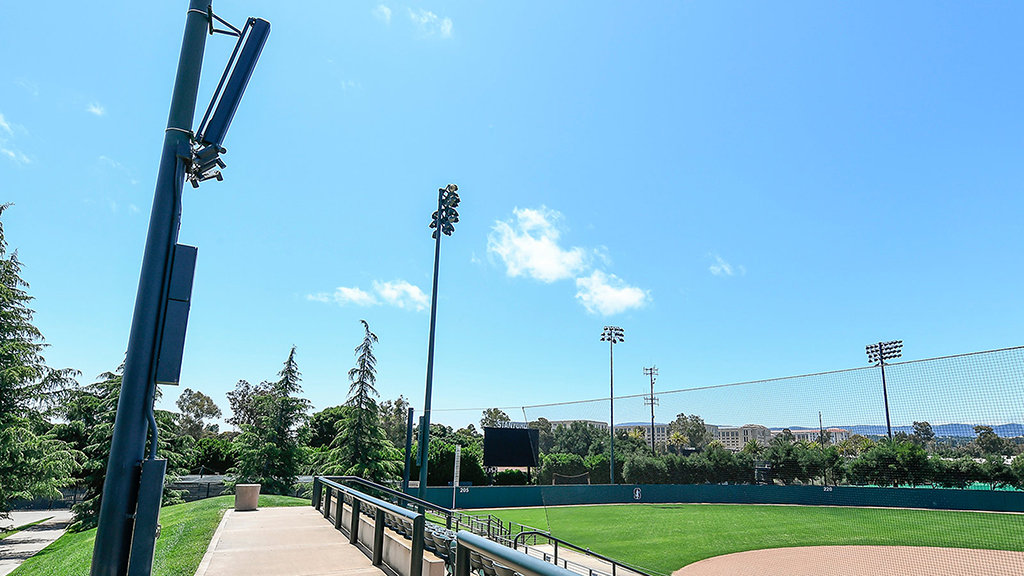 Este año se realizó una actualización del equipo y para su renovación, el equipo de diseño decidió utilizar la última tecnología digital de conformación de haz sonoro incorporada en los altavoces de columna autoamplificados Meyer Sound.
A total of 80 altavoces de columna fueron instalados en el estadio, usando los tres modelos de la serie: CAL 96 (con 96 altavoces procesados y amplificados individualmente), así como los modelos más pequeños CAL 64 y CAL 32.
“La tecnología de dirección de haz nos permite colocar un altavoz de forma que sin ella no sería posible una ubicación vertical óptima. Horizontalmente necesita ser colocado en el lugar correcto, pero en la dimensión vertical se puede usar el direccionamiento del haz para cubrir con éxito el plano de los asientos de una manera que no sería posible con otros métodos”, afirma Peter O’Neil, director de ingeniería de Diversified.
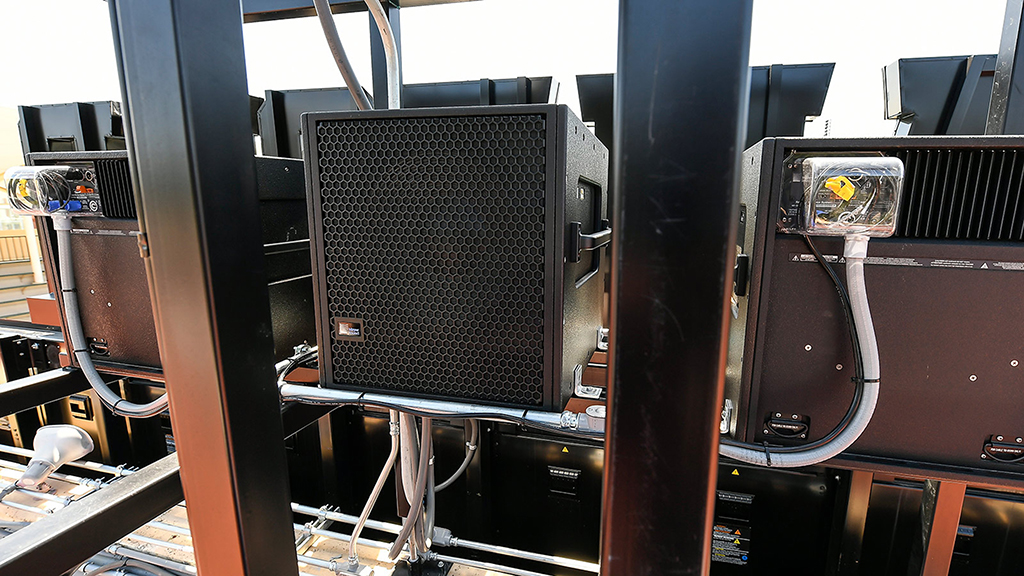 El control de patrón de cobertura evita los problemas que se encuentran a menudo en los sistemas de sonido de los grandes estadios, explica Mark Graham, director asociado de WJHW.
“Un problema con los sistemas distribuidos, cuando se utilizan altavoces de largo alcance, es que, si no se tiene el control vertical de los sistemas de columna Meyer, se puede tener sonido de un lado del estadio filtrándose hacia el otro lado. Y si es lo suficientemente fuerte, degradará la inteligibilidad de la palabra hablada. Pero con los CALs y su patrón vertical estrecho se puede controlar exactamente qué áreas cubrirá cada altavoz y prevenir ese problema”.
Graham también destaca que el perfil delgado de los altavoces de columna permite una cobertura discreta de las zonas problemáticas de las cubiertas superiores, entre las estructuras de iluminación.
“Con las soluciones convencionales en esas áreas se pueden tener problemas horribles. Pero con estos sistemas de columna, simplemente añadimos un pequeño poste, que es bastante barato y discreto desde el punto de vista arquitectónico, y se puede dirigir el sonido hacia esa zona”.

Aunque presentan un perfil delgado, los altavoces de columna ofrecen una gran potencia. De acuerdo con el director de Desarrollo de Negocios de Meyer Sound, John Monitto, “además de distribuir el sonido de una manera uniforme y bien controlada, los CALs también ofrecen un rendimiento máximo muy alto para ofrecer una óptima inteligibilidad por encima del ruido de la multitud”.
A pesar de la sofisticada tecnología digital, O’Neil confía en la fiabilidad a largo plazo del sistema. “Es una solución probada con una base de trabajo en otros estadios al aire libre, incluido el Memorial Stadium de Berkeley, que ha estado en uso durante varios años. Resiste a los elementos y también a los partidos de fútbol donde se necesita toda la potencia”.
Para cubrir áreas de asientos donde no era apropiada una solución de altavoz de columna, el sistema del Stanford Stadium también incorpora 84 altavoces UPJunior y diez UP-4XP.
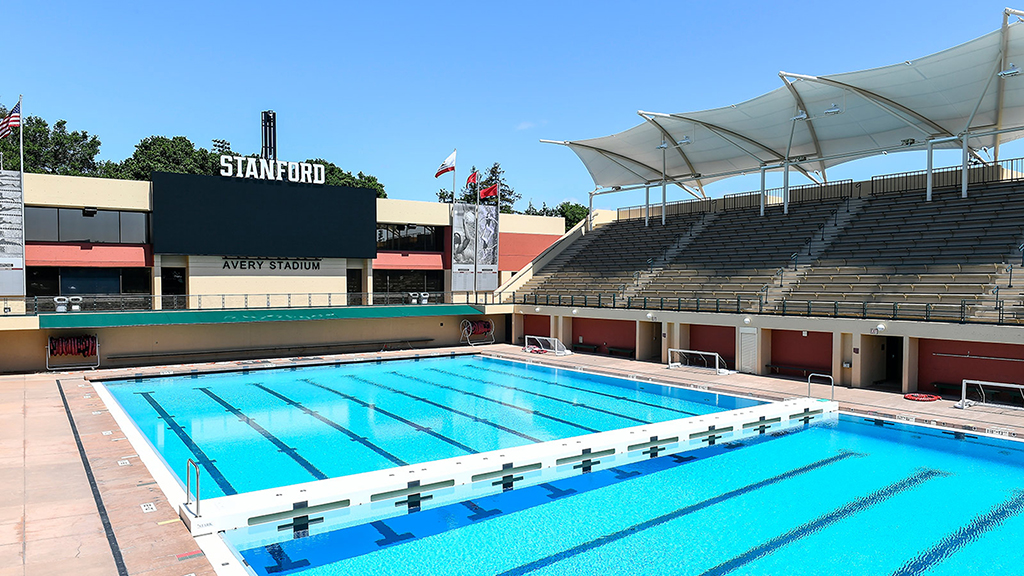
Cerca del Avery Aquatic Center, dos altavoces CAL 96 y un altavoz CAL 64 están centrados sobre el marcador, lo que proporciona una solución de fuente puntual para tribunas con capacidad para 2.480 spectators.
Los sistemas de relleno comprenden nueve altavoces MM-4XP y dos UPJ-1XP. Para eventos, como la natación sincronizada, que requieren música de alta fidelidad y ancho de banda completo, el sistema proporciona graves profundos a través de tres subgraves 750-LFC desplegados en una configuración cardioide.
Boyd and Jill Smith Family Stadium
For your part, en el Boyd and Jill Smith Family Stadium, con una capacidad escalable de 1.500 a 3.500 personas, se han instalado dos CAL 64 junto con cuatro altavoces UPJunior-XP.
“Otra gran ventaja de una solución CAL es que proporciona flexibilidad para manejar espacios ampliables en capacidad”, afirma Monitto. “Si se necesita redistribuir el sonido, se puede simplemente programar otro preset para dirigirlo hacia un patrón de cobertura más ajustado o más amplio que se adapte a la nueva configuración de asientos”.
Otro factor que favorece una solución integral de Meyer Sound fue la probada longevidad del producto. “Varias de las instalaciones al aire libre aquí habían instalado sistemas MSL-3 hace más de 25 años y siguen funcionando bien”, continúa Monitto.
Las futuras fases del programa de actualización de instalaciones incluirán nuevos sistemas Meyer Sound para el Estadio Laird Q. Cagan en Maloney Field (fútbol y lacrosse) y Klein Field en Sunken Diamond (béisbol).
Did you like this article?
Subscribe to our NEWSLETTER and you won't miss anything.
Related articles
 Meyer Sound y la Universidad Estatal de Arizona crean un espacio de sonido inmersivo
 Meyer Sound brings innovative sound to Arena Wien
 New auditorium at Örebro University is equipped with Meyer Sound
 Meyer Sound revoluciona el sonido en el teatro Paramount
 The Filene Center renews its sound infrastructure with Meyer Sound
 Area15 achieves immersive sound system with Meyer Sound
 The Roma Musical Theater in Warsaw is renovated with Meyer Sound systems
 The Adelaide Convention Center renews its sound system with Meyer Sound
 Meyer Sound debuts Spacemap Go with the work of Bill Fontana
 Meyer Sound gives a webinar on its Compass control software
 Mondo Ibérica continues to bring LED technology to sports centers
 Un videowall construido con MicroTiles es utilizado por la universidad de Stanford como herramienta educativa
 Epson renueva su gama de proyectores de entrada 3LCD para pymes y centros educativos
NEC renews its line of projectors designed for companies and educational centers
Epson renueva su gama de proyectores de entrada 3LCD para pymes y centros educativos
NEC renews its line of projectors designed for companies and educational centers