


The convent of Santa Clara recreates Christmas dinner in a 'poetic and sensory' space
'Gastro-poema de Navidad' is an audiovisual show where the sound elements, The smells and the projection on the table itself are the pillars of a journey that seeks to turn a Christmas meal into a dreamlike and fantastic story..
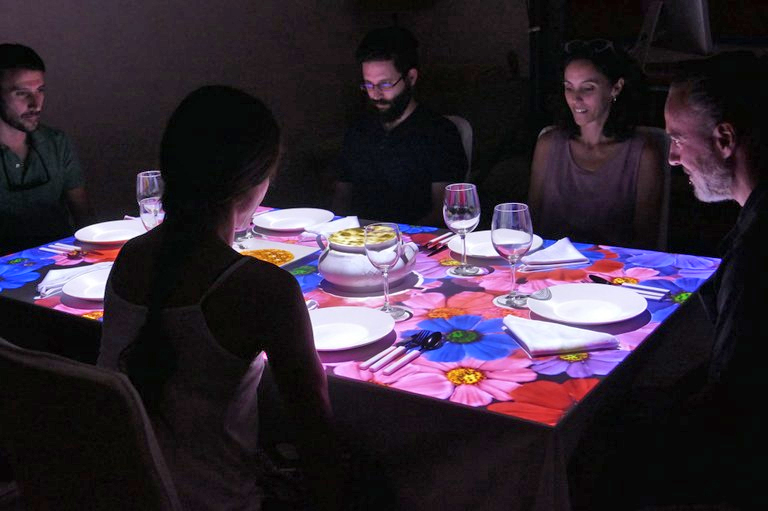
The Santa Clara Space hosts up to 3 January the show Christmas gastro-poem, a sensory project that uses different audiovisual techniques to build a virtual and parallel reality around Christmas.
This sensory initiative is being carried out in the lower Refectory of the old Monastery of Santa Clara and has been carried out by the company The Unmissable, Responsible for other audiovisual projects in heritage spaces in Seville, as Murillo's Children (a montage of images and dance that was performed on the Torre de Don Fadrique for the maestro's centenary).
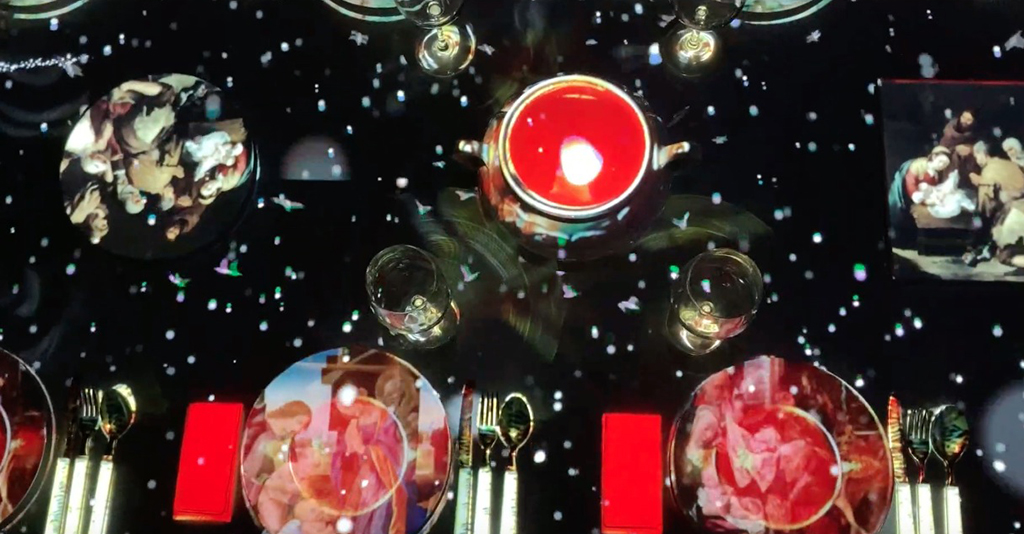
Unlike other jobs that this company has launched, This focuses on a small format where the viewer takes on a greater role.. Designed for family audiences and free access, The assembly has been promoted by the Seville City Council, through the ICAS (Institute of Culture and Arts of Seville), within its Alumbra Christmas programming 2019.
A Christmas meal is recreated on a table set with all the elements of a dinner., “something different”. Some characters, like mischievous spirits, They introduce attendees to a dream world recreated with the iconography of these dates, that is mixed with other images and elements that provide a magical and poetic vision, of a table whose plates, glasses and cutlery breathe, They talk about and show virtual food and gastronomic illusions aimed at the senses..
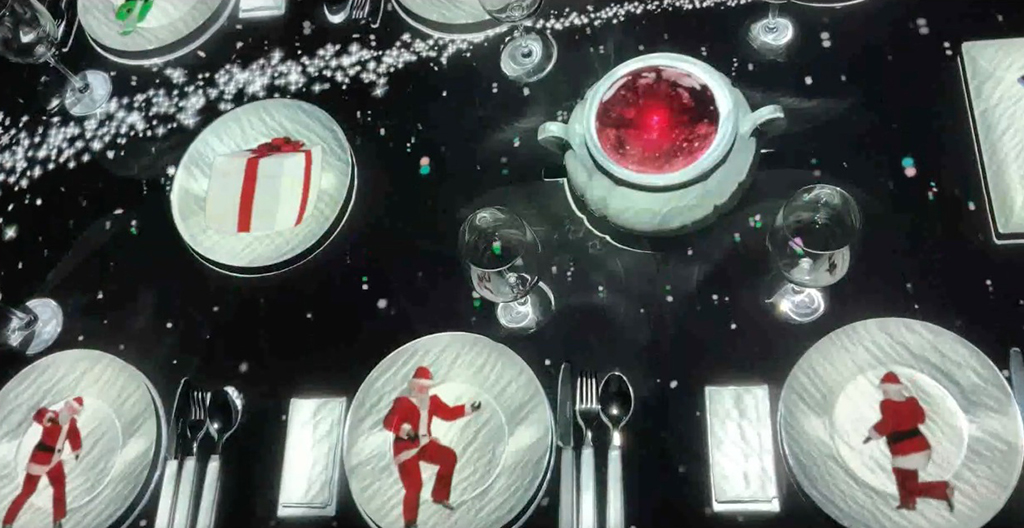
According to José María Roca, project manager, The idea was to “turn an everyday event like food, although at Christmas it is not so much, into something extraordinary and suggestive”.
Each function is prepared to seat 64 spectators at eight tables contemplating works alluding to Christmas on their plate. While this original lunch is produced, Mozart pieces sound, traditional New Year's waltzes and some more abstract melodies.
“It is a work of sensations, fun and poetic, which returns the convent's Refectory to its original function, that of being the space for lunch, since that was where the Poor Clare nuns ate, although on this occasion we are not talking about physical food but rather one for the spirit.”, Rock explains.
The company claims to have enjoyed this innovative project because the closeness that the viewer has with the images, the distance between the eye and the table, has forced them to look for a finer line: “The audience feels more like a protagonist because it is on their own plate where an action takes place that is not diluted as happens in large format productions”, concludes Roca.
Did you like this article?
Subscribe to our NEWSLETTER and you won't miss anything.
Related articles
 Christie illuminates Planet Ice Bristol Christmas experience with laser projection
 MainRo club redefines the concept of ‘dinner and a show’ with RCF audio
 Christmas projection on store facades to boost commerce
 Riedel provides flexible communications to the historic Jacobin convent and its convention center
 Audac presents the smallest ceiling speaker in its Cena series
 Portuguese winery Cálem creates an immersive and sensory space to explore the history of wine
 Trasmediterránea celebrates its centenary with a clear commitment to dynamic digital communication
 Sono performs a rear projection of 30.000 lumens for the charity dinner 'Somos Uno'
 Leyard and Planar showed at ISE 2017 a clear commitment to the European market
 Christie Boxer projectors provided light and color to the convent of San Esteban in Salamanca
Eikonos provided the audiovisual equipment for the traditional Planeta Prize literary dinner 2015
Christie Boxer projectors provided light and color to the convent of San Esteban in Salamanca
Eikonos provided the audiovisual equipment for the traditional Planeta Prize literary dinner 2015
 Sono contributes AV technology and services to the PortAventura Foundation Solidarity Dinner
 Disney floods New York shop windows in a Barneys Christmas digital signage campaign
 Clara and InStyle magazines incorporate interactive audiovisual content