


The National Museum of Qatar incorporates immersive audio into its futuristic design
To accompany the exhibitions, the Spat Revolution software has been used., next to Meyer Sound speakers.
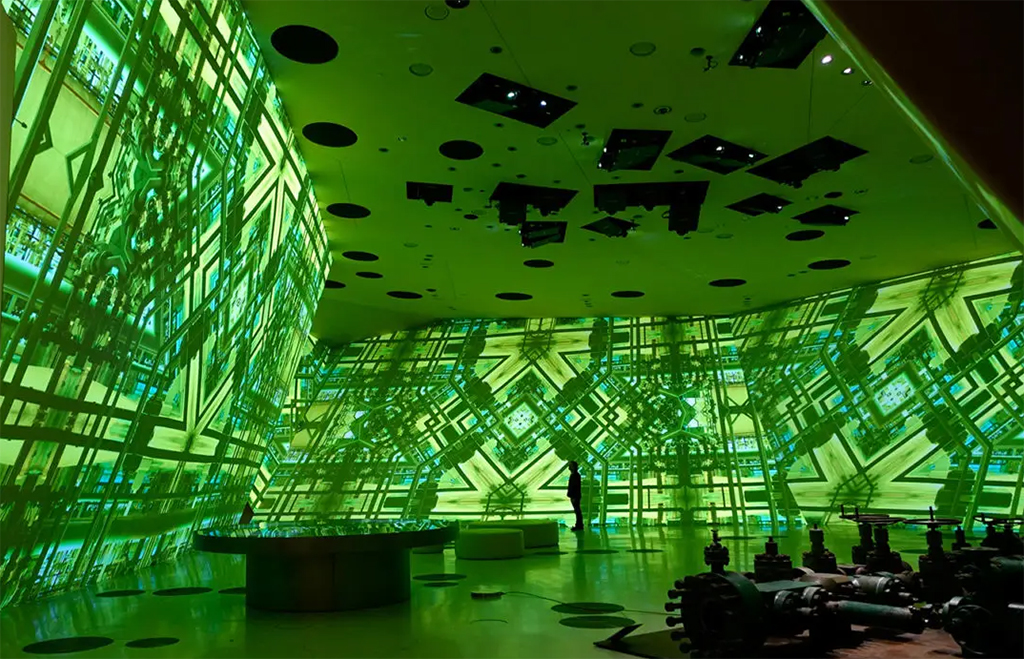
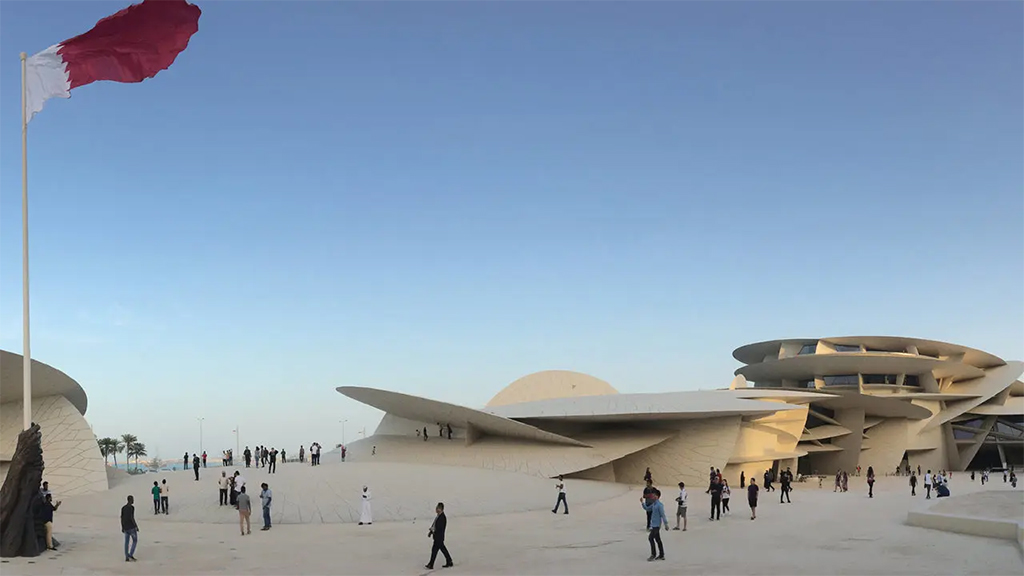
He National Museum of Qatar stands out for its modernist exterior design and 539 discs imitate the shape of a 'desert rose'. A project carried out by the architect Jean Nouvel, and whose interior houses more than 26.200 square meters of exhibition, with multiple interconnected galleries where spectacular video walls have been installed that are accompanied by immersive and multidimensional audio created with Flux Spat Revolution.
The objective of these exhibitions is to explain the evolution of Qatar from its geological history to its cosmopolitan present.. Apart from the permanent exhibitions, also houses temporary rooms, an auditorium, we went, a research center, workshops, shops and cafes.
The innovative immersive audio design has been realized by Idea and sound, based in Basel (Swiss), a pioneering multimedia agency acclaimed for its approach to integrating sound scenography with audio design.
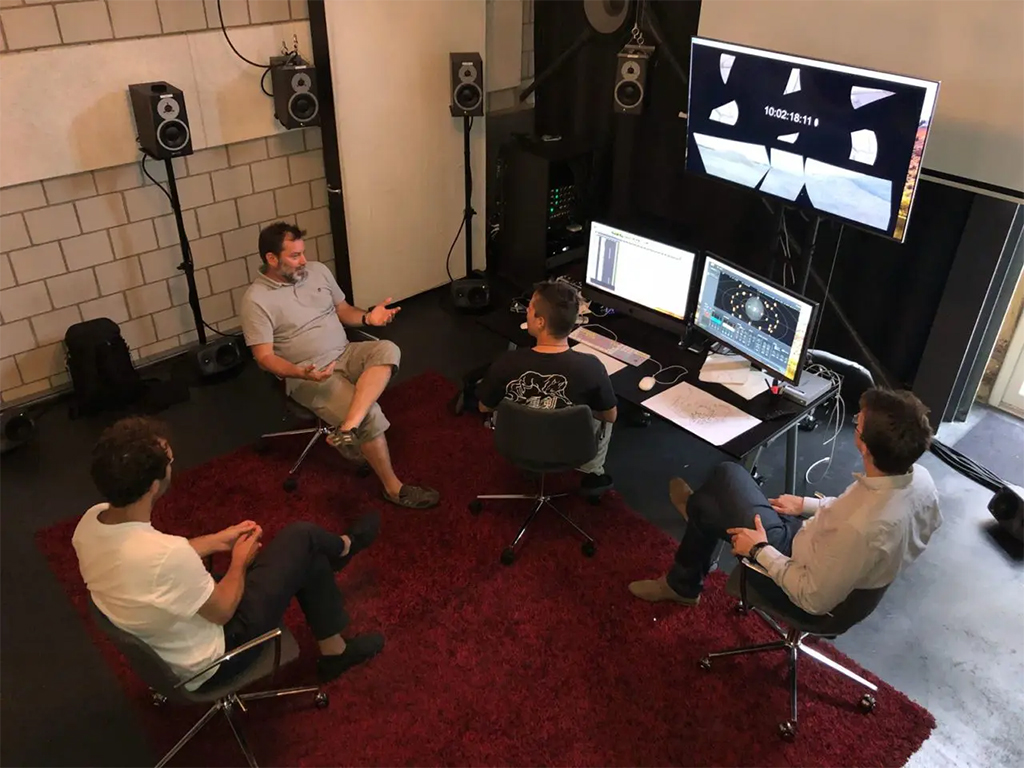
The company has been working on immersive audio for more than 15 years and, as the founder of the company explains, Ramon De Marco, The Qatar project has been unique on many levels.
“The museum itself is a very large and unusual space, and each of the galleries has its own architectural and acoustic character. It has its own theme, with different video presentations and, of course, different audios that accompany it, each one created by different composers and sound designers”.
With multi-channel sound and the essential aspect of the presentation of each gallery, The complexities of producing and mixing multiple audio channels for each space was just the beginning.
“We specify 64 channels for each gallery, almost 700 speakers in total”, explains set designer and audio designer Daniel Teige. Meyer Sound provided the speakers for the project, that was mixed with Spat Revolution.
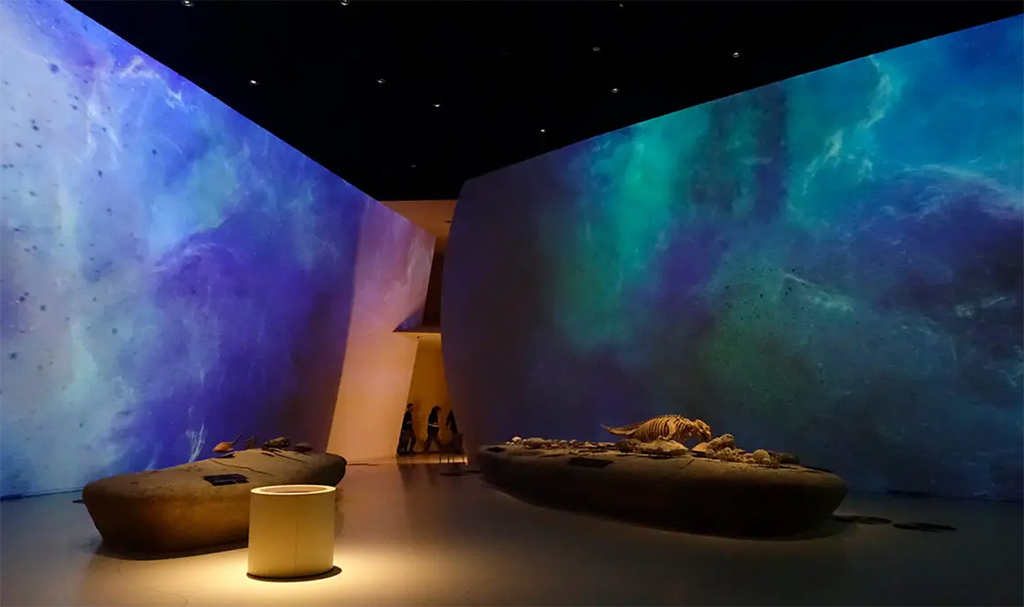
Speaker placement was also an issue, DeMarco adds.. “The architects insisted that they did not want to see any speakers. Originally they wanted speakers only in the ceiling, that had some 20 meters high. Achieving any type of directionality would have been practically impossible and, finally, It was decided to place some speakers at the bottom of the walls, where we had about eight centimeters of free space. Meyer Sound had a compact speaker, the UP4slim, that we were able to implement in that limited space”.
Creating an immersive audio experience for even a single space can be a challenge, but creating multiple environments for contiguous spaces presents great complexity.
“Much of sound scenography tries to understand spaces and how sound behaves in a space.”. Con Spat, We were able to create a concept on how to handle the sound and adapt it to the theme of each gallery. We compared several immersive software programs and Spat was the most intuitive, as well as the one that provided the best sound quality. It is much more than a surround panorama: is a room simulation tool that offers many opportunities to choose different algorithms”.
In addition to the sound problems of the overlapping of the adjacent galleries, De Marco points out the great diversity of the project as another challenge.
“We work with each of the composers to create style guides, determine what sounds they would use and how everything would be set up. Most composers had more experience composing for television documentaries and were not necessarily used to creating for multi-channel immersive environments.. We worked with them not only in terms of what kind of sounds they would use, but also the material they would deliver, so we could adapt it to mixtures of 50 o 60 canales. Instead of receiving one or two WAV files, we got 50 o 60 files to organize them in a space”.
Composer Stratis Skandalakis has a long history of creating immersive compositions for exhibitions. He has traveled around the world to collect field recordings of his work. He worked with a wide range of composers and circumstances, mixing each of the projects using Spat Revolution.
“It was quite challenging at times. Some of the composers had no prior experience with multichannel mixing and were not used to having, For example, where to place a sound in a 360º space. I often worked with a director to my left and a sound designer to my right., and I was dealing with a very complex mix with perhaps 50 canales, which explained why additional sound design takes time”.
Skandalakis notes that working with Spat is key to addressing the wide range of materials the team had to work with..
“It was the first time for me to work with multiple formats at the same time. With Spat we could use stereo, mono, ambisonic, 5.1 and combine them all. It was a great tool for sound design and special effects.. You can make very fast movements, play with object based blending”.
Staging and designing the systems in advance was key to making it work, and much of the acoustic planning and modeling began at the Idee und Klang studios in Basel.
Working with Spat Revolution saved them time and allowed them to create the initial sound design quickly and efficiently before taking it to the actual galleries for a perfect fit..
For De Marco and the Idee und Klang team, This was his first experience working with Spat Revolution.
“We compared several different immersive software programs and Spat was the most intuitive, in addition to the one that offered the best quality. It is much more than a panoramic surround, “It is a room simulation tool that offers many opportunities to choose different algorithms”.
Did you like this article?
Subscribe to our NEWSLETTER and you won't miss anything.
Related articles
 London's National Maritime Museum upgrades its audio systems with Wharfedale Pro
 TiMax SoundHub brings immersive audio to the Polish History Museum
 Martin Audio Provides Sound for Futuristic Sandbox VR Experience
 APG adds binaural capability to its Ness immersive audio software
 Arthur Holm monitors adapt to the luxurious design of the Qatar Court
 Meyer Sound Brings Immersive Audio to Shanghai Astronomy Museum Programs
 The Aquarium of St. Louis unites immersive visual design and entertainment to welcome its visitors
 Harman Solutions Bring Immersive Audio to the Art Aquarium Museum
 The National Museum of Qatar installs 123 square meters with Narrow Pixel Pitch design by Daktronics
 Sono brings AV engineering and sensory experience with a Spanish seal to the National Museum of Qatar
 Dnp incorporates a more innovative design and easier installation to its Supernova STW line
 Samsung takes to IFA 2016 a futuristic and immersive gaming environment with its new curved monitors
 The Picasso Museum in Malaga incorporates wireless microphones from Audio-Technica
 The National Assembly of Kuwait chooses Arthur Holm Desktop screens for their design and performance