


Led Screens: the importance of content
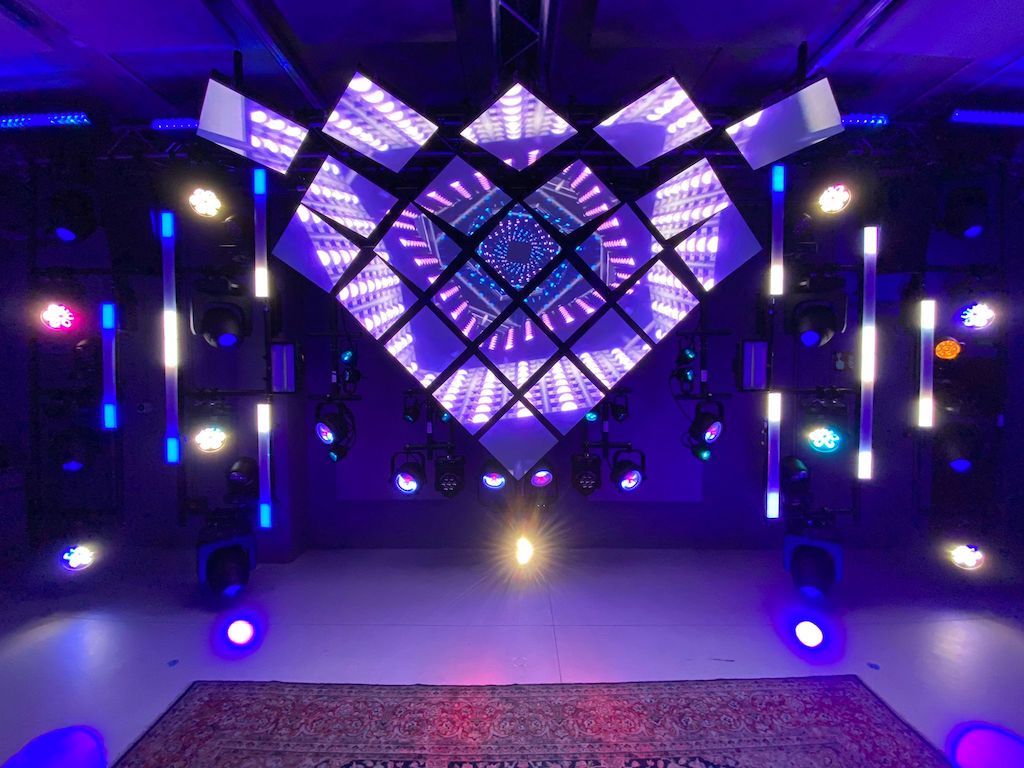
The use of Led screens is increasingly popular and, but still, It is essential to pay attention to how the content is viewed in the same, explains Carles Forné, visual media product manager SeaSound, who advocates for content created pixel by pixel to achieve a 'WOW' effect.
Creating quality content is essential for success in today's digital age. The use of Led screens is increasingly popular and, but still, It is essential to pay attention to how the content is viewed in the same. There is no better way than, to achieve a effect WOW on these screens, use a content created pixel by pixel.
Our daily life is an accumulation of stimuli; we get up and look at our cell phone; We start the car with the navigator to go to work and, once we arrived, we turn on the computer. We have become accustomed very quickly to a graphic and virtual environment, to obtain information through a screen.
Much of the 'ease' we feel when using a simple screen is, without a doubt, by how the information is presented to us and its graphic environment. That the letters are not too large and other important information invades us; that the buttons have the right size to interact with them, since they are annoying if they are oversized; that the images are seen with definition and detail...
Here comes the important part, since most people unconsciously choose. Choosing one application or another for the simple fact of “I like it more” and “they do more or less the same thing… but I prefer this one”.
It is in this aspect that our work as audiovisual professionals is fundamental.: transmit information so that when viewers receive it they say “like” or even a simple WOW.
The use of Led screens in any space is becoming more common every day, from concerts, press and advice rooms, passing through retail and hotels, airports and stations. The great modular versatility of these visual systems offers a range of possibilities in terms of sizes, resolutions and applications.
Precisely, This modularity raises a question: the resolution. Usually, 'standard' contents are FHD (1.920×1.080p) o UDH (3.860×2.160p) and they work perfectly for monitors with this type of resolutions. The problem arises when it comes to an FHD video that you want to display on a 780x780p LED screen.. Neither the resolution nor the appearance (16:9) agree.
What are the solutions? The most used tool is the famous climber, as if it were the salvation of everything, which leads to its abusive use.
This tool ccompresses or enlarges pixels taking into account that if, For example, We need to put a 1,000p wide video on a 500p wide LED screen, the scaler is going to 'throw away' half of the pixels, losing image definition.
When the scale factor is very large, the image will be affected. That's why the climber works when we have to vary very little., having a very low scale factor.
An even better solution is to crop the image, show the 500p of the content that interests us, so the screen is responsible for showing a quality image, even if it's only a part. But, without a doubt, The optimal solution is to create content pixel by pixel, taking as reference the resolution of the Led screen on which it will be displayed.
Creating content pixel by pixel means that content must be the exact resolution of the screen to maximize image quality, as well as ensuring that every detail is clearly seen. Besides, when creating content this way, It is ensured that it adapts perfectly to the specifications of the screen, avoiding problems such as distortion or stretching of the image in favor of its sharpness.
When a viewer looks at a screen with content that is not well adjusted to its resolution, probably because scaling was used too much, He doesn't like what he sees and won't pay more attention than necessary..
Despite making all the possible investment in a Led screen that meets the best specifications on the market, if the content is displayed incorrectly, nothing we do will help.
An example of this was an incredible video of a starry night in the middle of the mountains., with spectacular image quality and 4K resolution (4.096×2.160p). The problem came when we wanted to scale to an 800p wide screen…
The photographer was stunned to see that a third of the stars had disappeared, and the stars that had the most pixels were just dots.. The entire investment to take the photograph and the purchase of an LED screen was forgotten when it showed content that was not what the author wanted to express and, consequently, The viewer did not experience that sensation either. WOW that did exist in the original creation.
Content quality is essential to achieve the effect WOW desired on a Led screen. The entire investment made may have a return below expectations simply because the content is poorly displayed.. Its pixel-by-pixel creation and adaptation to screen specifications are essential to guarantee maximum image quality.
Carles Forné
Visual Media Product Manager SeaSound

¿Te gustó este artículo?
Subscribe to our NEWSLETTER and you won't miss anything.