


AV and broadcast: a common future

In this Tribune, Mike Blackman, executive director of WHEREAS, gives his opinion on the convergence of broadcast and AV, una tendencia creciente en tanto que la tecnología broadcast y la creación de contenidos se vuelve cada vez más importante para el mercado AV Pro y de integración de sistemas.
El mercado del broadcast, piedra angular de la industria de los medios de comunicación y el entretenimiento, ha experimentado notables transformaciones a lo largo de los años. Aunque no cabe duda de que mantiene su posición, cada vez es mayor la demanda de aplicaciones de broadcast en los proyectos audiovisuales, lo que puede atribuirse a varios factores, como la evolución de la tecnología y los hábitos de consumo de medios, inter alia.
An ISE, nos enfrentamos al reto de incorporar más contenidos y funciones que muestren cómo estas tecnologías pueden trabajar juntas.
Creciente demanda
Los avances tecnológicos han hecho más accesibles y asequibles las tecnologías profesionales de broadcast y creación de contenidos, como cámaras, microphones, software de producción y procesamiento de vídeo, lo que ha propiciado un crecimiento de la producción y distribución de contenidos de alta calidad. In turn, las expectativas de los consumidores están en su punto más alto, con una demanda cada vez mayor de vídeo y audio de alta calidad, por lo que los proyectos audiovisuales deben dar prioridad a la calidad broadcast para garantizar que cumplen esas expectativas.
También vivimos en la era digital, en la que las plataformas de streaming están en su apogeo, lo que crea una demanda masiva de contenidos en directo y pregrabados. Los proyectos audiovisuales necesitan cada vez más capacidades broadcast para producir y distribuir contenidos a través de estas plataformas y llegar a una audiencia global.
Un buen ejemplo de ello es el Talent & Knowledge Congress que se celebró el año pasado en Barcelona, un foro internacional para la gestión del talento y el conocimiento, en el que estaba previsto que me anunciaran, inter alia, ganador de sus Premios al Talento. However, me habían dado cita para hablar en otra conferencia a más de 7.000 kilómetros de distancia, en Omán. Gracias a la avanzada tecnología broadcast y con la ayuda de Hypervsn, exhibidor en el ISE, pude asistir al acto, retransmitido en directo holográficamente en 3D, y recoger mi premio “en persona”. Fue realmente impactante, y la gente se quedó alucinada con la tecnología en tiempo real y su interactividad.
 La industria AV también ha experimentado un aumento de la demanda de servicios de retransmisión de eventos en directo, like concerts, acontecimientos deportivos, conferencias y ferias comerciales. Estos eventos suelen requerir sofisticadas configuraciones audiovisuales para captar y transmitir contenidos de alta calidad a audiencias presenciales y remotas a gran escala.
Tampoco podemos olvidarnos de las presentaciones y conferencias corporativas. La llegada de la pandemia impulsó a empresas, centros educativos y otros tipos de organizaciones a acelerar su transformación digital y operar más en el ámbito online. Reuniones de negocios, conferences, product launches, charlas, actuaciones y otros eventos migraron a Internet, y muchos de ellos se pregrabaron y reutilizaron, lo que aumentó las responsabilidades de los equipos de audiovisuales.
ISE presta servicio a varios mercados verticales de usuarios finales, muchos de los cuales buscan ahora producir sus propios contenidos de vídeo de calidad broadcast para uso interno o externo. La producción y distribución de contenidos, que en un principio se utilizaba sobre todo en el sector de los medios de comunicación y el entretenimiento, se ha extendido a un número cada vez mayor de sectores verticales en los últimos años. El mayor despliegue de tecnologías broadcast en los entornos educational, hostelero y empresarial representa un cambio significativo en la forma en que estos sectores comunican, captan y difunden contenidos. Esta transformación está impulsada por la necesidad de una communication, un compromiso y una difusión de la información eficaces.
 Adopción de IP
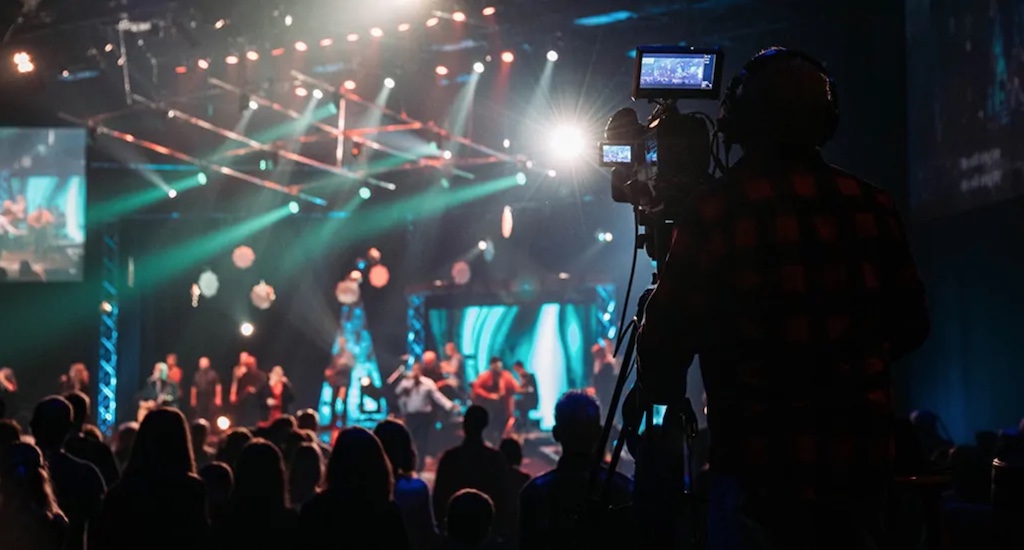
La adopción de la tecnología IP también ha contribuido a acortar distancias entre los sistemas audiovisuales y de difusión al ofrecer una infraestructura común, flexible y rentable. Nowadays, casi todos los dispositivos audiovisuales están conectados a una red IP. Los sistemas audiovisuales basados en IP ofrecen mayor escalabilidad que las soluciones audiovisuales analógicas tradicionales. Con IP, es más fácil añadir nuevos dispositivos, ampliar la capacidad de la red y adaptarse a los cambiantes requisitos audiovisuales.
Besides, la tecnología IP ha revolucionado la forma de distribuir y transmitir contenidos audiovisuales: las redes también pueden priorizar el tráfico audiovisual para garantizar que los flujos de audio y vídeo reciban el ancho de banda necesario y una latencia baja, lo que resulta crucial para mantener una experiencia audiovisual de alta calidad.
A medida que aumente la adopción de IP, the colaboración y la integración entre el AV y el broadcast serán aún más fluidas, lo que mejorará aún más las capacidades y el alcance de ambos sectores.
Y, of course, no puedo despedirme sin instarles a que visiten WHEREAS 2024 y vean y experimenten algunas de estas tecnologías en persona.
Mike Blackman
Director ejecutivo de WHEREAS

Did you like this article?
Subscribe to our NEWSLETTER and you won't miss anything.
Related articles
 WHEREAS 2026 will twin ProAV and broadcast in its new Spark event
 Next generation AV: forging the future with the ISE Hackathon
 “LaON Technology tiene el primer intercom inalámbrico 5G del mercado”, David Lois, de Broadcast Solutions
 Canon is committed as much to broadcast and cinema as it is to business and integration
 Philips descubre en ISE 2024 el futuro de la tecnología de visualización
 SPC For Business marks the future of videoconferencing at ISE with Yealink Smartvision 40
 Hypervsn shows the future of interactive AV with the SmartV digital avatar
 ISE Live & Online is organized around innovation and the future of the AV industry
 BIT Broadcast 2014 will offer a 360º broadcast and AV technological and business proposal
 Expertos del sector audiovisual debatirán sobre su presente y futuro en Broadcast IT Experience
 The University of Tokyo develops a system that turns ordinary paper into a display
 Soluciones de ImaginArt en Broadcast
Albiral presenta su nueva marca Pixtron Broadcast en Broadcast IT 2011
Soluciones de ImaginArt en Broadcast
Albiral presenta su nueva marca Pixtron Broadcast en Broadcast IT 2011
 ¿Alianza entre Samsung y Sony para impulsar un estándar común en 3D?