


The Royal Opera House improves its audio conversion with Prism Sound
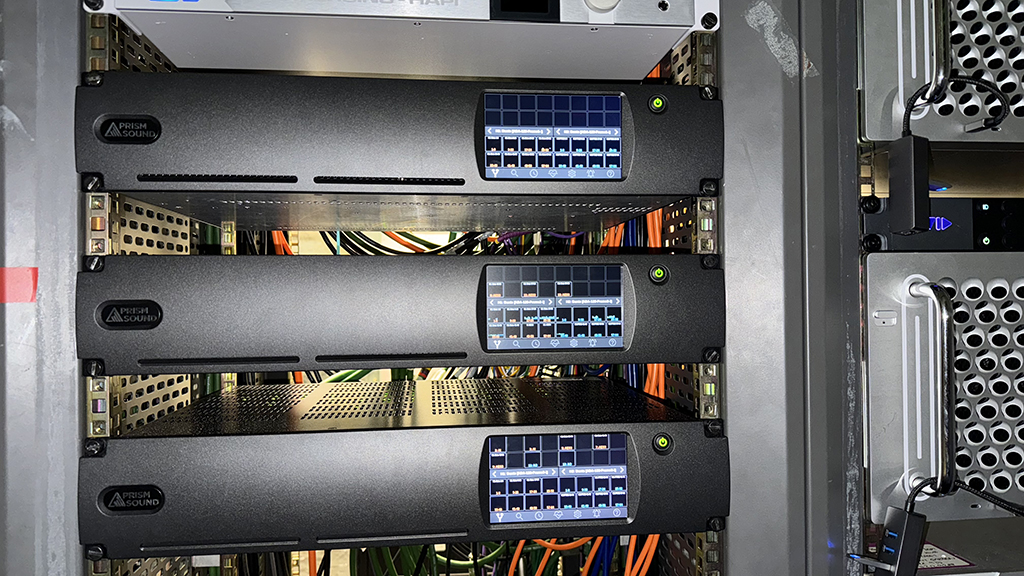
There are currently seven Dream ADA-128 units of Prism Sound running on the new Dante network. Three are housed in the studio's engine room., another in a rack room, the fifth in a wheeled carrying case, the sixth in the ballet studio and the seventh is used for mass audio distribution.
As part of a major review of its technical facilities, the Royal Opera House (ROH) in London's Covent Garden has installed sistemas multicanal Prism Sound Dream ADA-128 to manage the analog to digital conversion throughout your audio workflow. A total of seven units are operational on the new Dante network and an eighth unit is on order for installation by the end of the year.
“I looked at numerous different audio converters, but I chose Prism Sound because the Dream ADA-128 did not have any of the defects that I found with other products. . Offers great sound quality; Integrates well with the rest of our equipment; It has many inputs and does not take up much space in the rack. In summary, “These units do exactly what we want them to do.”, explains Daniel Arif, sound project coordinator, Royal Opera House video and broadcast.
The need to improve facilities was identified shortly before the Covid pandemic when the Board of the Royal Opera House commissioned a health study of the entire building. This highlighted several deficiencies and budget was allocated to resolve them.
“No major work had been carried out in the mid-1990s. 90 and the study clearly indicated that many parts of the building, from the technical infrastructure to the rear areas of the building, They weren't where they should be.”, Arif clarifies.
As you would expect from a venue the size of the Royal Opera House, there is a huge amount of infrastructure to consider. On the technical side, Arif says the obvious place to start was the existing sound studio because it could be quickly remodeled without affecting the rest of the building..
“Although the sound studio captures audio from various places in the building, the room itself and the equipment in it are autonomous. For this reason, we knew the studio was the ideal place to start, as it would give us a good indication of what could be done elsewhere”.
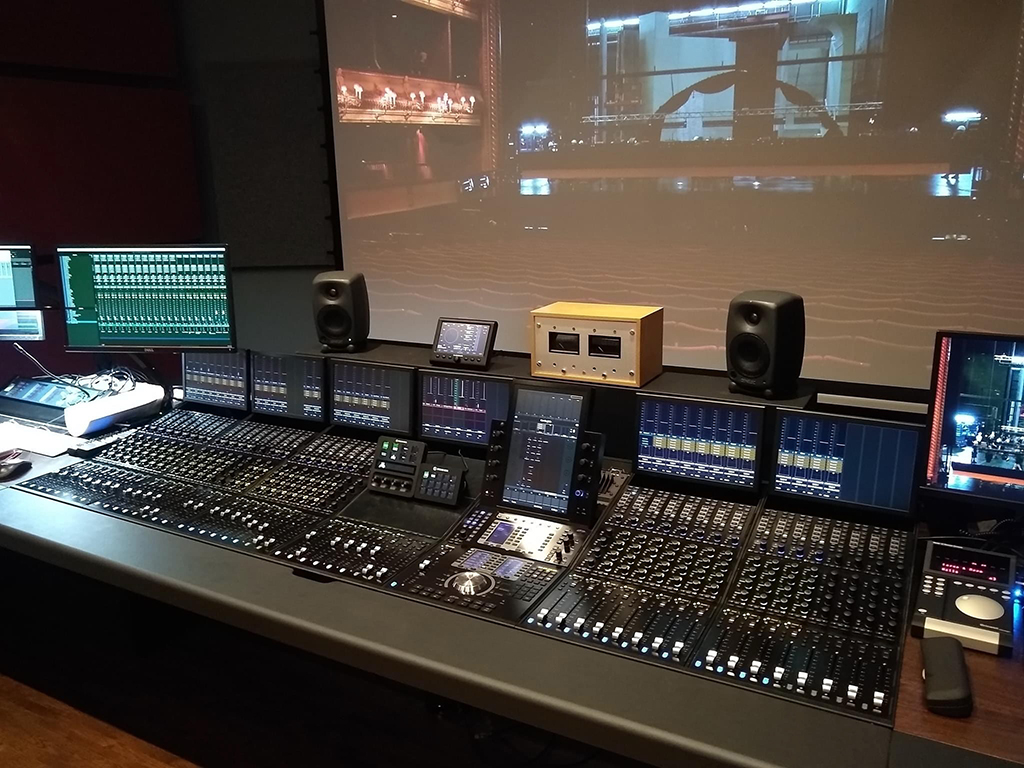
Originally built in 2004, when the Royal Opera House began broadcasting live performances in cinemas across the UK and Europe, The studio is also used to capture audio for release on CD and DVD. Before the remodeling it contained a Studer console and monitoring 5.1 y, in terms of workflow, behaved much like a traditional broadcast studio.
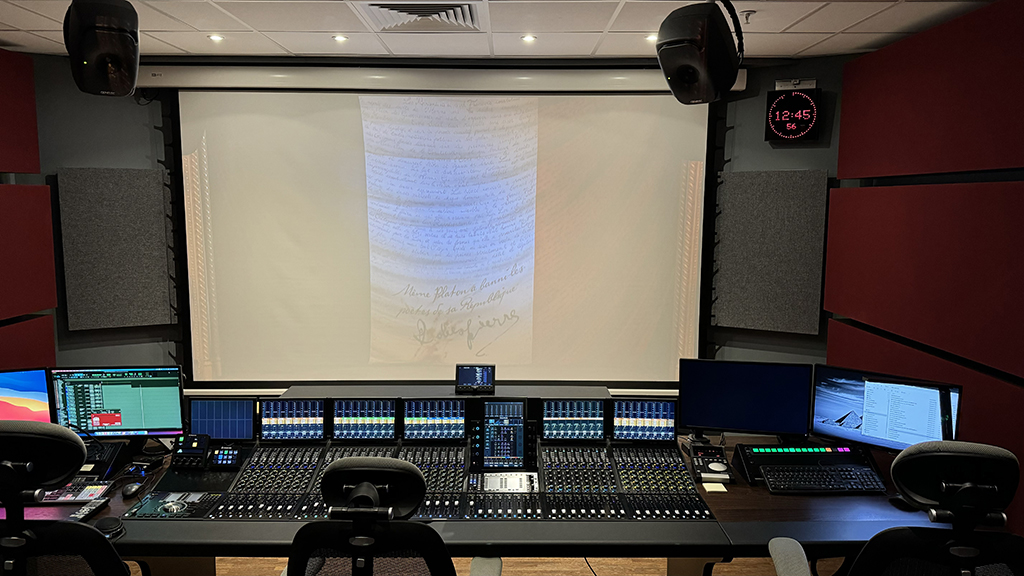
During the remodel, in which Munro Acoustics improved the acoustics and made the space much more comfortable for the ROH staff, Arif and his team reviewed the entire equipment list to change and improve the workflow.
“Much of our material is mixed by independent engineers who like to edit in their own studios., They can be anywhere in the country. They wanted us to make it easier to move recordings, so to adapt to that we decided to move to a workflow in the box using Pro Tools y Pyramix. This meant changing the console, since a traditional broadcast table was no longer suitable for that style of work. Our solution was to invest in a Avid control surface, along with two Macs running simultaneously as our primary and redundant systems”.
Once the decision was made to go completely digital, Arif began analyzing the I/O and figuring out how to interface with the multitude of microphones used during each performance.. A large number of entries was vital (Arif specified 128), as does rack space because the ROH studio has a relatively small machine room.
Due to unavoidable manufacturing delays, Dante cards for new ADA-128 units were delayed in shipping, so Prism Sound set up ROH with a temporary solution involving its Atlas audio interfaces. Once the Dante cards were delivered, ROH switched to Dream ADA-128 units and now uses them to handle all Dante to Pro Tools conversion.
“We still use Atlas interfaces to connect our analog microphones, but when ADA-128 microphone cards are available, we will do everything through the new units”, Arif adds..
Currently, three ADA-128 are housed in the studio's engine room, that drives 128 microphone inputs from the orchestra pit and stage. Another ADA-128 is located in a rack room on the seventh floor, where he manages the microphones installed on the roof of the opera house and all the amplifiers for the front public address system.
“We also have another ADA-128 in a wheeled carrying case, that we use for concerts that have an awkward staging”, dice Arif. “Our sixth unit is in the ballet studio, a small theater where we record Insight events for You Tube. Finally, “We have a seventh unit that is used for mass audio distribution.”.
“The Dream ADA-128 is the only thing that comes close to doing everything we need”, Arif adds.. “The I/O from FOH and our broadcast networks is shared through our Dante system and we can change things when necessary. We recently installed a new Yamaha FOH sound console and have locked the gains from it and the Prism Sound units so that no one can touch them. If something needs to be adjusted, It can be done digitally at the destination”.
In addition to updating the sound studio and installing the new Dante network, A new FOH sound table has been installed, connecting it to the Dante network.
“We still have a huge analog infrastructure running alongside our new digital setup, but the plans for these updates are to become completely digital in the future”, said Arif. “The goal is to save time, offer workflow efficiencies by creating presets for certain programs and making the entire system easier to navigate. This is important because the ROH is an important and busy place, and we need it to be prepared for the future”.
Prism Sound is now working closely with the Royal Opera House to develop new features for the Dream ADA-128 that will specifically benefit the live sound market.
Did you like this article?
Subscribe to our NEWSLETTER and you won't miss anything.
Related articles
 Krotos Video to Sound: AI-powered automatic synchronization and conversion
 NBC Sports improves audio production with Dante
 Meyer Sound enhances the gaming experience at Amalie Arena
 Meyer Sound ensures optimal sound at Atlantis The Royal in Dubai
 Goss Opera House chooses RCF Audio for building renovation
 EVO 16: Audio interface with conversion technology and Smartgain
 Hikvision improves business meetings with its Sound Cube speaker
 Meyer Sound Constellation enhances learning at Aarhus School of Architecture
 Meyer Sound Improves Spatial Sound Design and Mixing with Spacemap Go
 Samsung offers an interactive LED experience at the Sydney Opera House
The Sydney Opera House uses d technology&b audiotechnik to celebrate its 40 birthday
Samsung offers an interactive LED experience at the Sydney Opera House
The Sydney Opera House uses d technology&b audiotechnik to celebrate its 40 birthday
 Spectacular video projection at the Opera House and Sydney Harbor to mark the centenary of the Australian fleet
Opera House Sydney creates holophonic acoustic sleight of hand show
Spectacular video projection at the Opera House and Sydney Harbor to mark the centenary of the Australian fleet
Opera House Sydney creates holophonic acoustic sleight of hand show
 YCD multimedia digital solution boosts Sydney Opera House restaurant sales