


TiMax panLab optimizes spatial audio designs
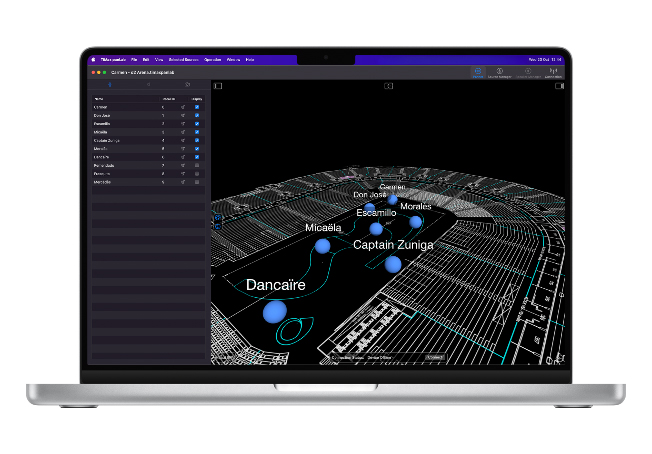
This is the first product launch since TiMax and Innovate Audio have teamed up with Focusrite, what sets the pace in an update roadmap. The new development has added 3D rendering capabilities to QLab, along with a wide range of mixing consoles and system processors.
TiMax has developed panLab, an app for macOS that includes a set of augmented features to allow users to take spatialized audio designs further, in both entry-level and large-scale systems.
This is the first product launch since TiMax and Innovate Audio joined Focusrite (More information at Digital AV), marking the first step in a roadmap of product updates. To the new development capabilities have been added 3D rendering a QLab, along with a wide range of mixing consoles and system processors, plus TiMax SoundHub.
The simplicity of the 3D user interface in TiMax panLab provides a tool for creators to intuitively develop multidimensional audio soundscapes. He UX design refined from the original panLab spatial programming platform, designed by the recently acquired Innovate Audio, has impacted with two decades of experience in spatialization and show control directly from TiMax, the main fans of immersive audio.
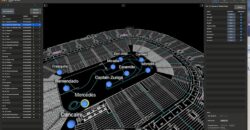
The drag and drop interface, simple and intuitive, allows users to view and manipulate audio in 3D space. The process of positioning elements such as speakers and sources allows users to quickly and easily set up complex 3D spatial audio environments.
Once inside the application, You discover access to both the original functionality of panLab to work directly with QLab, panLab Console to interact with mixing consoles, plus all-new access to enhanced panoramic spatial programming and Cue management live for shows and systems mapped and rendered on the spatial processor TiMax SoundHub.
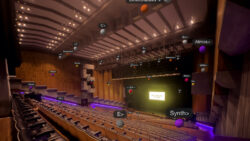
TiMax panLab's 3D user interface sets it apart from all other spatial audio control packages and can also be programmed in mode without connection to a QLab workspace. With sources and speakers located within three-dimensional space, Users can take advantage of the custom 3D amplitude-based panning algorithm to manipulate object positions not just on the x and y axes, but also in the height axis.
Sequence paths can be drawn directly in 3D space, where individual nodes or complex path can be moved and changed, and now they can also be looped. When playing sequences in QLab, movement automation shown in panLab.
TiMax panLab introduces new levels of control over actions and output. Sequences benefit from the addition of tempo mapping.
New software offers a tap tempo function and the ability to specify the number of measures in which each sequence should be played. Multiple selection is also available throughout the UI, which adds speed and accuracy to object updates, either for positioning or object level control.
New TiMax panLab includes significant performance improvements. The software is based on a new animation engine to allow for greater functionality in future updates and offer an augmented experience for panLab console users.. An additional focus on optimization for older Intel Macs has ensured greater access to the app for a wider range of users.
Did you like this article?
Subscribe to our NEWSLETTER and you won't miss anything.
Related articles
 Audinate Dante recreates the spatial audio system for 'The Wizard of Oz'
 TiMax integrates third-party audio control into its SoundHub software 6.11
 TiMax and Sonosphere create Spatial Studio Hub around immersive audio
 Martin Audio and TiMax bring the sound and light festival to life at Westfield London
 TiMax will show the possibilities of panLab spatial audio at ISE 2025
 TiMax panLab promotes the 'Concrete voids' acoustic experience with 3D audio
 Simon Fraser University investigates spatial audio with Renkus-Heinz
TiMax panLab will make its debut in Plasa 2024
Simon Fraser University investigates spatial audio with Renkus-Heinz
TiMax panLab will make its debut in Plasa 2024
 TiMax will show its most innovative immersive audio solutions at InfoComm
 TiMax SoundHub provides immersive audio in 'Rock me Amadeus'
 Focusrite grows in audio technology with the purchase of OutBoard and TiMax
 TiMax will present at ISE 2024 the new options for your audio solutions
 TiMax Spatial Sound Creates the Soundscape in the New Treetop Golf
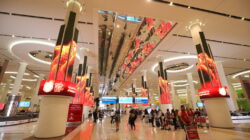 TiMax delivers spatial audio for immersive Dubai Airport experience