


The TREVOL Project validates mixed reality in real clinical environments
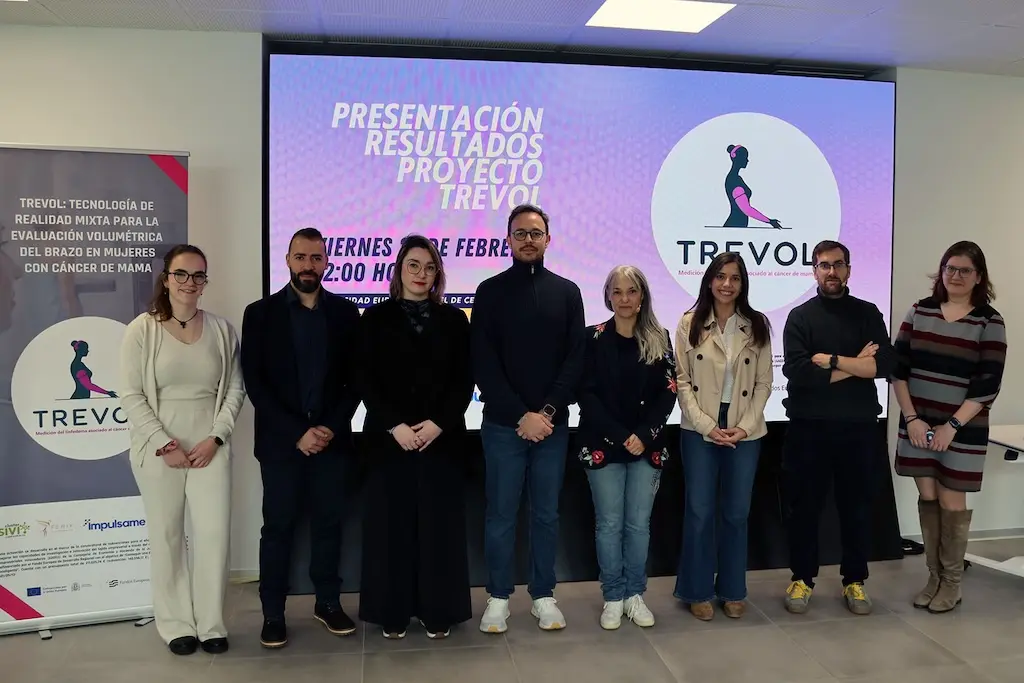
The Miguel de Cervantes European University (UEMC) from Valladolid, together with the entities that make up the consortium, The TREVOL project has successfully concluded, an applied research initiative that has validated the clinical effectiveness of mixed reality for volumetric assessment of the arm in women with breast cancer.
The project, developed in collaboration with Cluster Innovative Solutions for Independent Living (GRAY), Fenix Physiotherapy e It drives me, and financed through support for innovative business groups (AAEEII) of the Ministry of Economy and Finance of the Government of Castilla y León, co-financed by the European Regional Development Fund with the aim of Achieve a more competitive and intelligent Europe, born to respond to a relevant clinical need: follow-up of lymphedema secondary to breast cancer, one of the most frequent sequelae after oncological treatment and that can significantly affect the functionality and quality of life of patients.
Under the acronym TREVOL (Mixed Reality Technology for Volumetric Evaluation of the Arm in Women with Breast Cancer), The research raised a key question: determine if virtual reality is comparable to the traditional volume estimation method used in consultation, based on tape measure measurements. The results have been conclusive. No significant differences have been observed between both methodologies in the global quantification of arm volume., confirming that the mixed reality tool provides an objective and accurate measurement, comparable to conventional systems.
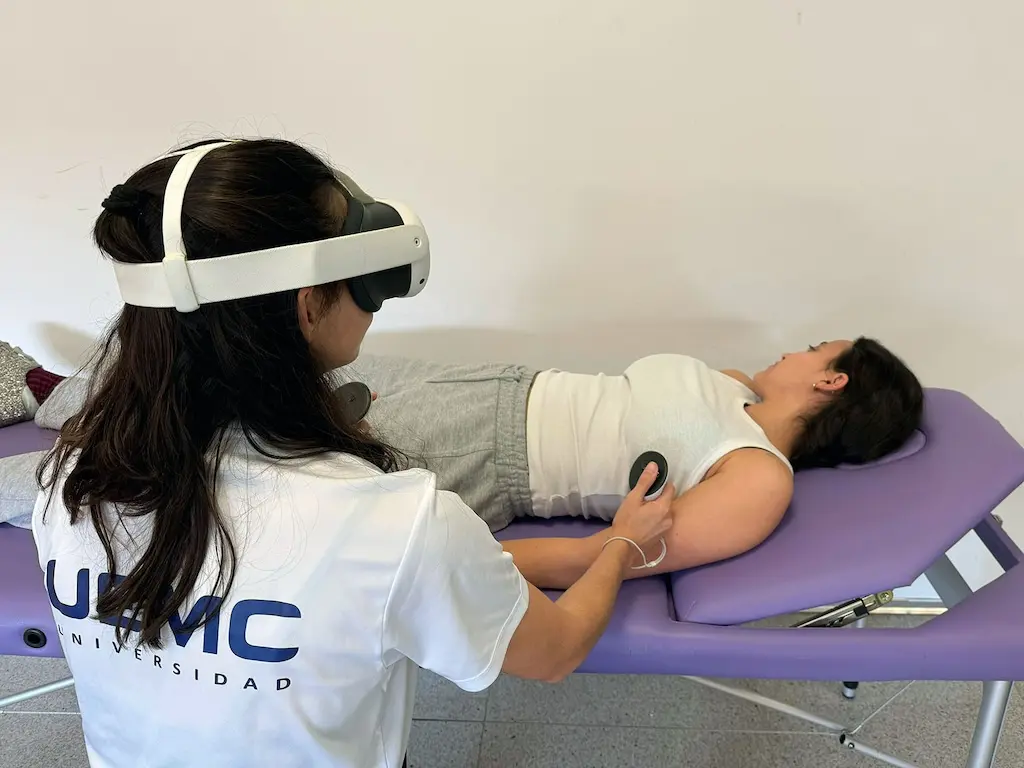
Mixed Reality, reliable tool
In addition, The study analyzed the ability of both techniques to detect volumetric variations between different clinical visits. Again, The data showed that mixed reality presents the same sensitivity as the traditional method, which reinforces its reliability as an evolutionary monitoring tool in patients at risk or presence of lymphedema..
Beyond technical validation, The research has addressed the feasibility of integrating this technology into real clinical settings, evaluating aspects such as ease of use by healthcare professionals, compatibility with hospital systems, security in data storage and the design of accessible interfaces. The portability and scalability of the system are emerging as determining factors for its future implementation in different healthcare contexts..
With these results, TREVOL consolidates the mixed reality as an innovative alternative y clinically reliable in the follow-up of lymphedema associated with breast cancer, opening new possibilities for the incorporation of immersive technologies in healthcare practice and placing the UEMC at the forefront of applied research in digital health.
Did you like this article?
Subscribe to our NEWSLETTER and you won't miss anything.
Related articles
 ClearOne will create in InfoComm 2023 real collaboration environments
 Brainstorm completes the European mixed reality project AdMiRe
 Mixed reality stars in the new La Pedrera Magical Vision experience
 LG will design at InfoComm 2022 real environments to show off your new display technology
 Innovae develops a project with Mixed Reality for the automotive industry
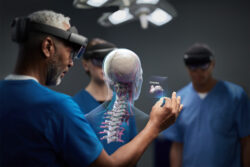 Microsoft's mixed reality goes beyond the limits of operating rooms
 U-tad presents the Magic Leap mixed reality glasses in Spain
 Mixed reality applied to Medicine will be key in the OVR 2018
 The effectiveness of Microsoft HoloLens mixed reality in its application in operating rooms
 Mixed reality: applications for the immediate future
 NEC Display will reproduce real environments in visualization and laser projection at ISE 2017
 InMediaStudio brings virtual and mixed reality to the documentary 'Return to Mars'
 Kramer focuses his participation in ISE 2015 in the training of AV-IT professionals in real environments
 NEC Display bets on 'A world of visual experience' at ISE 2014 and its application in real environments