





Christie MicroTiles, size does matter
Bob Rushby, Chief Technology Officer and Vice President of Research and Development at Christie Digital Systems, exposes in this Tribune a simple maxim: larger size, greater visibility. A formula that is especially applicable in the case of digital signage, an emerging technology that continues to fight to gain a real foothold in those sectors in which it really should have already succeeded: retail outlets and public spaces.
 There are many factors that contribute to digital signage continuing to be an industry waiting to be exploited in these sectors., but one of the most important is the size of the screens and the resulting lack of real impact. While the typical domestic LCD or plasma screens dominate the visual space of a living room, occupying a large part of the wall, This prominence disappears when the space is much larger and more visually loaded, as happens in large commercial areas or public spaces., like train stations, airports, shopping centers and large building lobbies. Many leading businesses and companies in the media industry have tried to install or hang flat screens everywhere in these large spaces to capture the attention of buyers, only to find that, in most cases, Those potential spectators wander around, oblivious to the claim.. Screens lack capture power because their size is not large enough, giving up for a long time the surprise factor that they had, a decade ago, the first LCD screens launched on the market. Alex Hughes, Strategy director at British digital content agency AMiGO is one of many experts who have become aware of the importance of size. According to Hughes “In message-saturated and visually rich environments such as a supermarket, the clarity, the audacity, the coherence of the message and, how not, the scale, They are necessary to attract attention and impact, in a positive sense, on the consumer”. E
 The problem of compromises When network technicians realized that plan A for small screens was not having the desired result, They embarked on a plan B, consisting of grouping small screens to achieve a greater effect. Evidently, visibility was increased but its execution failed miserably. All commercial and home displays have what is known as a “frame” or “mount.”, which is nothing more than an outer grooved edge that frames the image and serves as a trim to hide the attachment and mounting points of LCD and plasma screens. When those frames are joined together to form a grouping of screens, a combined image is obtained, this is, a grid where the visualization appears divided into quadrants with varying degrees of homogeneity. To be honest, the result is almost always poor and at best it is a compromise solution. Then we have the problem of calibration and control of the multiple monitors to achieve chromatic uniformity in the images.. Reds in one quadrant may appear more orange in the other three; the upper right corner, brighter than top left, etc. These matrices have the added disadvantage of weight. When installed against the wall, make maintenance and service operations difficult and more expensive, given that, one way or another, Technicians can access the rear panels of the units to perform virtually any task. There are other ways to “make the jump to the big screen”, But these options pose their own challenges, so they are very rarely used. The outdoor advertising industry is in the midst of a determined conversion of its billboard stock into solid LED screens. And it is proven that it is possible to obtain better economic performance from digital screens and reduce many of the operating expenses associated with the endless re-papering of billboards along highways.. The manufacturers of these giant LED panels have indoor versions designed for businesses and public spaces.. However, Its use raises two fundamental problems. LED monitors are made up of thousands of tiny light-emitting diodes that combine to produce images that are clearly visible from a distance.. However, when approaching the image, Visibility loses quality due to what has been called the “pixel pitch”. up close, The appearance of the outdoor panels leaves a lot to be desired as a result of that “pixel pitch”. Even the best interior panels, those who enjoy a step between pixels of 3 a 4 millimeters, The most they achieve is to offer second level images, unless the viewer moves far enough away from the screen. In that case it will work, but, as we see, we are faced with another compromise solution. The other challenge is the cost. LED arrays for interiors have a cost that is impossible for the budgets of most businesses to assume., building maintenance workers and support companies. At least for the moment, These LEDs for indoor use continue to be niche products due to their cost per square meter. If you want to make the leap to a larger scale solution, front projection and rear projection are two other options to consider, but, again, The proper functioning of these technologies poses important challenges to be overcome in the type of environments considered here.. Projection systems that generate bright images in poorly lit spaces have to cope, on the contrary, to the bright ambient lighting characteristic of most businesses, as well as the continuous changes that natural light experiences, common in most public spaces with large windows and atriums. Those displays that offer better visibility in dark spaces may present a “washed out” appearance in areas with natural lighting due to the large obstacles that must be overcome to achieve adequate contrast levels.. Another physical requirement of this type of display system is the need for a space free of interruptions on both the front and the back of the projection support – such as glass coated with a special optical film – that prevents the appearance of shadows and silhouettes.. However, result, in general, very difficult to achieve those configurations unless the screens are mounted at the top, in a completely secluded place and therefore outside the natural line of visibility. To generate bright images, projection systems use lamps designed to last a set number of months (and not years), before replacement is necessary. The costs of these lamps and the labor that their replacement entails force us to completely discard these projection systems as possible viable options for the majority of digital signage projects..
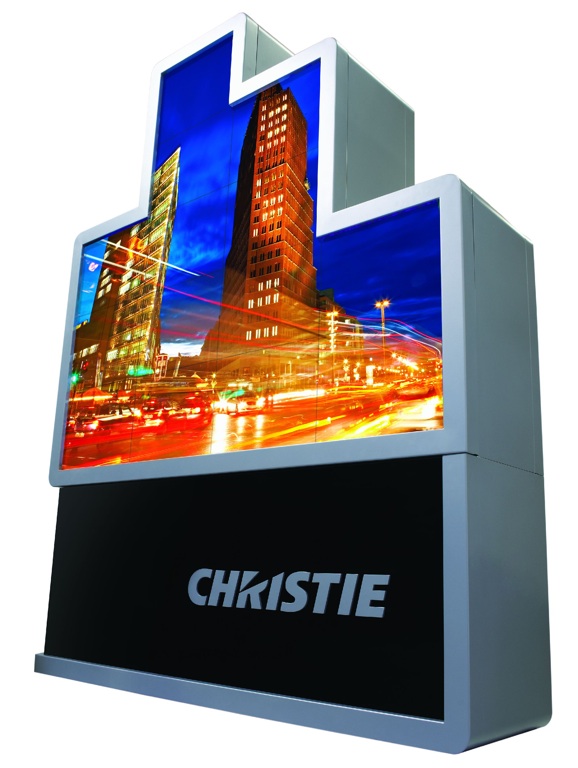
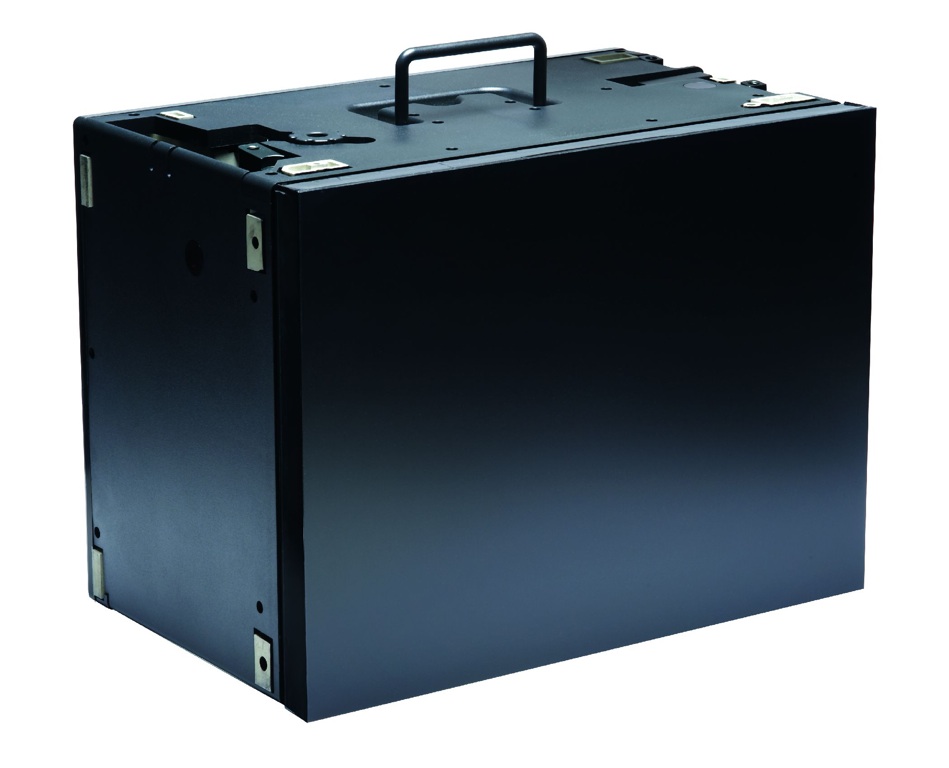
 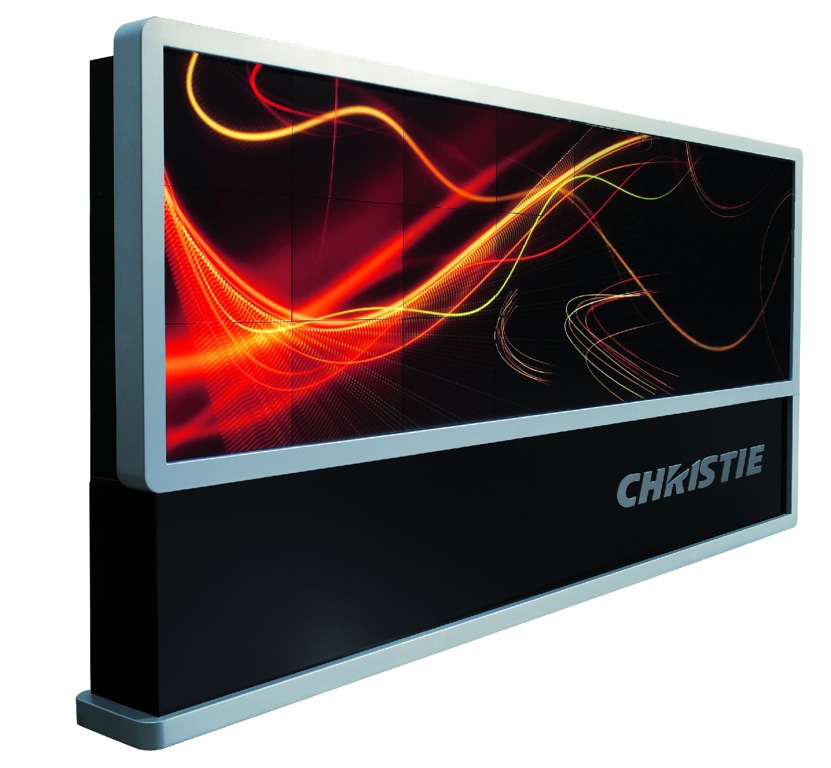 Christie MicroTiles, without compromising quality If size is the true answer to this type of spaces, It is essential to resort to new technology. And Christie, We have valued the opportunity that is presented and all the challenges that it entails, pouring all the weight of our experience and our R&D capabilities until we found Christie MicroTiles. A completely new modular display technology, developed and patented by Christie and is the result of several years of R&D, based on DLP technologies, LED and rear projection. A technology that makes most physical problems, costs and maintenance involved in moving to a larger scale solution disappear. A technology that also represents a change of mentality, passing (so to speak) of operating display devices in an environment, to have a digital canvas totally open to any visual possibility. Christie MicroTiles are visual building blocks that can take on almost any size or shape, free of the ugly, thick joints and compromises in contrast and sharpness that once ruined many of the great visualizations we've all witnessed at some point. These display modules have extremely fine pixels, perceptible from any distance and that, besides, They are equipped with superior viewing angles and have been specifically designed to face the multiple challenges posed by the jump to the big screen.. The physical properties of Christie MicroTiles address all the challenges of installing full motion media in large public and commercial spaces., at the same time opening new possibilities. These quadrants are small cubes of 306 mm (alto) x 408 mm (ancho) x 254 mm (prof.) that can be easily stacked and stacked into any shape imaginable. We can cover an entire wall with these blocks, frame a window or anything else you want to highlight, place them in a line like a lasso around a room, arrange them like a game of Scrabble to finish, etc. Faced with the fully visible joints that are formed when joining the screen frames, With Christie MicroTiles the joints are only a millimeter thick and most of the time they disappear. Christie MicroTiles modules do not overheat. You only need to leave a few centimeters of clearance behind the hubs for air to circulate.. Besides, They do not require any maintenance tasks. The LED light source that powers the screen image has an expected life of 65.000 hours of use, moment from which the brightness level begins to degrade, proving that it is at the same height or even above the LCD screens. If any maintenance operation is required, All you have to do is access the front part and we can replace the most complicated component (the light engine) in a maximum of 15 minutes. Each of the mosaic's quadrants has been designed to self-calibrate and adjust, always maintaining communication with the surrounding quadrants. This means that a quadrant array will always be characterized by a uniformity in brightness, color and contrast. Compared to the rest of the mosaic screens that require continuous care and control to maintain a homogeneous appearance, Christie MicroTiles modules are equipped with a processor that continuously manages communication between the quadrants, reaching a consensus among all on the appearance they should present. The quadrants also generate significant color saturation, which means that when the director of a company sees a screen with his company's logo, It is not that the reproduction of orange or bluish colors is “practically” faithful to the original, but the colors are identical. Our R&D team took advantage of a well-known phenomenon called the Helmholtz-Kohlrausch effect (about the HK phenomenon). After methodically examining light sources, we manage to produce colors with greater saturation and more brightness, and therefore, images with more vivid colors. There are many extensive and complicated scientific articles that have been written about the HK effect., but the essential thing is that the images achieved are unparalleled in the visualization industry. Despite the great sophistication behind the technical design, the end user will find a very simple process. Data output from a computer or media player goes to a small external control unit that powers the Christie MicroTiles quadrants., that stack, coming together like simple blocks screwed together, and are connected by a common connection wire and power cables. In the specific case of large format screens that require several control units, These units communicate with each other, synchronizing automatically in a matter of seconds, without the need for any technician to intervene.
 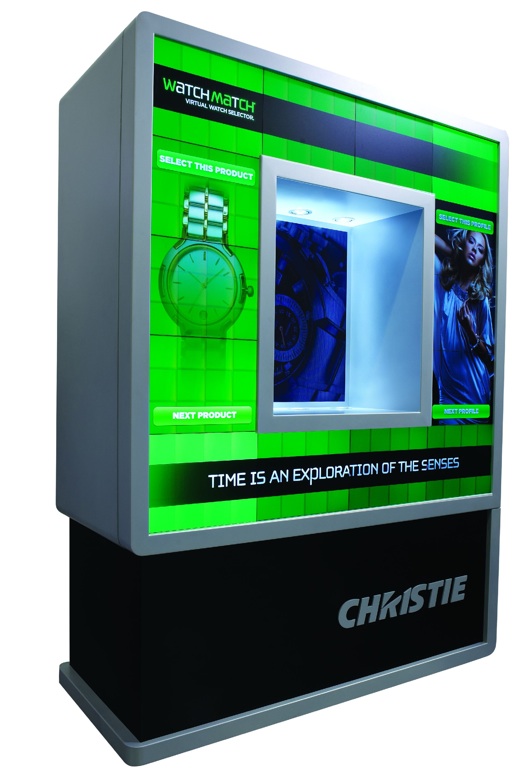 Commercial approach For digital displays to truly work in large-scale environments, The sight lines are very long and the ceilings are very high., they need to acquire a greater dimension. They must be more than just technology to “fill gaps” or occupy a space “just because.”. Screens must be authentic design elements, capable of functioning within the general concept of the space in which they are located and being part of the overall experience of clients and visitors. “Christie MicroTiles has arrived in the industry at the most opportune and accurate time” comments Denys Lavigne., president of Canadian content creation company Arsenal Media. “What I want to say is that we are at a point where, from both a consumer and brand perspective, There are a few key issues of increasing importance. I mean the size and the impact, creativity when adapting something in a space and the quality of the image”, Lavigne points out.. “From a creative point of view, One of the most impressive aspects of this technology is that it will not only allow us to create a creative installation of high color, but will also allow us to introduce a new visual texture”, Lavigne adds.. “Something truly unique”. These screens require a commercial approach that goes beyond those cases in which “money is not a problem”. That is to say: an approach that allows them to be integrated into the infrastructure and construction designs of conventional businesses. Which means digital display installations with a lasting and perceptible impact as well as a technical design that controls energy costs., have a long service life, Minimize high maintenance and replacement costs and offer a visual experience that will excite retailers and brands interested in this technology, instead of having them wish that so many concessions didn't have to be made to make viewing possible. To date, The jump to a large-scale solution has been one of the most important challenges that digital signage and the digital field outside the home sector have had to face; that's why, We are convinced that we have a convincing and possible solution.

Bob Rushby
Chief Technology Officer and Vice President of Research and Development at Christie Digital Systems

Did you like this article?
Subscribe to our NEWSLETTER and you won't miss anything.
Related articles
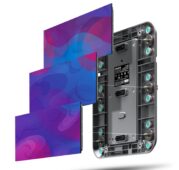 Lockheed Martin incorpora Christie MicroTiles Led en Amaze
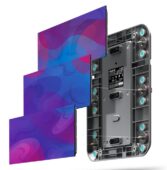 Christie expands its MicroTiles Led line with pixel models of 0,75 y 1,0 mm
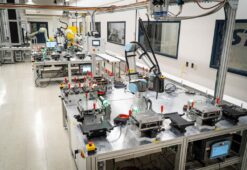 Christie boosts Led MicroTiles manufacturing with automation and robotics
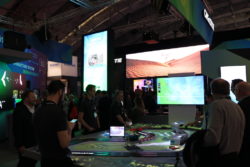 Christie shows at ISE 2020 Active 3D technology applied to its Led MicroTiles
 Christie MicroTiles in the St. Petersburg Ring Control Room
 Christie MicroTiles and LCD projectors to enhance interactive teaching
 Innovative Christie MicroTiles launch the new Acura sports car
 Christie MicroTiles shine at the Goya Awards gala
 Christie MicroTiles enhance the image of New Look's Dublin flagship store
 Christie equips with 250 MicroTiles screens to the five sets of Bulgaria On Air
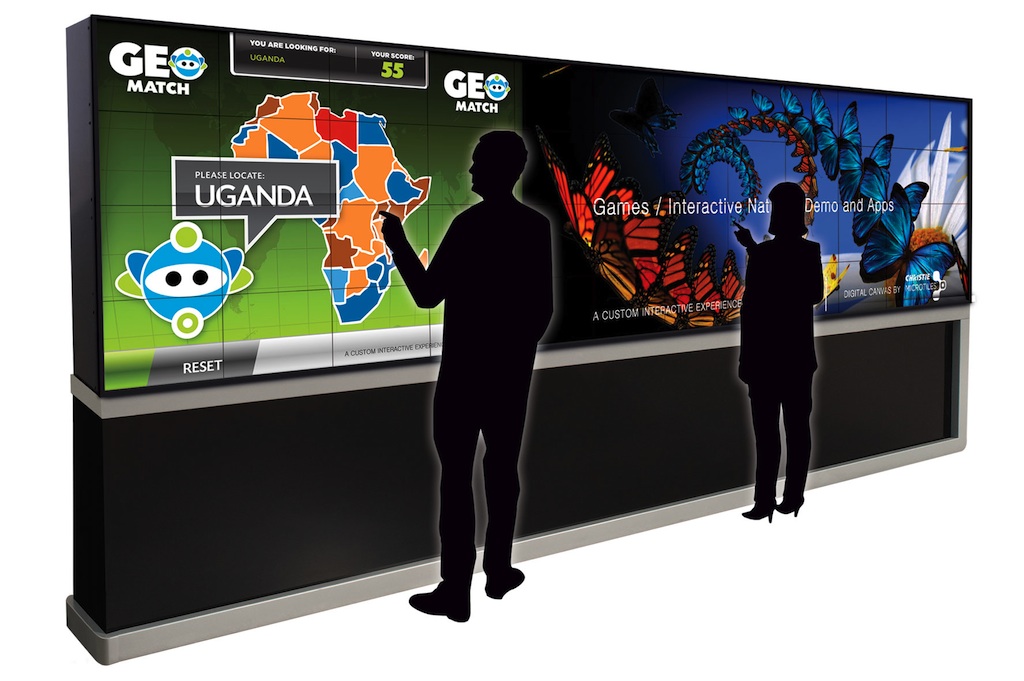 Christie expands MicroTiles capabilities with new solutions
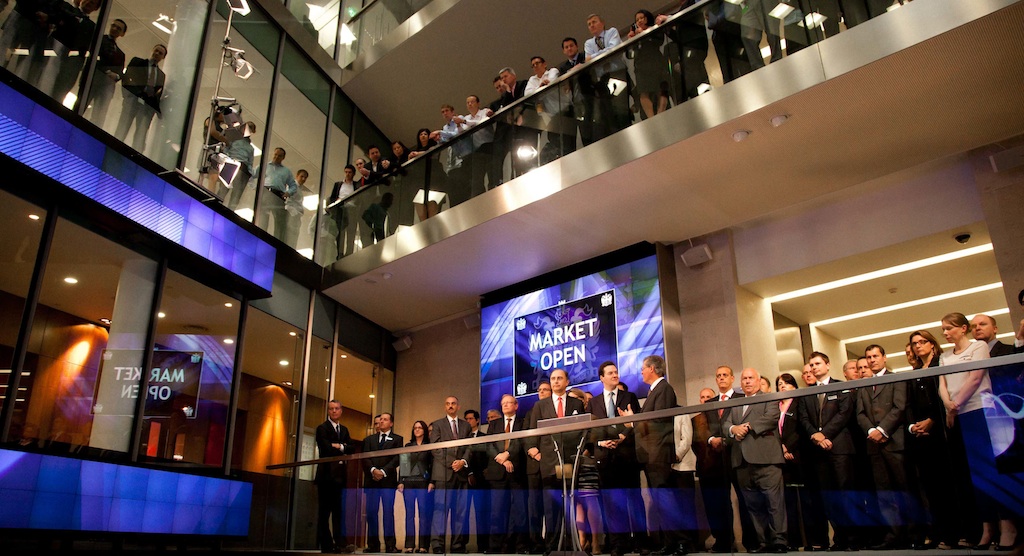 Christie MicroTiles on the London Stock Exchange
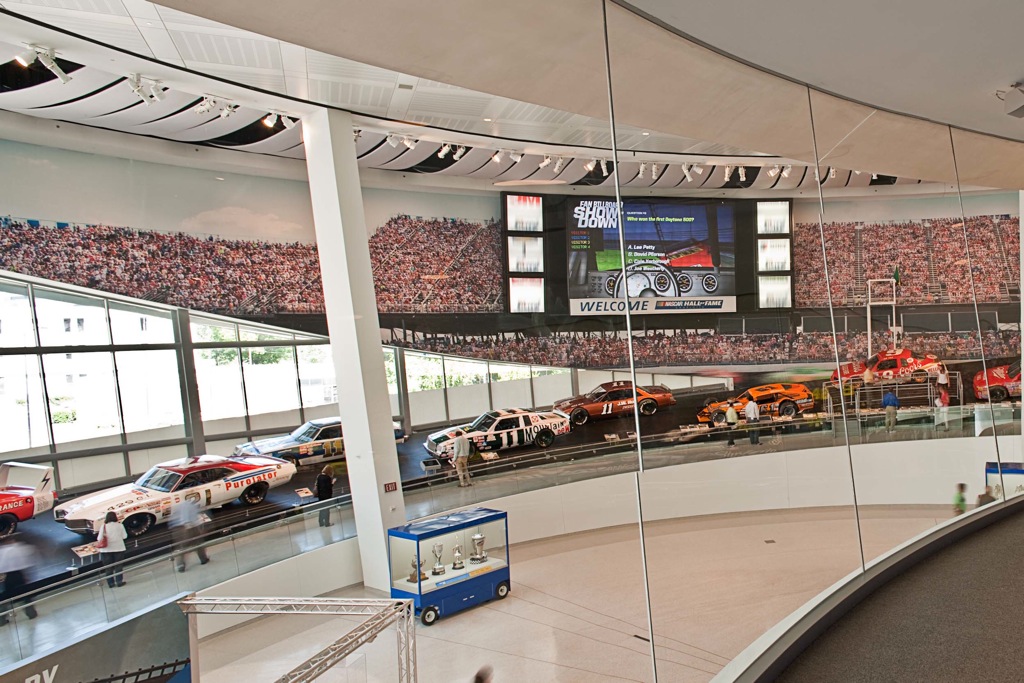 Christie MicroTiles in the NASCAR Hall of Fame
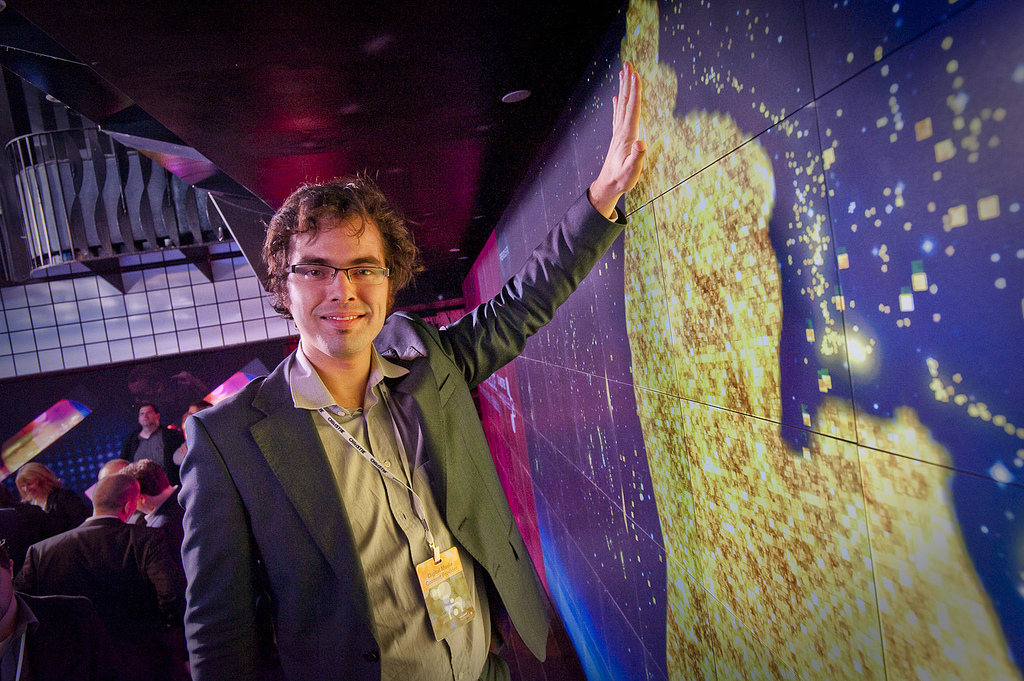 Christie MicroTiles, a stunning seamless digital canvas