


Crean un modelo para analizar las imágenes de los sistemas de vídeovigilancia en lugares públicos
Ingenieros de la Escuela Politécnica Superior de la Universidad Autónoma de Madrid (UAM) proponen un nuevo modelo para desarrollar sistemas automáticos de análisis de secuencias de vídeovigilancia. A diferencia de los actuales, estos sistemas podrían adaptarse a las características particulares de determinado escenario o situación.
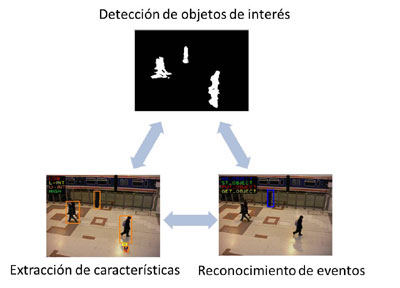 Ingenieros de la Escuela Politécnica Superior de la Universidad Autónoma de Madrid han creado un sistema para analizar las imágenes captadas por cámaras de vídeovigilancia y que, a diferencia de los modelos clásicos, se adapta a las características particulares de cada escenario o situación.
Los sistemas de vídeovigilancia permiten supervisar un área determinada mediante el uso de varias cámaras conectadas a una central de monitorización. Son sistemas actualmente muy demandados para detectar situaciones potencialmente peligrosas en lugares públicos como aeropuertos, estaciones de metro o escenarios deportivos, y que requieren personas especializadas para revisar las imágenes.
Para hacer más efectiva la supervisión, actualmente se utilizan herramientas automáticas de análisis de vídeo que permiten centrar la atención en un monitor concreto (con imágenes de un evento potencialmente peligroso, For example) o realizar búsquedas eficientes en las grabaciones, entre otros usos. Esta necesidad ha convertido el análisis automático de secuencias de vídeo-vigilancia en un área de investigación muy activa.
Los actuales sistemas automáticos de vídeovigilancia se basan en el análisis de tres etapas: la detección de objetos o personas de interés, el seguimiento y extracción de características de estos objetos o personas, y la detección de eventos inusuales (abandono de objetos, entradas a zonas prohibidas o actos de vandalismo).
Estas etapas funcionan de forma independiente entre sí, y se aplican del mismo modo en todos los escenarios y situaciones. Los ingenieros de la Escuela Politécnica Superior han advertido que existe una dependencia entre estas tres etapas y que su aplicación puede y debe adaptarse a cada tipo de situación, given that, For example, un potencial robo en un aparcamiento solitario no requiere las mismas técnicas de detección que otro en una estación de metro con alta densidad de personas en movimiento.
El modelo de vídeovigilancia que proponen tiene por tanto la capacidad de adaptar las etapas de análisis a cada escenario y situación, y concentrar la atención en las cámaras con mayor complejidad de datos.
Did you like this article?
Subscribe to our NEWSLETTER and you won't miss anything.
Related articles
 AG Neovo PN-Series: pantallas de videowall para aplicaciones en lugares públicos
 Radiant Images logra la patente de sistemas de captura inmersiva para imágenes holográficas
 Panasonic AF1-SST: pantallas interactivas multitáctiles para señalética en lugares públicos
 Cisco and Telefónica create a test platform to analyze the benefits of converged networks
 Panasonic TH-55FLV70: panel of 55 inches to set up video walls in public places and control rooms
 Aopen y Axis Comunications crean DS2, el primer entorno híbrido de digital signage y videovigilancia
 Schneider Electric presenta Pelco 3D, the first software for the design of video surveillance systems in three dimensions
 Crean un sistema de videovigilancia que predice el comportamiento humano
 QNAP integra las cámaras IP de Dahua Technology para aumentar la flexibilidad de los sistemas de videovigilancia
 iDock ‘Touchcode’, la solución de iRoom para evitar robos de iPad en lugares públicos
 ADT incorpora la verificación por imágenes a sus sistemas de alarma para el hogar
 Unitronics will provide videoconferencing systems to 114 public centers of Extremadura
 La videovigilancia y la integración de sistemas para funciones inteligentes, claves en 2012
 Bosch Recording Station, IP recording and management solution for network video surveillance systems