


Xenon lamps vs mercury vapor lamps
over the years, Projectors have been evolving at the pace of the latest technological advances in line with the trend to achieve larger screens and higher resolutions.. Digital projectors typically use high-intensity discharge lamps that contain xenon or mercury vapor.. Marcos Fernandez, Country Manager for Spain and Portugal at Christie, This article highlights the benefits in terms of performance of the former compared to the latter..
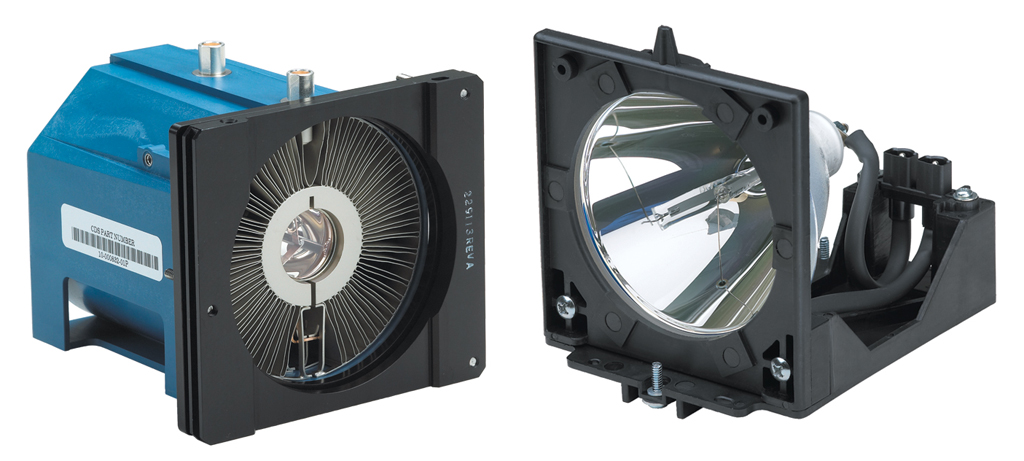
Despite its internal complexity, The function of digital projectors is very simple: project a large format image from a video source, data and graphics on a projection surface; and for this an internal light source is necessary. Due to the high degree of magnification required by the projected image and the number of optical elements in the path from the light source to the screen, the brightness of the light source must be very high; even more than that radiated by typical fluorescent and incandescent lamps used in offices and other closed spaces.
The two most widespread technologies in digital projection solutions are mercury vapor lamps and xenon lamps.. In both cases, The lamp emits light by passing current through a gas under very high pressure (of several hundred atmospheres) inside a molten quartz tube. The current flowing between the electrodes of the lamp (what is called the arch) turns on the gas making it glow.
The active gas found in mercury vapor lamps is, as its name indicates, mercury heated to a gaseous state that has been mixed with other gases to facilitate starting, improving its performance and reliability; while, In the case of xenon lamps, the gas used is xenon gas.. This basic difference between the two lamp technologies leads us to establish a series of practical differences in terms of the properties and performance of projectors that include these technologies..
Differences in performance
Regarding performance, The fundamental difference between xenon lamps and mercury vapor lamps lies in the color spectrum of the light they emit.. A xenon lamp radiates a fairly flat spectrum with more or less similar intensities at all wavelengths throughout the entire visible range. (between 400 nm y 700 nm), approaching the neutral white color of natural light. On the other hand, The typical emission spectrum of mercury vapor lamps is considerably less uniform, showing a series of peak highs and lows across the entire visible range, where the highest peak is found in the yellow region. The red end of the mercury vapor spectrum is also trending downward compared to the blue end., showing as a cold white.
The rising and falling peak spectrum of the mercury vapor lamp means that projectors with this type of lamp typically offer poorer color reproduction., compared to projectors that include xenon technology. The measure responsible for determining the precision with which colors are reproduced is known as the color rendering index or CRI.. In order to improve the IRC, the light path of the projector can be designed to better balance the spectrum of mercury vapor throughout the visible range and reduce the height of the peaks, even if it is at the cost of a considerable drop in luminous output. Some mercury vapor-based projectors include a motorized yellow separation slot filter that, if necessary, could be placed in the light path to improve the projector's color accuracy, reducing the brightness level in return.
Another performance difference between mercury vapor and xenon lamps is the stability of the spectrum over time.. The peaked spectrum of mercury vapor lamps implies a considerable change in the color reproduction of a projector, which may be affected as the lamp ages. On the contrary, in the case of xenon lamps, the flat spectrum has relatively little effect on color reproduction over time.
Xenon also has a very short-term stability advantage, that manifests itself from the moment of ignition, maintaining a flat spectrum as it warms. Besides, can reach its full brightness capacity in considerably less time than mercury vapor lamps.
Operational Considerations
 Regarding on-screen performance, xenon has a clear advantage over mercury vapor. However, the tables are reversed when it comes to assessing traits such as effectiveness, lifespan and running cost.
First of all, Mercury vapor lamps are much more effective than xenon lamps at converting electrical energy into light.. Indeed, in general, to obtain the same light output, A projector with a mercury vapor lamp requires less energy to operate than a projector with a xenon lamp. This will depend on the level to which light output has been sacrificed for improved color accuracy. (as described above). Projectors that operate with less power do not tend to overheat, which makes them more reliable and quieter.
In second place, Mercury vapor lamps have a much longer lifespan, with a minimum duration of 1.000 hours that can reach even 10.000 depending on the power of the lamp. While, The life of xenon lamps ranges from 500 hours and a maximum of 4.000.
The combination of high efficiency and long useful life makes mercury vapor technology offer what constitutes the third and decisive advantage: significantly lower running costs.
Both technologies require very simple maintenance.
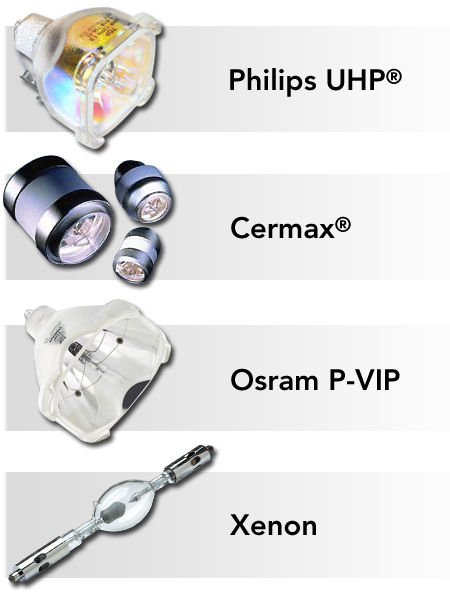
Mercury vapor lamps, such as Philips UHP ultra-high performance lamps and Osram P-VIP high-quality video projection lamps, They are pre-aligned modules that include independent reflectors that are easily replaceable by the user.. Perkin Elmer's Cermax xenon lamps are another example of pre-aligned modules.. There is another common xenon lamp configuration, known as bubble lamp, which can be designed in previously aligned modules, offering the same ease to the user for replacement and allowing the lamp to be replaced in the factory as many times as necessary..
Containing a small amount of mercury, Mercury vapor lamps require additional care when disposing of an old lamp. Even so, Both types of lamps must be disposed of safely and responsibly in accordance with environmental requirements for the disposal of this type of waste..

Applications
Given the different advantages and disadvantages of mercury vapor and xenon lamps, It is clear that certain projector applications will be better suited to one type of lamp than the other.. Mercury vapor lamps are the best option when low operating costs and the longest possible lamp life are important., while if the priority is to achieve maximum color accuracy and chromatic stability, the best option will be xenon lamps.
Another issue to take into account is the light output required by the projector., which may depend on screen size and ambient light. Projectors with mercury vapor lamps reach brightness levels that exceed those of traditional models and this seems to continue to be the trend in the future.. In fact, Models that include two or more lamps together are considered to offer brightness levels high enough to be used in ProAV applications. However, currently, Achieving the highest light output levels in digital projectors is only possible with xenon lamps.
For example, DLP projectors 3 Chips belonging to the Christie M Series are based on mercury vapor lamps and offer a brightness level between 2.500 ANSI lumens and 9.500 ANSI lumens, while the models of 3 Christie chips that include xenon lamps offer a luminous range between 2.000 ANSI lumens and 30.000 ANSI lumens. Xenon technology is the most logical option when projecting onto large screens or dealing with high ambient lighting..
The size of the projector is another factor to consider. How mercury vapor lamps are more efficient and consume less energy, lamp size can be smaller, which in turn has allowed the development of much smaller projectors. Some are so small they can fit in a briefcase, leaving even plenty of space. Even so, despite the tiny Cermax xenon lamps and the increasingly smaller dimensions of xenon-based projectors, Mercury vapor has become the favorite technology for small projectors thanks to the advantage of its low cost.
Conclusion
The most important characteristics of each lamp type determine the choice of mercury vapor or xenon technology for a specific application.. The life of mercury vapor lamps is usually longer than that of xenon lamps and the maintenance costs are lower.. Besides, They are commonly used in smaller projectors. On the other hand, Xenon technology is the best option when the highest level of screen performance is required, for both brightness and color accuracy. Christie offers a wide variety of digital projectors based on both technologies for every specific need..
Marcos Fernandez
Country Manager de Christie for Spain and Portugal

Did you like this article?
Subscribe to our NEWSLETTER and you won't miss anything.
Related articles
 Prolights illuminates with more than 1.200 lamps the RTL Power Hits edition 2020 at the Verona Arena
 Have the lamp projector lights been turned off??
 Just Lamps, the largest projector lamp specialist, passes into the hands of distributor Stampede
 Christie CP2208: projector with xenon lighting for screens up to 10,6 metros
 TD Maverick confirms the success of the GoLamps projector lamp warranty program
 TD Maverick makes it easier for the channel to choose lamps for projectors from the new Hotlamps website
The Sony VPL-FHZ55 projector replaces lamps with 3LCD laser light technology
TD Maverick makes it easier for the channel to choose lamps for projectors from the new Hotlamps website
The Sony VPL-FHZ55 projector replaces lamps with 3LCD laser light technology
 LiveDots ship lights up Johannesburg with twenty million LED lamps
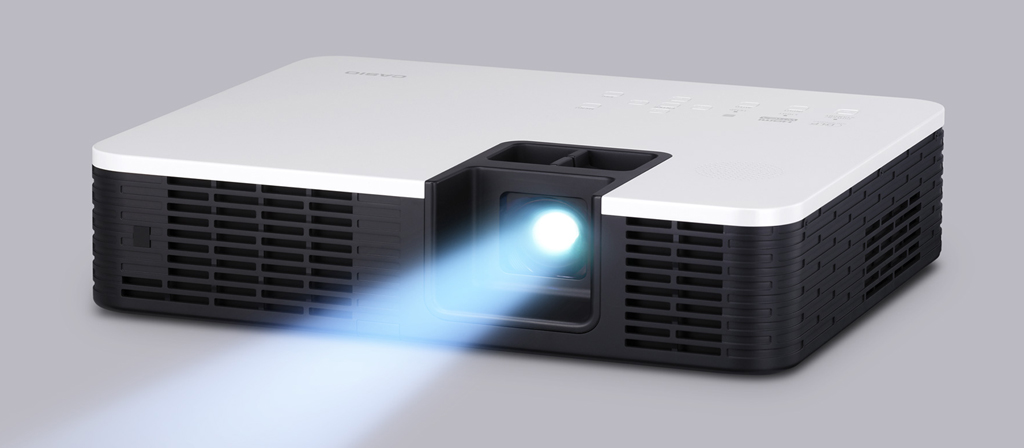 Casio launches the new XJ-H2650 mercury-free projector
 Just Lamps, projector lamps in 24 hours
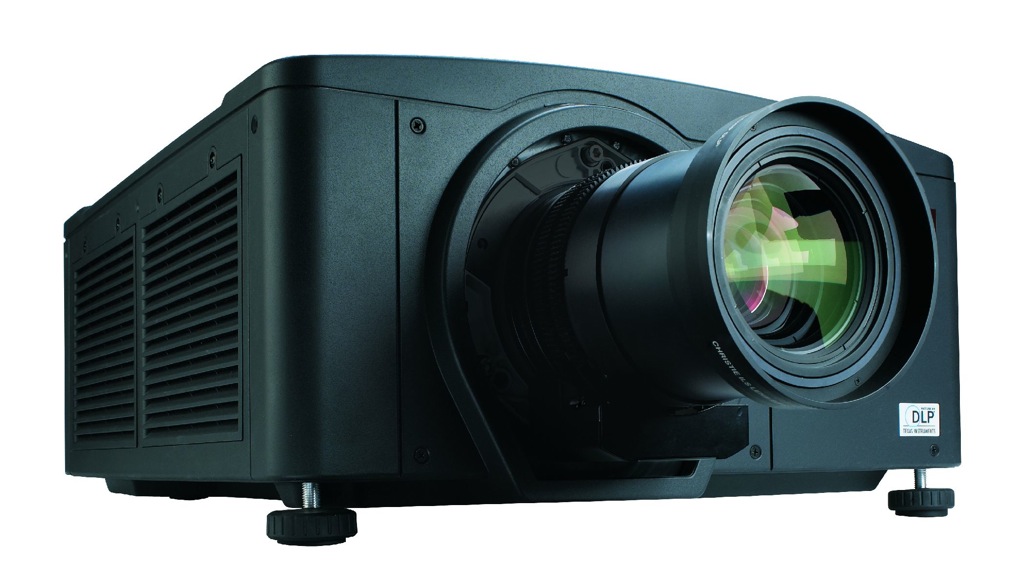 Christie expands its award-winning M Series to include panoramic resolution options
 Christie names Kelonik a Certified Service Provider
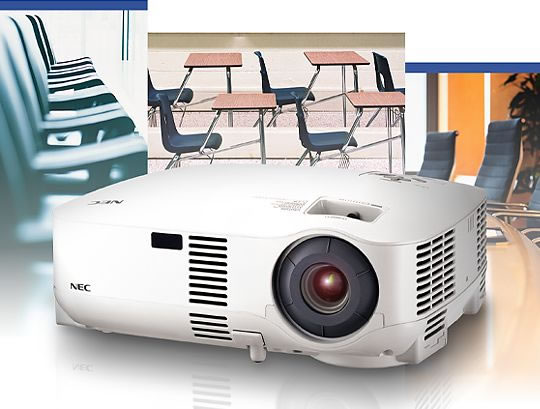 NEC Display Solutions increases the life of lamps and filters in its projectors
 Christie: total reliability in your lamps