

The historic Queen Mary combines its Art Deco design with digital signage technology from AOpen and Insteo
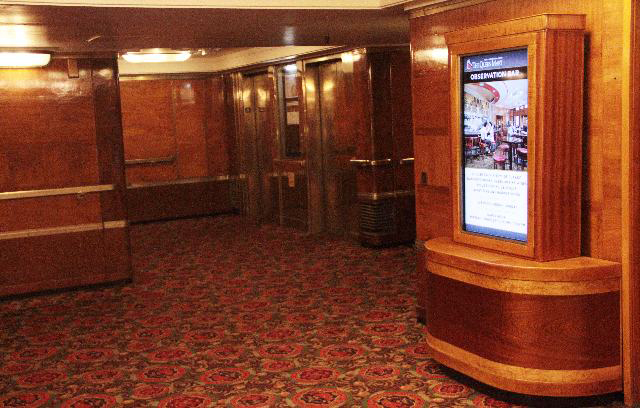
In order to replace the outdated signaling system that had been installed on the Queen Mary, Insteo ha diseñado un proyecto que adapta las pantallas y kioscos, dotados con la tecnología de AOpen, al estilo Art Decó que predomina en el interior del transatlántico, hoy convertido en museo, hotel y centro de conferencias.
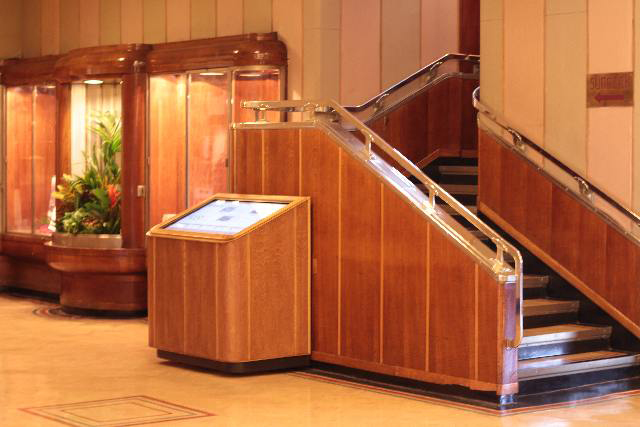
He transatlántico Queen Mary, que hoy se encuentra anclado en Long Beach (California) y funciona como hotel, museo, restaurante y centro de conferencias, destaca por sumergir a sus clientes en un ambiente de diseño Art Decó que evoca tiempos pasados. Pero este entorno de los años cuarenta no está reñido con un servicio confortable y moderno, donde las tecnología son elemento clave.
La señalización digital ha sido una de estas tecnologías que se ha instalado en el buque, un proyecto que plateaba como reto aunar la implantación de equipos audiovisuales pero sin que estos rompieran con el encanto que le caracteriza.
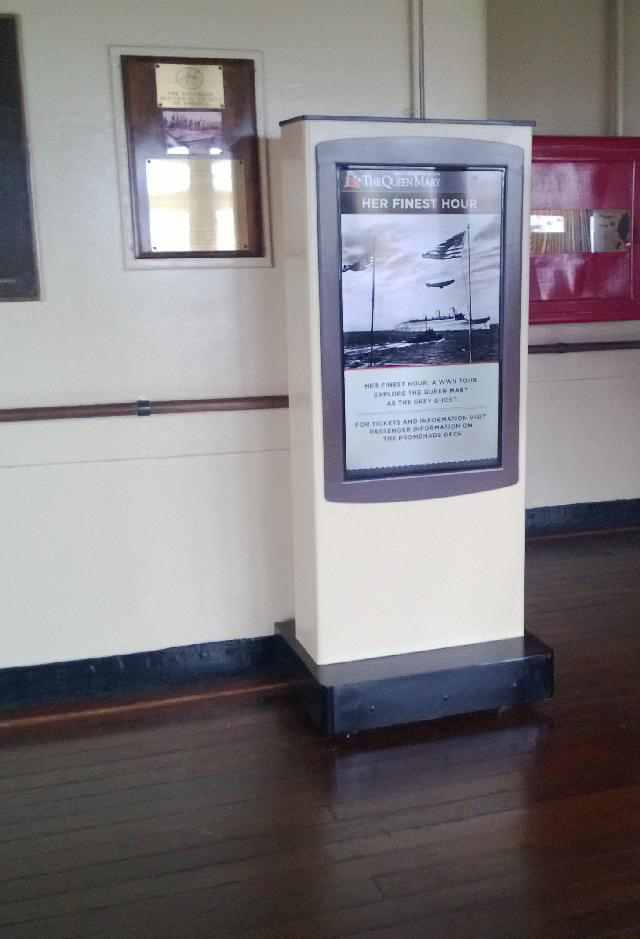
El Queen Mary and Evolution Hospitality quería una solución que sirviera para sustituir el anticuado sistema que se había implantado en la renovación realizada en 1970, que sirviera para educar e informar a los visitantes y que encajara en el entorno.
El proyecto fue realizado por Insteo y Open, que tuvieron que dar respuesta a una serie de desafíos. El buque está protegido por numerosas sociedades históricas y no es posible realizar agujeros ni dañar la estructura interior para colocar las pantallas y realizar la instalación del cableado.
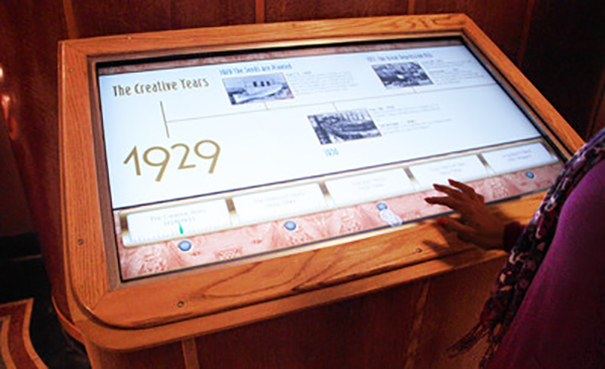
Es por esto que tuvieron que construir armarios a medidas para encastrar las pantallas y revestir los kioscos digitales con los mismos materiales que los que predominan en el barco y que datan de los años 30. En lo que respecta a la red, ante la imposibilidad de poder realizar una nueva tirada de cableado se optó por utilizar las canalizaciones existentes y utilizar el WiFi y 4G allí donde llegaba la cobertura.
Insteo se encargó de diseñar las estructuras para que combinarán con el mobiliario existente, al estilo Streamline Moderne y desarrolló el contenido que se mostraba en las pantallas, con información histórica, rutas para visitar el transatlántico y lista de eventos, así como aplicaciones táctiles que permitieran a los visitantes interacturar con ellas. Todo esto se ejecuta gracias a la tecnología de AOpen que incorporan las pantallas.
Did you like this article?
Subscribe to our NEWSLETTER and you won't miss anything.
Related articles
 Queen Mary University of London triples the brightness with Christie laser projection
 Black Box combines digital signage and temperature detection with BDS-8
 Digital Projection provides LED technology to historic Fort Smith establishment
 Bagel Biz combines NoviSign and Sharp technologies to upgrade your digital signage network
 Reale Seguros combines gamification and digital signage to bring the brand closer to employees
The NBA Store combines online and physical shopping with an interactive digital signage solution
Reale Seguros combines gamification and digital signage to bring the brand closer to employees
The NBA Store combines online and physical shopping with an interactive digital signage solution
 John Gerrad combines digital signage and simulation for his public art work ‘Solar Reserve’
AOpen Digital Engine players manage content on Croc's digital signage network
The Czech Planetarium in Brno combines digital simulation with optical projection thanks to technology from PNY and JVC
John Gerrad combines digital signage and simulation for his public art work ‘Solar Reserve’
AOpen Digital Engine players manage content on Croc's digital signage network
The Czech Planetarium in Brno combines digital simulation with optical projection thanks to technology from PNY and JVC
 AOpen montará la ‘tienda del digital signage’ en su stand de ISE 2013
 Nike combines digital signage and social networks to show which Spanish Euro player is the most popular
 New range of iLook Decó design digital screens
 SignWall combines digital signage, the video wall and live market research
 dB TV de Vital Media combina digital signage con programación de TV en directo