


Luz Greco 2014: the inspiration of El Greco's work illuminates the Cathedral of Toledo on the IV centenary
The sixth edition of the Luz Greco audiovisual show, which coincides with the IV centenary of the death of the Cretan painter, se inició el pasado fin de semana superando las expectativas previstas respecto a ediciones anteriores con un videomapping en un escenario tan complejo como emblemático: la Catedral Primada de Toledo.
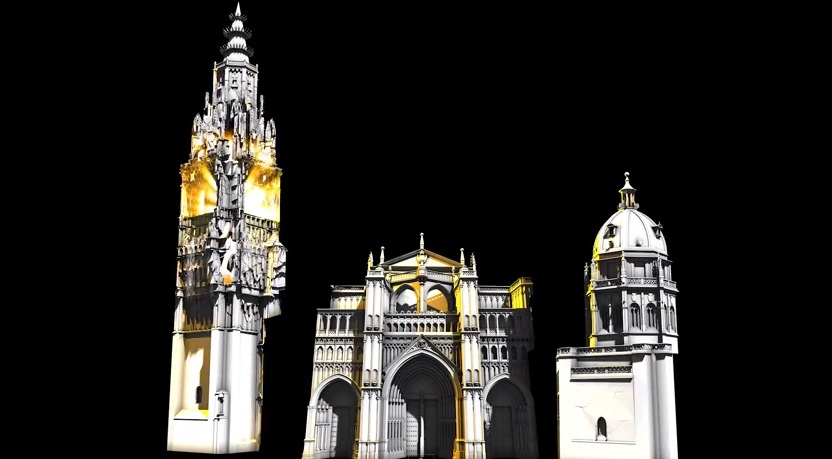
La ciudad de Toledo ha vuelto a recrear una fiesta de luz, sonido y efectos con las primeras visualizaciones del espectáculo Luz Greco 2014, con un videomapping renovado respecto a pasadas ediciones y con un único enclave protagonizado en la fachada de su catedral, en el año que se conmemora el IV centenario de la muerte de El Greco (ver en detalle las ediciones pasadas en Digital AV Magazine).
Precisamente la edición de este año será la última que seguirá este formato audiovisual que el Ayuntamiento de Toledo inició hace seis años, in 2009, para ir preparando a ciudadanos y turistas en los actos que tendrían lugar en 2014, coincidiendo con la centenaria efeméride de la muerte del pintor cretense, y que este consistorio ha decidido convertir en un espectáculo fijo en esta época.
Así lo ha señalado el alcalde de Toledo, Emiliano García-Page, tras resaltar el éxito de este espectáculo de luz y sonido en los últimos años que “ha cuajado en ciudadanos y visitantes, ya que se planteo como un espectáculo para concienciar a la opinión pública de que en 2014 se celebraría el Año Greco, y que a partir de ahora será un espectáculo fijo porque se han cumplido todos los objetivos: hacer de Luz Greco un escenario de atracción turística y cultural”.
Además del pasado fin de semana, the next 18 y 19 de julio se realizarán seis sesiones de este espectáculo, from the 22:30 until the 1:30 de la madrugada, ininterrumpidamente. El proyecto de este año, patrocinado de nuevo por Caja Rural Castilla-La Mancha con una aportación de 20.000 euros, y una partida total de 106.951 euros se ha convertido en un evento que atrae en la época estival a miles de visitantes a la capital manchega.
Según los datos aportados por el Ayuntamiento de Toledo y su Patronato Municipal de Turismo, en el primer fin de semana de pases de Luz Greco 2014, concretamente el sábado 12 July, esta ciudad ha registrado una media del 86% de ocupación hotelera, which means a 20% más respecto al mismo fin de semana de 2013, que registró un 64% de reservas.
Complejidad y máxima luminosidad
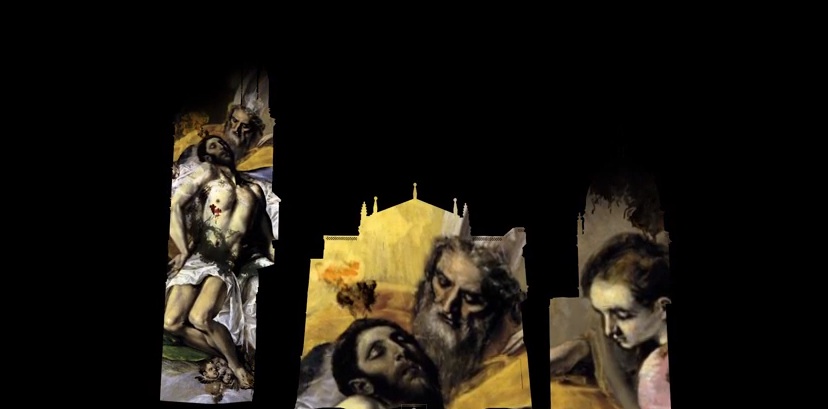
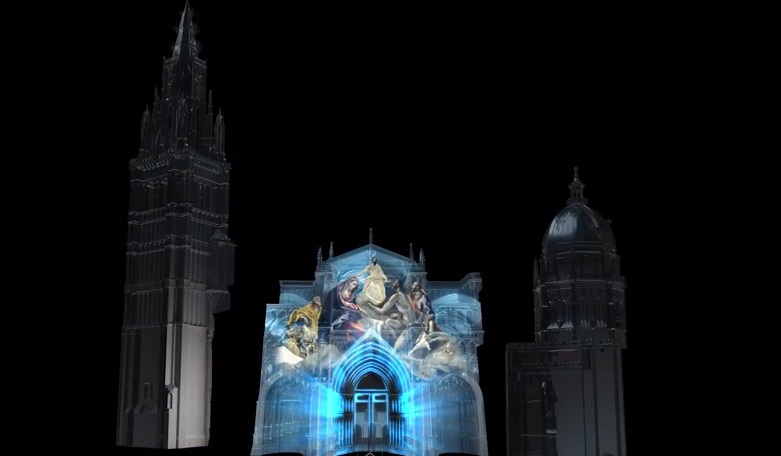
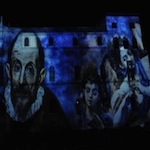
La compleja y emblemática estructura de la Catedral Primada de Toledo es la protagonista de Luz Greco 2014, en cuya fachada se proyecta un espectacular videomapping de unos quince minutos de duración, codirigido por Óscar Testón y Manuel Horischnik, realizado por las empresas BNC Montajes Audiovisuales with the production of Ibercover, que recrea su proceso de construcción, con un especial homenaje a la Campana Gorda con sonido incluido, así como movimientos y efectos figurativos y orgánicos de este edificio, que se combinan con lienzos y elementos presentes en la obra de El Greco.
Como explicó Óscar Testón durante los ensayos, “las proyecciones en la catedral despiertan formas sorprendentes que no dejarán indiferente a nadie y todo ha funcionado mejor de lo que se había imaginado. Hemos querido hacer un homenaje a la Campana Gorda y para ello creamos una fábrica de campanas para mostrar cómo se construye, para luego ver el proceso que se realizó para subirla, con sonido de campanas”.
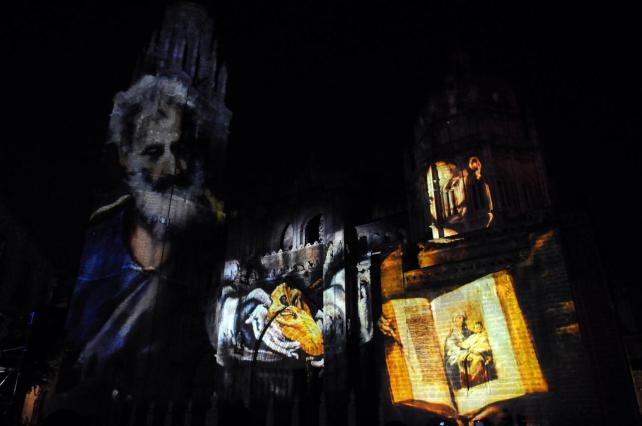
En este videomapping, en el que han trabajado una veintena de profesionales, también se realiza un juego dinámico con las puertas de la catedral y la representación de formas orgánicas en la fachada.
La tecnología empleada para lograrlo se basa en cuatro proyectores con una luminosidad de 40.000 lúmenes cada uno del modelo HDQ-2K40 de la firma belga Barco, y tres más de 20.000 lumens, suministrados por la empresa BCN Montajes Audiovisuales.
Si bien la fachada de la Catedral Primada de Toledo es el centro neurálgico de este año, la obra del pintor cretense y su imaginería toma el protagonismo. Uno de los retos de la dirección de Óscar Testón era lograr una proyección vertical impecable en la torre, de unos noventa metros de altura, ya que no era posible realizar una perpendicular.
“Hemos tenido que montar dos torres enfrentadas -explica Testón- para cubrir y ‘manchar’ la mayor superficie posible de la fachada de la catedral, con un proceso muy complejo y laborioso, ya que hay que proyectar desde dos puntos distintos de la Plaza del Ayuntamiento para no generar sombras que enturbien las imágenes y mantener el hilo conductor de esta creación y que el público reconozca la historia que se muestra”.
[youtube]http://youtu.be/ndOfvvar5sc[/youtube]
Did you like this article?
Subscribe to our NEWSLETTER and you won't miss anything.
Related articles
 Prolights illuminates the art gallery of the Tarragona Cathedral
 'Lumina Cathedral of Toledo': a unique immersive experience inside the primate temple
 Christie illuminates the façade of the Mexican cathedral of Tuxtla with her HS series
 Prolights illuminates the Irish cathedral of Saint Fin Barre
 Sony muestra en ISE cómo impulsar la inspiración y la conexión con la tecnología AV
 Chauvet COLORado Batten Q15: iluminación profesional con inspiración y creatividad
 A spectacular videomapping commemorated the centenary of the Albacete Bullring
ClayPaky ilumina la obra Heaven, which closes Wrocław as European Capital of Culture
A spectacular videomapping commemorated the centenary of the Albacete Bullring
ClayPaky ilumina la obra Heaven, which closes Wrocław as European Capital of Culture
 ‘Teresa ilumina Ávila’ conmemora con un videomapping el V centenario de su nacimiento
Samsung and Miguel Chevalier create immersive and sensorial digital artwork ‘Origin of the Curve’ for IFA 2014
‘Teresa ilumina Ávila’ conmemora con un videomapping el V centenario de su nacimiento
Samsung and Miguel Chevalier create immersive and sensorial digital artwork ‘Origin of the Curve’ for IFA 2014
 Brazil 2014 Light up your World Cup with efficient technology from GE Lighting
 La tecnología LED ilumina el interior gótico de la catedral de Notre Dame y la hace eficiente
Ibercover participa en los video mapping de Lux Greco 2013 de Toledo
La tecnología LED ilumina el interior gótico de la catedral de Notre Dame y la hace eficiente
Ibercover participa en los video mapping de Lux Greco 2013 de Toledo
 Videomapping contest to involve young people in the Lux Greco audiovisual project 2013