


VIA Artigo A900 with Android support for environments emerging from the Internet of Things and M2M communications
Con avanzadas capacidades multimedia, VIA Artigo A900 ofrece un compacto sistema basado en Android idóneo para aplicaciones de digital signage y kioscos interactivos.
 VIA Artigo A900 incluye todos los componentes necesarios para construir kioscos interactivos, sistemas de señalización digital y otras soluciones de Interfaz Humano-Máquina (HMI) en un único sistema compacto basado en Android. Proporciona ricos gráficos 3D y un rendimiento de vídeo de alta definición, así como flexibles opciones de conectividad de entrada/salida (E/S) y avanzadas herramientas de desarrollo de software.
Este dispositivo de VIA Technologies dispone de puertos Mini HDMI de entrada y salida, que permiten configurarlo para mezclar en tiempo real flujos de vídeo capturados localmente con contenidos suministrados desde la nube. Esto hace posible la creación de pantallas interactivas visualmente atractivas para sectores como el comercio, banca o museos. Los dispositivos periféricos (como sensores, cameras, ticket printers, lectores de códigos de barras y escáneres de huellas digitales) se pueden integrar a través del puerto Serie, las E/S digitales o los puertos USB 2.0, lo que permite ampliar las funcionalidades de la instalación.
“VIA Artigo A900 elimina las complicaciones que supone crear soluciones integradas basadas en Android para una amplia variedad de escenarios que emergen rápidamente en la Internet de las Cosas y las comunicaciones Máquina a Máquina. Estos entornos requieren un rendimiento multimedia avanzado y opciones de conectividad versátiles. Al suministrar un sistema totalmente integrado que se puede personalizar fácilmente para satisfacer las necesidades de cada aplicación a la que va dirigido se reducen los costes de desarrollo y se acelera el lanzamiento de los productos al mercado”, explica Epan Wu, director de la División VIA Embedded Platform.
Technical characteristics
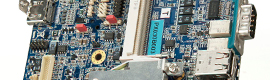
Basado en la placa VIA VAB-1000 Pico-ITX, el VIA Artigo A900 dispone de un procesador de dos núcleos VIA Elite E1000 Cortex-A9 SoC (sistema en un chip) a 1,0 GHz con gráficos 2D/3D de alto rendimiento y un motor de vídeo que admite la aceleración por hardware de Open GL ES 3.0 and simultaneous playback of multiple HD videos.
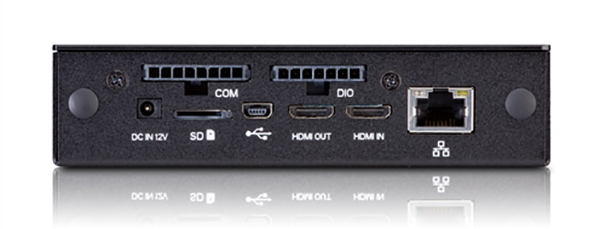
También dispone de un conjunto de funciones de E/S en los paneles frontal y posterior de su chasis sin ventilador. Por delante presenta tres puertos USB 2.0 y conectores para entrada/salida de audio, mientras que en la parte posterior incluye dos puertos Mini HDMI para entrada y salida HDMI, un puerto de E/S digital que admite GPIO de 4 bits, un puerto COM compatible con RS232/485, un puerto Gigabit Ethernet, una ranura para tarjetas micro SD, un puerto Mini USB 2.0 y una entrada de alimentación de 12 V.
Las ranuras mSATA y Mini-PCIe de la placa ofrecen opciones versátiles para ampliar el sistema, que incluyen la integración de conectividad de red inalámbrica de alta velocidad mediante módulos de banda ancha móvil mini-PCIe 802.11b/g/n y HSP/UMTS 3.75G a elegir.
Otras prestaciones integradas comprenden 2 GB de memoria DDR3 SDRAM y 4 GB de memoria eMMC flash. El sistema es compatible con la función Wake On LAN (WOL), por lo que resulta una solución idónea para crear dispositivos destinados a la Internet de las Cosas y gestionados de forma remota para casi cualquier entorno.
Did you like this article?
Subscribe to our NEWSLETTER and you won't miss anything.
Related articles
 Now Touch series 5 Steel Android: all-in-one touch screens for industrial environments
 Extron IN1808: switches for environments requiring 4K/60 video support
 Crestron finds the perfect framework for easier total connectivity in the Internet of Things
 Reality Editor: MIT augmented reality system to connect with the Internet of Things
 IBM invests 3.300 million dollars to create its division for the Internet of Things
 Telefónica markets the first product for the Internet of Things with Thinking Things
 VIA facilitates communication in applications oriented to the Internet of Things with Amos-3003
VIA shows at ESEC 2014 your latest solutions for digital signage and the Internet of Things
VIA facilitates communication in applications oriented to the Internet of Things with Amos-3003
VIA shows at ESEC 2014 your latest solutions for digital signage and the Internet of Things
 Zebra Technologies develops Zatar, cloud-based ‘Internet of Things’ solution for businesses
The Internet of Things boosts the economy with profit forecasts of 613.000 million dollars
Zebra Technologies develops Zatar, cloud-based ‘Internet of Things’ solution for businesses
The Internet of Things boosts the economy with profit forecasts of 613.000 million dollars
 Internet of things and big data: walking towards a new revolution
 ARM Digital Signage with Android Support from VIA
 VIA announces ARM-based digital signage system with Android support
 VIA adds support for Android on its x86 platforms