


Is software the future of the audiovisual industry?
In this article, Timothy Griffin, CTO of Userful, analyzes for Digital AV Magazine some of the trends that have been appearing as a result of the increase in software solutions in the audiovisual market, and that respond to problems that were previously solved with specialized and expensive equipment.
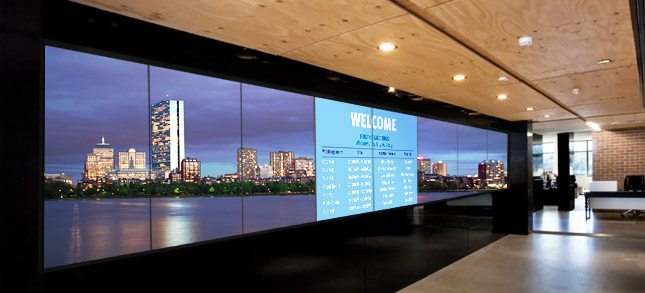
Software has become an integral component in people's lives. In any industry and market, Applications have been changing the way we interact with the world. Network infrastructures have also transformed the way the world is interconnected., giving instant access to information, no matter where you are.
The software domain has been creating new challenges and opportunities in the audiovisual industry. The image processing capabilities of a modern PC are impressive and it is possible to handle 15 and even 30 screens.
Software-based solutions are solving problems in the AV world that were previously done by specialized and expensive equipment. By its nature, software frees AV professionals from using this specialized equipment, through systems based on the 'server appliance' model, software solution that uses a standard PC.
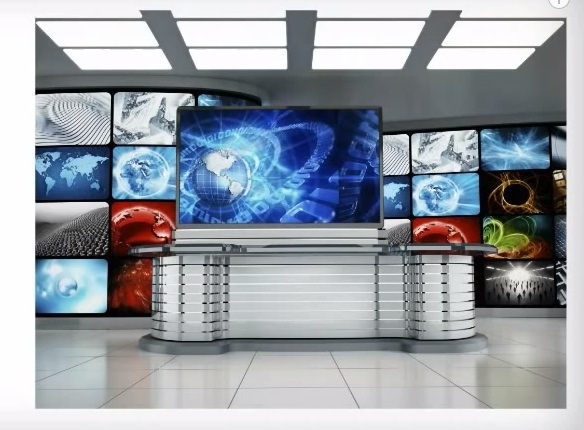 The Userful Network Video Wall is an example of this type of system, a software-based solution implemented with standard PCs and HDMI/SDI capture cards, that replace high-cost conventional controllers and use a network video model.
Software-based solutions offer flexibility and significant cost savings, by giving the user hardware options. Since companies only need to deal with software and not hardware development, solutions are better adapted to market demands, that is to say, can develop new features faster.
Modular matrix
 A great example of this transition from traditional AV hardware to software-based solutions are controllers..
When you need to stream content from multiple sources to multiple displays, traditionally a modular matrix is used, a device with physical buttons, that distributes content between inputs and outputs, and are limited to the physical number of I/Os they have.
The other problem is that the modular array only distributes content, so an additional AV device or PC is needed to generate the content. Finally, modular array is generally a local device, meaning the operator has to be on site to set up content distribution.
In this new world of software AV, The graphical interface is controlled from a web browser, in the user's preferred language. A software-based, network-distributed solution enables a number of additional functionalities.
 For example, a user can see both the name of a channel and a preview of the content in the console, prior to displaying it on the screens. Feeds can be delivered over the network or a local content management system.
Using software solutions to solve challenges also allows customers to get rid of proprietary hardware.. A standard PC with capture cards and a network connection can stream IP video to terminals connected to the displays and use software to switch between different sources..
Videowall
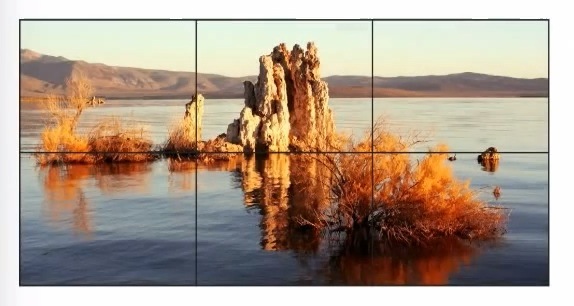
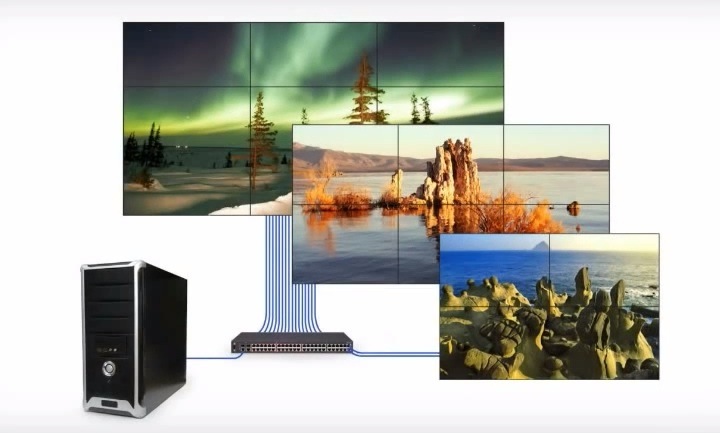 Video walls are another great example of implementation where software is impacting the audiovisual market.. Traditional video walls require specialized solutions or the use of expensive displays with limited configuration options.
Nowadays, las ‘server appliances’ can be used to transmit video over IP with great flexibility and ease of configuration, in addition to offering a significant cost reduction, compared to conventional controllers.
Network transmission speeds have reached a point where a standard PC can easily stream standalone content to 25 screens. All from a software solution such as Userful Network Video Wall. The flexibility of solutions like this allows you to have several independent video walls from a single PC, plus on-the-fly reconfigurations and content management with a central web console.
Software-based solutions give users the benefits of expansion. They only need to add the screens to the existing video, without the need to modify the entire infrastructure. If you want to display higher resolution content, you just have to change the computer.
This new era of ‘AV-over-IP’ and ‘AV-over-software’ is simplifying the implementation of a wide variety of content delivery solutions.. Matrices modulares, video over IP and software-based video walls are three examples. This offers great opportunities to system integrators willing to use this model and provides great competitiveness to those who adopt it more quickly..
The future of AV is getting brighter as screens proliferate around the world. And the future is based on software.
Timothy Griffin
Founder and Chief Technology Officer of Userful

¿Te gustó este artículo?
Subscribe to our NEWSLETTER and you won't miss anything.