


Panasonic projection technology visually reconstructs the 'Forum of Augustus'’ in Rome
Known as 'Forum of Augustus', This important archaeological site in Rome has used Panasonic video projection technology to create a spectacular visual reconstruction of the period, thanks to the combination of 33 projectors from this manufacturer synchronized with other devices.
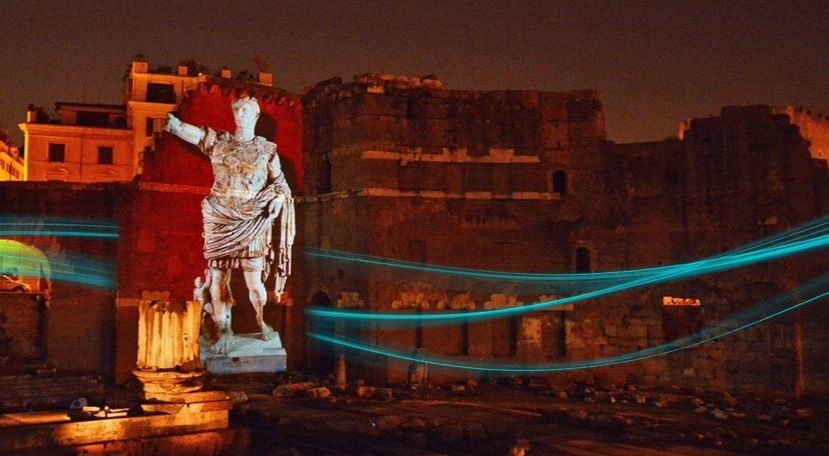
Panasonic has contributed its video projection technology to visually recreate the archaeological site of Rome, known as 'Forum of Augustus', thanks to a combination of 33 PT-EX16KE series projectors for larger images and PT-VX500 series for details.
This visual experience recreates the splendor of this imperial forum with more than 2.000 years of history, where projections are seamlessly synchronized with dozens of devices on a surface of 300 meters long and from a distance of more than 40 meters from the projection point, with high resolution and luminosity images to show all the details and colors of the time.
The use of projection technology has served to give life to the monuments and ruins of this important archaeological site, in which the viewer can visualize in detail the greatness of ancient Rome, according to the project conceived by the physicist Paco Lanciano and the television presenter Piero Angela, promoted by the Department of Arts and Entertainment of the City Council of Rome, and produced by Zètema Progetto Cultura.
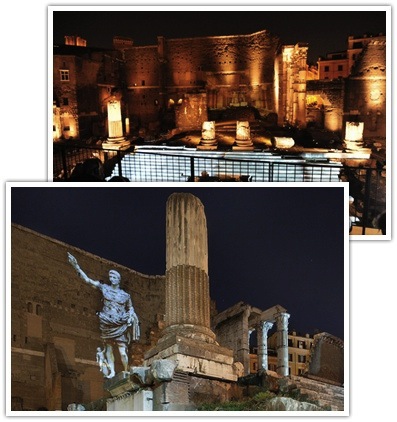 This complex production, with the title 'Forum of Augustus, 2.000 years later', It has been carried out on the occasion of the celebrations of the bimillennial of the death of Augustus (19 of August 14 dC), which has had the participation of numerous archaeological professionals, physical, computer scientists and audiovisual experts.
The spectacular installation is located in one of the temples of ancient Rome, en the Via dei Fori Imperiali, in which the visitor can witness the effect of dozens of devices perfectly synchronized to create an impressive spectacle in front of a kind of enormous amphitheater.
 As Siro Volpato explains, commercial director of Adeo Group, local integrator in this project, “when they chose us to execute this project, We understood that it was a great challenge that would have international appeal. In this case, we needed to have numerous synchronized devices to cover a projection hundreds of meters long, and the first choice was to look for video projectors that offered the appropriate technology to determine if the project was viable”.
The option was to find devices that offered a luminosity of more than 10.000 Ansi lumens at a distance greater than 40 meters from the projection point. “We carry out numerous tests with LCD and DLP systems to simultaneously project the same images in parallel,” Volpato points out., and we opted for LCD technology 13.000 Panasonic lumens for its brightness, resolution and cost according to the established budget”.
Another of the challenges of the project was its transportation, since “displacing a significant number of sophisticated devices, big and small, to an area of Rome that is closed to traffic and not accessible to articulated trucks was not an easy task. Consequently, We had to look for a suitable vehicle large enough to carry all the systems and, both, of a small size to access the archaeological zone”, remember this manager.
Besides, For this operation “we created a system, which we have called Remu (Multimedia direction), that uses network cabling to handle audio, video and lights on remote equipment that is located in multiple separate locations. The idea was to create a kind of big video that we could use to control everything with a couple of actions, with all the typical functions necessary to manage a movie”.
 The option involved a software application to run simultaneously 33 movies, six channels of audio and lighting with Panasonic video projectors; specifically six of the PTEX12KE model, six PT-EX16KEs and twenty-one PT-VX500s, “that we synchronize to the millimeter. We work a lot on recalibrating the images of each system meticulously –says Volpato-, even during the screening phase. For this, we had to repeatedly use the software to make sure everything was perfect, second by second, during the 45 minutes of film. It was a bit like being the conductor of an orchestra., responsible for 33 musicians during a concert at La Scala”.
For example, the program includes, among other things, a scene in which migratory birds fly from right to left over a distance of more than 300 metros, “and we managed to create this fluid scene without gaps or overlaps between the images from one projector to the next.”. We used active and passive controls to ensure that a local server could control the timecodes of the entire movie and each individual projection, both during the startup phase and at runtime”, points out.
In this sense, los 33 Panasonic projectors are continuously synchronized using a predetermined schedule and the system is able to perform a reset without any delay, in just milliseconds.
For Volpato, “The response of the video projectors is excellent, taking into account that we did not have screens such as video terminals and the old walls had somewhat uneven surfaces. From the first screening, made before the mayor of Rome, ambassadors and diplomats, so far everything has worked perfectly: three passes every night, of 45 minutes long each, before an audience of two hundred people each time, which will be carried out for three years”.
Did you like this article?
Subscribe to our NEWSLETTER and you won't miss anything.
Related articles
 Panasonic Connect helps you choose the best 3D projection technology
 Lang AG invests in Panasonic projection technology
 Panasonic brings its projection technology to the Area15 space in Las Vegas
 Panasonic PT-FRQ50: laser projection 5.200 lumens and Solid Shine technology
 Digital Projection Technology Visually Revitalizes Roshen Cake Factory
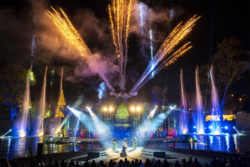 Panasonic projection technology establishes itself in the world of culture
 Projection Artworks redefines the boundaries of videomapping with Panasonic projection technology
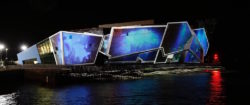 Architectural projection with Panasonic laser technology on the façade of The Deep aquarium
 MiCo Milan chooses Panasonic projection technology for its congresses
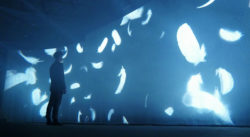 Panasonic merges Japanese tradition with projection technology at Fuori Salone
 Panasonic 4K laser projection technology at London Church House events
 Panasonic laser projection technology for corporate meetings and events
 Swiss Chocolate Adventure offers a sweet immersive projection with Panasonic technology
 Panasonic brings its display and projection technology to the Cathedral of Our Lady of Munich