


Audiovisual exhibition of the San Telmo Museum pays tribute to the clandestine network Comète
Comet, the clandestine network that operated during World War II, is the protagonist of the audiovisual and interactive installation, composed of 32 pantallas y producida por Morgancrea, que se expone en el Museo San Telmo de Donostia.
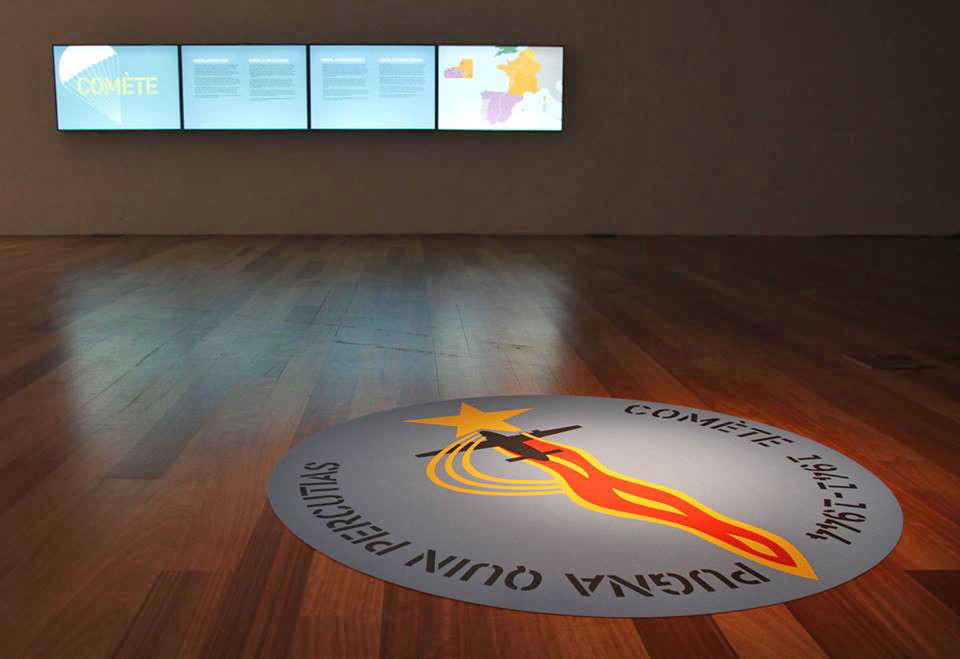
The past 17 de marzo el San Telmo Museum de Donostia inauguró la exposición interactiva ‘Comète, La Red de la Evasión’, una muestra dedicada a la organización clandestina franco-belga (1941-44) que se dedicó a acoger y repatriar a aviadores aliados que eran derribados en la Europa ocupada por los nazis durante la II Guerra Mundial.
Se trata de un proyecto audiovisual e interactivo, que permanecerá abierto hasta el 31 de mayo en la Sala Laboratorio del museo, con entrada gratuita, and?, coincidiendo con el 70 aniversario del fin de la II Guerra Mundial, busca rendir homenaje a todos los que integraron la organización civil Comète, así como a supervivientes y familiares.

La vía de evasión comenzaba en Bruselas y, tras atravesar ciudades como París, Burdeos o Bayona, llegaba hasta el País Vasco, por donde los fugitivos cruzaban la frontera hacia España por el río Bidasoa o los Pirineos. Una vez en San Sebastián, los servicios de las embajadas británica o belga se hacían cargo de los aviadores y eran conducidos hasta Gibraltar para ser repatriados de nuevo a Gran Bretaña.
En esta hazaña participaron más de 3.000 civiles de varios países, con un papel muy destacado de las mujeres, que lograron acoger o repatriar a unos 800 fugitivos, la mayoría aviadores aliados.
La exposición es una colaboración realizada entre el Museo San Telmo, la Casa de la Paz y los Derechos Humanos y Donostia 2016, y muestra un viaje por las ocho estaciones que corresponden al recorrido del mapa europeo realizado por la red Comète: London, Brussels, Paris, Burdeos, Dax, Baiona, Bidasoa, Pirineos, Gipuzkoa y Gibraltar.
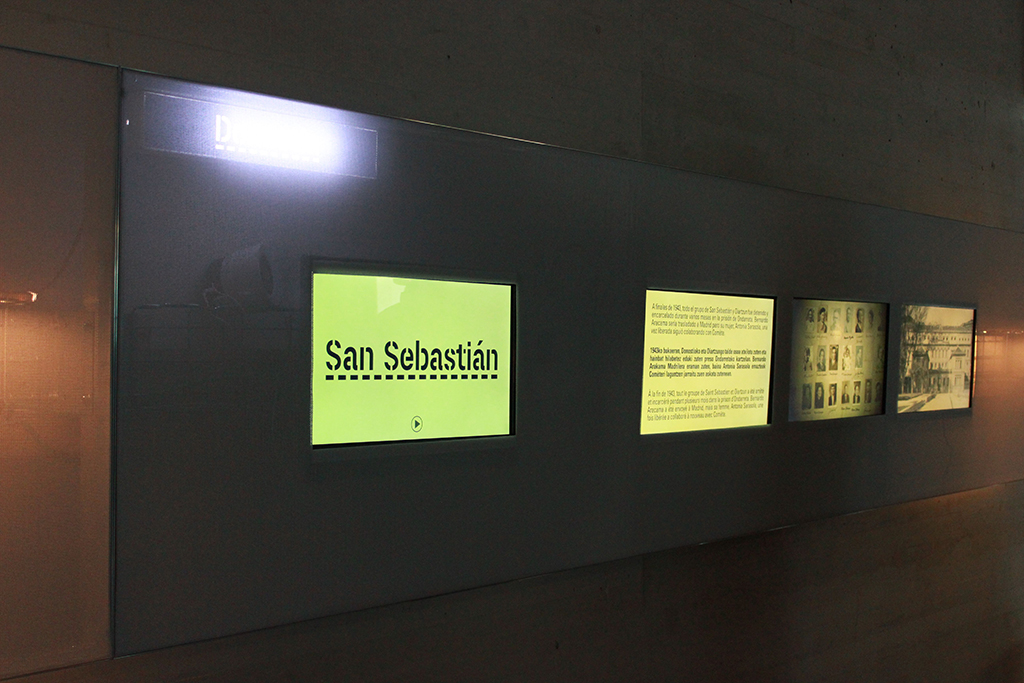 Para mostrar toda esta historia se ha realizado el montaje de un friso audiovisual formado por 32 monitors, algunos de ellos interactivos, que recuerda la estela de un cometa y donde se rememoran testimonios de la época.
Estas imágenes son las que quedaron fuera del documental presentado en 2011 The Last Passage, para el que se realizó un trabajo de investigación que duró cinco años y cuya producción ha corrido a cargo de Morgancrea a partir de materiales de archivo de Moztu Filmak.
Among the 32 monitors, 24 pantallas ofrecen información, images, documentos y testimonios sobre la red Comète de forma sincronizada. Esto permite crear juegos audiovisuales que se desarrollan simultáneamente en todos los monitores, como el paso de aviones, el recorrido de un tren o la escritura de un texto en todas las pantallas.

Para realizar esta instalación se han utilizado 8 ordenadores Mac Mini con salida a 3 monitors. El sistema de control, programación y sincronización se ha creado mediante QLab, una aplicación de Show Control para Mac desarrollada por Figure53.
In addition, 8 pantallas táctiles e interactivas alojan cerca de 200 vídeos en los que se pueden ver y escuchar entrevistas con una treintena de protagonistas o familiares de personas involucradas en la red.
También se están Hemos optado por tablets ViewSonic VSD221 de 22 inches, que trabajan sobre OS Android, con un interface en HTML5 desarrollado por la empresa Hamaikaweb, que ha permitido subtitular electrónicamente las entrevistas en 4 languages (Basque, castellano, French, English) seleccionables por el usuario.
[vimeo]https://vimeo.com/122757896[/vimeo]
Did you like this article?
Subscribe to our NEWSLETTER and you won't miss anything.
Related articles
 MCR pays tribute to the innovation of its brands at its awards gala 2025
 The Thyssen museum uses Canon projectors to pay tribute to designer Balenciaga
 An emotional digital exhibition recreates the tribute of sport after the 9/11 attack
 Vitelsa participates in the audiovisual installation of the Joan Miró exhibition at the IVAM
 Hitachi brought to life the 'Imagine Moscow' exhibition’ from the London Design Museum
LG and Madpixel bring the masterpieces of great international painters to the San Telmo Museum
Hitachi brought to life the 'Imagine Moscow' exhibition’ from the London Design Museum
LG and Madpixel bring the masterpieces of great international painters to the San Telmo Museum
 IBM Watson pays tribute to Gaudí at MWC 2017 with its cognitive intelligence in real time
 'La noche toledana' pays tribute to 'Don Quixote' with interactive videomapping produced by Ibercover
 The cathedral of Santiago is transformed again with a 3D videomapping that pays tribute to the victims of Angrois
 Acciona makes an audiovisual installation for the temporary exhibition Monet's Garden in Melbourne
 Vitelsa carries out the audiovisual installation of the exhibition 'Covers' for the University of Valencia Foundation’
 La Fundación Bancaja encomienda a Vitelsa la instalación audiovisual de la exposición ‘Andy Warhol Superstar’
 The San Telmo Museum in San Sebastián hosts the exhibition 'Global Screen’
 The Mataró Museum uses new technologies in a pioneering exhibition