


Expertos de la industria AV debaten sobre UHD y redes HDBaseT en digital signage y cartelería digital
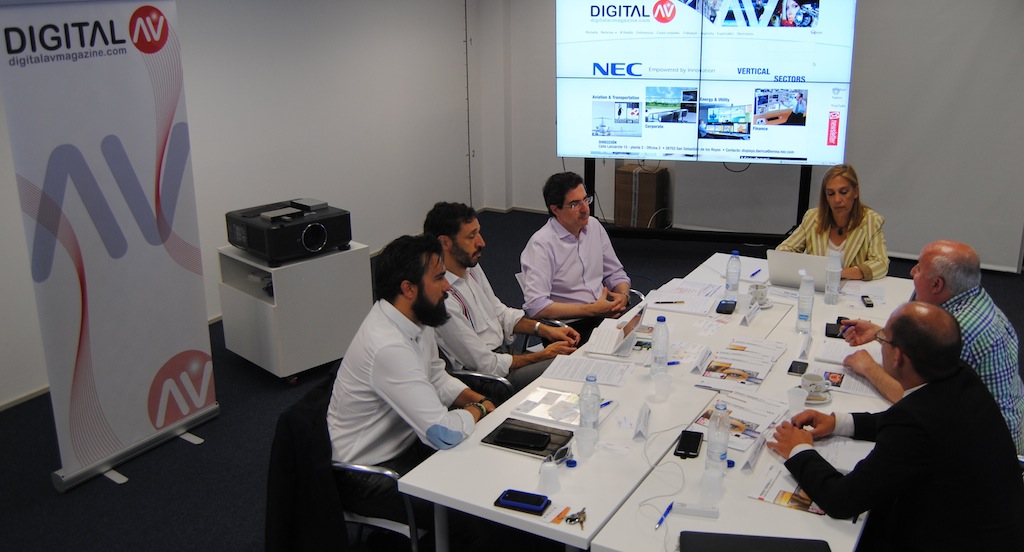
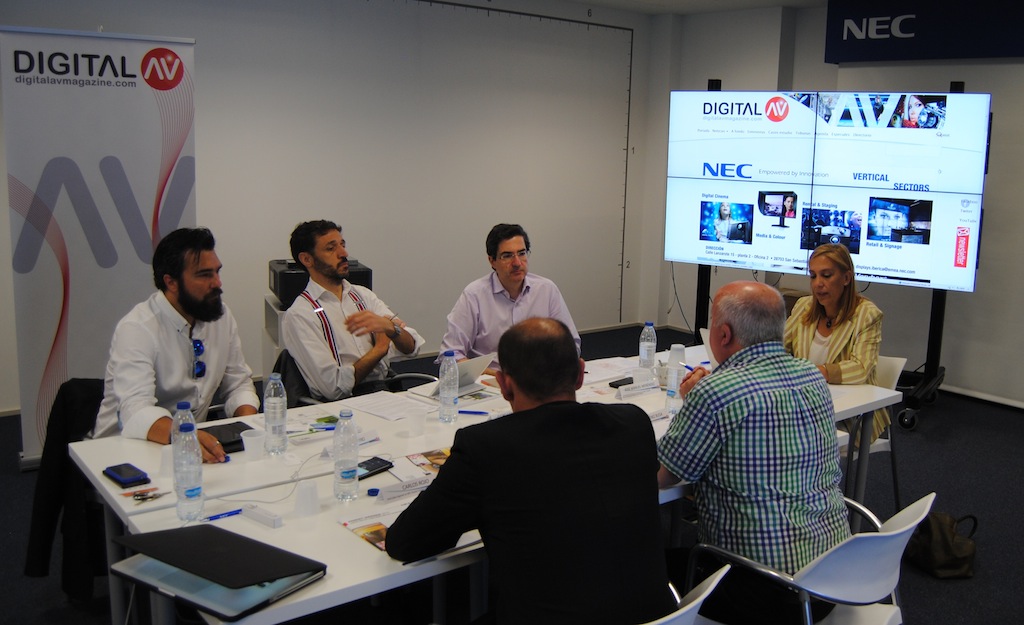
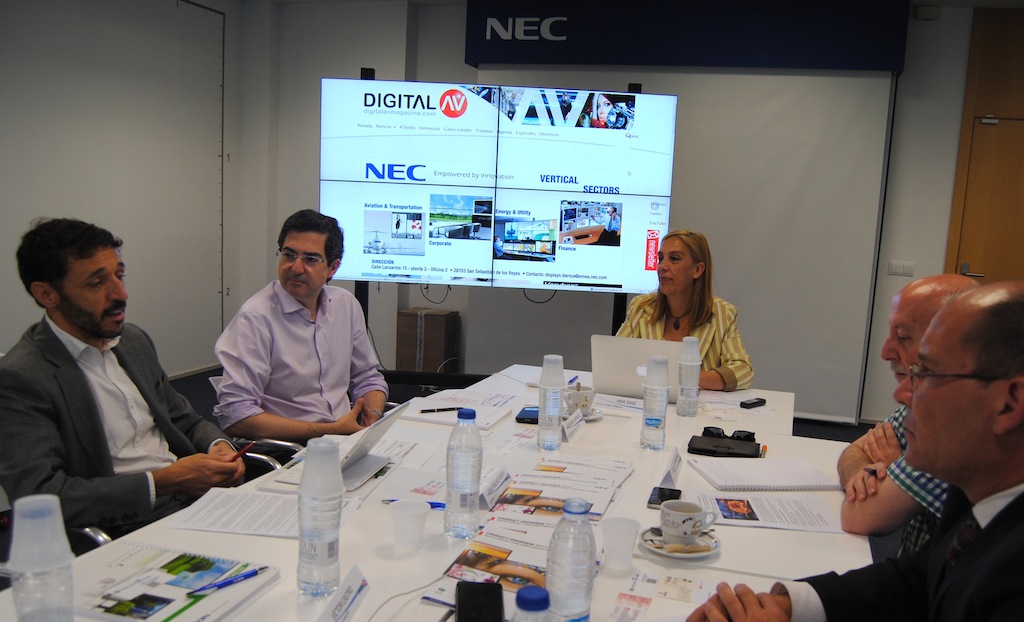
En el marco visual e interactivo de la nueva Sala Demo que NEC Display tiene en Madrid, este fabricante ha organizado, en colaboración con Digital AV Magazine, una serie de desayunos de trabajo con la participación de expertos de la industria AV y de digital signage con el propósito de analizar y debatir las últimas tendencias tecnológicas del mercado y su aplicación práctica a proyectos de negocio.
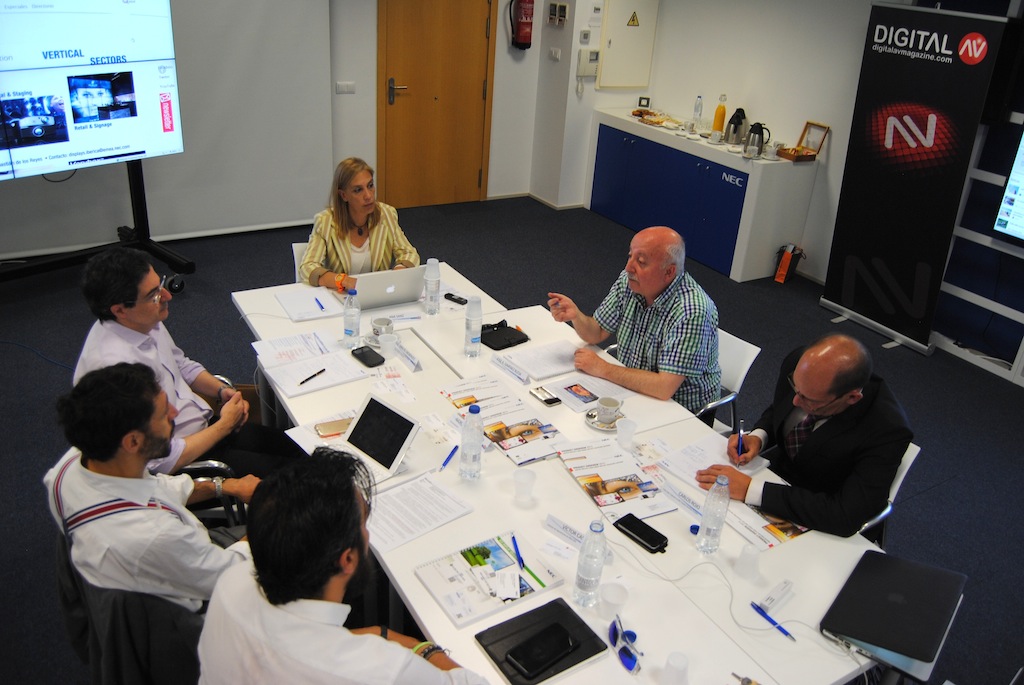
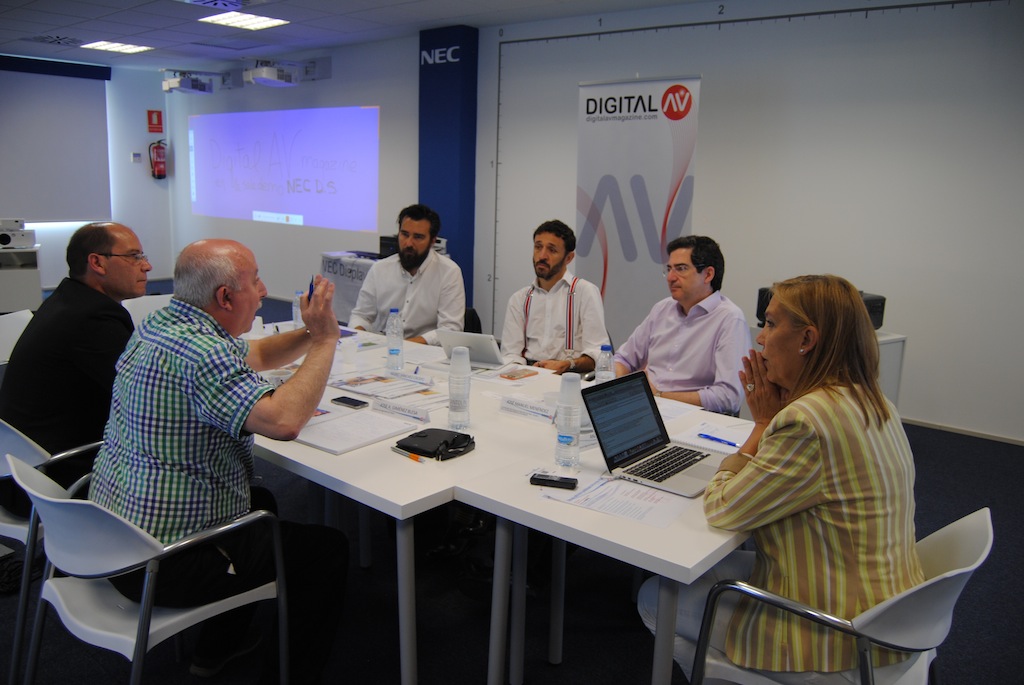
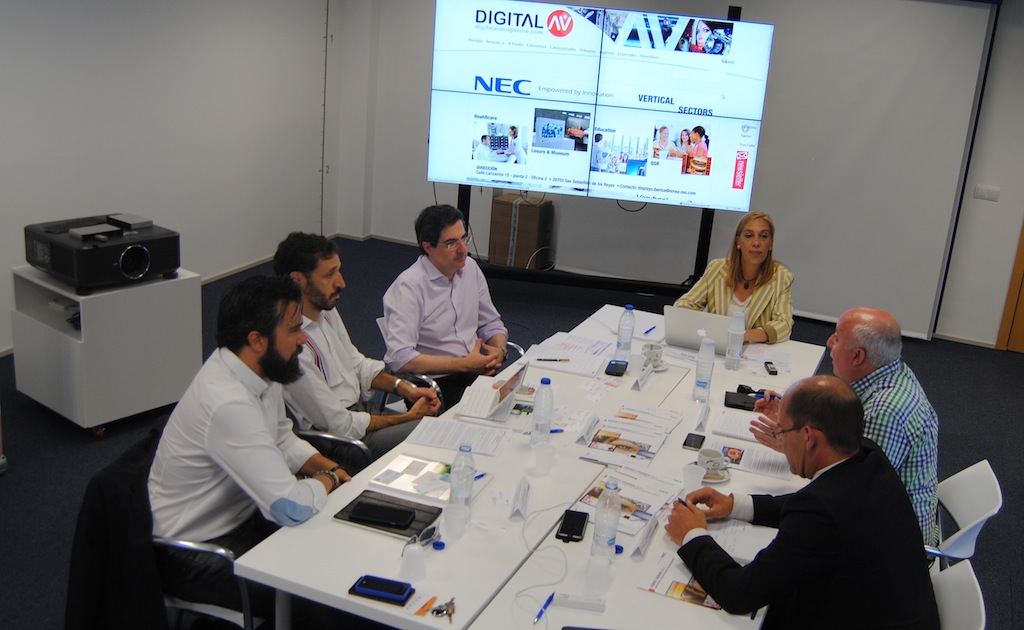
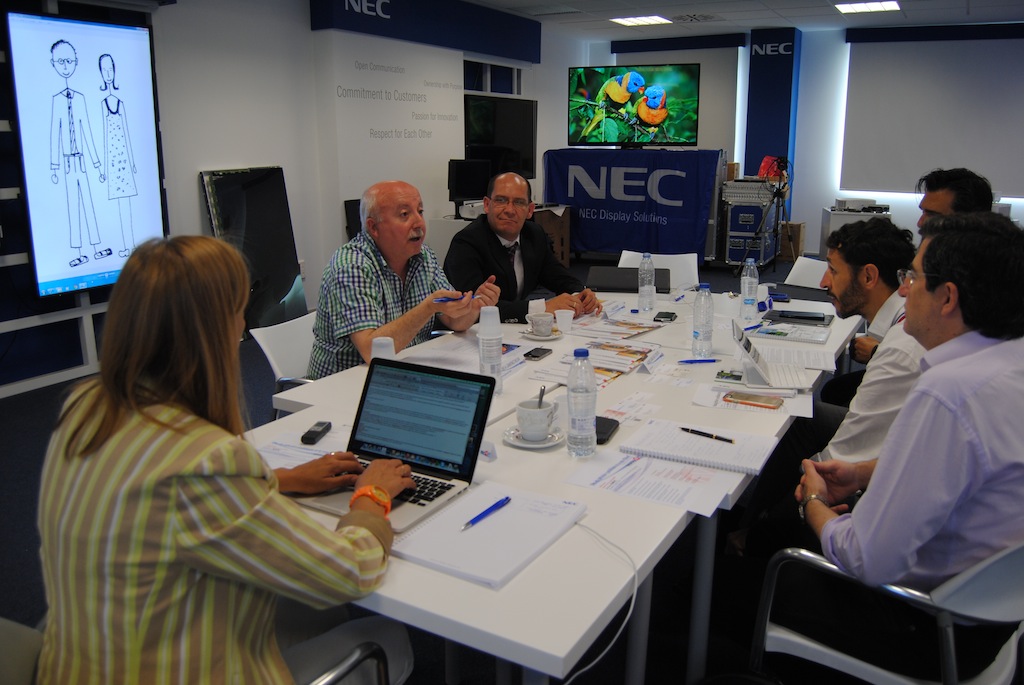
‘Ultra alta definición y posibilidades de las redes HDBaseT’, aplicado al entorno de publicidad dinámica y señalización digital (DS), ha sido el tema que ha inaugurado este ciclo de debates tecnológicos, con la aportación experta de José Antonio Giménez Blesa, director de ingeniería de Vitelsa; Carlos Rojo, field sales engineer de NEC Display Solutions; José Manuel Menéndez, coordinador del Grupo de Aplicación de Teleco. Visuales de la Universidad Politécnica de Madrid (UPM); Isidro Sánchez-Crespo, CEO of Music, y Víctor Castro, operations director of Mira DSS, en torno a la mesa moderada por Ana Sanz, director of Digital AV Magazine.
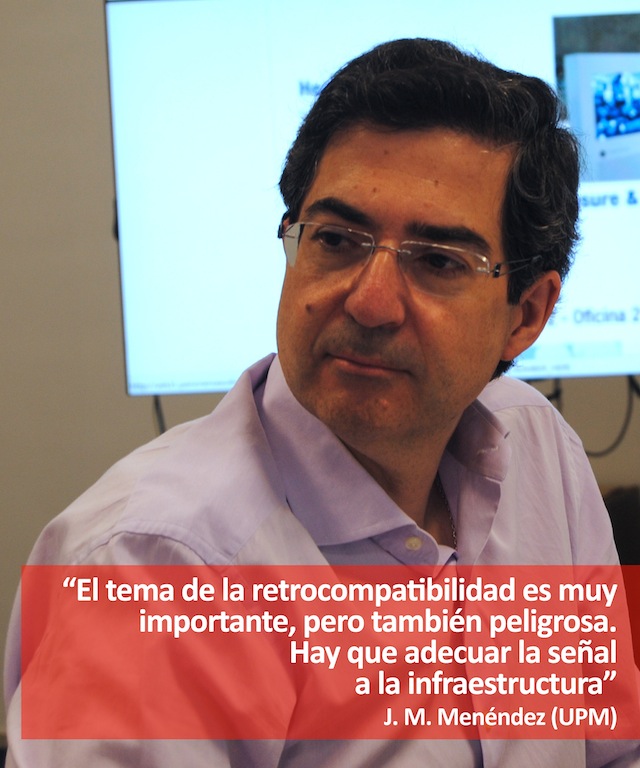 Las posibilidades que la tecnología 4K-UHD ofrece al mercado de la publicidad dinámica son enormes para todos los participantes, si bien la utilización de HDBaseT para reproducir señales en estos entornos presenta todavía demasiados escollos.Para J.M. Menéndez, de la UPM, “las cualidades y funcionalidades que ofrece UHD en una pantalla contribuyen a lograr una mayor proximidad e impacto por el usuario que lo observa, acentuando la inmersión en el contenido que se muestra. But also, ofrece nuevas opciones vinculadas con la detección del interés del usuario, segmentación por perfil, age, sex, tiempo de visualización,… lo que conlleva la generación de nuevos contenidos, imágenes y escenas enfocados a ese rol personalizado”.
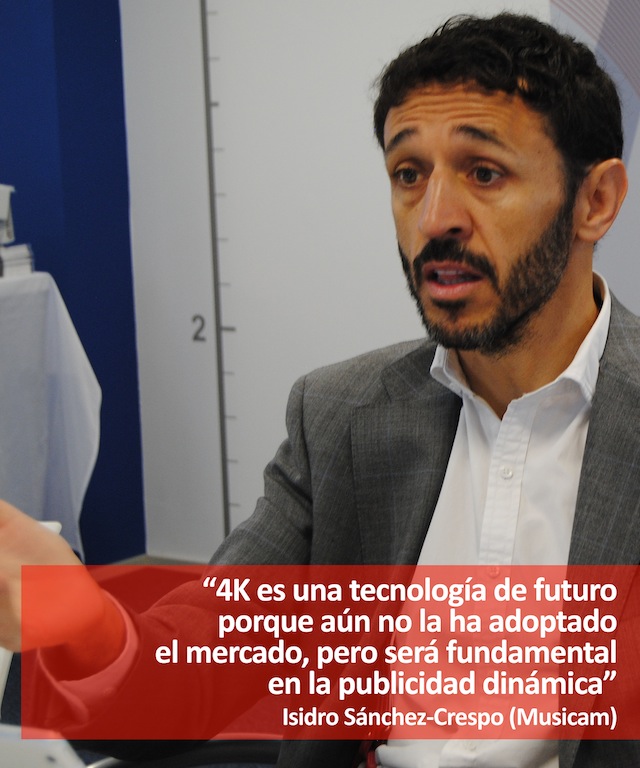
Con otro matiz, Isidro Sánchez-Crespo, de Musicam, apunta que “es todavía una tecnología de futuro, porque aún no es presente en su adopción por parte del mercado, si bien en el entorno de la publicidad dinámica va a ser fundamental. Todo lo que atañe a la mejora de contenidos y a la experiencia de usuario es vital en cualquier negocio. Pero también hay muchas dudas en cuanto a modelos de negocio, ya que desde hace años las opciones se reducen a la venta de hardware y software, pero los contenidos los hace el cliente, y al revés; lo que ha generado que al final estas redes visuales se limiten en una gran parte a pantallas decorativas y a la desaparición de muchas empresas comerciales y creadoras de contenidos”.
El experto de NEC Display, Carlos Rojo, va más allá y subraya que “cada vez hay una motivación mayor por generar nuevos contenidos, y si es con la máxima definición mejor. También es cierto que cuando hablamos de la adopción de nuevas tecnologías, like 4K, casi siempre pensamos en grandes clientes y no en una pyme que quiera una o dos pantallas con contenidos creativos para impactar en sus clientes. Y este es un problema que se da tanto en hardware como en generación de contenidos”.
 In this sense, Rojo subraya que “hay clientes que no necesitan tener todo en su instalación, pero sí que quieren invertir en este tipo de sistemas y hacer algo con ellos. También diferenciaría las opciones que ofrece la cartelería digital, con formatos y escalas diferentes que permiten ofrecer mayor profundidad. Un ejemplo de ello es la instalación que hemos realizado en Aena, con monitores de 40” que ofrecen información de calidad al usuario en menor espacio y en más puntos”.
Para J.A. Giménez Blesa, de Vitelsa, “la tecnología 4K no tiene sentido en pequeño formato, sino a partir de 60 a 80”, aunque abre un nuevo mundo para el sector AV. Estoy de acuerdo en que todos los proyectos hay que verlos con una visión global, sean grandes o pequeños, y que no se puede dar la misma solución sin tener en cuenta las necesidades de la instalación, los contenidos de acuerdo a la tecnología más adecuada o la interactividad con el usuario”.
HDBaseT, ¿un estándar o una declaración de intenciones para DS?
La pregunta es clara y la respuesta de los expertos está en esa línea y anima el debate: “esta en gestación”. Then, ¿qué consecuencias supone para audio y vídeo, Ethernet, USB, control y alimentación utilizar un sencillo cable LAN de hasta 100 metros?
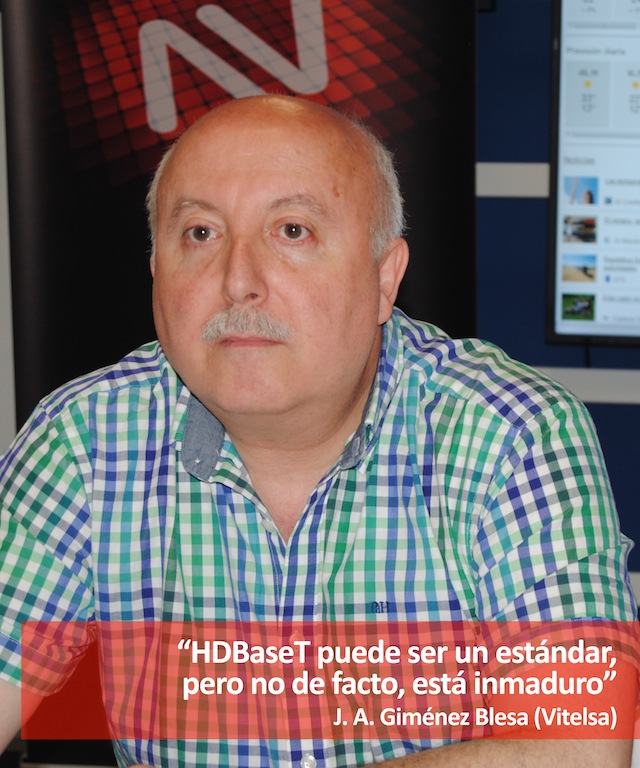
El responsable de Vitelsa ahonda un poco más y apunta que “la señal funciona perfectamente en entornos broadcast para emisión de programas. HDBaseT es, at the moment, una especie de camino construido entre varios fabricantes y el estándar, as such, es mínimo. El objetivo es transportar señales de vídeo, audio, data, control e incluso potencia por un único cable a un número ‘x’ de displays, y hasta ahí es real, pero cada fabricante tiene su propio sistema y la interoperabilidad es cero. Es un estándar, pero no de facto, está inmaduro”.
 Carlos Rojo le responde que “todos los cambios son complejos y que no es un estándar Vesa, sino que esta gestándose, pero nuestros equipos están preparados y las empresas tecnológicas y de ingeniería fomentamos esa compatibilidad”.
“De acuerdo –replica Giménez Blesa-, pero resulta que la compra de un transmisor y un receptor para ello, con una matriz de uno y otra al final de otro fabricante para llevar una señal a una pantalla, vale a veces más que la propia pantalla. Es de locos, y al final se opta por el modelo monofabricante. Besides, al abaratar los costes se accede a periféricos de terceros, donde la interoperabilidad es igualmente cero y al final no funciona. Puede que sirva para el entorno doméstico, pero no para la industria. Al final una solución broadcast es más efectiva que una propuesta HDBaseT”.
El responsable de la UPM añade un nuevo elemento al debate: “cambiar HDBaseT por DisplayPort, que es libre de licencias, ya que DVI no lleva audio. El problema es que HDBaseT no se puede convertir en un ‘jpeg’ al uso si quiere evolucionar; o que sea un extensor para utilizar el cableado de transporte de señal y luego no se coordine con sistemas y los requerimientos de cada proyecto”.
 Para Rojo una opción “es que se desarrolle una nueva gama de producto, como extensores CAT5. Precisamente esta Sala Demo sirve para probar esas soluciones, y de hecho hemos invitado a desarrolladores de HDBaseT, like Crestron, Extron, Kramer, etc. Uno de los problemas de estas grandes marcas con HDBaseT es que utilizan potencias diferentes. En el caso de los fabricantes, estamos obligados a pone un HDMI en nuestros sistemas, y en la mayoría de los casos tenemos también DisplayPort para hacer salida en 4K, que de momento está más maduro que HDBaseT y ofrece más ancho de banda”.
Giménez Blesa aclara también que “como integradores, contamos con un microlaboratorio, ya que no instalamos nada que no hayamos probado antes, para conocer tanto la norma teórica como su aplicación práctica y comprobar que funciona, con el fin de no hacer experimentos fallidos y aprender de los errores. HDBaseT no es una norma ni un estándar: es una declaración de intenciones, porque sus valedores no están orientados a la interoperabilidad y, at the moment, no parece que AMX, Crestron, Extron, etc. abran su protocolo y se homologue”.
“El problema -apunta Rojo- es que hay una doble información, errónea, sobre 4K, ya que los clientes piensan simplemente que se va a ver mejor pero no saben dónde y cómo se va a conectar, y por eso es tan importante este último aspecto, porque cuando haces un proyecto no puedes fallar. Es necesario que los fabricantes de HDBaseT se pongan de acuerdo y, from there, hacer compatibles todas las comunicaciones”.
El reto de la infraestructura y el ROI
But, llegados a este punto, ¿es la distribución de señales el principal escollo? Y, en ese caso, ¿desde dónde podemos reproducir señales 4K? ¿Depende de los estándares que utilicemos para codificar y comprimir para llevar a cabo la conexión en cadena? Ante estas cuestiones que surgen en la mesa, Carlos Rojo introduce un elemento fundamental en el despliegue de este tipo de proyectos: el ROI.
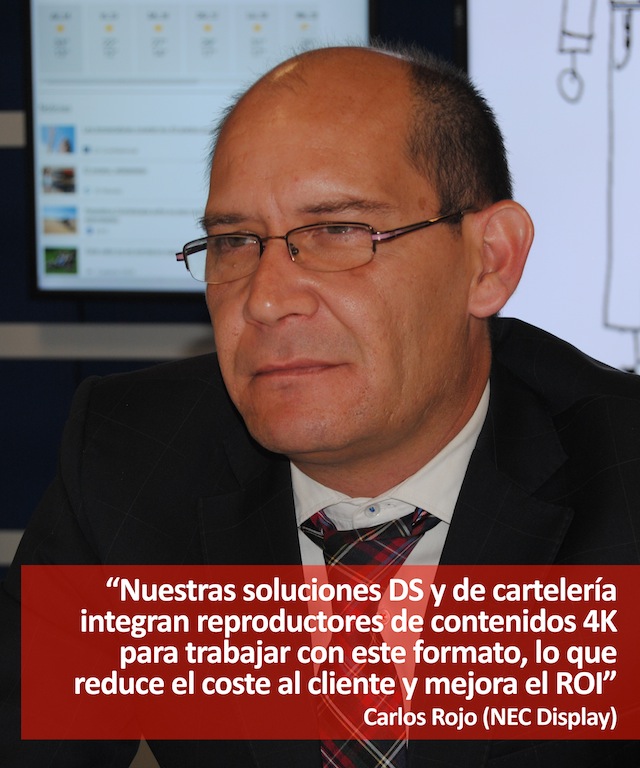
“Es fundamental -asegura- que el cliente conozca el retorno de su inversión y, at the moment, con la tecnología 4K no tenemos ninguna prueba piloto ni feedback que nos lo aporte, porque estamos trabajando con betas, ya que está poco maduro, pese a que hay una gran oferta y los clientes se lo pueden permitir. En NEC hemos desarrollado reproductores de contenidos 4K para nuestros equipos con Intel. La mayoría de nuestras soluciones de cartelería y DS los integran y, aunque no sea 4K nativo, sí pueden soportarlo para trabajar con este formato, lo que reduce el coste al cliente. En muchas instalaciones, como pueden ser los aeropuertos, los videowalls de 3×3 reproducen este tipo de contenidos, ya que el procesador divide y expande para ofrecer una mayor resolución, algo que no ocurre en un centro de control”.
 Pero Giménez Blesa no está del todo de acuerdo: “o hago postproducción para dividir en cuatro señales Full HD reales o no hay nada que hacer. Desde Vitelsa hemos tenido experiencias 4K en entornos museísticos, donde el kit esta en la producción y postproducción 4K (with cameras, estaciones de trabajo…). El tema de la resolución no son estándares, ni broadcast, ni IT/AV, porque lo que hay que hacer es integrar imágenes en movimiento, independientemente de la tecnología, y eso depende de potentes procesadores, como los que tienen los centros de control, para lograr resoluciones diferentes e incluso ir a más de 4K”.
 “El tema de la retrocompatibilidad es muy importante -matiza José Manuel Menéndez- pero no sé hasta qué punto es peligrosa. La señal SD para un sistema Full HD no se puede utilizar con retrocompatibilidad porque estropeas el sistema. Hay que adecuar la señal a la infraestructura porque es contraproducente para todos los agentes de un proyecto. Existen soluciones de cableado y HDBaseT sin compresión que ofrecen esa capacidad para permitir el despliegue de infraestructuras mas económicas”.
 Para Menéndez, este tema es claro: “no se debe adaptar la resolución al espacio, sino al revés o con múltiplos de nativos. Hay que analizar y jugar con el entorno concreto, con el impacto que se quiere ofrecer,… y luego integrar la tecnología. Un ejemplo de ello son los estándares que el estadio Santiago Bernabéu tiene en megafonía y audiovisuales, que son vitales por motivos de seguridad”.
For your part, Sánchez-Crespo subraya que “nos definimos como especialistas en experiencia del usuario, y cuando con las nuevas tecnologías esto lo trasladamos a grandes clientes y ven sus posibilidades, normalmente se queda en la instalación de un flagship, pero no lo extrapolan a su cadena de tiendas o establecimientos; como mucho lo hacen efectivo en gestión de colas y para medio-largo plazo. Uno de los retos es elevar el discurso de lo que hacemos y comercializamos, hemos ganado en cuanto al interlocutor, que antes siempre era sistemas o compras y no entendían la efectividad de estas herramientas en ventas y marketing, que ahora ya está presente”.
¿Hay futuro en despliegues 4K a corto plazo en España?
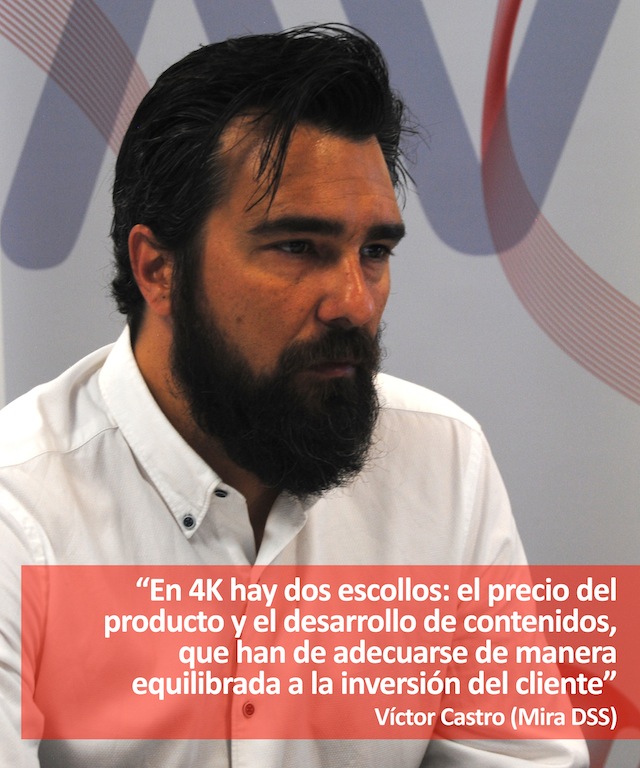
La respuesta la efectúa Víctor Castro, de Mira DSS, “desde el punto de vista comercial, todas las marcas se orientan al 4K porque es el futuro a corto-medio plazo, pero nos encontramos con dos escollos: el precio del producto, ya que el cliente no ve la inversión sino que lo basa en costes; y el desarrollo de contenidos 4K de calidad y su emisión, porque si no matamos moscas a cañonazos y es necesario que sistemas y contenidos se adecuen de manera equilibrada a la inversión del cliente”.
“Es cierto. El objetivo de los fabricantes clásicos, sobre todo del entorno broadcast, es vender 4K, pero no software. Creo que la tendencia será vender captación y mezcla por 4K para activarlo por software”.
Carlos Rojo añade que “el mercado, en DS y cartelería digital en España, aún no está preparado para soluciones 4K, pero también es cierto que en estos mismos entornos se pueden ya realizar trabajos en los que 4K cobra totalmente su sentido, pero el cliente aún no lo ve. Donde sí es cada vez más claro y evidente es en los centros de control”.
“Pero nos limitamos a entornos muy profesionales -recalca Castro-, como también sucede con el de salud, que necesitan este tipo de soluciones en UHD, pero en retail no existen contenidos 4K y se mantienen como están, no avanzan ni ven las posibilidades que tiene”.
El responsable de NEC se muestra de acuerdo y suma “el entorno de videojuegos, con tarjetas gráficas muy potentes; el de arquitectura o el museístico. Tenemos experiencia en cine digital, y en esta área no hay problemas de contenido en este tipo de formato. El reto es trasladar esta generación de contenido y equilibrar el coste en otros mercados, y estamos preparados para ayudar a los clientes”.
 “Efectivamente -continúa Giménez Blesa-, el futuro ya esta aquí, pero hay que formarse y formar y escuchar las necesidades del cliente para aportar soluciones efectivas, porque todos somos aprendices para garantizar su práctica. Irá evolucionando y al final será todo 4K y en nada tendremos pantallas 8K. Tenemos hardware y software, pero el mercado tiene que demandarlo y aportar sentido común en la infraestructura, the systems,…”
El CEO de Musicam comparte todo lo anterior y “por señalar algo más pegado al día a día, es vital escuchar y evangelizar, pero no matar la tecnología ni confundir al cliente y que se produzca un rechazo o un parón como ha sucedido en muchas ocasiones. La crisis ha servido para profesionalizar el sector y ofrecer servicio de valor al cliente”.
“Estamos aprendiendo que la tecnología permite determinadas cosas y que debe contribuir al modelo de negocio -apunta Víctor Castro-. La cuestión es analizar cuál es mi negocio y qué necesito. Cuando ves una pantalla de vídeo es inevitable que los ojos se te vayan a ella, y si es impactante y contenidos bien armados aún más, por eso hay que analizar cuál es el contexto y, en función de ello, decidir lo más adecuado. La tecnología condiciona cómo se deben hacer las campañas, y las posibilidades que ofrece 4K son indudables para generar atracción y feedback”.
El experto de la UPM finaliza la mesa de debate y quiere aportar una reflexión disruptiva: “hemos hablado de temas muy interesantes e innovadores. Hemos analizado UHD en el entorno profesional y creo que en el doméstico resulta paradójico. Estamos en una importante transición tecnológica, como hemos vivido antes de SD a HD y ahora UHD, y es algo que seguirá evolucionando y nos dará nuevas soluciones para diferentes escenarios. Hoy estamos en UHD1-4K, pero ya tenemos UHD2 – 8K para abrir un nuevo debate”.
Did you like this article?
Subscribe to our NEWSLETTER and you won't miss anything.
Related articles
 DSS 2020 will face its first virtual edition with a panel of more than 40 digital signage experts
 King Outdoor and Daktronics advance in the digital signage industry
 Netipbox offers freely accessible Covid-19 content for digital signage networks
 La Smart Building Conference 2018 will be assisted by 25 industry experts
EET Europarts brought together experts from the ProAV market in Madrid, digital signage and video surveillance
La Smart Building Conference 2018 will be assisted by 25 industry experts
EET Europarts brought together experts from the ProAV market in Madrid, digital signage and video surveillance
 BIT 2016: AV industry experts will analyze and debate the key issues of a sector in transformation
 Caverin Solutions analyzes with industry experts the main challenges of the AV sector in Spain
Bluecell transfers the 'Like' concept from social networks to digital signage supports
NEC Display promotes its innovation in digital signage at the III Crambo Digital Signage Symposium
Caverin Solutions analyzes with industry experts the main challenges of the AV sector in Spain
Bluecell transfers the 'Like' concept from social networks to digital signage supports
NEC Display promotes its innovation in digital signage at the III Crambo Digital Signage Symposium
 Matrox presents at NAB 2013 your Maevex units 5100 for digital signage over IP networks
 Toshiba Tec will bring its new range of digital signage 'Slim Signage' to Digital Signage World’
 Micha Risling (HDBaseT Alliance): “HDBaseT is an ideal connectivity technology for digital signage”
 Valladolid is committed to digital signage to inform about its cultural and leisure offer
 AOpen brings together the digital signage industry again to discuss the future of the sector