


Microsoft experiments with augmented reality to achieve more immersive video conferencing
El proyecto que ha llevado a cabo Microsoft se denomina Room2Room y para su puesta en marcha se han utilizado cámaras Kinect con sensores de profundidad y proyectores digitales para capturar la imagen 3D de una persona que se encuentra en una sala y proyectarla a tamaño y tiempo real en otra.
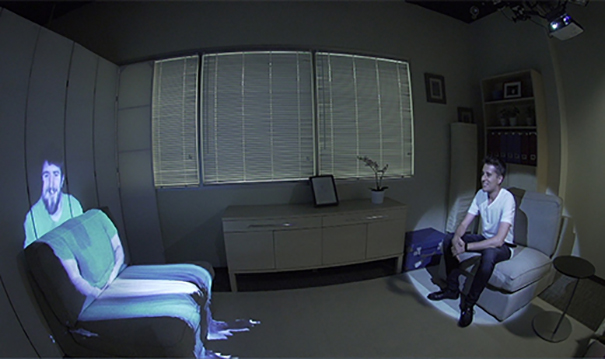
Un grupo de investigadores de Microsoft Research están explorando la forma crear proyecciones más realistas que den la sensación de que no se trata de imágenes en 3D. Un proyecto que va encaminado a conseguir que las videoconferencias se conviertan en experiencias inmersivas, con la sensación que la persona que se encuentra en otro lugar parezca que está sentada frente al interlocutor y manteniendo una conversación casi ‘presencial’.
Este es un proyecto que se está realizando bajo el nombre de Room2Room y es la extensión del antiguo proyecto de realidad aumentada de Microsoft Research llamado RoomAlive.
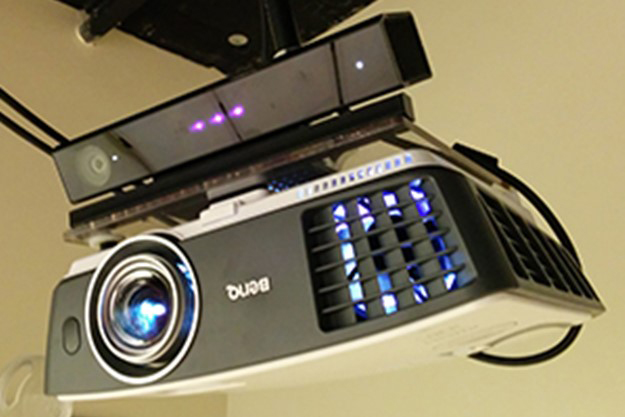 Similar a RoomAlive, Room2Room utiliza cámaras Kinect con sensores de profundidad y proyectores digitales para capturar la imagen de una persona en 3D en una habitación y proyectar una versión a tamaño y tiempo real de esa persona sobre un mueble que se encuentra en otra habitación.
El objetivo es crear una sensación de realidad y poder mantener una conversación ‘natural’ como si la otra persona estuviera en la misma sala.
Esta es una experiencia emergente que plantea aún muchos retos a resolver antes de que pueda ser comercializada y utilizada en una sala de juntas. La tecnología para los sensores y proyección está disponible pero el sistema en sí es demasiado voluminoso y presenta cierta complejidad a la hora de instalar y configurar. Besides, las imágenes no gozan de una alta resolución y, sometimes, es complicado determinar hacia donde se dirige la mirada de la persona con la que se está hablando.
Según Tobias Höllerer, profesor en la Universidad de California, la resolución puede ser mejorar y la creciente popularidad de la realidad virtual, impulsada por el próximo lanzamiento de algunos cascos dirigidos a los consumidores por empresas como Oculus, podría ayudar a avanzar este tipo de tecnología de realidad aumentada. “Estos son los inicios de las conferencias más inmersiva”
Did you like this article?
Subscribe to our NEWSLETTER and you won't miss anything.
Related articles
 ViewSonic CDE30 uses AI for smoother video conferencing
 Microsoft recovers ancient Olympia with AI in 3D and augmented reality
 Mo-Sys se asocia con VividQ para impulsar la realidad aumentada
 Visyon boosts immersive technologies with large virtual and augmented reality space
 Kabel develops an application to introduce augmented reality in the classroom
Microsoft promotes the talent and digital skills of students with augmented and mixed reality
Thyssenkrupp and Microsoft bring augmented reality to the elevator market
Kabel develops an application to introduce augmented reality in the classroom
Microsoft promotes the talent and digital skills of students with augmented and mixed reality
Thyssenkrupp and Microsoft bring augmented reality to the elevator market
 Microsoft Research takes another step in augmented reality with the Holoportation project
 inMediaStudio attends Days Event 2015 with immersive augmented reality solutions
 Google's innovative glasses for augmented reality, ready for launch in 2014
 Bank Experiments with Augmented Reality Virtual Gaming Screen to Engage Consumers
 Nissan experiments with virtual showroom using Microsoft's Kinect
 Microsoft's MirageTable takes video conferencing to a new level
 Reconocimiento facial, realidad aumentada y control de gestos para promocionar ‘Los juegos del hambre’