


Sony Medical offers its comprehensive video chain to view surgical processes in 4K
“La tecnología 4K es el siguiente paso para mejorar las imágenes durante las intervenciones quirúrgicas”, señala John Herman, responsable de marketing europeo de soluciones de uso quirúrgico de Sony Medical, mientras explica los avances que supone la ultra alta definición en este entorno.
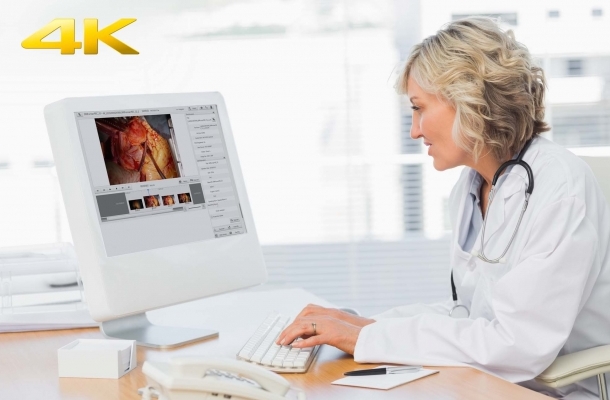
Los vídeos de definición estándar (SD) proporcionaban a los cirujanos una imagen de 680×480 pixels, si bien en los últimos ocho años los hospitales han migrado progresivamente al vídeo de alta definición (Full HD), que ofrece imágenes más nítidas de 1.920×1.080 pixels.
Como apunta John Herman, responsable de marketing europeo de soluciones de uso quirúrgico de Sony Medical, “si hubiéramos preguntado a un cirujano si estaría dispuesto a volver atrás y renunciar al HD, hubiera respondido con un no tajante. Habría argumentado que la definición estándar ya no cumple con los requisitos de cuidado estándar y que incluso podría suponer un riesgo para el paciente”.
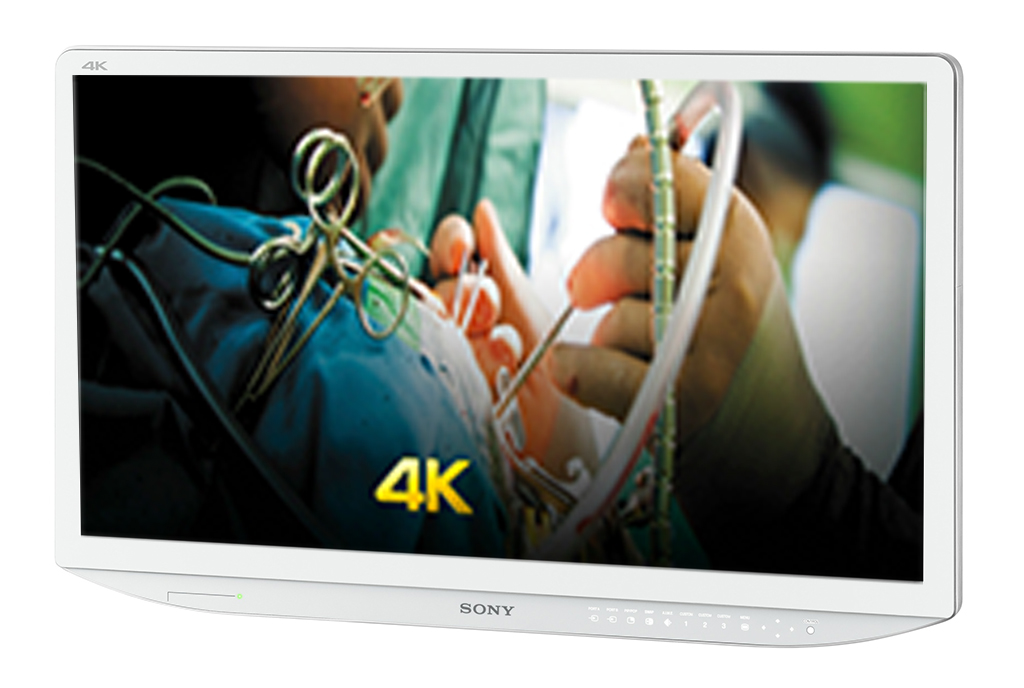
In the same way, el responsable de Sony Medical asegura que los cirujanos estarán listos para adoptar la ultra alta definición 4K, “que proporciona una imagen mucho más nítida, with a greater sensation of depth, lo que para los cirujanos significa diferenciar mejor los vasos sanguíneos u otras estructuras microscópicas. In addition, les da una mayor confianza en el diagnóstico de lo que están viendo, así como en sus movimientos y acciones quirúrgicas. El 4K también ofrece una gama de colores mejorada, que permite reproducir colores realistas”.
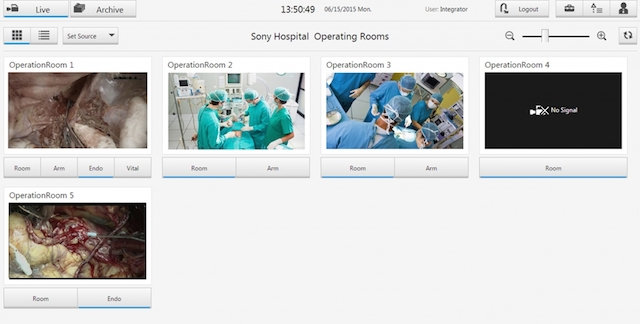
Al igual que con HD, la próxima generación de imágenes 4K se crea en una cadena de vídeo cerrada desde la fuente al resultado final. In this way, en el quirófano, la señal de vídeo se genera en la cámara del endoscopio, la del microscopio quirúrgico o la cámara instalada en un brazo de robot sobre la mesa de operaciones para los procedimientos de cirugía abierta.
“Las fuentes 4K requieren el cuádruple de ancho de banda para transmitir la señal en comparación con HD. Los cables de vídeo estándar no resultan prácticos para transmitir imágenes 4K de forma eficaz, ya que se necesitarían cuatro cables. Con este fin hemos diseñado una nueva plataforma capaz de convertir la señal de vídeo a formato IP y transmitir contenido 4K a través de un único cable”, especifica Herman.
El contenido puede enviarse a cualquier lugar del hospital mediante la conexión LAN para compartirlo o almacenarlo. Para ver la imagen, los datos se convierten de nuevo a un formato de vídeo y, aunque puede reproducirse en cualquier dispositivo HD o 4K, solo se puede apreciar la resolución y la nitidez original en un monitor 4K.
Esta cadena integral resulta fundamental en el quirófano, donde no se pueden producir retrasos en la cadena de procesamiento, y es precisamente donde Sony Medical aporta la experiencia de su departamento de retransmisión en directo. “El cirujano que trabaja con una cámara endoscópica no puede tener latencia en la imagen -apunta Herman-; otherwise, el movimiento de las manos de este mientras visualiza la imagen no estaría coordinado. Cualquier retraso visible haría que el cirujano no pudiera llevar a cabo la operación”.

At the moment, Sony Medical es la única empresa en el sector de imágenes quirúrgicas que proporciona todos los eslabones de la cadena 4K. “Es cierto que hay una gran competencia para los monitores o los grabadores quirúrgicos en los distintos segmentos -continúa Herman-, pero en la cadena 4K, desde la adquisición de la imagen a su procesamiento; desde la grabación a la visualización, nuestra propuesta es única, con un flujo de trabajo 4K completo”.
In this sense, la compañía ha sido pionera en el desarrollo de monitores 4K para uso médico y de un sistema de grabación en 4K para cirugía. “Ahora acabamos de lanzar al mercado un sistema de gestión de contenidos 4K, y en breve presentaremos nuestro sistema de vídeo 4K a través de IP”, explica Herman al tiempo que recuerda que Sony es un referente mundial “en sensores de imagen y tecnología de procesamiento de imágenes y los módulos de cámara de muchos de los endoscopios más utilizados son nuestros”.
Una de las funciones más destacadas del sistema IP de Sony 4K es una arquitectura abierta diseñada a partir de los estándares de la industria y sin requisitos de patente, lo que proporciona a los hospitales la flexibilidad necesaria para conectar cualquier dispositivo o monitor.
Gracias a la infraestructura necesaria para la conversión a Full HD, muchos hospitales están listos para compartir contenido desde un servidor o un sistema de gestión de contenidos (CMS). Besides, la necesidad de contar con capacidades digitales en otras áreas del ámbito sanitario, como en sistemas de archivado, transmisión de imágenes (PACS) y registros electrónicos, significa que la mayoría de los hospitales cuenta con una infraestructura de TI estandarizada compatible con vídeo a través de IP.
Hay dos áreas en las que la conversión a 4K presenta desafíos que deben tenerse en cuenta para la planificación. Muchos hospitales ya tienen dificultades a la hora de planificar el almacenamiento de los archivos de vídeo en HD, y con 4K estos problemas irán a más, ya que pueden ser hasta cuatro veces más pesados que los archivos HD.
Gracias al formato XAVC-S de Sony, estos archivos 4K podrán reducirse a un factor de tres en función de los ajustes de calidad de la imagen, lo que supone un significativo ahorro en . costes derivados del almacenamiento y en el hardware necesario para la edición.
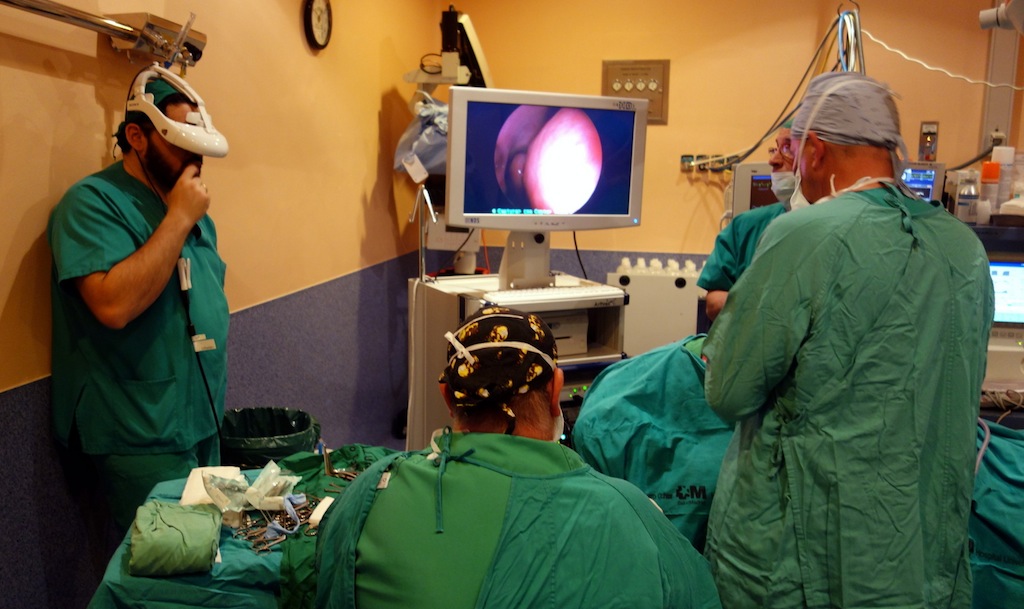
La siguiente área es el propio quirófano. Mientras que las imágenes HD pasan por un cable de vídeo, el cableado de fibra óptica es un requisito indispensable para que el 4K muestre en tiempo real el procedimiento quirúrgico que se está realizando, para lo que se requiere experiencia y un cuidado especial.
La actualización a 4K dentro del quirófano ofrece nuevas oportunidades para que los cirujanos accedan a más información cuando la necesiten; tengan la capacidad de compartir las imágenes de varias fuentes, como TAC o IMR de sistemas PACS, historiales de pacientes o datos preoperatorios en un único monitor 4K de gran tamaño.
Más allá de mejorar las imágenes para la cirugía endoscópica, Sony está colaborando con empresas para estudiar el potencial de la tecnología 4K en la microcirugía. Debido al trabajo tan preciso que se requiere en neurocirugía o cirugía oftálmica, los cirujanos pasan mucho tiempo mirando a través de un microscopio. La tecnología de módulos de cámara 4K es lo suficientemente compacta para integrarla dentro del microscopio para que genere una imagen nítida en 4K en un monitor 4K para cirugía, en lugar de estar mirando a través de un binocular.
Did you like this article?
Subscribe to our NEWSLETTER and you won't miss anything.
Related articles
 Sony and Ameria develop comprehensive immersive display system
 EM Acoustics offers comprehensive solution to Royal Plymouth Theater
 Sony completes its line of surgical monitors with new 4K HDR 3D/2D models
 Sony expands its line of 4K surgical monitors with two models of 27 inches
 Marant Professional offers a comprehensive AV capture system with Audio Video Streamer
 HoverCam Pilot 3 offers a comprehensive solution to the education and conference sector
 Sony LMD-X550MT y LMD-X310MT: surgical monitors with 4K and 3D technologies
 Sony MCX-500: all-in-one video mixer for educational and business productions
 The Virgen del Rocío Hospital optimizes surgical processes with augmented reality
 Sony offers new 4K laser projection solutions for large format viewing
 Pixel DS4: Comprehensive digital signage and online video platform to improve company communication
 Álava Ingenieros offers the video synopsis for Briefcam research
 Alava Ingenieros offers a comprehensive solution to equip UAVs with hyperspectral and multispectral cameras
 Kaleido-Modular now offers to view up to 24 signals per monitor