


Underwater touch screen for dolphins to interact and investigate their behavior
Un equipo de científicos de la Universidad Rockefeller han diseñado una singular pantalla táctil con una aplicación específica para que los delfines puedan interactuar sin interferir en su hábitat y de manera segura, con el fin de seguir estudiando el comportamiento de estos inteligentes y sociales animales.
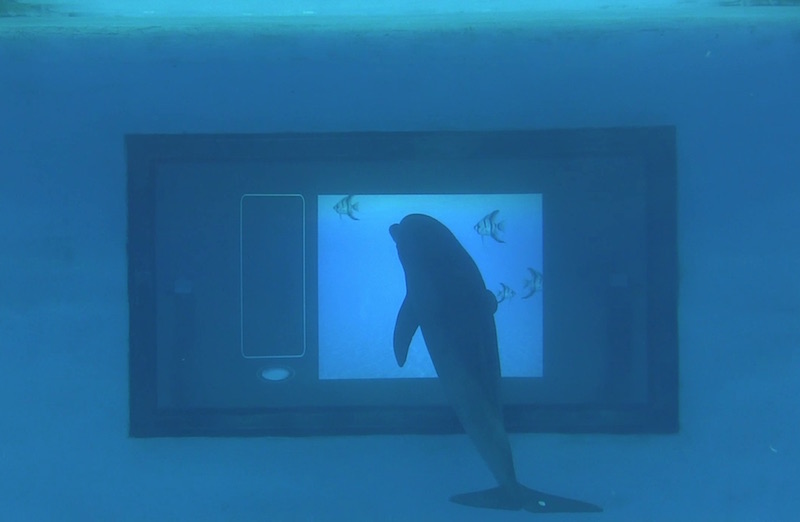
Instalada para realizar un proyecto piloto en el National Aquarium de Baltimore (USA), esta gran pantalla táctil subacuática (de unos tres metros de superficie), se ubica detrás de una ventana para que no exista ningún dispositivo electrónico que pueda alterar la seguridad y hábitat de los delfines en su piscina, y cuenta con un ‘teclado’ que cuando lo toca el delfín, detecta ópticamente y activa una serie de actividades de una aplicación desarrollada específicamente para investigar y observar la forma de comunicación y colaboración cognitiva de estos mamíferos marinos.
Este singular sistema visual ha sido desarrollado con tecnología óptica de M2C2, específicamente desarrollada para este proyecto por un equipo interdisciplinar de científicos de la Universidad Rockefeller y Hunter College, coordinado, respectively, por el biofísico Marcelo Magnasco, del Laboratorio de Neurociencia del centro académico Universidad Rockefeller, y Diana Reiss, psicóloga cognitiva de delfines y profesora, que trabajan en colaboración con el National Aquarium de Baltimore.

Si bien la investigación se encuentra todavía en sus primeras etapas, estos animales inteligentes y muy sociales interactúan con un teléfono inteligente construido para ellos e incluso jugar al ‘Whack a mole’ adaptado para delfines, sin necesidad de entrenamiento, entre otras posibilidades destinadas a comprender el aprendizaje y la comunicación vocal de los delfines; su capacidad de comunicación simbólica y qué patrones de comportamiento pueden surgir cuando tienen la capacidad de solicitar ítems, interacciones e imágenes.
Además de la pantalla táctil subacuática, el hábitat de los delfines en este acuario cuenta con un sistema de monitorización 24/7 para observar ininterrumpidamente su comportamiento desde todos los ángulos, así como con una avanzada serie de hidrófonos que permite localizar vocalizaciones desde todos los puntos del tanque de agua.
Como señala Magnasco, “fue muy difícil encontrar una solución elegante que fuera absolutamente segura para los delfines, pero ha sido increíblemente gratificante trabajar con estas increíbles criaturas y ver sus reacciones a nuestro sistema. Los delfines son muy inteligentes y este sistema totalmente interactivo y programable nos ayudará a seguirles en cualquier dirección que nos lleven”.
In the same line, Diana Reiss espera que “esta sofisticada pantalla táctil sea enriquecedora para los delfines y también para nuestra ciencia, al abrir una ventana a la mente de los delfines; ofrecerles una mayor elección y control para que puedan mostrarnos reflexiones de su forma de pensar y ayudarnos a descifrar su comunicación vocal”.
Did you like this article?
Subscribe to our NEWSLETTER and you won't miss anything.
Related articles
 Rate ARC: industrial touch screen panels for harsh environments
 RTI will exhibit the KX4 touch screen for meeting spaces at InfoComm
 AG Neovo TX-3202: touch screen for interactive digital signage
 Black Box Reserva: touch screen meeting room signage
 Aopen cTile 22: Chrome touch screen for digital kiosks
 iBase OFP: Open panel PC with touch screen for integration into kiosks
 Extron TLP Pro 1025T: desktop touch screen for presentations and meeting rooms
3M C6587PW: 65 PCAP multi-touch screen″ para digital signage
Now 7001LT: interactive touch screen 70 inches for digital signage
Jung Smart-Panel KNX 5.1: touch screen for controlling KNX systems
Extron TLP Pro 1025T: desktop touch screen for presentations and meeting rooms
3M C6587PW: 65 PCAP multi-touch screen″ para digital signage
Now 7001LT: interactive touch screen 70 inches for digital signage
Jung Smart-Panel KNX 5.1: touch screen for controlling KNX systems
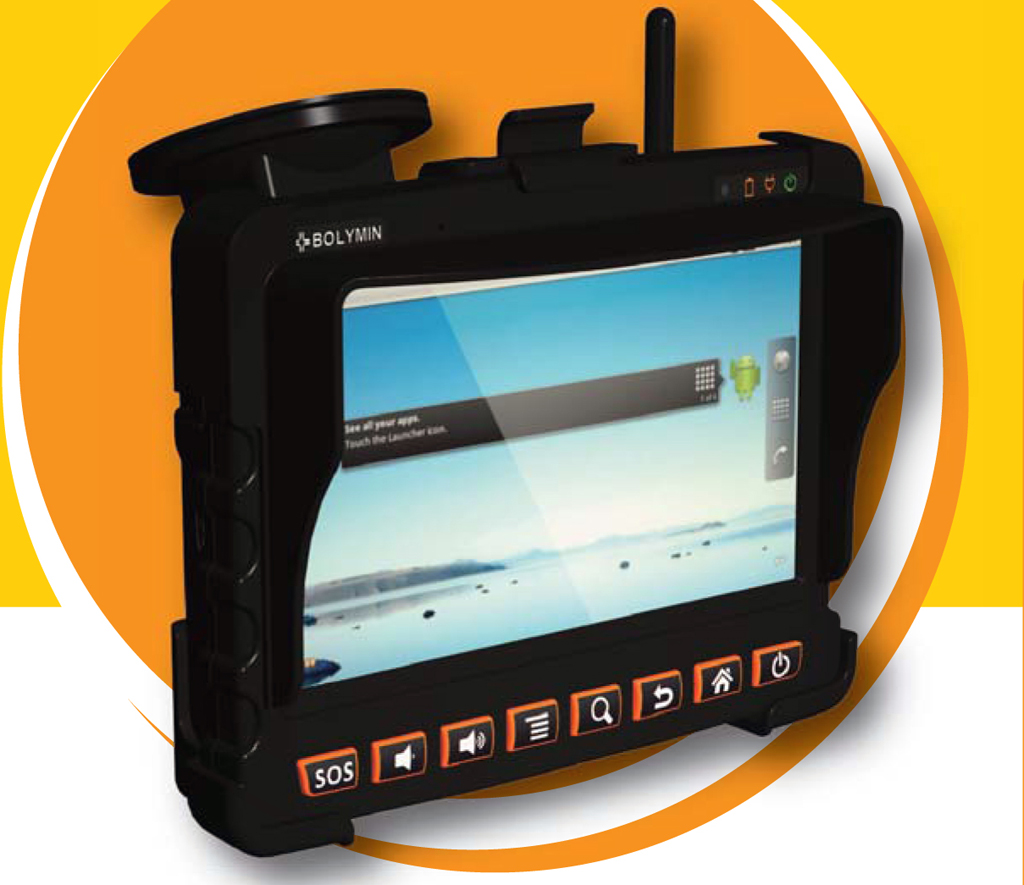 Bolymin touch screen terminal to transmit location information
 JM Aiphone: video intercom for professional access control with 7” touch screen
 They create a touch screen for patients that improves hospital efficiency
 Panasonic's new GT32-E touch screen for outdoor applications