


The University of Salamanca develops a virtual simulator for scoliosis surgery
The USAL multidisciplinary research group, VisualMed System, y Arsoft han sido los artífices de este proyecto que ofrece todo el protocolo de actuación de la intervención para la adquisición de habilidades en su práctica médica.
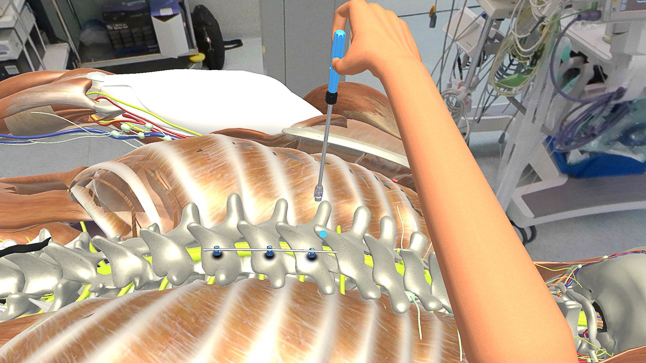
VisualMed System, grupo de investigación multidisciplinar de la University of Salamanca y la empresa especializada en la implantación de sistemas de realidad aumentada y virtual, Arsoft, han desarrollado un simulador virtual de abordaje quirúrgico en columna vertebral para la escoliosis.
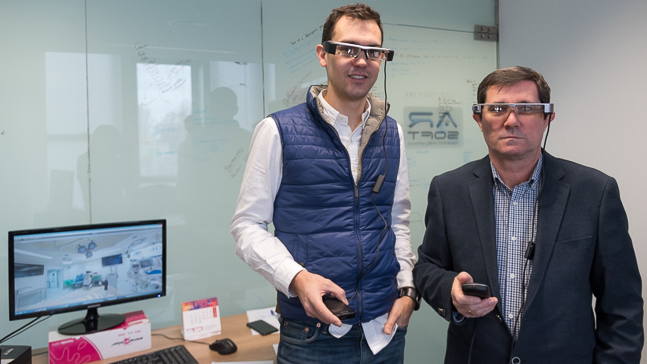 Este simulador, sistema pionero de abordaje y entrenamiento quirúrgico virtual en un entorno real, ofrece todo el protocolo de actuación de la intervención para la adquisición de habilidades en su práctica médica.
La herramienta tecnológica constituye un “sistema pionero e innovador a nivel mundial que ofrece al estudiante de medicina y al propio facultativo todo el protocolo de actuación de la intervención quirúrgica de esta enfermedad de la espalda para la adquisición de habilidades y entrenamiento de su práctica médica”, explica Juan A. Juanes, profesor de Anatomía humana y responsable del grupo VisualMed System.
Una de las grandes ventajas que ofrece el sistema es que “fusiona contenido virtual con real, de forma que el usuario puede siempre guiarse de las imágenes y vídeos grabados de una intervención real, que incluso podrá visualizar de forma inmersiva”, comenta Santiago González, director de Arsoft.
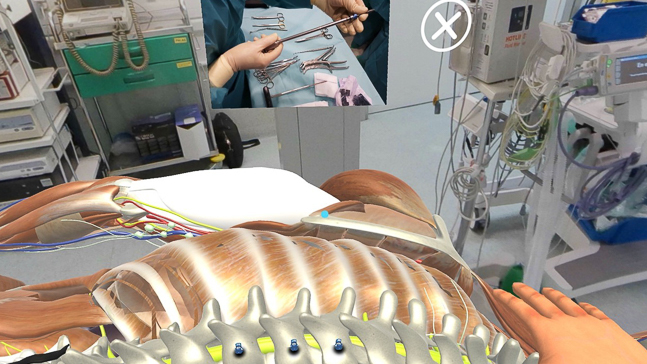 La realidad virtual facilita una inmersión completa para el aprendizaje y la adquisición de destrezas en cualquier área de las ciencias de la salud. En el campo de la medicina permite “simular cualquier tipo de cirugía, ubicar al alumno en un quirófano para que se familiarice con el entorno, con el manejo del instrumental quirúrgico o incluso introducirlo en el interior del cuerpo humano para ofrecerle una perspectiva integral de su estudio”, subraya el profesor Juan A. Juanes.
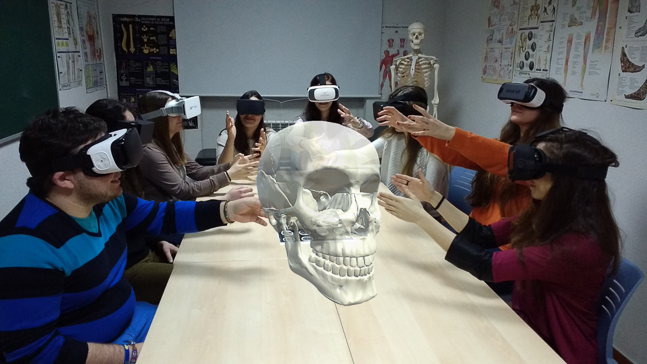
La inmersión virtual en una estructura corporal se logra a partir de unas gafas de visión estereoscópica que, junto con la integración de la Realidad Aumentada, las convierte en una “tecnología de innovación docente de gran potencial para la formación” ya que permite a los alumnos de medicina contemplar cualquier parte del cuerpo humano en tres dimensiones “como si lo tuvieran realmente encima de su mesa de estudio”, agrega el director de Arsoft.
Otros proyectos
Además del diseño del simulador para el abordaje quirúrgico en un paciente con escoliosis, durante los últimos años VisualMed System y Arsoft han ejecutado diferentes sistemas tecnológicos de visualización médica avanzada, con fines docentes y orientados hacia la práctica clínica, que destacan entre los más innovadores de su campo.
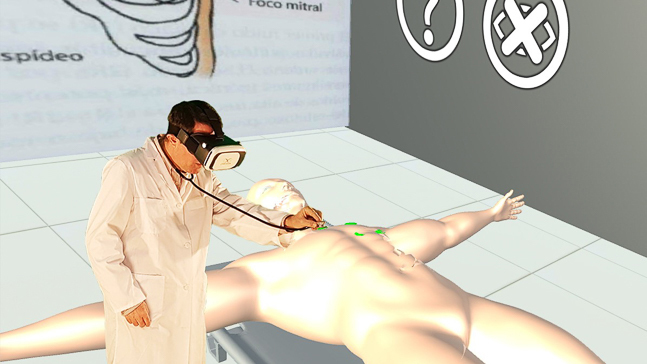 Entre las soluciones que han desarrollado se encuentra un sistema interactivo de auscultación virtual y un proyecto para el aprendizaje virtual inmersivo de las estructuras anatómicas del cráneo humano.
El primero consiste en un sistema de realidad virtual que permite al usuario manipular un estetoscopio para localizar los puntos de auscultación en un paciente virtual.
Posicionando el estetoscopio en los puntos correctos se escucha el sonido del corazón que se oiría cuando es utilizado en un caso real. En la aplicación cada sonido es diferente en función del punto de auscultación y, besides, atiende a la presencia o no de cardiopatías del individuo sometido a examen. El objetivo es que el alumno, no sólo aprenda a auscultar, sino que “lo haga aprendiendo también a diferenciar ruidos cardíacos en función de las zonas y de las diferentes cardiopatías que se pueden presentar en un paciente”, explica el profesor Juanes.
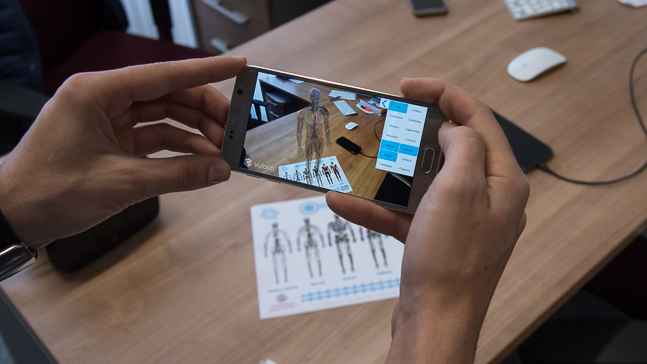 For your part, el entorno creado para el estudio de las estructuras anatómicas del cráneo humano muestra todo el potencial didáctico que ofrece la aplicación de la realidad virtual para el estudio de la anatomía humana.
Con este objetivo han desarrollado un software específico, ejecutado en unas gafas estereoscópicas, donde el usuario puede ver de forma los distintos huesos y forámenes que configuran el esqueleto del cráneo, acompañado, in turn, de las explicaciones docentes en formato de audio guía. Besides, la aplicación incluye un sistema de autoevaluación que permite llevar a cabo una valoración de los conocimientos adquiridos tras su manejo.
La combinación de vídeos esféricos también ha sido utilizada por Arsoft y VisualMed System para ofrecer inmersiones virtuales en entornos clínicos como quirófanos o salas de radiología e, even, permitir presenciar procedimientos quirúrgicos reales como si se estuviera participando en ellos.
Did you like this article?
Subscribe to our NEWSLETTER and you won't miss anything.
Related articles
 Kempten University relies on Barco projection for its simulator
 Disguise develops two media servers for virtual production
 Virtualware develops a real-time clinical case simulator
 The University of Lleida develops a telepresence robot for people with disabilities
Tensator develops virtual sommelier for sake maker Ty Ku
The University of Lleida develops a telepresence robot for people with disabilities
Tensator develops virtual sommelier for sake maker Ty Ku
 La Universidad Sapienza revela las ventajas del visor Sony HMS-3000MT en cirugía
The IPN develops a virtual cane and facial recognition glasses for the blind
Tensator develops its first full-height virtual assistant to promote Thierry Mugler's new fragrance
The IPN develops a virtual environment, Kinect-based, to train future surgeons
Dassault Systèmes Target Zero Defect, virtual simulator for the automotive sector
La Universidad Sapienza revela las ventajas del visor Sony HMS-3000MT en cirugía
The IPN develops a virtual cane and facial recognition glasses for the blind
Tensator develops its first full-height virtual assistant to promote Thierry Mugler's new fragrance
The IPN develops a virtual environment, Kinect-based, to train future surgeons
Dassault Systèmes Target Zero Defect, virtual simulator for the automotive sector
 The Alcalá Innova Foundation develops a virtual simulator for the intubation of neonates
 Virtway desarrolla para AstraZeneca el ‘Simulador Virtual en Salud Mental: Paciente Virtual’
 DsBitnet develops the virtual directory for digital signage 'Wayfinder’
 They present a virtual kitchen simulator based on augmented reality