


Los ingenieros de CentraleSupélec se forman con la tecnología láser de Digital Projection
Esta prestigiosa escuela de ingeniería francesa fomenta en su nuevo campus el conocimiento y la formación en sus aulas con los proyectores láser de este fabricante.
Creada en 2015 de la fusión de dos importantes escuelas de ingeniería francesas – Supélec y Paris École Centrale -, CentraleSupélec ha inaugurado recientemente su tercer campus: Paris-Saclay, que tras completar su primer año académico se une a los existentes en Rennes y Metz, ofreciendo más oportunidades de aprendizaje a un total de 4.200 estudiantes.
Situado en el Suroeste de París, este nuevo campus -ambicioso desde el punto de vista arquitectónico-, es el resultado de una consulta y un trabajo de seis años por parte de expertos, cuyo objetivo ha sido facilitar la interacción y la comunicación entre todas las partes involucradas, a través de amplios espacios abiertos que representan el valor del intercambio de conocimientos de la universidad.
Durante casi dos siglos, los mejores ingenieros de CentraleSupélec han estado utilizando sus habilidades y conocimientos para apoyar el desarrollo de instituciones corporativas y organizaciones públicas. Situado en la región de Yvelines, el nuevo campus de CentraleSupélec se compone de dos edificios separados: con una superficie de más de 25.000 m2: el edificio Francis Bouygues, financiado por una asociación público-privada, y el Gustave Eiffel, of 48.000 m2, financiado por el Estado francés.
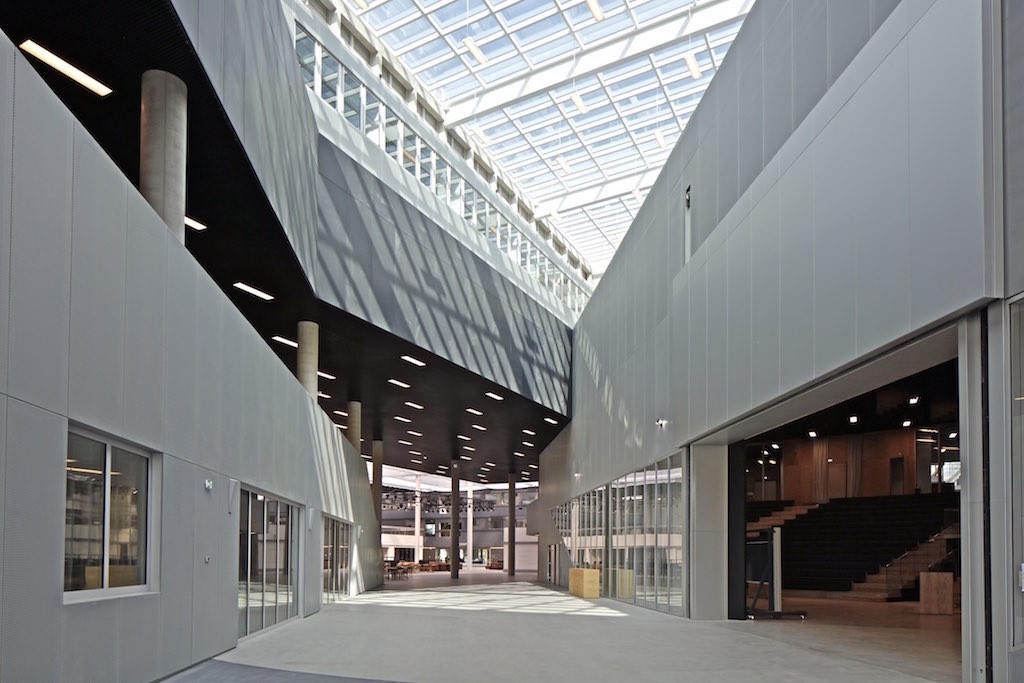
En este último caso, el estudio de arquitectura OMA imaginó el edificio Eiffel con una amplia diagonal alrededor de la cual se disponen espacios abiertos y compartidos. Con techos y tabiques acristalados, el edificio aporta el exterior y se beneficia de una gran cantidad de luz natural.
Para diseñar un entorno que favoreciera el conocimiento y la formación a la próxima generación de ingenieros, la escuela confió en la agencia francesa de escenografía dUCKS scéno, que trabajó en estrecha colaboración con el integrador de soluciones AV Tech-Audio.
Durante la licitación, el integrador se distinguió de la competencia al presentar un proyecto que era tanto financiera como técnicamente relevante, ofreciendo soluciones modernas y sostenibles que comprendían una red completa de proyectores que respetaban el concepto arquitectónico de OMA, a la vez que proporcionaban eficiencia y fiabilidad.

Para los principales auditorios y salas de conferencias de este edificio, que se utilizan para conferencias y clases y diversos eventos, incluyendo ceremonias de graduación y espectáculos, el integrador especificó proyectores láser del fabricante británico Digital Projection.
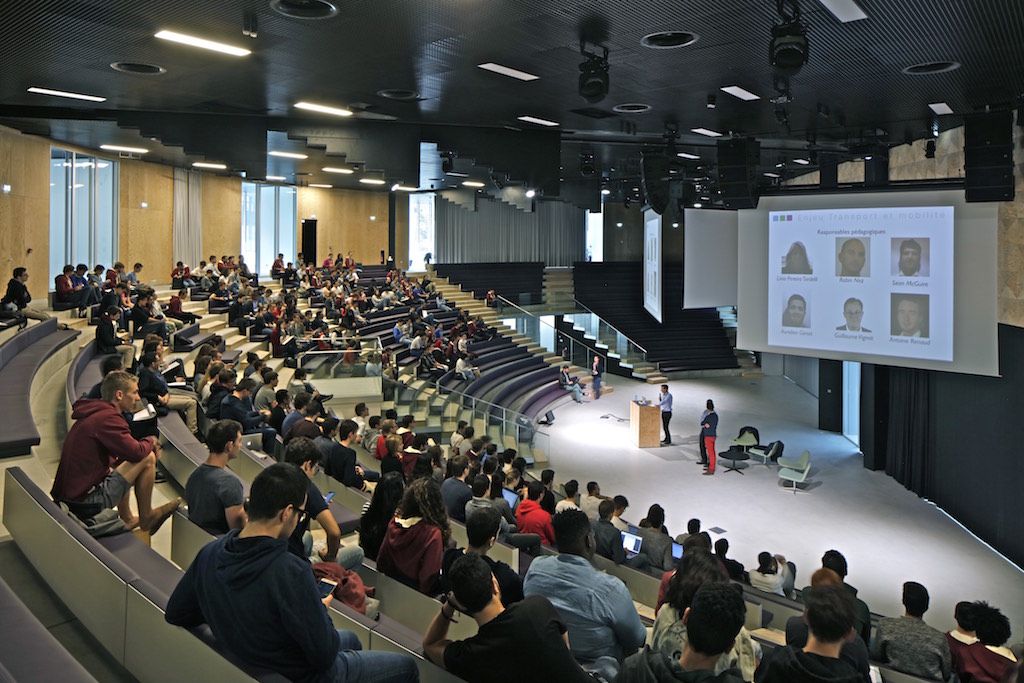
Para Amélie Chasseriaux, jefe de proyecto de dUCKS scéno, “este proyecto arquitectónico integra ventanas de piso a techo con vistas al atrio, que se extiende por todos los anfiteatros. Por tanto, era fundamental beneficiarse de potentes proyectores, capaces de proporcionar suficiente brillo para que los estudiantes pudieran ver claramente el contenido mientras tomaban notas a plena luz del día, sin tener que recurrir a cortinas”.
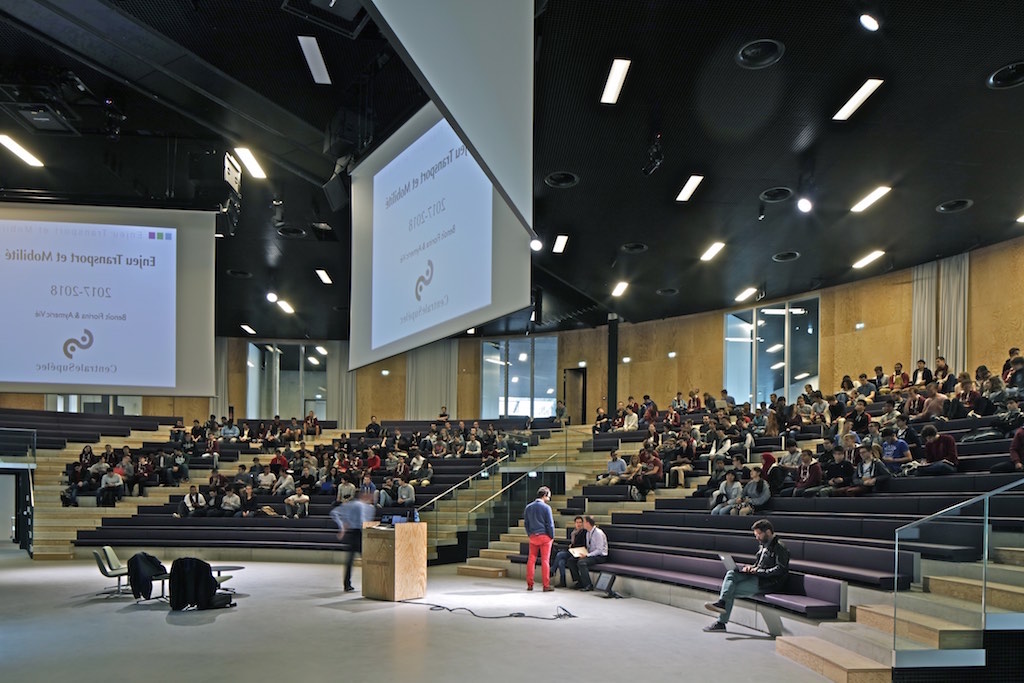
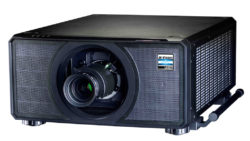
Specifically, en el edificio Gustave Eiffel se han instalado un total de doce proyectores láser de Digital Projection: siete modelos E-Vision Laser 6500 se ubican en el auditorio más pequeño, con capacidad de 50 a 120 plazas, mientras que un equipo E-Vision Laser 8500 garantiza el contenido visual para el teatro, con 120 butacas.
Otros dos proyectores láser M-Vision atienden el área de catering de la escuela, y tres modelos E-Vision Laser 8500 se encuentran en el Grand Hémicycle, la sala de conferencias más grande del edificio, with capacity for 960 estudiantes.
Este último en particular fue diseñado como un espacio modular, y como tal se puede dividir en tres partes diferentes gracias a las particiones plegables alojadas en el techo. La administración de contenido en vivo y el diseño se manejan con un procesador de vídeo Analog Way Ascender para las diversas configuraciones de la sala.
Las matrices de conmutación de Extron y los convertidores DTP/HDMI se instalaron previamente, y todas las salas de control están conectadas por derivaciones de fibra óptica para permitir la transmisión de eventos en directo desde y hacia las áreas principales del edificio.
Séverine Zaepffel, directora de proyectos de AV Tech-Audio, explica que “uno de los principales criterios para las especificaciones era el mantenimiento. Los proyectores de Digital Projection se utilizan diariamente, tanto para el currículo escolar como para las actividades adyacentes. Sabíamos que la tecnología láser ayudaría a reducir drásticamente los costes de mantenimiento, al no tener que reemplazar la lámpara, por lo que inmediatamente recurrimos a este fabricante, pionero en tecnología de proyección láser de alto brillo”.
Otro requisito fundamental es que todas las partes interesadas respetaran el trabajo arquitectónico de OMA, así como el concepto de diseño de Ducks, y por ello todas las empresas involucradas lograron este objetivo trabajando conjuntamente, sin concesiones en cuanto a funcionalidades, ni atajos en el mantenimiento.
“La sala de conferencias principal era, definitely, la más compleja en términos de integración -reconoce Amélie Chasseriaux-; simplemente era imposible instalar los proyectores en la parte posterior del atrio, debido a la altura del techo y al hecho de que no había sala de control. También tuvimos que seguir los requisitos de la sala en términos de estética y rendimiento práctico, regardless of configuration, con particiones abiertas o cerradas. Para minimizar el impacto visual de los proyectores, optamos por una configuración de retroproyección”.
Did you like this article?
Subscribe to our NEWSLETTER and you won't miss anything.
Related articles
 Digital Projection ensalza la ‘Cité de la langue française’ con tecnología láser
 Estalella Audiovisual: jornada formativa de proyectores láser de Digital Projection
 Digital Projection equipa un estudio virtual con sus potentes láser M-Vision
 Digital Projection presentará en InfoComm 2023 dos innovadores proyectores láser
 Digital Projection refrenda ante la industria AV su innovación en proyección láser
 Digital Projection transforma la tecnología de proyección láser en ISE
 Digital Projection Highlite Laser II marca el rumbo en los estudios Hengdian
 La tecnología de Digital Projection revitaliza visualmente la fábrica de pasteles de Roshen
 Digital Projection pone su tecnología láser al servicio de la industria 4.0 de Magna Steyr
 Digital Projection presentará en ISE un proyector láser 8K DLP y una pantalla Led 2D/3D
 Digital Projection M-Vision: laser projection 18.000 lumens for large installations
 Digital Projection hace brillar en ISE 2016 su nueva generación de proyectores láser
 Digital Projection Insight 4K, proyector láser de 12.000 lúmenes para mercados verticales
 El proyector DPI HighLite Laser 12K de Digital Projection debuta en ISE 2014