


Joan Baez entrusts the audio mix of her tour to Allen's dLive console & Heath
Después de una exitosa gira por Europa, Joan Baez continua su gira Fare Three Wellpor Norteamérica, en cuyos conciertos se utiliza una superficie Clase C C3500, con un MixRack CDM48 de Allen & Heath.
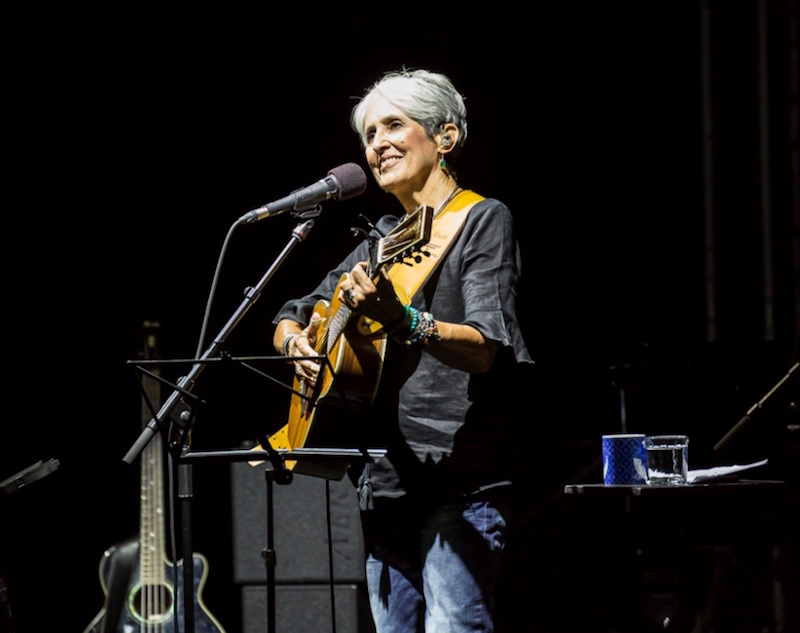 Tanto los monitores como el FOH de los conciertos de la gira Fare Three Well, que la artista Joan Baez ha iniciado por Norteamérica, están siendo mezclados por el ingeniero Jason Raboin, of Klondike Sound, utilizando una superficie Clase C C3500 con un MixRack CDM48 de Allen & Heath, brand that sells in Spain Audio-Technica Iberia.
Como explica Raboin, “trabajo con Joan desde hace quince años y es una artista fantástica. Ahora ha simplificado su banda a tres componentes, y yo he empezado a controlar simultáneamente tanto el FOH como los monitores, por lo que necesitaba una consola mejor. Investigué y hablé con mucha gente en la que confío y asistí a una demo de dLive. Incluso solamente con música pregrabada, sonaba mucho mejor que lo que estaba utilizando”.
La configuración típica para una actuación de esta gira, tal y como describe este ingeniero de audio es la siguiente: “tengo veinticuatro entradas procedentes del escenario, con tres mezclas intra-aurales y cuatro cuñas. La demanda de entradas es tan grande que algunas veces tengo asientos situados tras el escenario, por lo que tengo muchas zonas que gestionar”.
 En dos conciertos realizados durante la gira europea, concretamente en Francia, Raboin suministró envíos Dante a un camión de broadcast, “e incluso hubo un equipo de rodaje de un documental que nos siguió en algunas actuaciones,y les proporcioné ocho envíos analógicos desde el MixRack. Disponer de veinticuatro salidas analógicas además del envío AES hace esto posible”.
Los bancos y capas de dLive ayudan a Reboin a gestionar sus entradas. Utiliza los retardos y reverb de ExtraRack FX internos del mezclador para los instrumentos y las voces, y escenas de dLive para trabajos específicos. Este ingeniero graba cada actuación a través de una tarjeta dLive Waves y utiliza el Virtual Sound Check del mezclador para ajustar cada actuación, “lo que hace que ahora las pruebas de sonido sean mucho más cortas”, assures.
La gira cuenta con su propia monitorización intra-aural y a través de cuñas. “La mezcla intra-aural de Joan es principalmente post fader y divido su canal de voz, así que la banda escucha lo mismo que el público -continua-. El percusionista cuenta con su propia mezcla intra-aural sobre un iPad, con la app dLive OneMix, y es fantástico”.
Como apunta Raboin, “en esta gira trabajamos en todo tipo de locales, desde exteriores a salas sinfónicas. Así que la dinámica puede cambiar mucho de una actuación a otra. Pero dLive realmente nos ha ayudado a gestionar esto. El sonido es fantástico y he encontrado lo que he estado buscando durante muchos años”.
Did you like this article?
Subscribe to our NEWSLETTER and you won't miss anything.
Related articles
 Allen & Heath expands its Xone range of controllers and mixing consoles
 Allen & Heath aporta su sistema dLive en la gira mundial de Jacob Collier
 Allen & Heath realiza la más importante actualización del sistema de mezcla digital dLive
 SQ4You: app de mezcla de monitores personalizada para consolas SQ de Allen & Heath
 El sistema de mezcla digital dLive, elemento fundamental en la gira de Daya
 Allen & Heath adds DX168 to dLive digital mixing system
 Allen & Heath dLive: new digital mixing system from TAF music school
 Allen & Heath dLive C Class: compact mixing systems for AV environments and live events
 The Philips Gran Vía Light Theater installs a dLive digital console by Allen & Heath
 Allen&Heath puts the dLive console to the test during his roadshow 2016
Stockholm's Cirkus Theater installs Allen's first dLive console & Heath
Allen Mixers&Heath Qu Chrome: high performance for digital audio mixing
Allen&Heath puts the dLive console to the test during his roadshow 2016
Stockholm's Cirkus Theater installs Allen's first dLive console & Heath
Allen Mixers&Heath Qu Chrome: high performance for digital audio mixing
 Allen & Heath with dLive promises a before and after in digital mixing
 Brazil 2014: The Maracaná stadium manages its audio system with Allen's GLD-80 digital console & Heath