


Apollo Pavilion celebrates its 50 anniversary with a large scale mapping
Con objeto de poder cubrir todas las superficies y evitar los obstáculos, se utilizaron cuatro proyectores láser Panasonic PT-RZ21K de 20.000 lumens, junto con un servidor multimedia 4×4 oculto, que se empleó para la reproducción de vídeo y la previsualización del contenido.
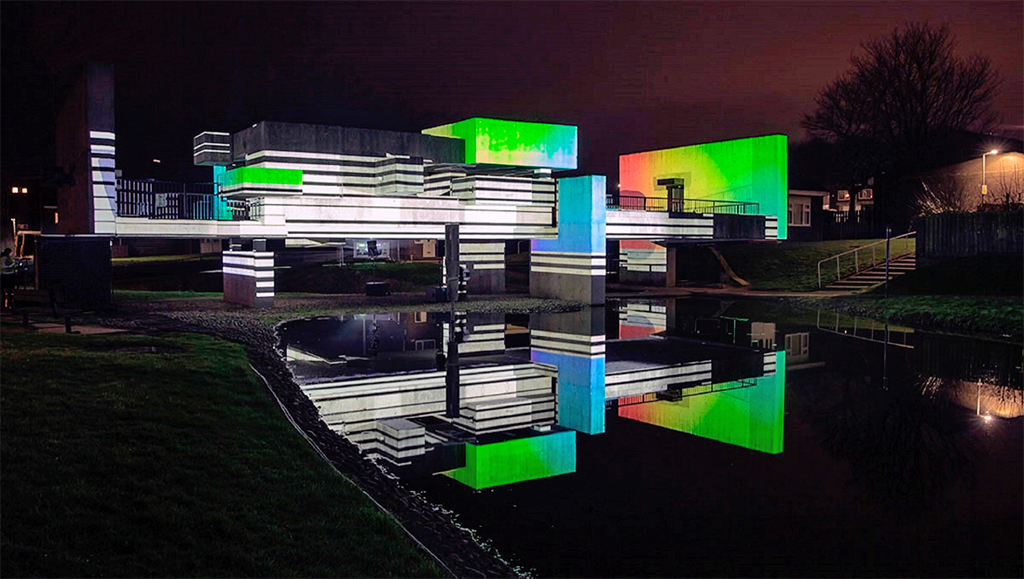
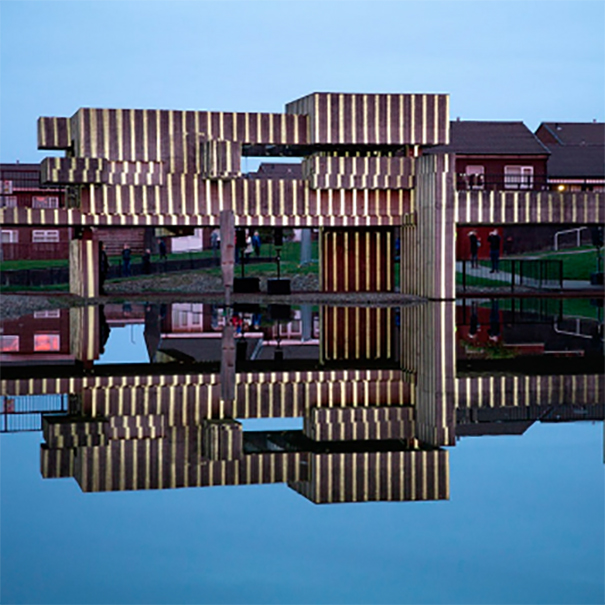
built in 1969 por Victor Pasmore, he Apollo Pavilion es una de las obras de arte más famosas del Reino Unido durante el período de posguerra. Su nombre deriva del alunizaje del Apolo 11 que tuvo lugar ese mismo año y refleja el optimismo de la comunidad local de Durham en aquel momento.
Cincuenta años después, sigue siendo uno de los edificios más atrevidos de Peterlee, en el condado de Durham, con su arquitectura de hormigón y su estructura en forma de bloques, es un clásico ejemplo de ese tipo de arquitectura en una de las primeras ciudades mineras de Durham.
Aunque el edificio planteó opiniones encontradas desde el mismo momento de su desarrollo, la nostalgia y un renovado interés han hecho que se catalogue con el Grado II y se incluya en la lista de edificios históricos en 2011. El aniversario coincide con el Año de la Cultura de Durham, por lo que el Consejo del Condado de la ciudad deseaba poder mostrar el edificio y su historia para reavivar el espíritu comunitario que había representado en su época.
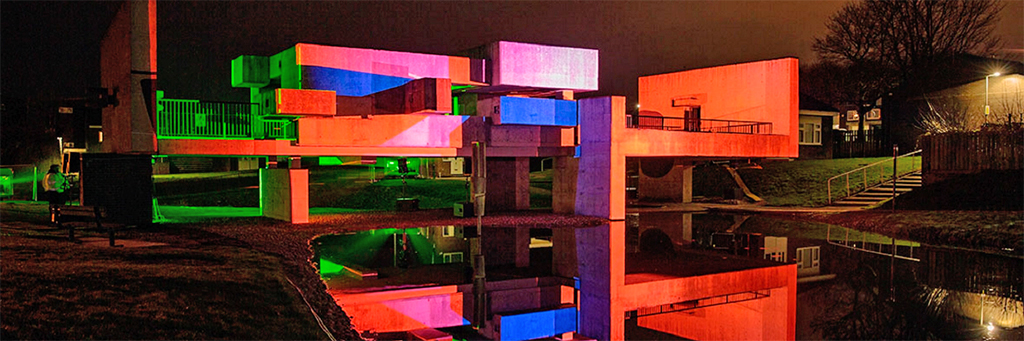
Producido por Artichoke Trust, Mader Wiermann y QED Productions fueron los encargados de realizar una proyección de vídeo de 360 grados y una obra de arte con paisajes sonoros para celebrar el cincuenta aniversario del Apollo Pavilion.
Las limitaciones físicas de la zona residencial suponían que debían cubrirse los 25 metros de anchura del edificio, por ambos lados, con solo cuatro proyectores, con un número limitado de posiciones y un bajo nivel de energía eléctrica. La proximidad de las viviendas residenciales no permitía el uso de generadores, por lo que todos los proyectores, el control de vídeo y el equipo de megafonía debían funcionar con las tres fuentes de alimentación de 16 amperios disponibles on site.
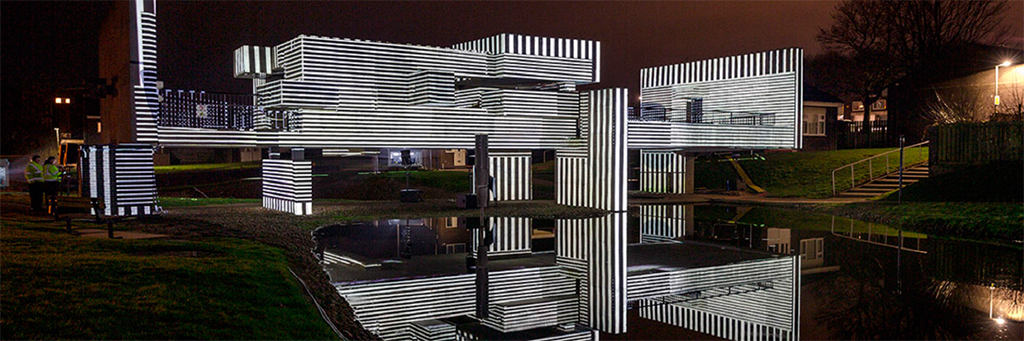
Para cubrir todas las superficies y evitar todos los obstáculos, QED Productions utilizó cuatro proyectores láser Panasonic PT-RZ21K de 20.000 lumens, junto con un servidor multimedia 4×4 pro oculto que se empleó para la reproducción de vídeo y la previsualización del contenido.
“Los proyectores de Panasonic ofrecían la resolución perfecta para una situación muy difícil, ya que su consumo era muy bajo sin que afectase a la calidad de la proyección, además de conseguir un elevado brillo y una excelente relación de contraste. Besides, el chasis compacto del modelo RZ21K era idóneo, ya que las estructuras podían ser relativamente pequeñas para no dificultar la visibilidad del público”, comenta Paul Wigfield, director de QED Productions.
Los artistas crearon un modelo 3D a partir de planos arquitectónicos antiguos y, al no disponer de los datos topográficos circundantes para determinar las posiciones físicas exactas del proyector, tuvieron que diseñar un flujo de trabajo de contenido UV integrado dentro de Cinema 4D.
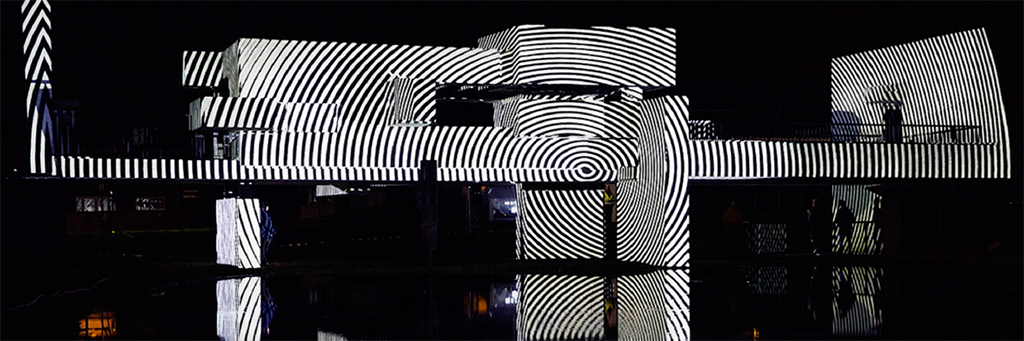
Esto permitió cubrir totalmente el edificio con el contenido y colocar con precisión los proyectores virtuales, en el servidor oculto, tan pronto como se hubieron detectado las posiciones y elevaciones exactas para los equipos.
Se decidió utilizar un flujo de trabajo UV integrado después que las simulaciones mostraran el número de superficies que quedarían ocultas con los cuatro proyectores que cubrían la escultura, lo que permitió adaptar y aprobar el contenido.
Paisaje sonoro adaptado al movimiento
El vídeo de 8 minutos reproducido en bucle presentaba una serie de ilusiones en perspectiva, efectos de iluminación espacial y atrevidas animaciones que utilizaban las complejas formas de la ‘escultura brutalista’. El montaje incluía también tres canales de audio (LCR). El paisaje sonoro se adaptó al movimiento del contenido de 60 fps a través de la escultura, reproduciendo todos los recursos desde el servidor multimedia.
Se utilizó el equipo KVM Xtreme de QED para conseguir la alineación precisa de 360 grados desde ambos lados de la estructura y desde cualquier lado del lago. Equipado con un cable de fibra híbrida, ofrecía una conexión directa al servidor y también enviaba señales y energía al monitor, teclado y al ratón remotos impermeables.
Comentando el impacto de la tecnología de proyección sobre el contenido, Paul Wigfield añadió: “La elevada relación de contraste de los proyectores se adaptaba realmente bien al contenido, que básicamente era en blanco y negro. Las secciones cortas de color y los efectos geométricos repentinos brindaron unos momentos especiales e inesperados, además de una breve aparición del módulo lunar Apolo”.
Otro elemento clave para el éxito del proyecto fue la previsualización y la colocación de los proyectores láser RZ21K de Panasonic. Las simulaciones virtuales y del flujo de trabajo fueron fundamentales para poderse comunicar rápidamente con los artistas, poniendo de manifiesto cualquier posible complicación in situ para que pudieran empezar su proceso de representación de contenidos.
Did you like this article?
Subscribe to our NEWSLETTER and you won't miss anything.
Related articles
 Christie illuminated an iconic Portuguese building with large-scale mapping
 INFiLED celebrates its 15th anniversary at ISE accompanied by its innovative Led technology
 Bulgari celebrates the 75 anniversary of his Serpenti collection with Digital Projection
 DisplayNote celebrates at ISE 2022 its tenth anniversary
 Genelec celebrates its 15th anniversary with its new GLM management software 4.1
 Avolites celebrates its 45 anniversary in the entertainment lighting industry
 Panama celebrates its fifth centenary with a large-scale mapping
 Ingram Micro celebrates its 40 anniversary in the IT market
 Maverick AV Solutions celebrates its tenth anniversary in Iberia
 TeamLab bordeless: a digital museum without borders that merges technology and art on a large scale
 Nestlé celebrates its 150 anniversary with the opening of an interactive museum of its history
 El Royal Pavilion se llenó de luz y color para conmemorar el 50 aniversario del Brighton Festival
 ISE celebrates its tenth anniversary in style
 Disneyland Paris celebrates its 20 anniversary with an explosion of light and color