





Genelec Aural ID redefines the use of headphones for audio reference listening and monitoring
This software works by acquiring the acoustic attributes of each person to create a detailed modeling of their anatomical characteristics that affect hearing.. This allows the delivery of a more truthful and reliable sound, when using headphones for playback.
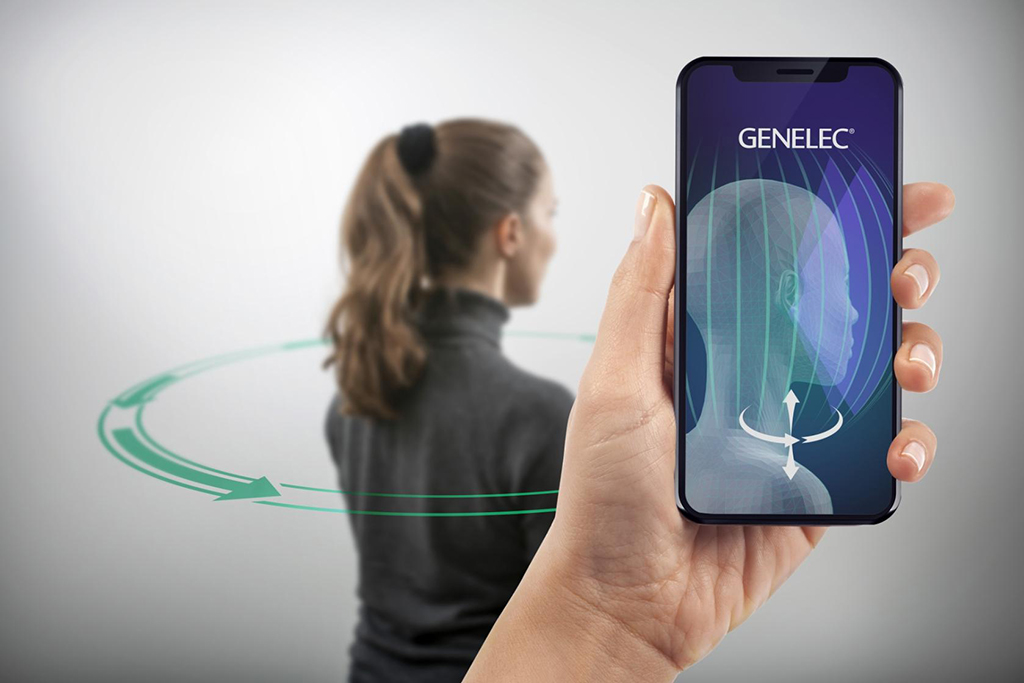
Genelec Aural ID availability has been announced, a new software based on technology that improves fidelity when listening through headphones.
Aural ID works by acquiring each person's acoustic attributes to create detailed modeling of their anatomical characteristics that affect hearing., which can then be compensated, allowing the delivery of a more truthful and reliable sound, when using headphones for playback.
It is software by Genelec, that distributes Audio-Technica Iberia, calculates the transfer function related to the head (Head Related Transfer Function o HRTF) personal of each user. The HRTF describes the acoustic properties of the head, the upper torso and outer ear, elements that interact in complex ways to affect the sound that reaches the eardrums.
Aural ID calculates these elements and creates a personal data file that characterizes the modification of the sound arriving from any azimuth and elevation. So, This file allows an audio device to accurately play stereo or surround content through headphones.
Until now, HRTF personal information collection has been a complex and time-consuming process requiring the use of an anechoic room, placing measurement microphones at the entrance to the user's ear canals, and careful attention to setup and procedure details, with multiple measurements.
However, even after these steps have been carefully followed, the data collected is less comprehensive than that which can be obtained with auditory identification and may still be prone to error.
In contrast, Genelec Aural ID software requires the user to provide a video in 360 degrees of your head and shoulder region, for which you only need to have a mobile phone equipped with a high quality camera.
Once the video is made, user can upload it to Genelec web-based calculation service. The calculation process will produce, first of all, an accurate and detailed 3D model scaled exactly to the correct dimensions of the head and upper torso, paying special attention to the modeling of the outer part of the ears. After that, Acoustic fields are calculated and analyzed numerically using a full-wave method, to capture acoustic phenomena in detail.
Acoustic fields are calculated for hundreds of different orientations at which the audio signal reaches the ear, what makes up the HRTF; finally, The data is compiled into a SOFA file that can be downloaded.
This is an audio file format that has been defined and standardized by the Audio Engineering Society (AES). This maximizes the technical compatibility of the HRTF data file, since the SOFA format is supported by many virtual reality playback devices (VR) and games.
Genelec believes that those who work in academic research, immersive audio monitoring, VR and game development will likely be the first to adopt new Aural ID technology.
“Just as our monitor speakers have set the sonic benchmark for professional audio monitoring, and GLM calibration software revolutionized the way studio monitors could be optimized for any acoustic environment., We are determined to help provide standards of sonic authenticity to headphone playback.. With the growing number of sound professionals relying on room monitors and headphones, “Aural ID represents an important step forward for the use of headphones for audio reference listening and monitoring.”, comments Siamak Naghian, director general de Genelec.
Did you like this article?
Subscribe to our NEWSLETTER and you won't miss anything.
Related articles
 AEQ redefines network audio for professional environments in ISE
 Dolby chooses Genelec monitoring for its Nuremberg facility
 Genelec Union: audio monitoring with SAM 9320A controller
 FBT redefines audio monitoring and control with Infinito Suite
 Genelec integrates Aural ID in plugin format available for DAW
 Biamp redefines audio standards for retail and hospitality
 Sennheiser reinvents the dynamic transducer with its new in-ear monitoring headphones
 Sennheiser optimizes monitoring sound with new line of in-ear headphones
 Genelec adds cloud services and reference levels to GLM software 3
 Joaquín Herrera chooses Audio-Technica microphones and headphones to train his students
 Beyerdynamic DT 1770 Pro: Reference headphones for studio and monitoring
 Eela Audio EA854: six-way studio headphone amplifier
Pioneer HRM-7 monitoring headphones provide precise and neutral sound
JBL 705i y 708i, Reference monitors for better immersive audio
Eela Audio EA854: six-way studio headphone amplifier
Pioneer HRM-7 monitoring headphones provide precise and neutral sound
JBL 705i y 708i, Reference monitors for better immersive audio