


QSC NV-32-H amplía sus capacidades para optimizar su aplicación en salas de reunión
El módulo Core Capable permite alternar entre el ‘Modo Core’, que transforma el dispositivo en un procesador Q-SYS con capacidades de conmutación local HDMI, y su actual ‘Modo Periférico’, diseñado para la distribución de vídeo HDMI a través de redes AV estándar.
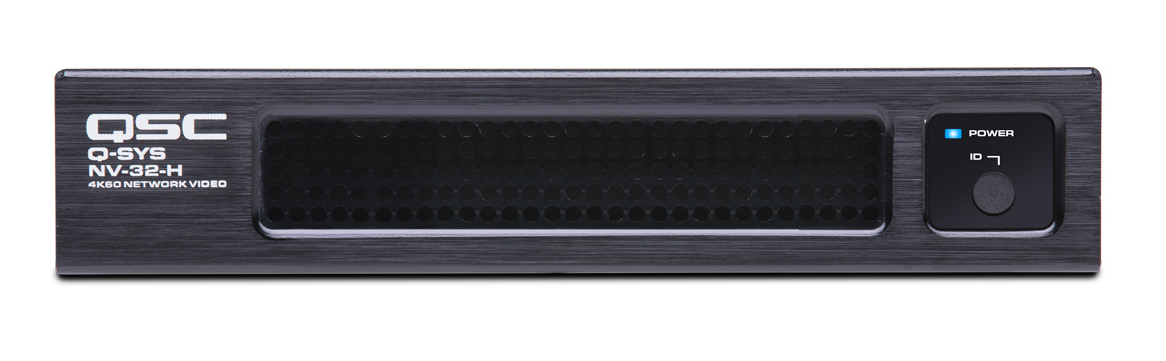
QSC ha anunciado el end point de vídeo en red multipropósito NV-32-H (Core Capable) para el ecosistema Q-SYS. Este módulo, que se configura por software, permite alternar entre el ‘Modo Core’, que transforma el dispositivo en un procesador Q-SYS totalmente funcional con capacidades de conmutación local HDMI, y su actual ‘Modo Periférico’, diseñado para la distribución de vídeo HDMI en red a través de redes AV estándar.
QSC presentó el módulo NV-32-H (Core Capable) que se une a la gama de procesamiento Core de Q-SYS como nodo final de video configurable por software y multipropósito. Resulta ideal para salas colaborativas (switch de video integrado).
“Nuestra definición de salas de reuniones ha cambiado drásticamente en los últimos nueve meses, con una mayor necesidad de estancias más pequeñas. Aprovechamos esta oportunidad para replantear el NV-32-H y desarrollar un end point multipropósito y completo que ofrezca a los integradores la flexibilidad necesaria para satisfacer los distintos requisitos de las salas. In addition, reduce el hardware, especialmente para las estancias en las que el espacio es muy limitado, y se simplifica la integración y se optimizan los costos del sistema”, señala Josh Arnold, director sénior de producto de Sistemas Instalados de QSC.
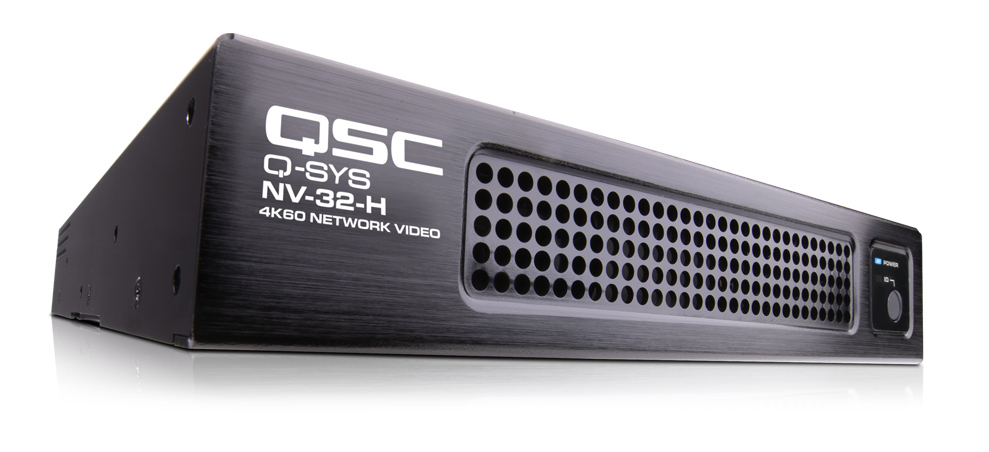
El nuevo ‘Modo Core’ del NV-32-H ofrece un motor de procesamiento de audio con todas las funciones para el ecosistema Q-SYS, incluidos 32×32 canales de audio en red, ocho canales AEC, una instancia de softphone VoIP y compatibilidad opcional con el software Dante. Al igual que el resto de los productos de procesamiento Q-SYS, también cuenta con un sólido motor de control, basado en software, que permite una integración sencilla de control para dispositivos Q-SYS nativos, así como para los dispositivos conectados de terceros.
Besides, como el nuevo NV-32-H ( Core Capable) está especialmente diseñado para dar servicio a espacios de colaboración de vídeo en la sala, también integra un conmutador de vídeo 3×2 para fuentes HDMI, conectadas de forma local. Esta característica representa un enorme ahorro de tiempo y de costos para las salas de reuniones, así como aulas pequeñas y medianas que requieren un control fácil de selección de las entradas (PC, dispositivos BYOD, cámaras de documentos) y las salidas (múltiples pantallas o proyectores) de la sala, ya que elimina la necesidad de un dispositivo de conmutación autónomo y los costosos requisitos de integración.
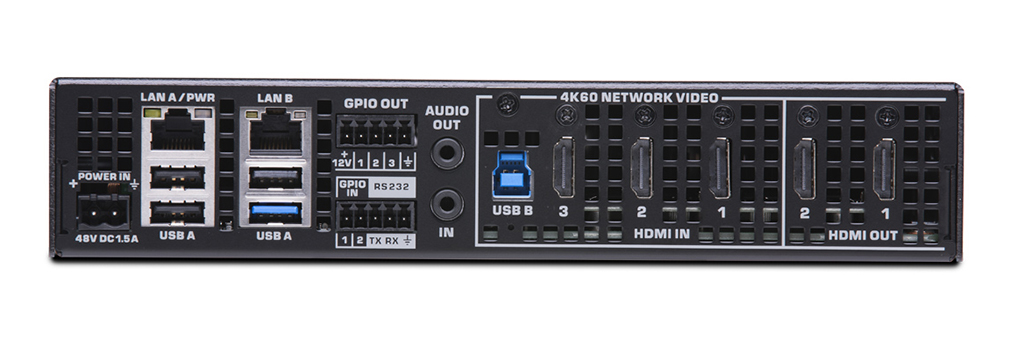
El ‘Modo Periférico’ convierte el dispositivo en un nodo final de vídeo en red multi-stream para la codificación/decodificación de vídeo HDMI para la distribución de video para el ecosistema Q-SYS. Este permite que las necesidades de distribución de video dentro de espacios de colaboración más grandes alcancen un equilibrio entre la calidad, la latencia y la eficiencia de la red.
Tanto en el ‘Modo Core’ como en el ‘Modo Periférico’, el NV-32-H ( Core Capable) ofrece una integración simplificada para aplicaciones de conferencias web como Microsoft Teams Rooms (certificación Teams en curso), Zoom y Google Hangouts Meet. Estos dispositivos actúan como un punto de acceso plug-and-play para la transmisión por USB de audio Q-SYS y cámaras de la sala de conferencias.
“Hemos afirmado desde el principio que Q-SYS no es más que software. La doble personalidad del nuevo NV-32-H es una prueba rotunda de esta creencia. Nuestra confianza en el procesamiento estándar de Intel combinado con nuestra capacidad de innovar en software nos ha permitido infundir un nuevo nivel de flexibilidad y escalabilidad de Q-SYS, particularmente para satisfacer las necesidades rápidamente cambiantes del espacio de colaboración”, comenta Mike Brandes, gerente de Producto de Q-SYS en QSC.
Did you like this article?
Subscribe to our NEWSLETTER and you won't miss anything.
Related articles
 Jabra Scheduler: panel táctil para optimizar la reserva de salas
 MaxHub CMA: pantalla 4K para comercios y salas de reunión
 ViewSonic amplía sus proyectores Led LS610 para salas de reunión y aulas
 Barco MVL-721: videowall de retroproyección Led para salas de reunión
 QSC ofrece soluciones para salas de reunión certificadas para Zoom Rooms
 Poly Expands Line of Audio Solutions to Optimize Customer Satisfaction
 VuWall y LG unen sus tecnologías para optimizar las soluciones de videowall en salas de control
 Crestron introduces the Flex B100 sound bar to optimize collaboration in conference rooms
 Extron HD CTL 100: controlador de pantallas para salas de reunión
 Polycom Trio amplía las capacidades de videoconferencia de gama alta para salas de reuniones
 Panasonic and Atlona join forces to offer a collaboration solution for meeting rooms
Crestron ofrece una nueva línea de soluciones para optimizar el audio en las salas de reunión
Qmatic amplía su plataforma Orchestra para optimizar las instalaciones de los clientes
Panasonic and Atlona join forces to offer a collaboration solution for meeting rooms
Crestron ofrece una nueva línea de soluciones para optimizar el audio en las salas de reunión
Qmatic amplía su plataforma Orchestra para optimizar las instalaciones de los clientes
 AMX amplía sus líneas Modero y Enova para optimizar los procesos de las salas de reunión