


The University of Glasgow encourages collaboration and interactive learning with dnp
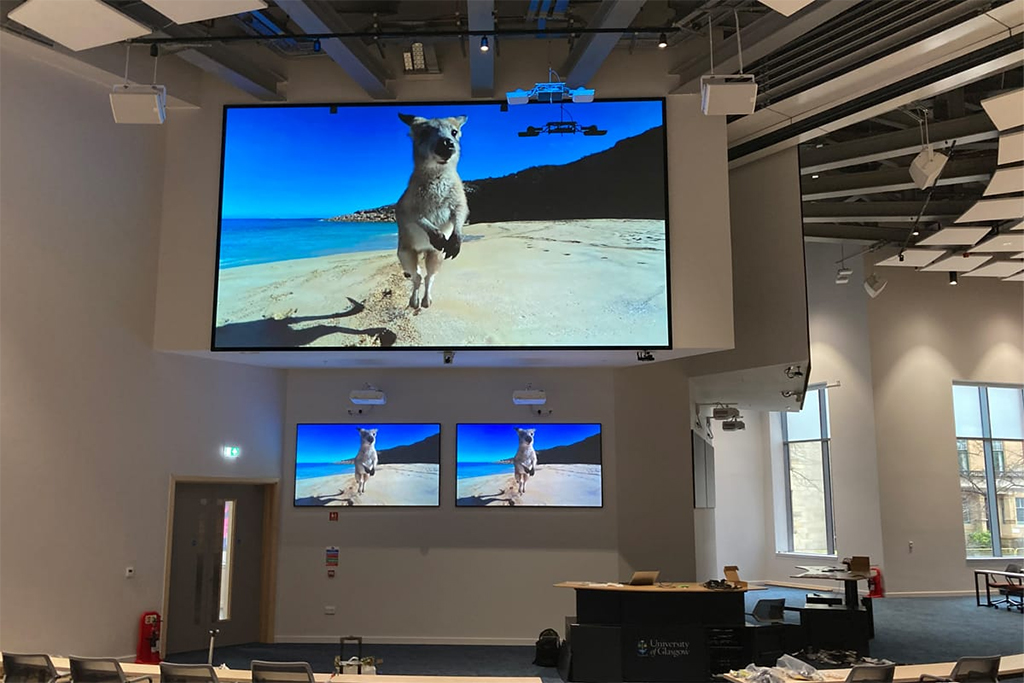
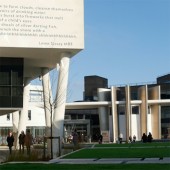
En el centro de aprendizaje James McCune Smith de la Universidad de Glasgow, Visual Display y Kinly have installed 30 screens dnp Supernova y 24 sistemas de proyección de Panasonic y Epson.
Visual Displays ha apoyado al integrador AV Kinly, to create, en el centro de aprendizaje James McCune Smith of the Universidad de Glasgow, un entorno creativo que proporciona una enseñanza de vanguardia, while encouraging collaboration. For this, has installed 30 screens dnp Supernova y 24 sistemas de proyección de Panasonic y Epson.
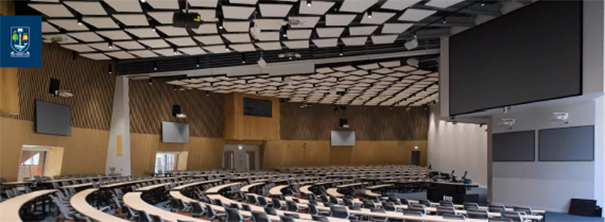
The building, que se inauguró el pasado mes de abril, tienen una capacidad para más de 2.500 estudiantes e incluye una sala de conferencias para 500 students. Los espacios de enseñanza interactivos varían en capacidad de 340 a 75 students, mientras que el centro también puede albergar una serie de seminarios/espacios de estudio en grupo.
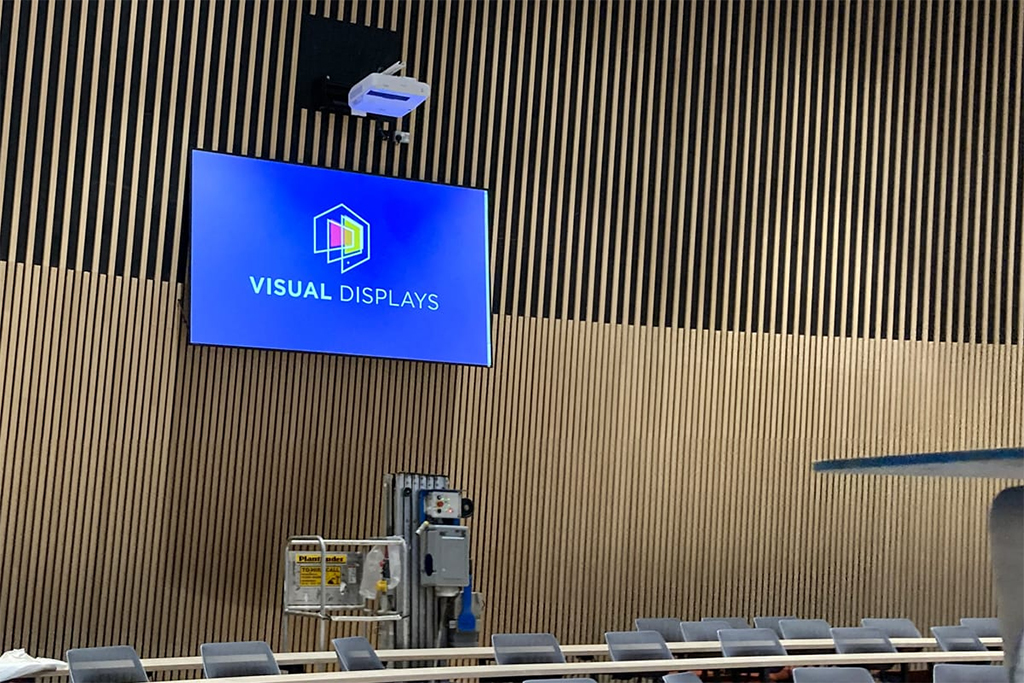
El proyecto presentó varios desafíos audiovisuales, sobre todo en la entrega de contenido a algunas ubicaciones de espectadores. Esto requirió secuencias de diseño CAD y la aplicación de los estándares AV de Avixa, utilizando calculadoras ópticas y herramientas de modelado CAD 3D paramétricas avanzadas.
El equipo del proyecto se enfrentó a los desafíos que planteaban los dos espacios principales: auditorios adyacentes para ser utilizados como un solo espacio o separados en dos espacios con una pared divisoria retráctil.
Estos eran complejos por su forma y los planos de los asientos, incluida la capacidad de los estudiantes para colaborar con los que estaban en la fila de atrás. Siguió un proceso colaborativo, basado en el estándar Discas of Avixa, tanto para el tamaño de la imagen como para los ángulos de visión. Esto llevó a un diseño complejo de múltiples pantallas.
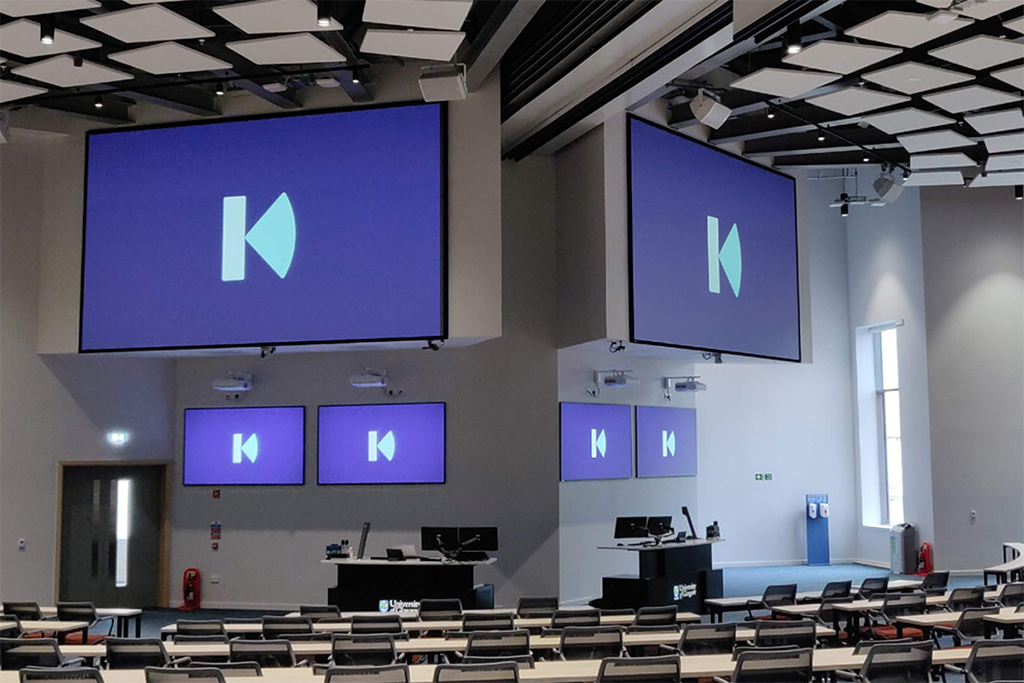
Se crearon especificaciones de pantalla en función de su rendimiento para garantizar el cumplimiento por encima de los estándares requeridos.
El núcleo del auditorio principal son dos pantallas 4K UHD de 6,2 meters wide. En un primer momento se apostó por equipos dvLed, pero al utilizar el estándar Avixa Piscr se pensó que lo más adecuado eran pantallas de proyección ALR (ambient light rejection), y más concretamente una dnp Supernova 08-85.
Estas pantallas de gran formato se colocan en un nivel alto para abordar las partes principal y trasera de los espacios. Se diseñaron pantallas grandes adicionales para garantizar que cada participante tenga una óptima experiencia de visualización, utilizando pantallas CLD of 100 y 120 inches.
La gama CLD de Visual Displays son paquetes que incluyen proyectores láser de Epson y pantallas de proyección dnp Supernova ALR.
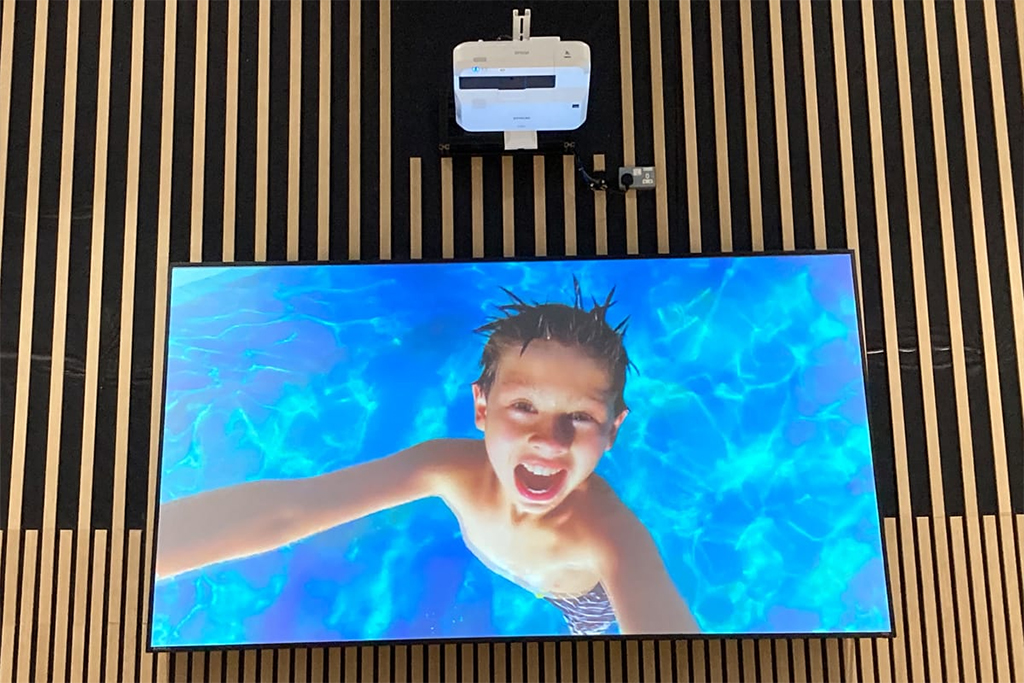
Dentro del proceso de planificación, se prestó especial atención a las cuestiones medioambientales y ergonómicas, impulsadas por las normas Well Building Standard y Cibse.
Al utilizar la proyección en lugar de dvLed, durante la vida útil de la instalación, se ahorrarán kilovatios de energía además de la costosa gestión del calor. Las pantallas de proyección se pueden usar indefinidamente a medida que los proyectores se actualicen. También se evita el vertido tóxico asociado con la eliminación de pantallas dvLed al final de su vida útil.
Estos espacios no solo brindan una experiencia visualmente impresionante, sino que también están diseñados e implementados de una manera de doble tecnología que combina la nueva tecnología AV sobre IP con la red troncal XTP standard.
Los espacios actuales son 4K, pero están preparados para actualizarse a 8K en el futuro. Son entornos de aprendizaje híbridos con vídeo y audio habilitados para Microsoft Teams, Zoom, Cisco Webex, y se puedan utilizar para participantes remotos (through Extron MediaPort).
Equipamiento
Pantallas dnp:
- 6 Supernova Infinity de 16:9. Dos con resolución 6.185×3.479 mm y dos de 4.000×2.250 mm. Las otras dos son de doble ancho de 7.200×2.250 mm.
- 16 Supernova Blade 120 inches.
- 4 Supernova UST de 120” y cuatro de 100”.
Projectors:
- 2 Panasonic PT-RQ22K, uno PT-RQ13K.
- 1 Epson EB-L12000Q, dos EB-L1750U, dos EB-L1500UH, 16 EB-L1070U, EB-700U UST.
Did you like this article?
Subscribe to our NEWSLETTER and you won't miss anything.
Related articles
 Extron promotes learning and collaboration with AV at the Pontificia Universidad Javeriana
 Crestron fosters collaboration and learning in central Silesia
 Rey Juan Carlos University promotes hybrid learning with Lightware
 LG encourages interactive learning with CreateBoard TR3DK
 Black Box Coalesce fosters collaboration at Olulu University in Finland
 University of Wales Trinity Saint David creates active, interactive learning environment with Sony
 Vivitek encourages collaboration and learning for people with visual impairments
 Matrox Monarch HD fosters collaboration at Florida International University
Dnp promotes e-Sports learning with its LaserPanels
Matrox Monarch HD fosters collaboration at Florida International University
Dnp promotes e-Sports learning with its LaserPanels
 University of Huddersfield encourages collaboration with revamped AV system
 The University of Kansas encourages creative collaboration with NanoLumens Led technology
NEC UM352Wi Ultra Short Throw Interactive Projector Encourages Classroom Collaboration
The University of Kansas encourages creative collaboration with NanoLumens Led technology
NEC UM352Wi Ultra Short Throw Interactive Projector Encourages Classroom Collaboration
 Hastings Creative Learning Center encourages interactive and immersive learning
Interactive video wall fosters interdisciplinary nature at Boston College of Engineering
Hastings Creative Learning Center encourages interactive and immersive learning
Interactive video wall fosters interdisciplinary nature at Boston College of Engineering