


Digital Projection realiza su primera instalación con proyección MLS en el HIVE
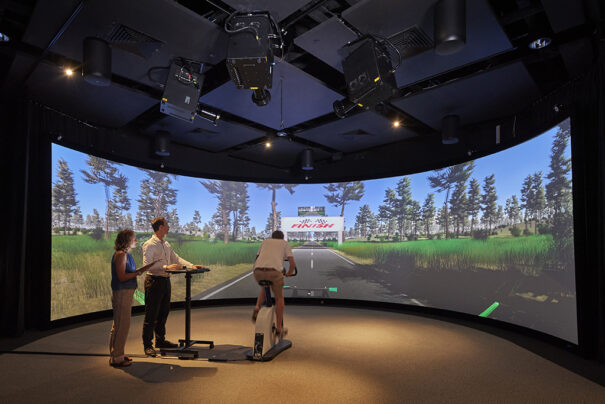
El centro de visualización inmersiva e investigación electrónica (HIVE) of the Universidad de Curtin ha actualizado sus pantallas Dome y Cylinder con los proyectores Satellite Modular Laser System (MLS) of Digital Projection.
El centro de visualización inmersiva e investigación electrónica (HIVE) of the Universidad de Curtin (Perth – Australia Occidental) apoya la investigación, siendo pionero en la exploración espacial, las ciencias de la salud, la educación y la ingeniería. Recently, ha marcado otro hito con la primera instalación mundial de proyectores Satellite Modular Laser System (MLS) de Digital Projection.
El HIVE es una de las instalaciones de visualización más avanzadas de su clase y la única que cuenta con cinco pantallas diferentes a gran escala. Su trabajo con tecnologías como la realidad virtual y aumentada, la visualización de datos y científica, la reconstrucción fotogramétrica en 3D y las imágenes volumétricas, se han utilizado para ayudar a pacientes con lesiones medulares, investigar el comportamiento de los consumidores y crear experiencias virtuales de lugares de naufragio.
“Ante todo, es un entorno seguro (sandbox) que ofrece la oportunidad de explorar una amplia gama de opciones en tecnología de visualización para proyectos de investigación en todas las áreas de especialización. Las instalaciones se crearon en 2013, por lo que era hora de actualizar sus sistemas audiovisuales con la última tecnología de proyección”, explains Andrew Woods, profesor asociado y gerente del HIVE de la Universidad de Curtin.
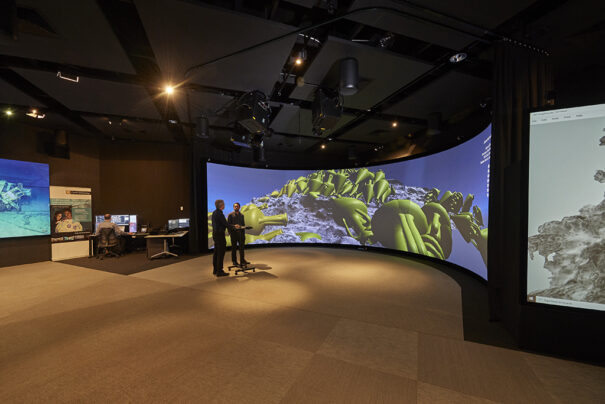
Las instalaciones de visualización del HIVE, ubicadas en un antiguo espacio expositivo de 15×15 metros, comprenden cinco tipos de configuraciones de pantalla: Dome, Cylinder, Wedge, Tiled y Hologram Table.
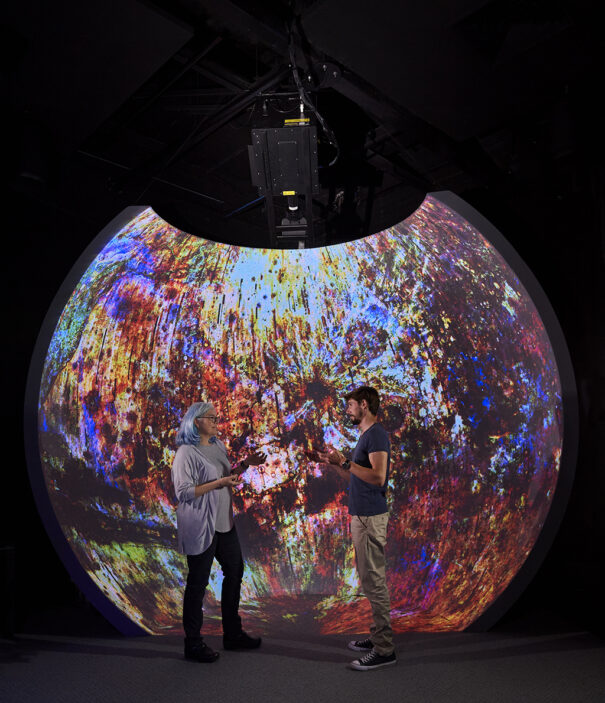
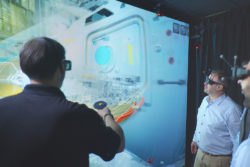
Dome es una pantalla de media cúpula con 4 metros de diámetro, que llena el campo de visión primario y periférico del usuario. Cylinder es una 3D envolvente que ofrece una experiencia de realidad virtual para hasta 50 users. Wedge consta de un par de pantallas 3D de 3,8 metros de diagonal que se utiliza principalmente para la visualización científica. Tiled presenta una resolución de 24 MP y se utiliza para imágenes de muy alta resolución. Y Hologram Table ofrece a dos usuarios imágenes 3D que se proyectan desde la superficie de una mesa. El proyecto de actualización se centró en las pantallas Dome y Cylinder.

“En el HIVE, Cylinder es el sistema estrella de la instalación. Utiliza tres proyectores para iluminar una pantalla de proyección cilíndrica de 180º de 3 metros de altura por 8 de diámetro. Con su actualización lo que queríamos era aumentar su resolución para utilizar proyectores 4K nativos, lo que proporcionaría una cuadruplicación de los píxeles mostrados, y aumentar el brillo. Todo ello sin comprometer la capacidad 3D estereoscópica de 120 Hz que ofrece la pantalla”, aclara Woods.
Tras hablar con Digital Projection, el equipo de InDesign Technologies, consultor del proyecto, comprendió que la solución Satellite MLS de Digital Projection era el sistema de proyección que cumplía con los requisitos del HIVE (4K completos con compatibilidad de 120 Hz, y sin estar sujeto a las zonas de exclusión que serían necesarias con un producto láser de clase 3).
“El MLS de Digital Projection todavía estaba en desarrollo como tecnología cuando comenzaron las conversaciones”, recuerda Tanya Hall, directora de desarrollo comercial de soluciones integradas de Amber Technology, distribuidor de Digital Projection en Australia y Nueva Zelanda.
Hall colaboró con Woods, InDesign, the integrator Vizcom Technologies y Emilijo Mihatov, director regional de ventas de Digital Projection, para discutir y perfilar los requisitos tecnológicos del proyecto, y con Vioso para desarrollar una solución que se adaptara a los requisitos de instalación de la pantalla Cylinder del HIVE.
El MLS separa la fuente de luz del pequeño y ligero cabezal del proyector, ofreciendo más libertad a los integradores, especialmente cuando el espacio y el acceso son limitados, al tiempo que reduce el ruido y el calor en la zona del público. Esta tecnología hace que la iluminación láser RGB de alta gama sea accesible para cualquier presupuesto.
En el HIVE, se han instalado tres sistemas Satellite MLS en la pantalla Cylinder, y otro más en la Dome. Aprovechando la naturaleza modular de estos proyectores, que permiten una separación de hasta 100 metros entre el cabezal de proyección y la fuente de luz, InDesign pudo colgar los cabezales de los proyectores satélite en los espacios de exposición, mientras que las fuentes de luz se colocaron a unos 15 metros de distancia en una sala de servidores que alberga el resto de equipos audiovisuales e informáticos.
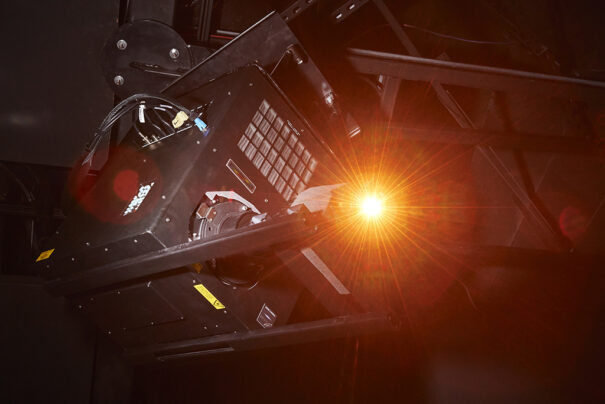
“Era importante que los proyectores tuvieran el menor impacto sonoro posible en el espacio”, aclara Scott Wrightson, director de proyectos de Vizcom Technologies. “Esto hizo que los sistemas Satellite MLS fueran imprescindibles. Al tener el procesador láser principal alojado en la sala de comunicaciones central, el nivel de ruido de funcionamiento de los cabezales era muy bajo, lo que era idóneo para este proyecto”.
Trabajar con una tecnología tan novedosa conllevaba ciertos retos. Los proyectores requerían lentes especiales que, en ese momento, no contaban con ningún distribuidor local, pero con la ayuda de Emilijo Mihatov de Digital Projection, Amber Technology pudo ponerse en contacto con el fabricante de lentes y establecer un acuerdo comercial para traerlas hasta Australia.
In the same way, con los sofisticados requisitos de mezcla para el componente cilíndrico del proyecto, Amber pudo ponerse en contacto con Vioso a través de Digital Projection y conseguir las estaciones de mezcla que necesitaba.
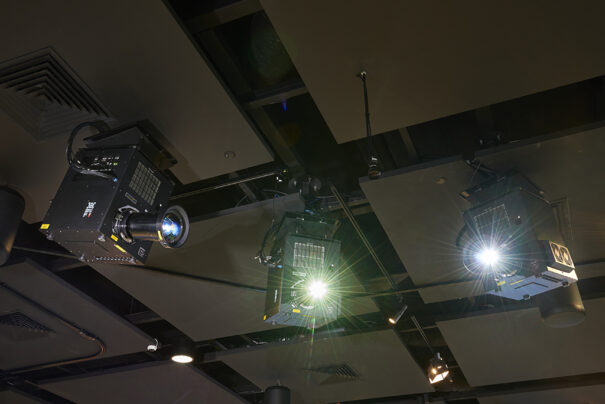
Las posiciones físicas de montaje también resultaron ser un problema, recuerda Wrightson, ya que fue necesario un refuerzo estructural completo para que las vigas de montaje estuvieran en las posiciones correctas para las pantallas Cylinder y Dome.
“Con esta solución de montaje también se produjeron algunas vibraciones ambientales procedentes de los sistemas de climatización y ventilación del edificio”, prosigue Wrightson, “lo que se notaba especialmente al utilizar la lente de ojo de pez Jenoptik en la zona de la pantalla Dome, por lo que tuvimos que diseñar y construir un cuello de lente a medida para anularlas”.
Para el HIVE, la mejora del sistema audiovisual es un importante paso adelante para una instalación cuyo trabajo gira en torno a las imágenes de gran impacto. “En última instancia, nuestro objetivo es que las pantallas del HIVE sean esencialmente invisibles para el usuario, y se limiten a ofrecer una ventana a un mundo diferente”, añade Woods. «Nuestro objetivo es poner imágenes increíbles en el lienzo en blanco de estas pantallas, que apoyen las aplicaciones y los proyectos de investigación de nuestros usuarios».

Did you like this article?
Subscribe to our NEWSLETTER and you won't miss anything.
Related articles
 Digital Projection llevará lo más innovador en proyección a ISE 2025
 Sony realiza su primera instalación Crystal Led Verona con Brompton
 L-Acoustics realiza su primera instalación con la serie L en un recinto deportivo
 ADI realiza su primera instalación digital permanente en Silverstone
 Genelec realiza su primera instalación Smart IP de Estonia en un sofisticado gastrobar
 Digital Projection renueva la proyección del Gärtnerplatztheater con su solución MLS
 Digital Projection y Vioso ofrecen en ISE una experiencia única en potencia y diseño de proyección
 Digital Projection transforma la tecnología de proyección láser en ISE
 Christie realiza la primera instalación con su tecnología SDVoE en Ecuador
 Digital Projection quiere cambiar las reglas de la proyección con el innovador Satellite MSL
 La escuela de Kingshott apuesta por Digital Projection para su nueva instalación AV
 Christie realiza la primera instalación permanente de proyección digital láser en una sala de cine
 Digital Projection presenta en ISE una solución de proyección de 40.000 lumens
 Christie performs first laser projection demonstration in Beijing 72.000 lumens