


Nanolumens Nixel hace realidad el proyecto de diseño e innovación de Verizon
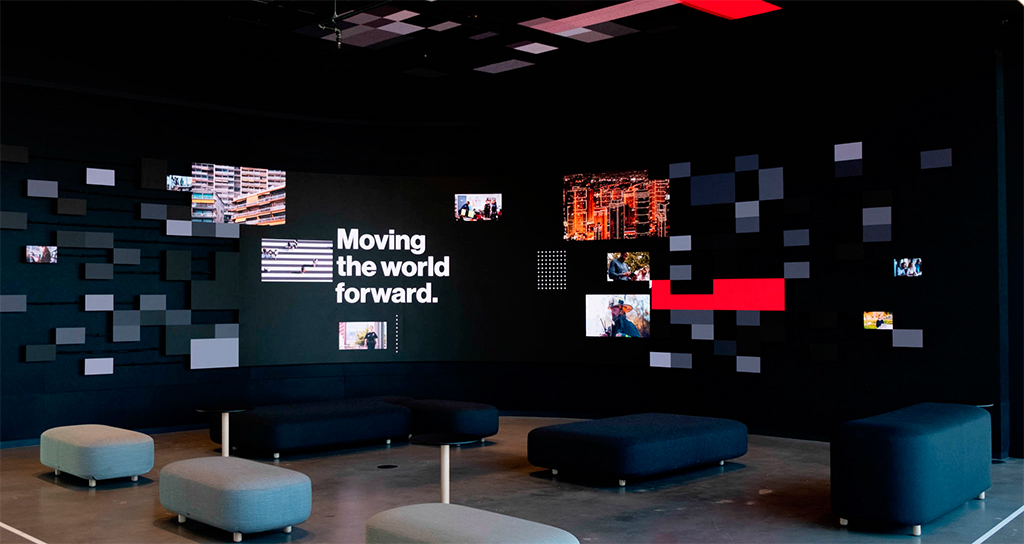
Para diseñar el original videowall industrial del centro de innovación de Verizon se ha utilizado un equipo Nixel de 1,5 mm Nanolumens en una matriz de 5,4 meters wide by 3,8 high.
Conceptos de diseño, ingeniería e ingenio han llevado a la construcción del innovador centro de Verizon. Y esto también se ha visto reflejado en sus instalaciones AV, donde la tecnología de Nanolumens ha tenido un especial protagonismo.
Para el proyecto de este centro, el grupo de expertos de Nanolumens trabajó para determinar las complejidades y los posibles resultados y desafíos de este proyecto de alto nivel. La instalación planteaba ciertos retos: un diseño complejo, una pared cóncava y una nueva topología de producto
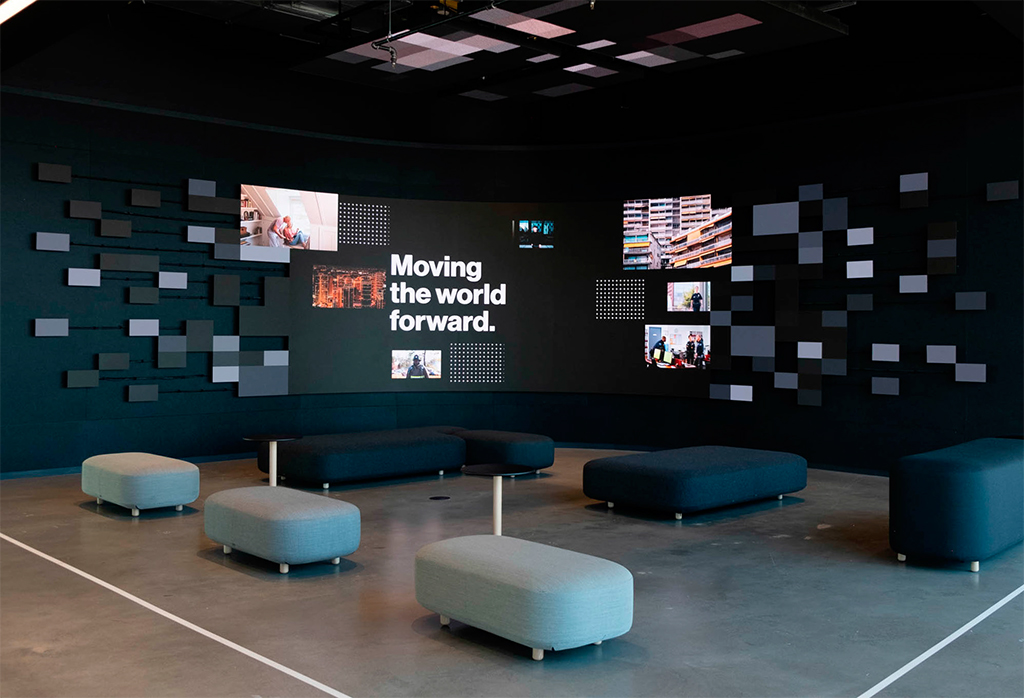
El objetivo era diseñar una pantalla de 16:9 que se separara de la pantalla principal para crear un videowall industrial y reconstruido que pareciera una placa de circuito.
Tenía que tener una estética limpia, pero también parecer industrial con las piezas y el cableado expuestos, como si un televisor hubiera explotado intencionadamente. La industria ha acuñado una frase para esto como ‘Tech-o-rating‘, y el resultado fue un diseño muy tecnológico con forma y funcionalidad.
El reto y las soluciones
Dan Rossborough, director del Grupo de Proyectos Especiales (SPG) de Nanolumens, se dio cuenta de que esta instalación planteaba muchos retos. Tardó cuatro meses en desarrollar una nueva topología de producto para el Nixel de Nanolumens, que serviría de base para este diseño.
Se creó la maqueta de un chasis en inglete sobre un único Nixel para emular los ‘Orphan Nixel’, una frase que Dan acuñó para describir las pantallas satélite Nixel que eran independientes de la pantalla de vídeo principal.
Junto con el equipo de I+D de Nanolumens, el SPG desarrolló una ‘placa hija’ que podía colocarse en la parte posterior de un Nixel. Le acoplaron una tarjeta de recepción para que pudiera ser tratada como si fuera una matriz completa. Esta idea a medida simplificaba el manejo de los puertos de alimentación y datos.
The development
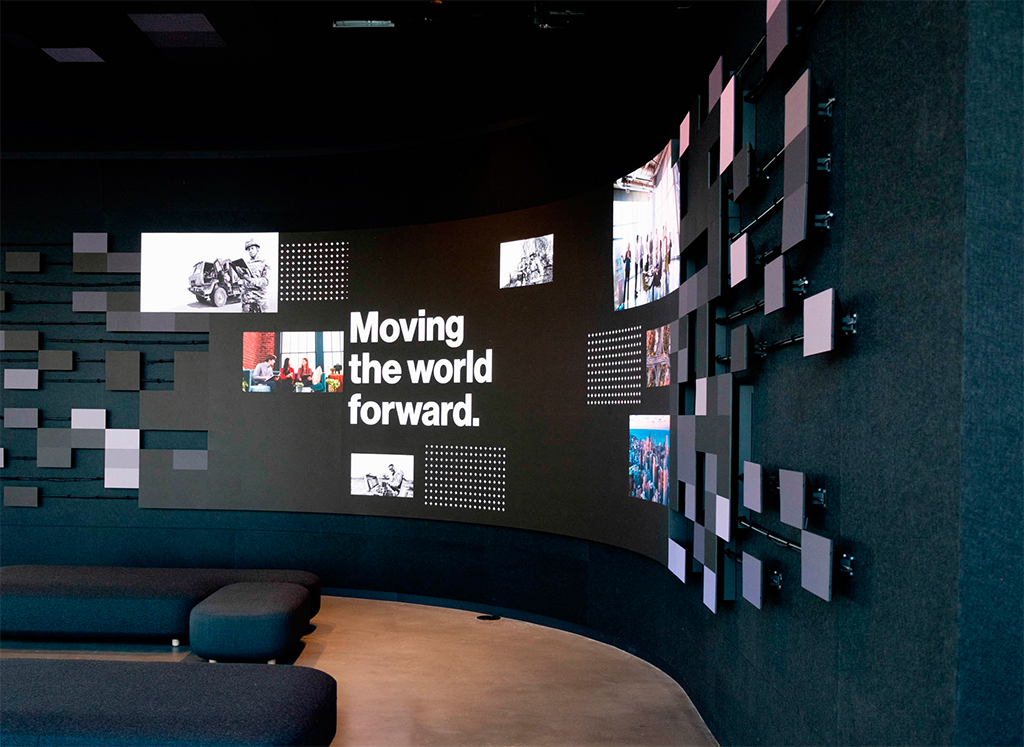
Los Nixels autónomos tienen su propio chasis y datos para estirar y formar cualquier array que se pueda imaginar, cada uno programado con su propio offset en dos rasters de contenido 4K coordinados (aspect ratio 32:9).
Los nixels huérfanos, alojados en un chasis FDM impreso en 3D a medida, se pueden montar frontalmente en soportes telescópicos de aluminio ajustables en 6 ejes y con anclajes de alimentación/datos en barras al cuerpo principal.
El cuerpo principal de la pantalla se realizó con ingletes en la parte superior, inferior y en los laterales, para que todo el conjunto parezca que flota. Todo ello fue posible gracias a la topología Frame-and-Skin de Nanolumens.
El chasis del Nixel huérfano se imprimió en 3D y se diseñó con espacio para la ‘placa hija’ y el Nixel. Un soporte de montaje personalizado con ajuste de 4 ejes y cabeceo permitía calibrar con precisión los nuevos Nixels. Antes de utilizar estos chasis impresos en 3D, se probaron teniendo en cuenta la dinámica térmica, y el diseño resultó ser sólido.
Este complejo diseño exigió al equipo trabajar con las limitaciones de una pared cóncava de atenuación del sonido hecha con MDF. La solución de Nanolumens no podía montarse en ella, así que tuvo que hacerlo a través de ella. Se utilizaron espaciadores para comprimir el sustrato que había detrás y permitir una alineación precisa de la pantalla principal y sus Nixels huérfanos de 1,5 mm.
Estos se alinearon de forma independiente con una tolerancia de menos de una décima de milímetro en una cara de rejilla que los alinea con precisión.
Otro elemento que ayudó en la fase de diseño fue una maqueta desarrollada en el laboratorio de diseño de Executioner, con una sección de 2×2 metros como prueba de concepto. Nanolumens también contrató a un artista de los medios de comunicación para que le ayudara a elaborar el mapa de este complejo videowall.
The results
Para el proyecto Verizon Hub se utilizó un Nixel de 1,5 mm de Nanolumens en una matriz de aproximadamente 5,4 meters wide by 3,8 high.
La sección principal del videowall es de 16:9, al igual que cada una de las ‘alas’ de estilo placa de circuito. Y aunque hacía tiempo que Nanolumens no utilizaba paneles Led de 9 mm en interiores, también proporcionó un videowall suspendido en el techo. Se trata más bien de un elemento de iluminación para crear ambiente en el espacio. Este videowall añade casi un efecto de espejo difuso de la pantalla curva más grande para el centro de innovación.
Did you like this article?
Subscribe to our NEWSLETTER and you won't miss anything.
Related articles
 Lightware takes stock of a 2024 marked by innovation
 Crestron technology makes San Diego's One Safe Place project possible
 NanoLumens deploys Led innovation in Terminal A at Newark Liberty Airport
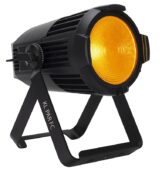 Elation combines technological innovation and classic design in KL Par FC
 Bang & Olufsen celebra 95 years of innovation and design in audio systems
 Black Box hace realidad el ‘IoT Building’ con sus soluciones y servicios
 d&b audiotechnik: innovation in audio design and efficiency for fixed installation
 Peerless-AV bets on Led technology, innovation, design and creativity in its developments
 The new Four Winds casino renews its signage supports with curved Nanolumens Nixel screens
 DigaliX Solutions consolidates its business project started ten years ago
 NanoLumens Nixel makes the interior and exterior of the University of Arizona lobby glow
 El centro de experiencia de JR Simplot fomenta la creatividad e innovación desde su pantalla curva Nixel
 The Rockin'1000 musical project – That's live comes true with Shure microphones
 NanoLumens hace en ISE 2015 su presentación oficial en el mercado europeo