


How digital signage and AI are revitalizing retail
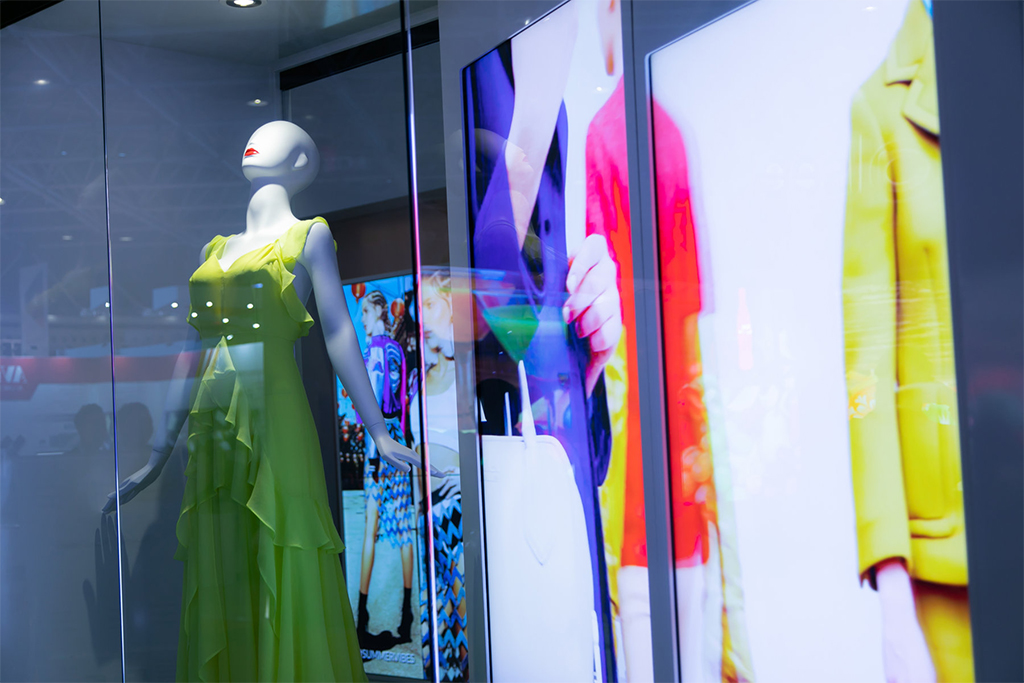
Artificial intelligence is booming in the digital signage sector, as in many other industries. Pero al hablar de IA el abanico es muy amplio. Hay que distinguir entre bots y software realmente ‘inteligente’ que puede ‘aprender’.
Los bots son programaciones fijas en las que un evento Y definido sigue a un evento X. For example, a una madre de 30 años con un niño pequeño que entra en un banco se le muestra un anuncio diferente en una pantalla de señalización que a una pareja de 60 años que entra en el mismo banco. La inteligencia artificial, instead, funciona de forma más abierta, con variantes de acción, vinculaciones, calculando correlaciones, comparando los resultados, utilizando el aprendizaje automático… El resultado es una optimización continua.
Utilizando cámaras de alta resolución se pueden leer variables como la postura corporal, la expresión facial, el movimiento de la cabeza, la dirección de la mirada y el tiempo de permanencia, con el fin de encontrar correlaciones de forma independiente y tenerlas en cuenta en futuras visualizaciones.
The solutions of digital signage software actuales utilizan hasta 20 características reconocidas de una persona para calcular el contenido de la emisión. Todo ello en fracciones de segundo.
Datos personales y anónimos
Un registro tan detallado de las características personales con la ayuda de cámaras de alta resolución suscita naturalmente inquietudes. Puedo disipar estas preocupaciones en la medida en que no se recogen datos personales.
Al software de señalización digital inteligente no le interesan los datos personales. Es completamente irrelevante quiénes son las personas grabadas. Lo que interesa a la artificial intelligence son, among other things, los patrones de movimiento reconocidos, los estilos de ropa, la edad o el sexo.
En el caso de la madre de 30 años con un niño pequeño en el banco, esto significa: al software de señalización digital no le interesa el nombre de la mujer ni quién es; lo que le interesa es que sea mujer, que tenga un hijo, cuándo acude al banco, cómo se mueve o cuánto tiempo permanece en el lugar, cómo va vestida y qué edad estiman los algoritmos que tiene. Esta información llena una tabla, una base de datos. La imagen puede volver a borrarse inmediatamente.
Por eso hay que distinguir claramente entre datos personales, que por supuesto deben protegerse, y datos anónimos. El análisis de imágenes sólo transmite patrones reconocidos en el sentido de una encuesta anónima en forma de tabla. Una persona frente a una cámara de IA es sólo una tabla de características a la que sigue una evaluación y un resultado, en este caso la visualización de publicidad adaptada.
Si registro características personales puramente cuantitativas y las almaceno independientemente de la secuencia de vídeo individual, se trata de datos anónimos e impersonales.
Tampoco se almacenan vídeos o imágenes. La cantidad de datos sería demasiado grande para ello y la secuencia de vídeo individual carece de interés. Lo que interesa, however, es el resultado, that is to say, las decisiones del software. Porque la inteligencia artificial está estrechamente vinculada al aprendizaje automático.
Hay que saber que en el caso de la IA en el sector de la señalización digital, estamos hablando de grandes redes, no sólo de dos o tres tiendas. Se evalúan secuencias de vídeo de muchos miles de puntos de emisión. Estas evaluaciones se utilizan para calcular los resultados futuros. In this sense, la IA aprende constantemente del conjunto de contenidos de señalización. Cuanto más grandes sean las redes, mejor y más precisa y rápidamente podrá aprender el software las correlaciones y correspondencias.
La IA y la señalización digital mejoran el comercio físico
Este conjunto de ‘patrones de reproducción’ ofrece a los estrategas de marketing posibilidades casi inagotables. Los puntos de relevancia e individualidad son importantes aquí: los mensajes publicitarios e informativos pueden reproducirse con más precisión que nunca.
Tomemos de nuevo el ejemplo de un banco. Este quiere atraer a nuevos clientes jóvenes y hace publicidad ‘a la manera tradicional’ con carteles de papel para su cuenta joven, que se cuelgan por todas partes en el banco. Pero esto no le gusta a una persona de 75 años que ahora entra en este banco. Tal vez a este cliente le moleste la publicidad. O simplemente no se siente bien atendido y se pregunta: ¿me quiere este banco como cliente?
Aquí es donde entra en juego la señalización digital inteligente. Este cliente bancario de 75 años puede recibir información sobre un plan para jubilados, mientras que el adolescente recibe información sobre su primera cuenta nómina gratuita y la joven madre sobre un plan de ahorro para ‘estudiar en una universidad puntera de EE.UU’.
Estos ejemplos muestran cómo las soluciones de IA y la señalización digital ayudan a dirigirse a los clientes de forma individualizada y, therefore, a captarlos de forma amable. Todos reciben publicidad adaptada a su edad y situación vital.
Thus, el banco de proximidad puede posicionarse para un público muy amplio. Esto es transferible a todo el ámbito del retail. Las tiendas de ropa se dirigen auténticamente a clientes de diferentes edades. Una panadería capta a los clientes con publicidad en expositores. Y una cadena de supermercados promociona las ofertas de la semana siguiente, siempre de forma diferente, según el grupo objetivo que pase por delante del expositor.
Un recorrido perfecto del cliente
Este experimento mental puede llevarse aún más lejos. Si se toma el recorrido completo del cliente, For example, el resultado puede afinarse vinculando los datos de la pantalla con otros, como los datos de ventas de la zona de caja y de la tienda en línea, los patrones de recogida en las tiendas, los de movimiento en una tienda o el tiempo pasado en determinadas páginas de productos en línea, e incluyéndolos en el cálculo del resultado.
Conectados a soluciones de señalización digital en la tienda, los carteles publicitarios pueden individualizarse y adaptarse mejor al grupo objetivo.
El futuro consistirá en proporcionar al cliente información relevante desde el primer punto de contacto, dondequiera que se produzca, y acompañarle en su experiencia online y offline de forma informativa y entretenida. La señalización digital no sólo contribuye enormemente a ello, sino que también es la clave para revitalizar el retail.
Pablo Trains
Business Development Manager de Concept International Spain

Did you like this article?
Subscribe to our NEWSLETTER and you won't miss anything.
Related articles
 How digital signage evolves in travel retail
 ECS5 facilitates the management of digital signage in the retail environment
 AG Neovo PM-3202: indoor digital signage display for retail
 Revoolt advances in digital retail with a signage solution for delivery of shipments
 Glass-Media introduces 'Digital Activation as a service' to boost the retail sector
 Led Screens: How do you know if they are protected against dust and water??
 WHEREAS 2018: Beabloo will provide the technological keys that are transforming the retail sector
 Cayin will show at Computex Taipei 2017 digital signage solutions for retail
Beabloo and Moca show how digital and proximity marketing help the sports retail market
Cayin will show at Computex Taipei 2017 digital signage solutions for retail
Beabloo and Moca show how digital and proximity marketing help the sports retail market
 TD Maverick shows the channel how to boost business with digital signage
 Tecnología de visualización interactiva como ‘personal shopper’ en el sector retail
 Philips BDL3210Q: side-lit LED backlit display for digital signage in retail
 D-retail brings its signage and digital signage solutions to Expo Retail 2012
 Why LCD video walls are becoming the most popular tool in digital signage?