


Sage Gateshead updates main auditorium with RCF sound
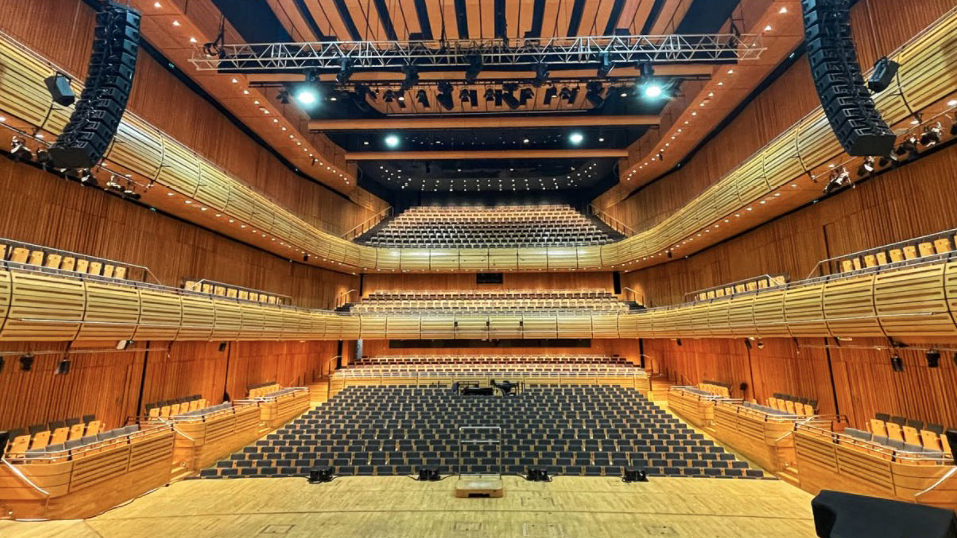
La sala de conciertos se ha renovado con la sustitución del line array RCF HDL 20-A por un HDL 30-A, y, besides, se ha realizado una revisión del diseño de subwoofer que ahora comprende 10 SUB 9006-AS.
El complejo Sage Gateshead, integrado por una sala de conciertos y un centro de educación musical, lleva mucho tiempo estandarizado los sistemas RCF en su sede del noreste de Inglaterra, en Gateshead, a orillas del río Tyne.
El auditorio principal de la sala de conciertos, Sage One, ha requerido una revisión completa en respuesta a la eliminación de sus asientos de platea en ciertos escenarios. Esto ha llevado a que el line array RCF HDL 20-A sea reemplazado por un HDL 30-A, más robusto, junto con una revisión de su diseño de subwoofer que ahora comprende 10 SUB 9006-AS. Un equipamiento que ha sido suministrado por Ingram AV.
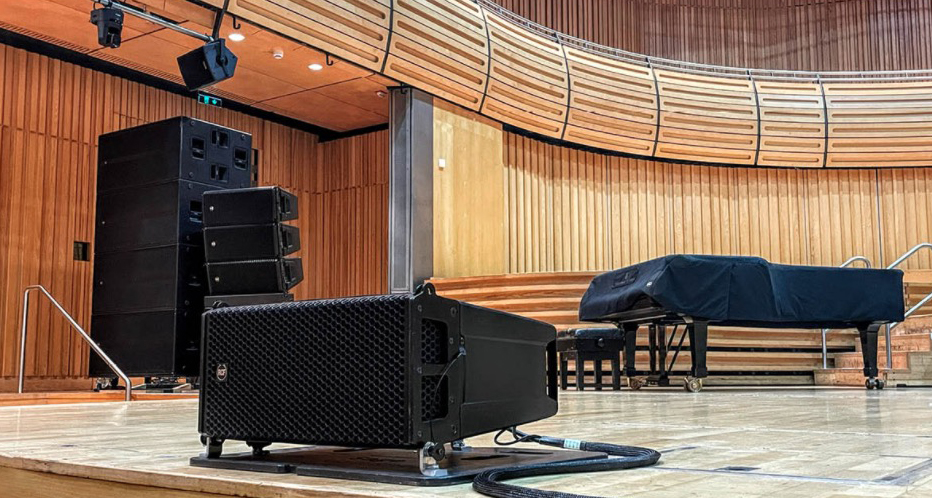
El director técnico del lugar, Graham Orchard, explica cómo surgió el proyecto capital para cambiar la funcionalidad de los asientos de la sala y cómo afectó a la megafonía.
“Los asientos originales nunca fueron diseñados para ser eliminados”, admite. “Solo habíamos hecho un evento permanente una vez, para el BBC 6 Music Festival in 2015. Fue un trabajo importante y dañó los insertos a los que estaban atornillados. El objetivo del proyecto capital era cambiar el mecanismo de liberación para que los asientos pudieran retirarse fácilmente y en menos tiempo”.
At the same time, Sage Gateshead sabía que si deseaban organizar eventos de carácter permanente tendrían que abordar el sistema de megafonía. Un concierto de pie ofrecería un tipo diferente de experiencia al público, al tiempo que aumentaría significativamente la capacidad en las plateas.
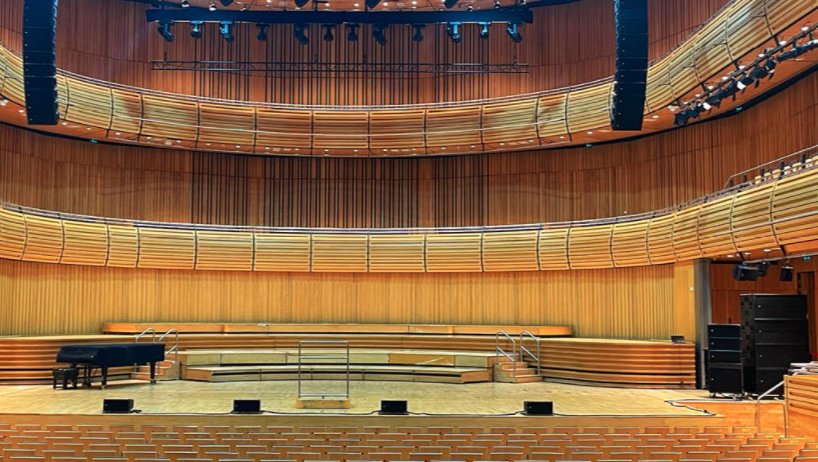
Con una larga experiencia tanto en el lugar como en las características HDL a través de su empresa anterior, Andy Magee, de RCF Engineering Support Group, ya había registrado numerosas mediciones para diferentes escenarios (For example, con el escenario extendido). Había pasado una semana con 24 micrófonos de referencia repartidos por la sala y, consequently, asesoró sobre la nueva configuración, que incluía altavoces de relleno de la gama TT de RCF, con todo el sistema ahora controlado y conectado en red a través del RDNet patentado de RCF.
En la nueva configuración, los paneles L/R de 12 gabinetes line array activos HDL 30-A de 2×10” recogen la cobertura de la fila F en el nivel de los cubículos y se extienden hasta los niveles 2 y 3 de los balcones, mientras que una pila en el suelo tres HDL 30-A adicionales y un único RCF SUB 9004-AS por lado cubren a la audiencia en las primeras cuatro filas.
Cuatro HDL 26-A en el frente del escenario proporcionan relleno de borde, mientras que dos TT 10-A brindan cobertura de relleno a nivel de platea y otros cuatro TT 10-A realizan la misma tarea en los niveles de balcón.
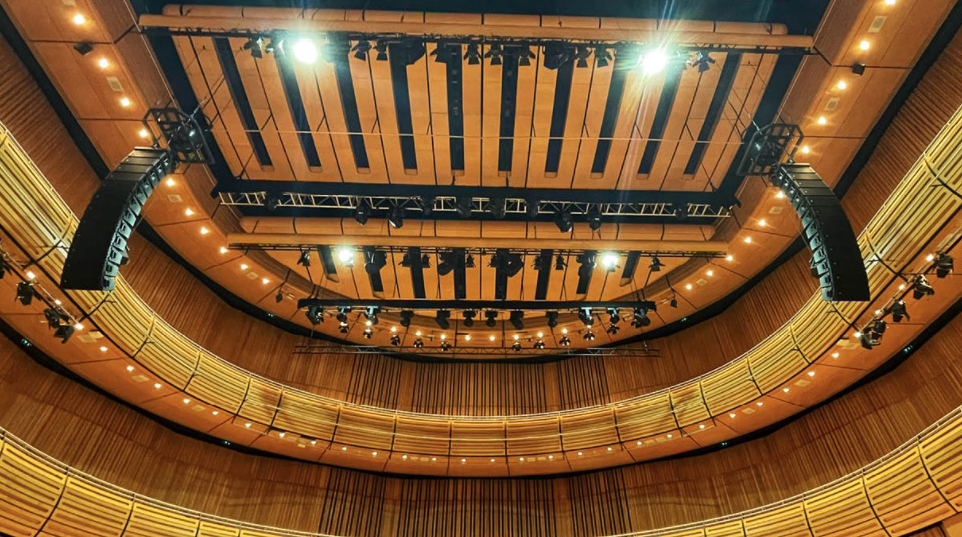
“El grupo de dos colgadores TT 10 cubre las cajas a cada lado, cada una de las cuales tiene capacidad para ocho asientos. Los otros cuatro, que salen del PA, están dirigidos a los balcones de nivel 2 y 3”, explica Graham Orchard.
Mientras los operadores luchaban con los problemas inherentes del contorno inclinado y curvo, y la consiguiente construcción de nuevas plataformas planas para la posición de control FOH, fue el despliegue de los subwoofers lo que estaba causando mayores problemas.
Inicialmente colocaron tres SUB 9006-AS por lado en configuración cardioide y luego se aumentó a cuatro. However, el cardioide fue retirado posteriormente debido a los contornos de la sala y a que se decidió que sonaba mejor sin él.
“El rechazo que obtuvimos del cardioide no fue tan significativo”, admite Graham Orchard. “Lo ideal sería tener los subwoofers debajo del escenario en un patrón lineal; pero eso era imposible, ya que el escenario está en un ascensor, por lo que los subs tienen que apilarse en el suelo. También hay que colocarlos muy lejos del escenario debido a problemas con la línea de visión”.
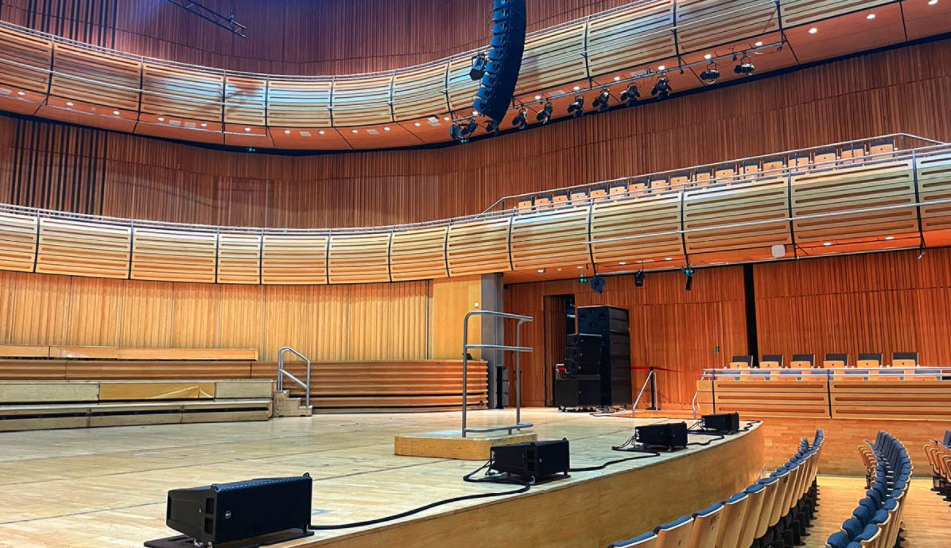
Como precaución, se han agregado dos SUB 9006-AS más como utilidades, ya que si bien pueden usarse para reforzar la artillería existente según sea necesario en el auditorio principal, también pueden transportarse en plataformas rodantes a otro espacio y usarse con la casa. HDL6.
El control es igualmente vital y con el cambio a HDL 30-A Andy Magee ahora ha integrado RDNet y el software RCF para brindar mayores capacidades. Si bien el sistema en sí fue sintonizado y alineado en el tiempo usando RDNet, la tableta de control brinda a los ingenieros acceso para recortar y ajustar el ecualizador de todas las zonas a través de la plataforma BSS Soundweb personalizada.
A través del panel de control ahora hay varias configuraciones para la reducción de etapa, la extensión de etapa estándar y la extensión de etapa completa (que afectan los retrasos) habilitadas principalmente a través de RDNet.
Pero por muy grande que sea el logro de esta elegante integración, la necesidad de que el HDL 30-A fuera compatible con los requisitos de las salas de conciertos clásicas era primordial, especialmente porque Sage Gateshead es el hogar de su orquesta, la Royal Northern Sinfonia. RCF trabajó para crear un ajuste preestablecido personalizado en RDNet que optimizara el rendimiento, garantizando que no se excediera de ninguna manera el bajo nivel de ruido existente en el lugar.
Las piezas finales del rompecabezas fueron el cumplimiento del presupuesto y la continuidad visual. “Tener algo que no cambiara por completo la representación visual de los palcos en la sala fue un factor clave. Sage One es una configuración de ‘caja de zapatos’, por lo que con la huella suspendida en el aire y en el escenario, simplemente cambiar de HDL 20-A a HDL 30-A fue un gran beneficio”.
Did you like this article?
Subscribe to our NEWSLETTER and you won't miss anything.
Related articles
 KV2 Audio actualiza el auditorio inmersivo del teatro inglés Octagon
 Chandler Theater updates its sound with JBL Pro technology
 Inspire Brands actualiza su auditorio con el sonido de JBL y Crown
 Martin Audio reinforces the renewed sound of the Kiva auditorium
 DiGiCo S31 updates the sound of the 30 Euston Square
 K-array brings sound to Sungroup's multipurpose auditorium
 The Ibizan nightclub Amnesia renews the sound of its main room with KV2
 Renkus-Heinz ofrece sonido de alta calidad al auditorio Einstein de Ulm
 El Mierscher Kulturhaus renueva el sonido de su auditorio con Nexo Geo
 The National Auditorium of Mexico updates its sound system with L'Acoustics
 La compañía de seguros LB Forsikring actualiza el sistema AV de su auditorio con dnp
 El auditorio Beatriz Madrid renueva sus instalaciones con el sonido de Shure
 The Colegio de México installs two Christie HS Series projectors in its main auditorium
 The Elbe Philharmonic inaugurated its Hamburg auditorium with a spectacular light and sound projection