


Lithuanian drama theater's sound system connects with Optocore
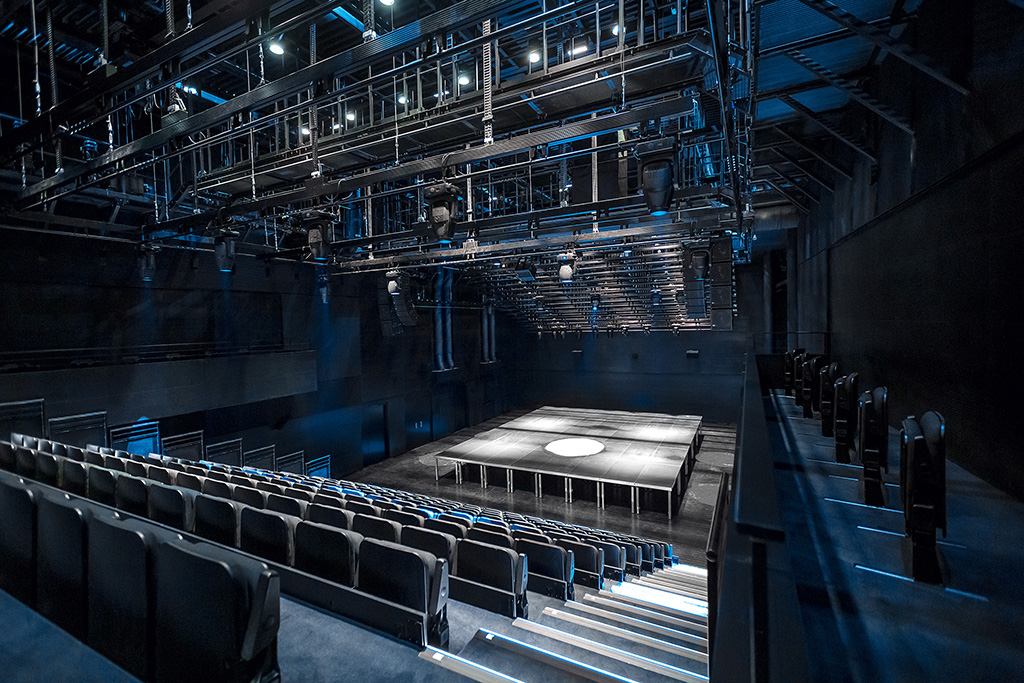
At the same time, the reconstruction of the Lithuanian National Drama Theater has been carried out (LNDT) A complete sound system has been installed, integrated by consoles DiGiCo and a PA system Meyer Sound. An entire infrastructure connected to a digital network based on Optocore AutoRouter.
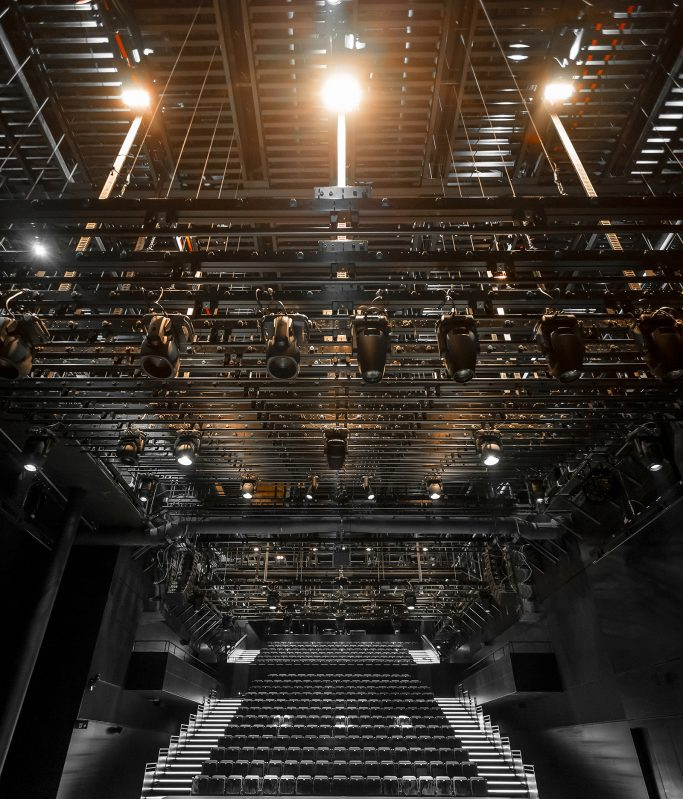 The reconstruction and expansion of the Lithuanian National Drama Theater (LNDT) in Vilnius has included a complete renovation of the sound system, based on Optocore technology and designed by Sound Plugged.
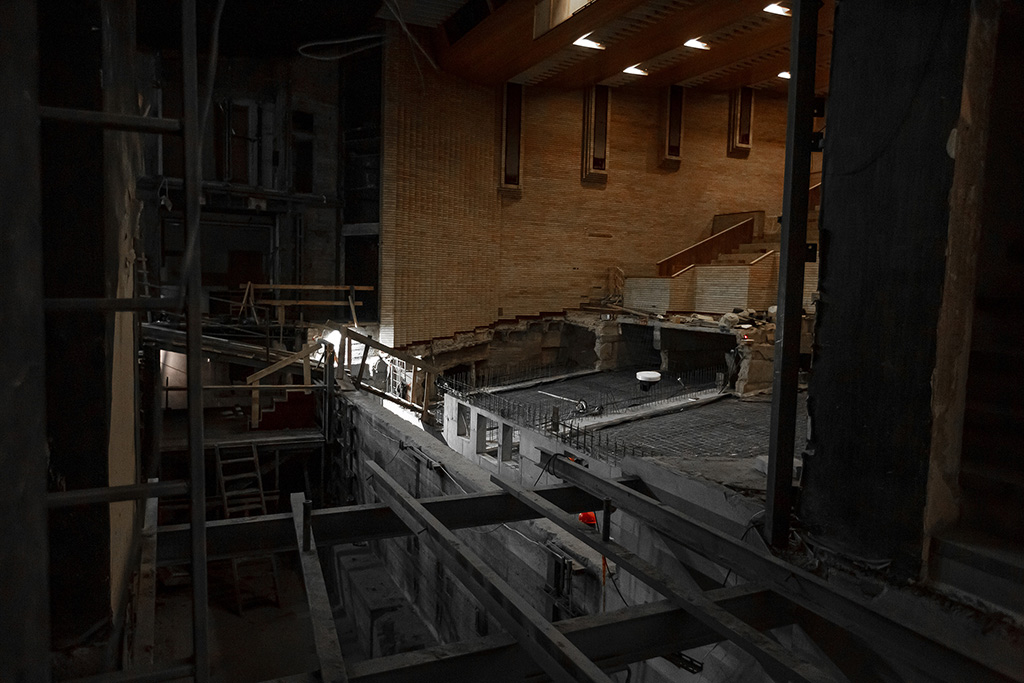
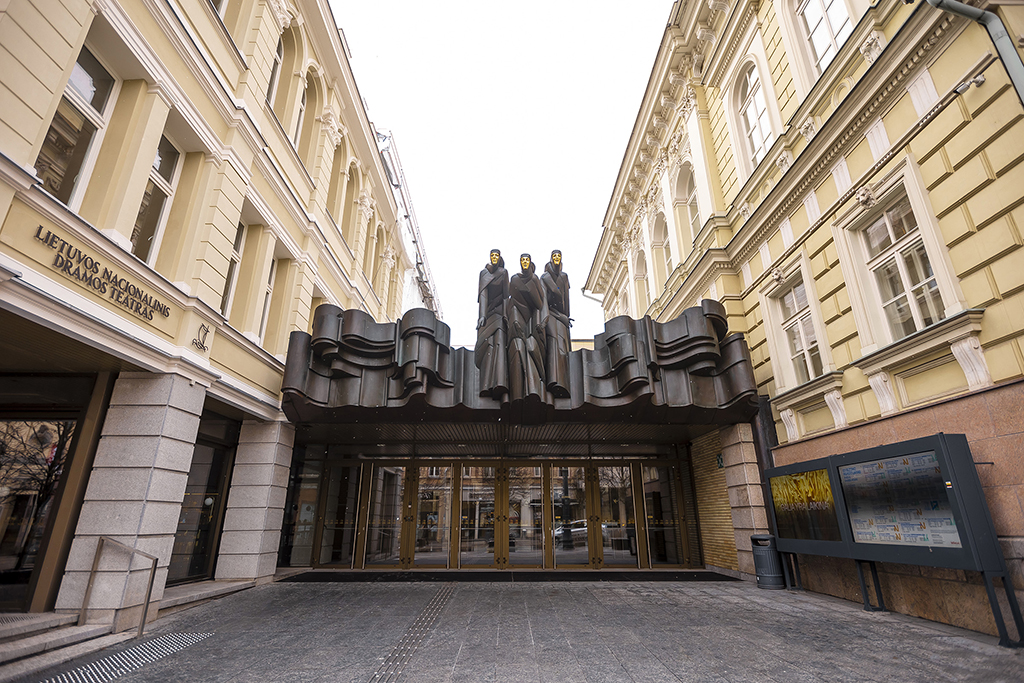
It is a building that dates back to 1940 and this renovation is the largest carried out in 40 years. Last year a new room was inaugurated, followed by a smaller one for experimental and small-scale productions. With the recently renovated great room, the LNDT, which is one of the most important cultural institutions in the country financed with public funds, It has a total capacity of 1.200 seating.
Once fully operational to summer filanels 2024, the three separate spaces will have their audio interconnected through an Optocore AutoRouter smart fiber patchbay, which will provide enormous routing flexibility in a fully redundant solution.
Sonus has been an Optocore distributor in the area since 2021 and so is DiGiCo. The integration of the Optocore console has been carried out in the project, offering remote preamp and SD series compatibility.
Besides, Sonus technology engineer and service/support manager, Darius Valikonis, explains how the three rooms are equipped with DiGiCo consoles in control positions and SD-Racks. The Small Hall has a SD9 console at FOH with Meyer Sound PA connected via DiGiCo SD-Nano Racks (with an additional large SD-Rack on stage).
In the New Hall a detailed SD12 and FOH, and in the Great Hall, the FOH console is a DiGiCo Quantum 338, all compatible with the Optocore protocol, with the PA connected through the nano racks but with two SD-Racks at the end of the stage, since more entrances and exits are required in the main space.
When explaining the background of the contract, Valikonis confirms that Sonus approached the project practically as a new construction, since the theater was in full reconstruction.
“The system was very old as the last major upgrade to the main auditorium was done in 2009, and although the machinery and mechanics were updated, sound or lighting systems are not”.
Cautiously, emphasized that the three rooms would be connected to standard, cost-effective ST fiber connectors and would remain “physically disconnected” from each other until final commissioning. It will then offer full bi-directional signal transport with all rooms connected internally using Optocore optical loops, with the fibers terminated in the main server room where the Optocore AutoRouter is located.
Darius Valikonis confirms that signal routing throughout the site has been one of the main requirements, allowing sound to be sent in different directions to the audience.
“AutoRouter is a very good system because you can operate in one place and if you need different inputs or outputs from the other place, it is possible to hold large events in two or three different locations, interconnecting them”.
Compatible with standalone Optocore networks, DiGiCo fiber loops and other protocols that support single-mode or multimode optical fiber, What AutoRouter does is create a smart star from a topology of Optocore fiber loops, automatically closing the loop between active and mobile devices. stage boxes.
No need to manually connect cables anymore, since this patchbay Smart automatically detects active devices and forms a loop topology to establish redundancy, no user interaction. This speeds up system design and configuration for any production, as Darius Valikonis points out.
“The main advantage of AutoRouter”, Darius continues., “is that in the New Hall and the Great Hall there are at least two possible points where the sound engineer can place the mixing console, so there is no need for any additional patching or connection. …you just disconnect from a place and reconnect and are aware; therefore, It is much easier and faster for the user. The equipment is very easy to use and requires no configuration; You just need to make sure there is a good connection for the fiber optics and you will be ready to use.”.
This agile solution in a building that has also been acoustically treated, was one of the challenges that the integrators managed to overcome. Other, according to the head of technology at Sonus, Mindaugas Indrašius, was how to integrate all this modern technology into the historic spaces of the theater, included in the protected heritage and decorative elements, without compromising the architecture.
Did you like this article?
Subscribe to our NEWSLETTER and you won't miss anything.
Related articles
 Lyric Hammersmith theater upgrades sound system with EM Acoustics
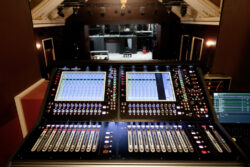 DiGiCo SD12 controls the audio system of the Lėlė Puppet Theater in Vilnius
 EM Acoustics renews the sound system of the Donmar Warehouse theater
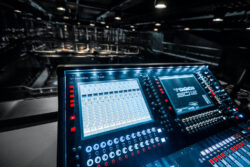 DiGiCo takes the Lithuanian National Theater to a new sound level
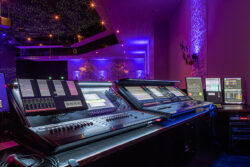 DiGiCo assists in Five Lakes sound system remodel
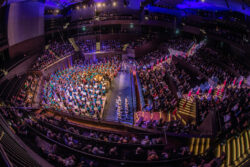 Optocore AutoRouter improves the sound system of the Finnish Musiikkitalo
 The Gran Teatro de Cáceres renews its sound system with DAS Audio
 MA Lighting connects your lighting control system with display platforms
 The Royal Wakefield Theater renews its sound system with EM Acoustics
 North Carolina Museum of Art Theater Opts for Flying Sound System from Martin Audio
 The renovated Pòsit theater in Tarragona relies on FBT technology as a sound system
 WHEREAS 2015: DiGiCo connects its consoles in an Optocore/Broaman network at its partners' stands
 An IPTV system from Ikusi Multimedia connects the screens of the Athletic Club de Bilbao stadium
dHD connects the humanitarian world of Doctors Without Borders thanks to its streaming system
An IPTV system from Ikusi Multimedia connects the screens of the Athletic Club de Bilbao stadium
dHD connects the humanitarian world of Doctors Without Borders thanks to its streaming system