


LSI Projects digitizes historic London music venue St Luke's

The iconic St Luke’s Anglican Church building has been converted into a modern performance space, Top-notch recordings and learning, como parte de la Orquesta Sinfónica de Londres (LSO). Una remodelación técnica y digital diseñada e integrada por LSI Projects como parte del proyecto Future ready.
Tras más de dos décadas de uso continuo, la infraestructura del edificio de St Luke’s se ha modernizado al completo para ampliar sus capacidades digitales y técnicas como parte de la actividad musical y artística de la Orquesta Sinfónica de Londres (LSO).
As part of the project Future ready, la renovación técnica del recinto, carried out by LSI Projects, ha ido más allá de sustituir los sistemas de sonido, visuales e iluminación para convertirse un espacio que respalda la evolución de la LSO.
This is what he points out Sabina Noble, directora de St Luke’s: “esta remodelación se basa en más de veinte años de experiencia en el recinto como sede de actuaciones, grabaciones y el programa LSO Discovery, apoyando la actividad artística, producción digital y alcance comunitario. Repensar el recinto desde dentro ha abierto oportunidades para la LSO que, simply, no existían antes”.
El proyecto Future ready permitió al equipo, along with Theatre Projects Consultants y LSI, rediseñar estos sistemas desde cero. Gran parte de ese trabajo se centró en Jerwood Hall, el principal espacio de actuación de St Luke’s, en el que se ha instalado un sistema unificado de iluminación para actuaciones, trabajo y salas de conciertos, integrando las luminarias de producción con las arquitectónicas y de emergencia de Max Fordham.
El nuevo sistema se integra sin problemas entre ETC Paradigm y la propia mesa de iluminación de la LSO, ofreciendo al equipo justo lo que necesita: sutileza para conjuntos pequeños, potencia para orquestas completas y la confianza de que, pase lo que pase en el escenario, la sala responderá.
Pero la transformación técnica se ha extendido más allá de la mesa de iluminación. A medida que St. Luke’s se convertía en un centro de grabación y transmisión en directo, su antigua configuración de audio lo limitaba cada vez más. La remodelación solucionó este problema con un nuevo sistema de contención y cableado, a sala de control de audio dedicated, construida con estándares de estudio profesionales, and another of edición digital que ahora funciona como galería de control de cámaras para eventos transmitidos y filmados.
Como integrador de sistemas del proyecto, LSI se encargó de la instalación técnica completa del edificio, since the sistemas de control de iluminación y gestión energética; infraestructura de audio y comunicaciones en red hasta los de intercomunicación digital y escucha asistida; megafonía in all space; instalaciones de retransmisión y producción de vídeo, además de un nuevo y extenso cableado de fibra, datos y señal; el equipamiento de la nueva sala de control de audio y la principal.
Un edificio de esta antigüedad y categoría presentaba además sus propios desafíos: estrechas vías de contención, espacio limitado y la imposibilidad de añadir nuevo cableado sin grandes obras. Con gran parte de los pasillos y galerías originales ya ocupados, la instalación de la nueva infraestructura requirió una planificación extremadamente cuidadosa.
“Confiamos plenamente en la creatividad del equipo de obra de LSI para encontrar soluciones, incluyendo el desvío de parte del cableado entre las nuevas salas de equipos en el sótano y la torre del reloj -explica John Riddell, director de Theatre Projects-. In the end, todos los servicios se instalaron correctamente, incluso en las zonas más complicadas, y la infraestructura es accesible para futuras actualizaciones”.
As he adds Liam Hawes, director de proyectos de LSI, “trabajar en un edificio catalogado de Grado I implicó un equilibrio constante entre el rendimiento y la protección del mismo. La estrecha coordinación entre todo el equipo del proyecto y la entrega puntual fueron esenciales, sobre todo teniendo en cuenta el limitado espacio disponible en la obra”.
La complejidad logística trascendió la construcción. Todo el recinto, incluyendo instrumentos, escenario y equipo técnico, tuvo que almacenarse en varias ubicaciones. Los ensayos, grabaciones y sesiones tuvieron que ‘reimaginarse’ como un programa móvil, con sistemas de producción optimizados adaptados para su uso remoto.
“Durante toda la construcción se mantuvo una comunicación fluida entre LSO como cliente, Avison Young como director de proyectos, el equipo de diseño, GPF Lewis como contratista y los subcontratistas clave, incluyendo a LSI -recuerda Noble-. Esta fluidez permitió que, cuando surgieron desafíos, pudiéramos resolverlos rápidamente y mantener el proyecto en marcha”.
Tras su reciente reapertura, los beneficios de la remodelación se han sentido casi de inmediato. Una infraestructura especializada ahora separa las demandas operativas de las técnicas, los eventos híbridos se pueden realizar con mayor eficiencia y la estructura digital del edificio permite transiciones más rápidas entre actividades.
Los espacios reconfigurados también admiten programación simultánea, un punto de inflexión para la organización. “En estos primeros meses, las mejoras y la capacidad adicional ya están marcando una diferencia real -asegura Noble-. Ahora podemos dar la bienvenida a mucha más gente al programa de St Luke’s y es maravilloso ver a tantas personas beneficiándose del trabajo realizado”.
Acústicamente, Jerwood Hall se ha perfeccionado mediante una serie de reflectores fijos superiores diseñados por Threshold Acoustics y especificados por Theatre Projects. Estas mejoras han aumentado la inmediatez, la presencia y la claridad para la orquesta, ayudando a que secciones más grandes se escuchen entre sí con mucha mayor precisión.
However, para Riddell, la nueva sala de control de audio destaca por encima de todo: “es un espacio excepcionalmente bien acabado que rivaliza con los de los estudios profesionales más famosos. No es solo una sala hermosa, sino que funciona de maravilla”.
Did you like this article?
Subscribe to our NEWSLETTER and you won't miss anything.
Related articles
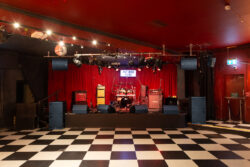 London-based Half Moon renews its sound with Martin Audio FlexPoint
 Riedel streamlines 4K Projects productions and events in Denmark
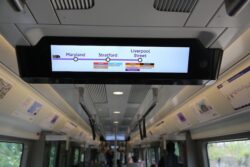 DOOH screens wrap London's new Elizabeth Line railway
 Sennheiser Digital 6000 stars in the reopening of London's West End
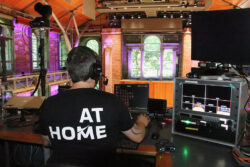 LSO St Luke’s broadcasts its performances with Clear-Com solutions
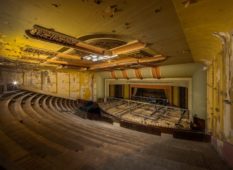 The London club EartH, pioneer in installing L-ISA Immersive Hyperreal Sound technology
 Artistic projection at London King's Cross station to entertain commuters
 A London real estate company relies on dynamic advertising to reinforce its brand image
 Watches of Switzerland offers a trip to the world of watches from the large touch video wall of its London store
 Martin Audio designa a Luke Ireland como director general
 The 6th edition of NEC Solutions Showcase will be the cornerstone of London digital signage week
 Multimedia panorama at London attraction 'The view from The Shard' with Dataton Watchout
 El Corte Inglés digitizes its signage
 UGC Ciné Cité digitaliza sus salas