


BlackTrax: tracking to coordinate light, video and set design on Ed Sheeran's last tour
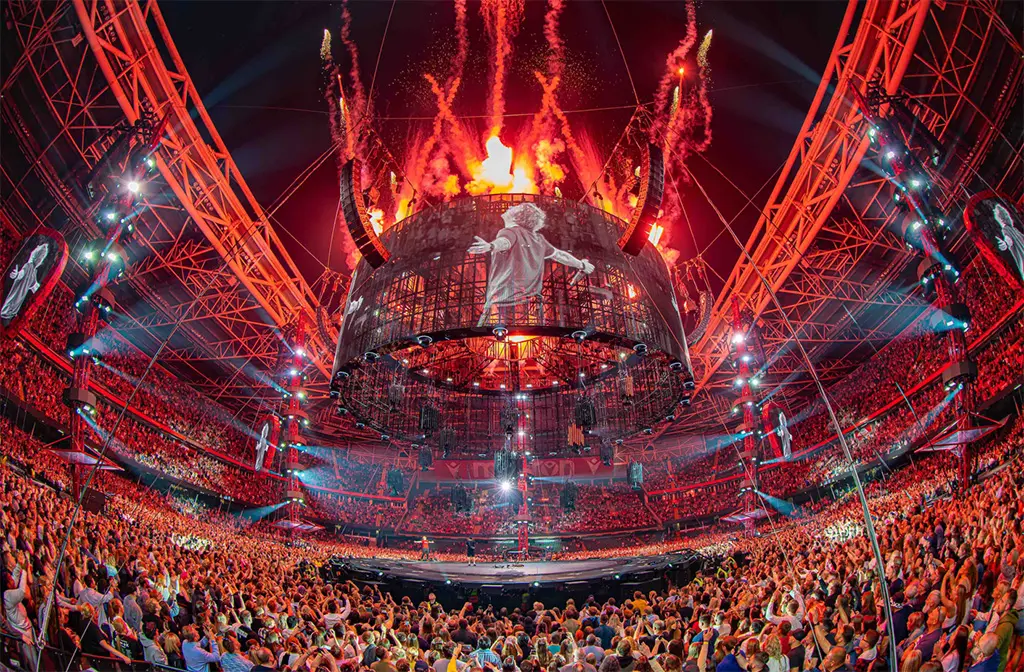
The turn +–=÷× (Mathematics) of Ed Sheeran, an ambitious production designed for stadiums and high-capacity venues with a concept in-the-round, turns to BlackTrax real-time tracking technology (Cast) to locate the position of the artist on stage and synchronize elements of the concert based on their movements.
He production design of the show was developed by designer Mark Cunniffe together with the creative team of Ed Sheeran. The proposal is based on a large circular stage which allows the audience to completely surround the artist, offering a balanced visual experience from any point in the venue.
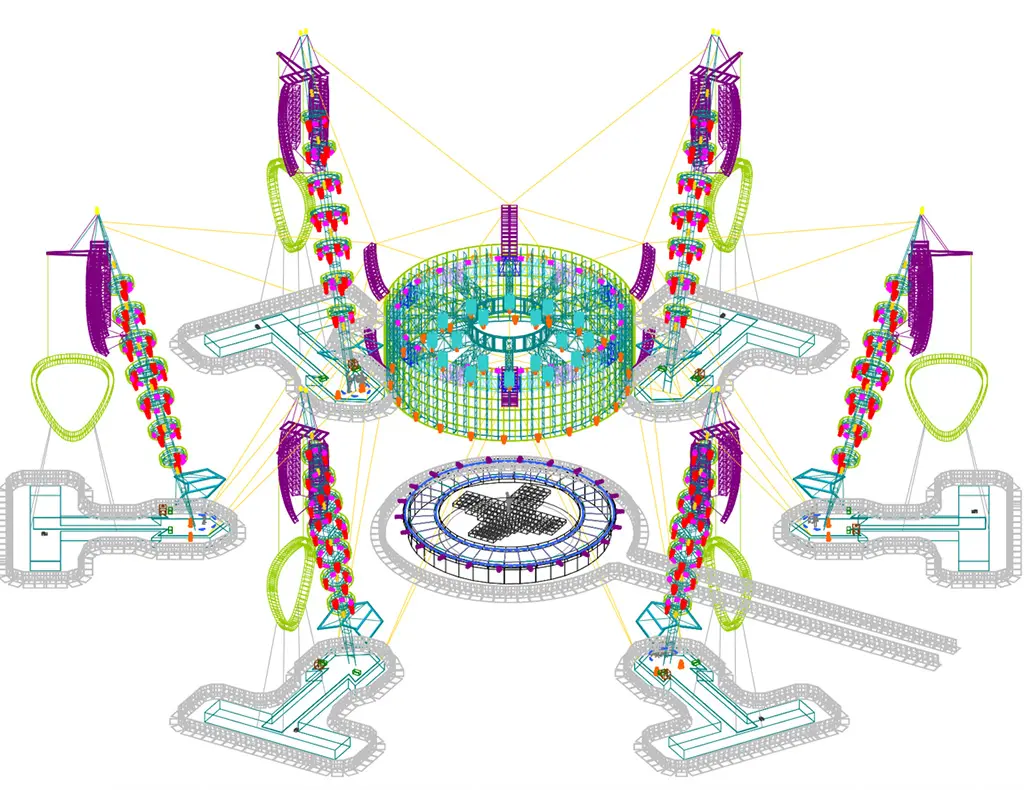
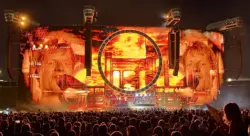
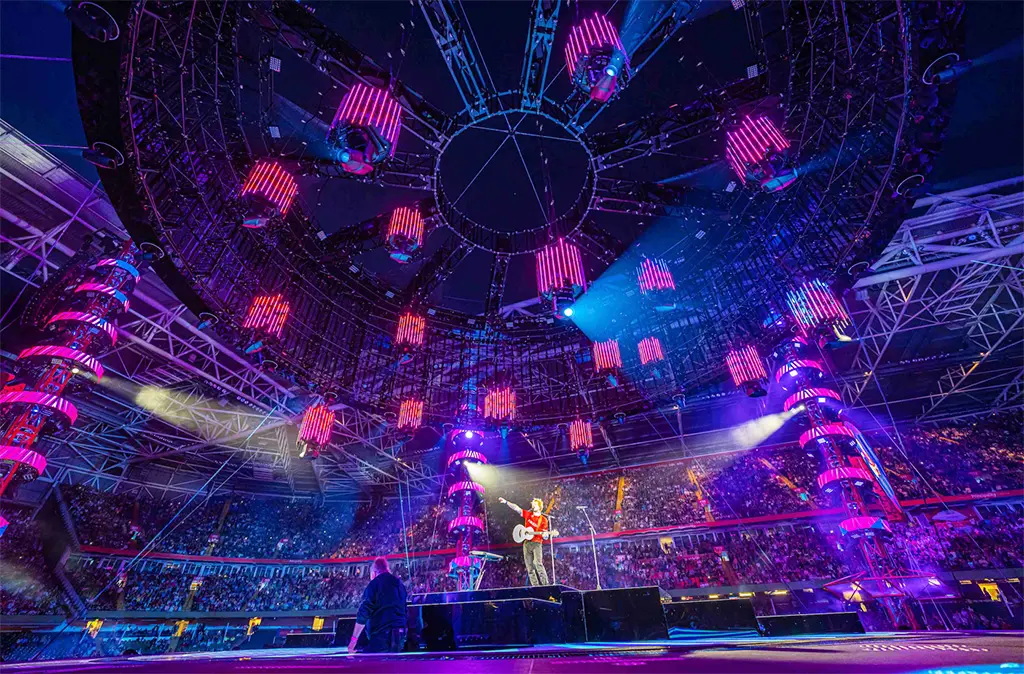 Unlike many large format shows, the scene of Mathematics Tour does not have points of rigging directly on stage. instead, The main structure is supported by six masts high rises located around the stage. These masts are connected by a system of tensioned cables that support a suspended video ring, known as the “halo”, along with different motorized scenic elements, including mobile chandeliers.
This configuration creates a very characteristic visual structure, but it also introduces important technical challenges, especially with regard to monitoring the artist and coordinating the different systems of the show. In order to optimize what would be a follow-up of lighting and visual effects certainly complex, Ed Sheeran's team opted for the system BlackTrax.
 BlackTrax utiliza tracking cameras and sensors to determine the exact position of the artist in real time, generating location data that are directly integrated into the show control systems. This information can be sent to lighting consoles, to the video systems and to different stage automation elements.
Thanks to it, spotlights can follow Ed Sheeran as he moves around the stage, and different visual effects can be activated or adjusted automatically based on your position. This level of integration allows lightning, video and scenery function as a coordinated system, maintaining the visual coherence of the show regardless of the audience's point of view.
Did you like this article?
Subscribe to our NEWSLETTER and you won't miss anything.
Related articles
 Halsey entrusts the sound of her latest world tour to the DiGiCo Quantum console 338
 “Loop” by Ed Sheeran: the challenge of integrating LED and unprecedented engineering in a world tour
 d&b audio provided the sound for Ed Sheeran's Mathematics tour in India
 Tecnalia and Target3D Iberia develop a UAV Tracking solution for Flying Robots Lab
 Panasonic PT-RCQ10: 1DLP projector for rent, scenery and cultural centers
 Seebühne uses Christie projectors for the lake scenery of ‘Carmen’
 Fidelidade used the video tracking technique for its annual event, pioneer in Portugal
 Elation helps set the retro vibe for Foreigner's latest tour
 Sono provides AV technology for the scenography of Antena's new talent show 3
 Dream Laser relies on BlackTrax to create impressive real-time video projections
 Rocktiembre 2016 vindicates the transcendence of rock with the latest audio and video technology
 Matrox will deploy the latest technology in 4K video monitoring at IBC 2014
 Panasonic's PT-DZ21K supports the Liceu of Barcelona to surprise with a daring scenography
 Carlos Jean resorts to video mapping for his new tour 2012