


Collaboration, the new paradigm of videoconferencing
To prosper in today's economy, it is necessary to collaborate with colleagues, partners and clients from all over the world in an instant to manage a company's business, Taking the telepresence experience to a whole new level through collaboration, according to Xavier Cirac, Director of Business Development Unified Communications at Unitronics.
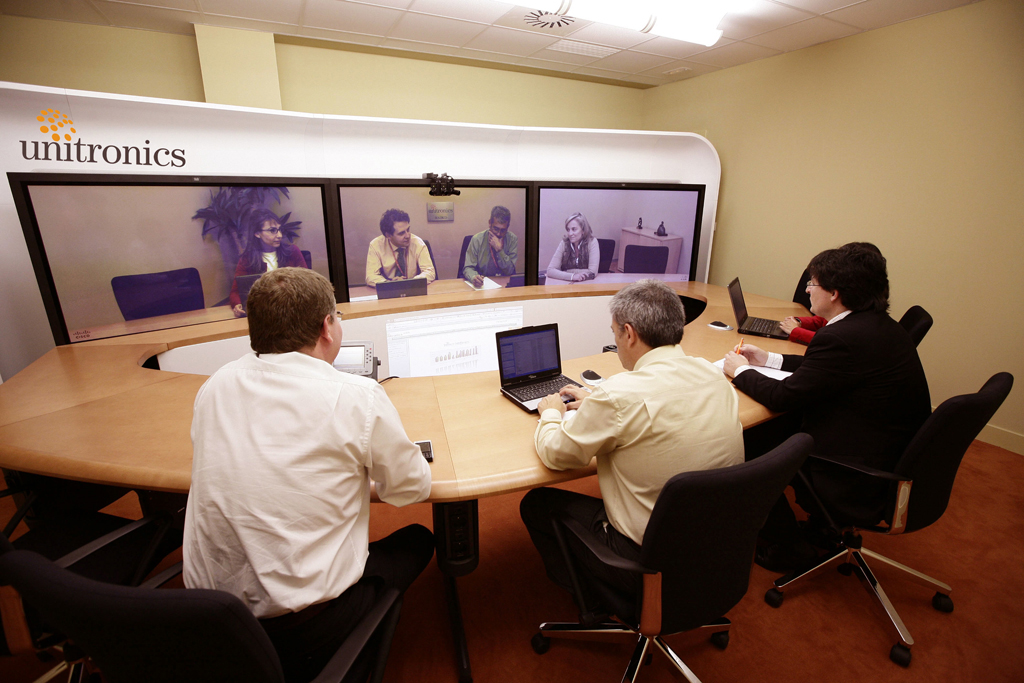
The terms “IP Telephony”, “Unified communications”, “Videoconferencing” and even “Telepresence” belong to technologies that have already been implemented in recent years to a greater or lesser extent in companies.. The reasons have been several, but they almost always included, at least, cost savings as a result of a reduction in travel and network consolidation.
On the other hand, The reality is that companies are finding that in their networks a SIMO of different solutions has been formed that have been implemented over the years and that are sometimes difficult (and therefore expensive) to integrate and maintain. The reality is, besides, that each of them only partially solves the final and real need of the users: Collaborate in an increasingly mobile and decentralized environment.
Aware of it, Most manufacturers are already forgetting the focus on all these concepts and are creating a consolidated strategy to provide solutions to the new paradigm.: the collaboration.
Manufacturers are no longer only focusing their R&D investments on releasing new audio or video protocols, or new terminals with a different design, but its new focus is to guarantee interoperability and position itself as the central engine of these new collaborative environments. Protocols like SIP, H.323, etc. are standardizing interconnectivity between video conferencing endpoints, telepresence or telephony, and therefore the war is no longer so much about who has the best endpoint device but about which manufacturer will be the core solution for collaboration environments.
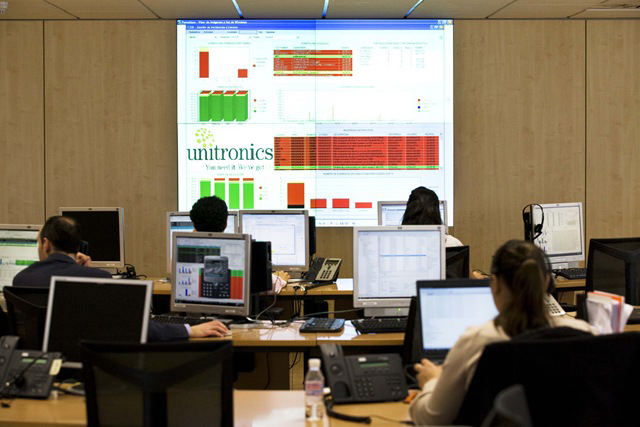
Cloud environment
But, what happens in companies? Real collaboration is where the increase in productivity and its subsequent cost reduction truly lies.. This concept, along with the current macroeconomic environment, is causing all levels of companies to demand solutions that allow employees to collaborate (and increase your productivity) from anywhere at any time and from any device. The increase experienced in cloud-based technologies or desktop virtualization (VDI) It is nothing more than another example of the need to resolve this situation.
Google, Cisco and Microsoft among others, They are aware of this and try to lead the cloud segment in turn., with collaboration solutions in your Google Apps suites (Google Talk), MS Office365 (Lync Online) y Cisco Webex, complemented by the multiconference and cloud collaboration services offered by service integrators as we do at Unitronics, o manufacturers such as Lifesize.
New iPad3
On the other hand, the past 7 In March, the new Apple iPad3 was presented to the market, the third version of the apple company's tablet and evolution of the iPad 2, which includes some new features such as a higher resolution HD Retina Display, Apple A6 Quad-Core processor, Improved battery and double the RAM.
iPad is gradually transforming the way its users relate to the content they have access to, and the fundamental change is in the experience that this type of device provides. But it is not only changing the way in which home users access Internet content. (videos, social networks, mail, ebooks,…), It is also revolutionizing the way business users access their company's content and applications..
Just like what happened with iPhone, Not only company VIPs use these devices anymore., but its use is widespread in employees of any department and hierarchy. This fact, along with its replica on smartphones (iPhone and Android basically) and together with the increasingly widespread mobile data networks, It is also helping to change the paradigm of the mobile employee of the company. The company should no longer focus its efforts on approving mobile devices, but must allow the user to use any device (the one that suits you best) and ensure that you can use the company's tools and that you can collaborate with other employees, what is commonly known by the English acronym Byod or “BringYourOwnDevice” or consumerization.
OK, But what kind of use do users make of this new connectivity?? According to a study by Allot, in 2011 and 42% of Internet traffic was already video, and according to Cisco in 2014 This traffic will become a 90% of network traffic, without forgetting that the 100% of mobile phones incorporate cameras as standard. The video capabilities of these devices will enable a new level of collaboration, but at the same time it will force a review of the companies' current networks.
Who hasn't discovered themselves calling a contact from their cell phone while sitting at their workplace?? Who hasn't discovered themselves looking at an email from their iPhone when they had their laptop next to them??… Who is not going to discover themselves in a few months doing a video conference from their iPhone with a colleague from the company or with a meeting room??
On the other hand, All these new usage habits are also changing network traffic patterns.. Part of the traffic that previously circulated from the PC to the wired network, It is now moving to mobile devices and tablets and in turn to Wireless networks and 3/4G mobile data networks. Aware of it, Manufacturers are already using this fact to launch their new solutions and marketing messages. : Cisco says we are entering the “Post-PC” era, while Microsoft replies by claiming that we are entering the “Post-Switch” era… and possibly both are right.
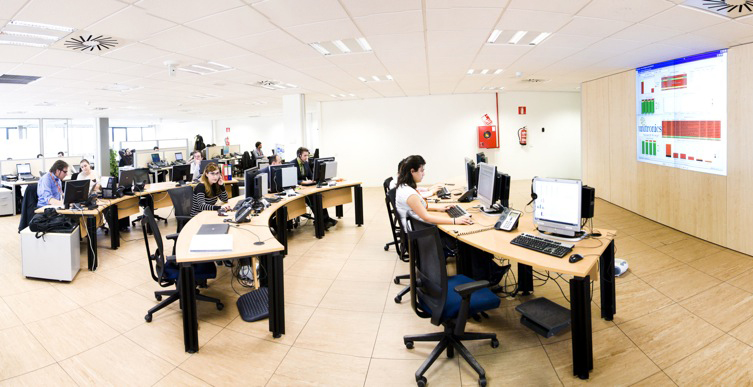
Collaboration strategy
OK, we have increasingly mobile users, a growing number of tablets and smartphones that are not approved and that I have to connect to my network, video traffic growing exponentially, users increasingly accustomed to social networks, my ToIP and videoconferencing solutions already implemented... and what do I have to do with all this if, besides, I don't have a budget?
1. First of all, the most important thing is to stop and think. In the same way that companies have a Systems Master Plan or a Security Master Plan, We will have to think about creating a Collaboration Master Plan. There is no point in solving different problems in isolation if we do not first have a global collaboration strategy.. What should we analyze in this strategy? Inter alia:
a. Starting point. The current tools and services that we can offer to our users.
b. User profiles and the collaboration needs of these profiles. Not all users are the same nor do they require the same level of collaboration.
c. The repercussions that new solutions may have on our current wired and wireless networks.
d. Internal organization in IT. Does it make sense to manage video from different departments or teams?, voice and data?.Do we create or adapt a specific team for collaboration?
e. The increase in productivity that implementing collaboration can bring to our company for each profile and its impact on ROI.
2. Secondly we will have to adapt (If you can't beat the enemy, join him). We will have to use the time and money that we now spend on homologation to allow users to use their preferred device, guaranteeing:
a. Device control: Management through an MDM tool will be essential (Mobile Device Management) that allows us to manage, block, maintain and provision tablets and smartphones.
b. Security: It will be essential to guarantee that access to our company data is secure, since these devices can be a new entry point for viruses, unauthorized access and information leak.
c. Independence from corporate and personal environments. By using technologies such as VDI, application virtualization, or allowing several different environments on the device (there are some MDM tools that allow this).
d. Medium: Train our administrators and help-desks in these operating systems (iOS, Android)
3. Study or seek new service-based cost models. The implementation of aaS models, Cloud or pay-per-use in some environments will possibly serve to dilute the investment required in time, guaranteeing the service and diluting the risk in these turbulent times in which we live and our companies live. Why not collaborate in the cloud?
Ultimately, Companies must not only adapt to this new collaborative paradigm, but it's your time to benefit from it, converting the need for collaboration into increased productivity.
Xavi Cirac
Director Unified Communications Business Development at Unitronics

Did you like this article?
Subscribe to our NEWSLETTER and you won't miss anything.
Related articles
 MCR expands its collaboration and video conferencing offering with HP Poly
 Kramer VIA offers video conferencing and collaboration to the University of Helsinki
 HP Poly: new generation of collaboration and video conferencing solutions
 Konftel and ScreenBeam integrate video conferencing and wireless collaboration
 DTEN exhibits an ISE 2022 your new collaboration and video conferencing solutions
 Lifesize takes collaboration to a new level with its 4K video conferencing solutions
 Meyer Sound creates a new sound paradigm at the Roskilde Festival 2018
Maverick distributes Logitech video conferencing and collaboration cameras
Telefónica Digital Education shows how Big Data and Learning Analytics open a new paradigm for corporate training
Unified communications and collaboration, Polycom Video Conferencing Hub
Meyer Sound creates a new sound paradigm at the Roskilde Festival 2018
Maverick distributes Logitech video conferencing and collaboration cameras
Telefónica Digital Education shows how Big Data and Learning Analytics open a new paradigm for corporate training
Unified communications and collaboration, Polycom Video Conferencing Hub
 Google Helpouts, new learning service, collaboration and consultation by videoconference
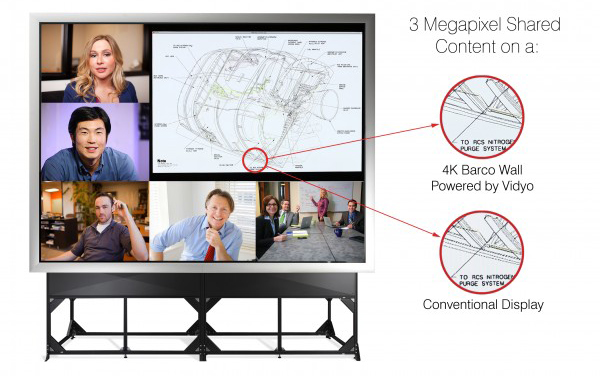 Barco and Vidyo develop a 4K immersive video conferencing and collaboration system
 From chat on social networks to online collaboration with video conferencing
 Multitouch creates a new paradigm within large interactive touch screens