


The University of Salford opens a new multimedia space with Christie MicroTiles
La Universidad de Salford (United Kingdom) ha instalado un gigantesco display Christie MicroTiles en ‘The Egg’, el centro dedicado al aprendizaje, la enseñanza y la investigación digital que la empresa posee en MediaCityUK, un gran complejo que aloja también una sede de la BBC y un conjunto de entidades creativas, digitales y mediáticas independientes.
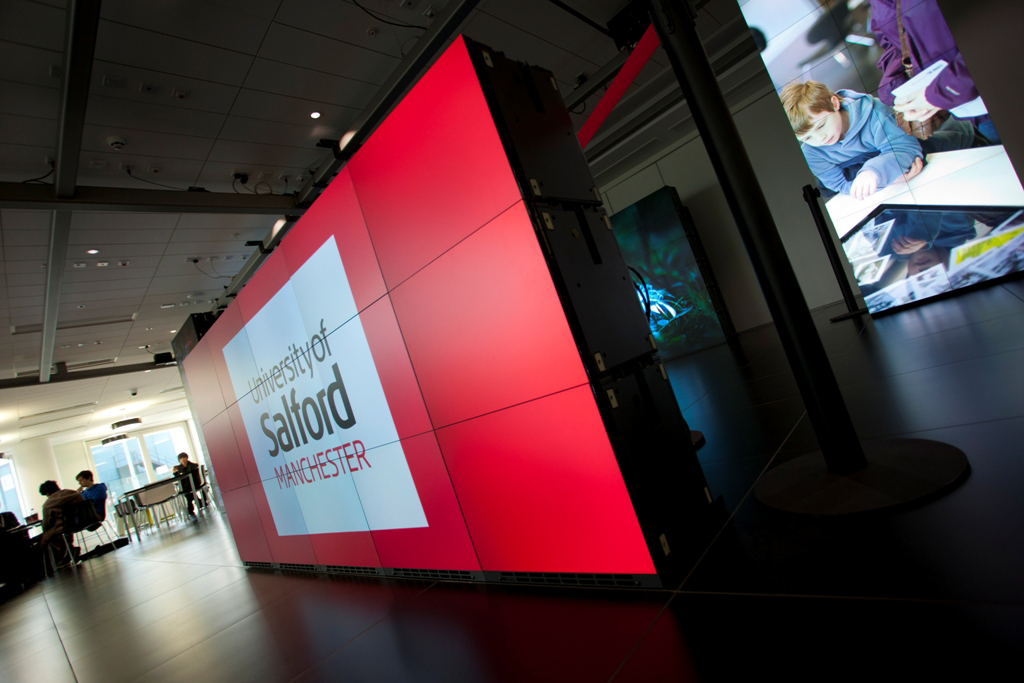
La Universidad de Salford, cerca de Manchester, ha inaugurado un singular espacio dedicado al aprendizaje, la enseñanza y la investigación digital. El centro se encuentra en MediaCityUK, un gran complejo situado en Salford Quays que aloja también una sede de la BBC y un conjunto de entidades creativas, digitales y mediáticas independientes. En la zona pública de la planta baja destaca un despliegue interactivo digital que incluye un espacio para presentaciones formales y diez mesas táctiles interactivas, pensadas para estimular la participación de los visitantes. El hito central es un videowall de alta resolución, formado por un total de 120 Christie MicroTiles y con capacidad para mostrar imágenes a resolución 9600 × 3840. La integración del proyecto ha sido obra de la empresa Electrosonic.
El edificio acoge a 1.500 estudiantes y empleados y ofrece cursos de grado y posgrado en todo tipo de temas relativos a la radio, la televisión, los juegos de ordenador y la producción de medios digitales. Cuenta además con instalaciones para la investigación. La zona de acceso al nuevo edificio, conocida popularmente como ‘The Egg’ (El huevo), se ha descrito como “un escaparate digital interactivo de acceso público para visitantes y estudiantes”, concebido como un espacio flexible en el que desplegar recursos de diferentes formas -por ejemplo, con fines de experimentación- o en donde mostrar investigaciones de otros centros mediante cámaras u ordenadores para control de movimiento.
Del original diseño técnico del espacio se encargó el Centre for Virtual Environments (Centro de Entornos Virtuales) de la Universidad de Salford, asignándose a Electrosonic la ingeniería e instalación de la totalidad del sistema.
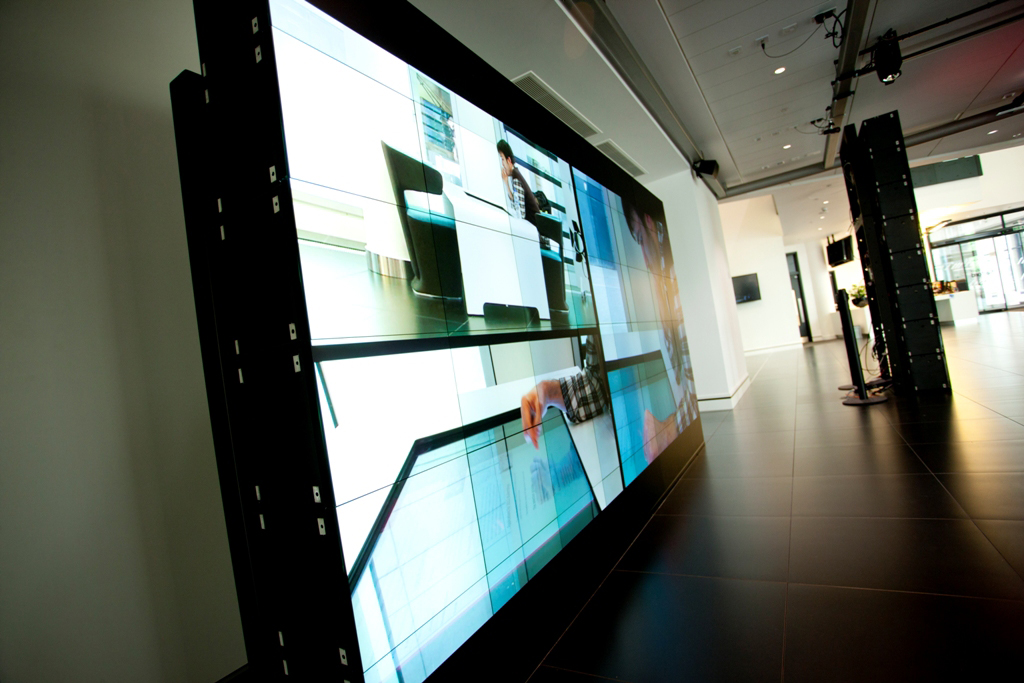
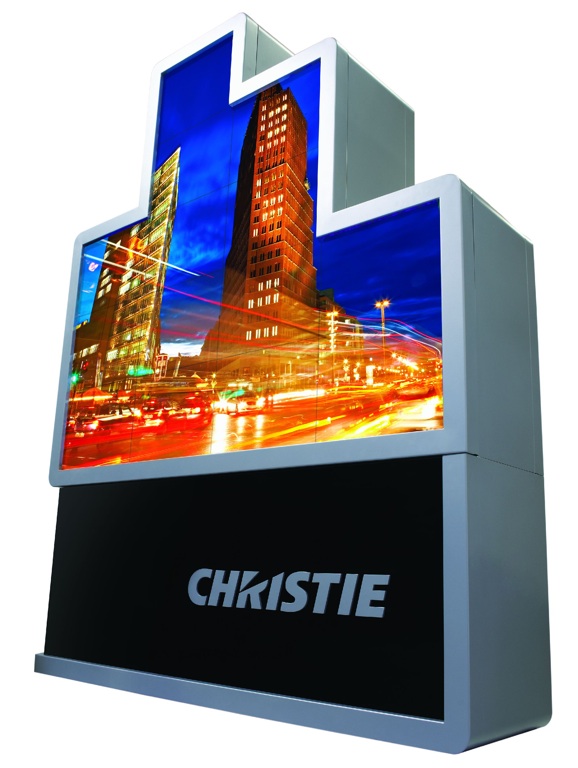
120 Christie MicroTiles
Aunque el videowall MicroTiles se ha montado en principio con una disposición de 15 x 8, el diseño de los bloques podría reorganizarse en un futuro con una distribución diferente para satisfacer necesidades proyectuales específicas (For example, 12 x 10, o 20 x 6). El Christie MicroTiles -todo un paso adelante en la tecnología del display- se ha construido a partir de una tecnología DLP testada y diseñada para lograr la máxima calidad de imagen en interiores complejos y entornos con elevada luz ambiental como el que aquí se describe. La universidad adoptó la solución de Christie por recomendación de Electrosonic. Un requisito previo fue que el display se montara exento sobre el suelo, sin fijaciones estructurales al edificio, una condición que requería el diseño y construcción de un marco de sujeción adecuado. Para llevar a cabo esos trabajos de ingeniería estructural Electrosonic contó con los servicios de Long & Co de Dartford. Se han facilitado marcos adicionales por si las necesidades de uso aconsejaran la división del videowall en bloques más pequeños.
El display se alimenta de una serie de fuentes informáticas DVI. Dos servidores 7thSense Delta Media Servers, cada uno de ellos equipado con tarjetas gráficas de cuatro cabezas, proporcionan una resolución global de 8000 x 3200 (en formato vídeo nativo 8K). Cuenta también con un Nvidia Quadro 7000 conectado a una estación de trabajo, with resolution 4000 x 1600, mientras otras fuentes de PC/Mac son de 1920 x 1080. But also, hay líneas de conexión SDI a los estudios de televisión existentes en el edificio, y todas las fuentes y entradas DVI de dos procesadores de vídeo Christie Spyder X20 1608 se conectan a un Lightware Matrix. Los Spyder funcionan en configuración amo/esclavo: uno gestiona la mitad superior de la pantalla y otro la inferior. Todas las salidas se dirigen, mediante extensores Lightware de fibra óptica, hacia las dieciséis unidades de control externo.
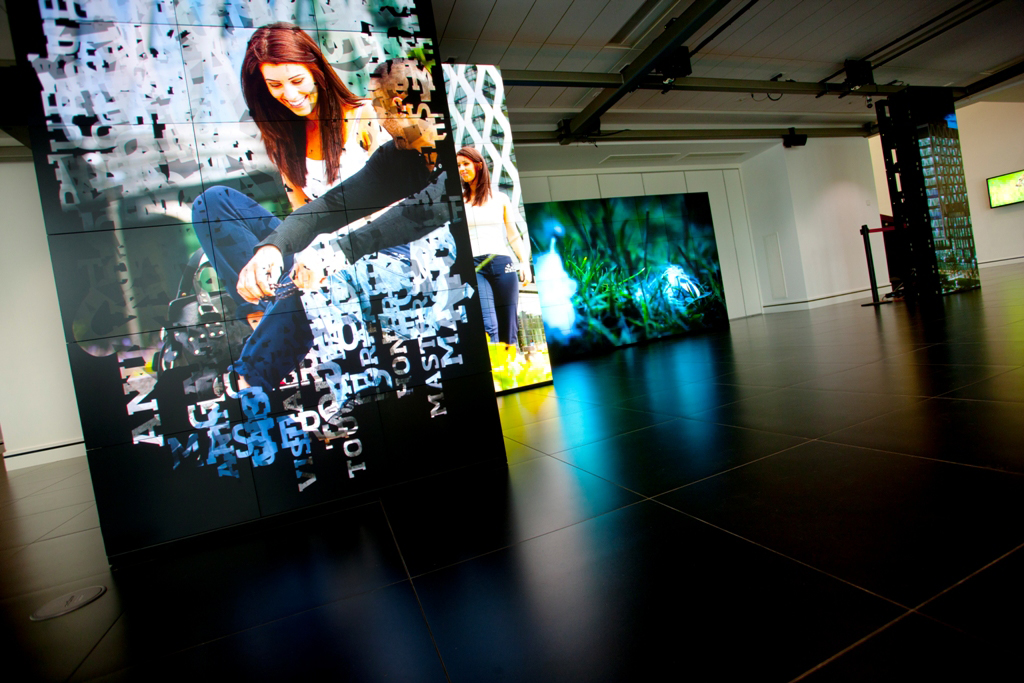
Reconocimiento de gestos
La intención es que el videowall y todo el espacio circundante se utilice en futuros proyectos académicos y de investigación. For this, el equipo incluye tres proyectores dirigidos al suelo y seis cámaras de visión artificial, una combinación creada para hacer posible el desarrollo de proyectos basados en el reconocimiento de gestos e imágenes.
El espacio principal contiene asimismo diez mesas de interacción táctil para uso de los estudiantes y del gran público. Se pidió a Electrosonic que proporcionara sistemas de trabajo que incluyeran un contenido inicial. La producción del software interactivo se subcontrató a Stardotstar, un productor de contenidos radicado en Manchester y capaz, therefore, de facilitar un soporte local continuo. El diseño de partida contemplaba paneles de 32 pulgadas con sensores capacitivos. However, el desarrollo del diseño aconsejó cambiar esos paneles por otros de 40 inches, dotados de sensores infrarrojos multitáctiles de PQ Labs. Las mesas táctiles funcionan mediante unos ordenadores Mac Mini apilados en una estructura situada en la sala de control. Se utilizaron extensores USB sobre CAT5 de Extron.
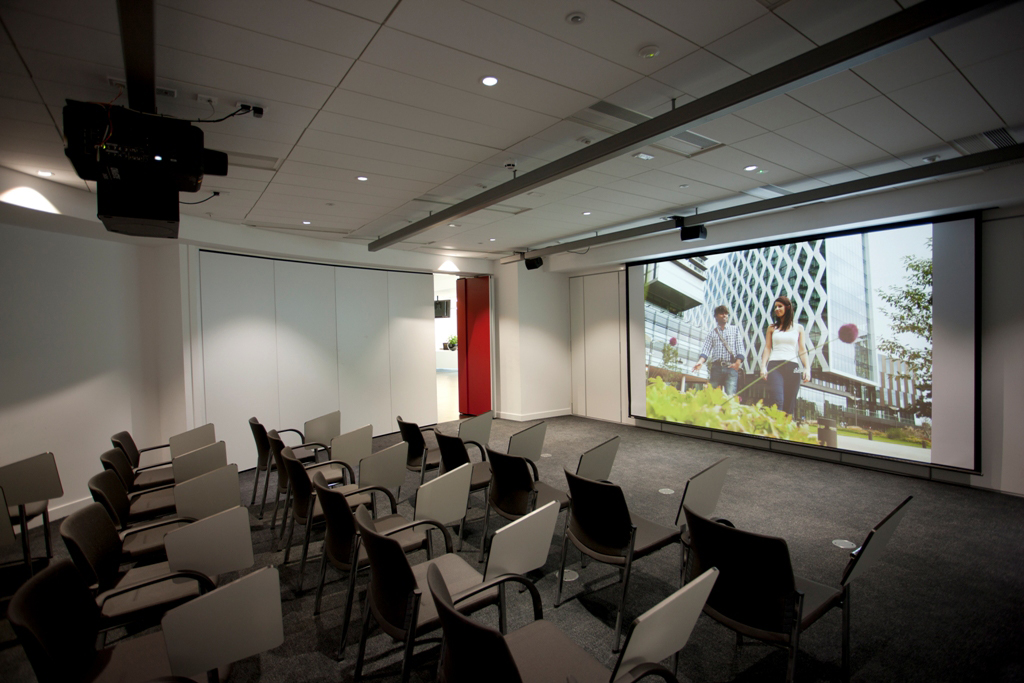
Espacio de reuniones
Una sala ubicada tras el videowall sirve de área para reuniones formales o informales y para presentaciones de proyectos de investigación o de otro tipo. El diseño espacial de la sala puede modificarse, aunque cuenta, eso sí, con una gran pantalla de proyección fija servida por un proyector Christie DHD800, recomendado por ser el más adecuado a las necesidades del cliente. La alimentación puede efectuarse desde cualquier dispositivo compatible situado en la sala de control o desde el ordenador de la persona que realiza la presentación.
Electrosonic ha diseñado y suministrado también un control de audio completo y flexible y refuerzo de sonido, tanto en ‘The Egg’ como en los espacios de presentación. La configuración inicial consiste en un sistema 5:1 y 2:1; no obstante, es posible reubicar o aumentar el equipo en función de los diferentes proyectos.
Una sala de control independiente aloja la totalidad del equipo de fuente, control y enrutamiento en seis estructuras de estantes. Es aquí donde encontramos los procesadores Christie Spyder X20 1608, los tres escaladores Extron DVS304DVI para fuentes analógicas, los ocho amplificadores de distribución Lightware DA2DVI DL con conexión dual DVI y los cuatro amplificadores de distribución Extron MDA4V HD-SDI. Veintinueve extensores de fibra Lightware TX/RX110 DVI son empleados para distribuir la señal, y se ha instalado un Medialon Showmaster ST para cubrir las necesidades de organización interna y la interfaz de usuario diaria.
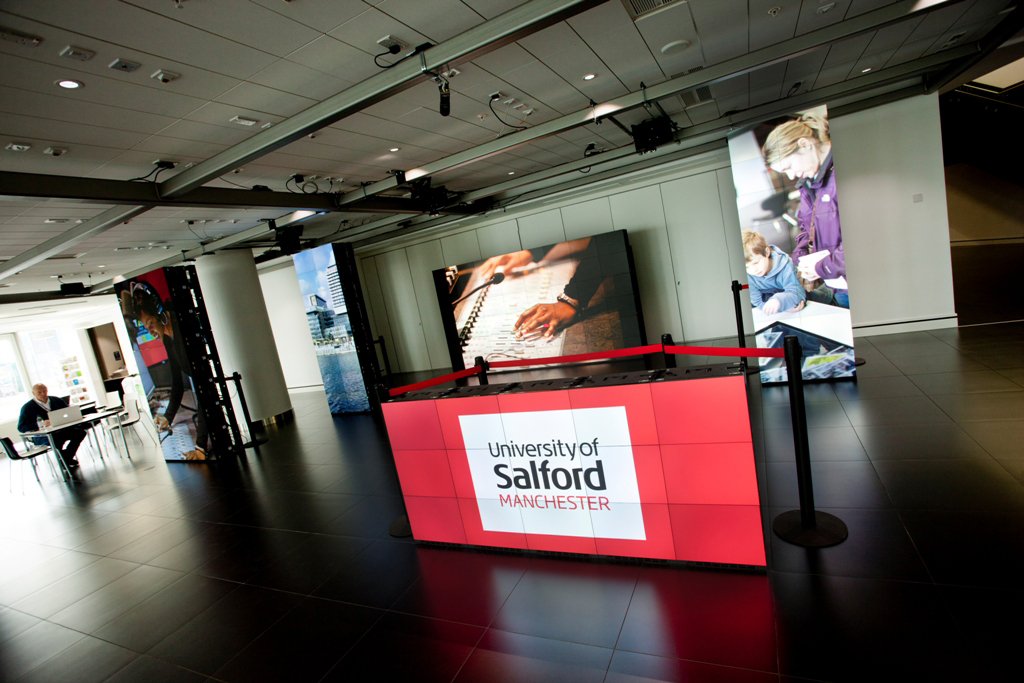
Lo que diferencia a este sistema global es que funciona, at the same time, como instalación experimental y como escaparate, siendo intención de la universidad explorar la mejor forma de cumplir los dos objetivos. Por lo que respecta al videowall de MicroTiles en sí, es visible para todo el mundo, incluyendo los viandantes que pasan ante el edificio.
La Universidad de Salford cuenta con su propio equipo de técnicos para el funcionamiento diario y la gestión de contenidos, por lo que la mayor parte de la producción de los mismos se realiza dentro de la institución. Si a eso le sumamos la contratación de dos creadores de contenidos permanentes sólo cabe esperar que en los próximos meses el display de MicroTiles dé muestras de todo su potencial.
Did you like this article?
Subscribe to our NEWSLETTER and you won't miss anything.
Related articles
 Audio-Technica inaugurates an immersive Dolby Atmos audio space in Madrid
 Hikvision inaugurates its new innovation hub in Santander
 INFiLED inaugurates its new experience center in Frankfurt
 FC Barcelona inaugurates its new exhibition space that includes a large immersive room
 Stonex inaugurates its new space with an innovation event in stage lighting
 Genelec inaugurates a new experience center in Berlin
 Christie MicroTiles help transform the space and time of 'Doctor Strange'
 Sonar+D 2017 se inaugura con el gran espacio inmersivo ‘phosphere’ de Daito Manabe
 The Gaudí Center in Reus inaugurates a new exhibition space that seeks immersion in Modernism in audiovisual format
 NEC inaugura su primera sala demo de España: un espacio que exhibe un ecosistema de soluciones audiovisuales
 Christie installs a screen with 29 MicroTiles to celebrate the centennial of Wilfrid Laurier University
 Innovative Christie MicroTiles launch the new Acura sports car
 Loewe inaugura una galería-museo multimedia en Barcelona
 Christie MicroTiles, size does matter