


Hologramas 3D de anatomía humana como herramienta de aprendizaje para alumnos de Medicina
Dos médicos en formación de la Universidad St. George de Londres han mostrado en un ensayo ante alumnos de medicina su innovadora visión del futuro de la enseñanza con la proyección hológrafica 3D como herramienta de aprendizaje.
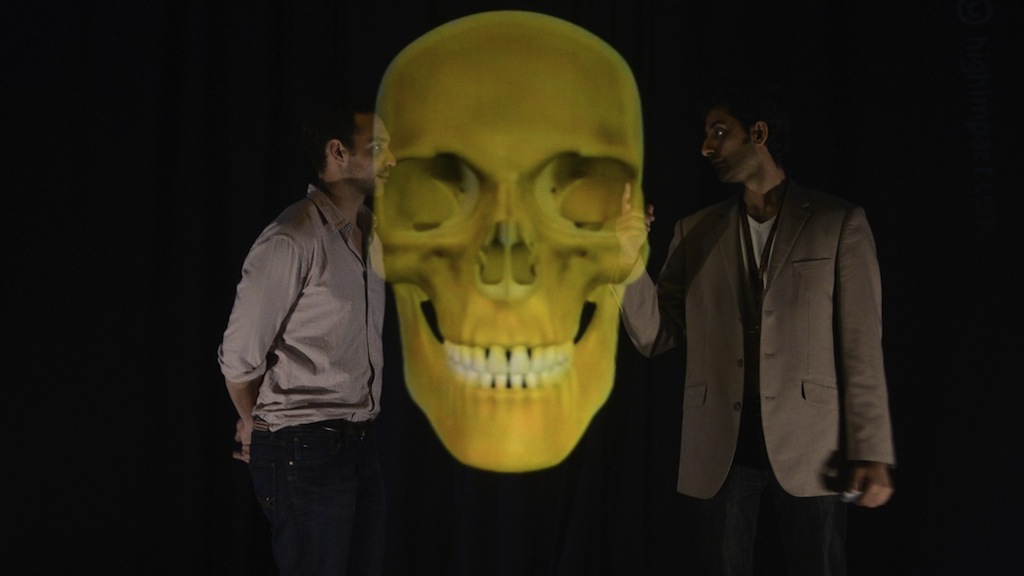
Más allá de las presentaciones al uso en reuniones y conferencias o incluso del uso de pizarras digitales en las aulas, dos médicos en formación de la universidad londinense de St. George han realizado una prueba innovadora ante alumnos de medicina utilizando la proyección holográfica 3D, sin necesidad de gafas, como herramienta de formación y atención.
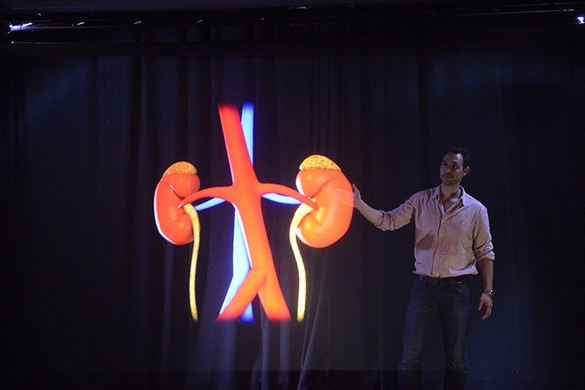 En este ensayo, denominado por sus creadores Hamlet (holografía asistida a docencia médica y e-tutoring), Kapil Sugand y Pedro Campos han impartido un seminario a estudiantes de medicina y médicos en formación con una animación con hologramas 3D del sistema renal humano.
Durante el seminario, se mostraba el funcionamiento del riñón, en este caso con un holograma 3D de 13 meters high, y otras partes de la anatomía humana, incluido un enorme cráneo.
Como explica Kapil Sugand, del equipo Hamlet, “el promedio de capacidad de atención es de hasta treinta minutos en una conferencia estándar de una hora. Estamos utilizando la teoría educativa para construir animaciones dinámicas y simplificar conceptos complejos, estimular y prolongar la capacidad de atención aplicada a la enseñanza médica”.
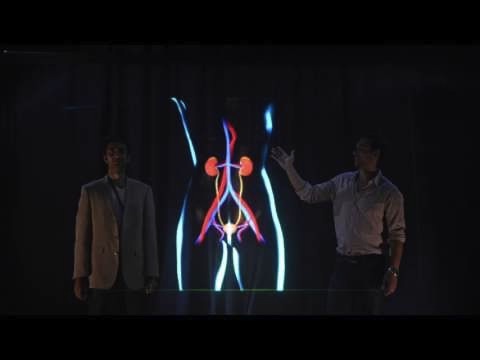 Como parte de la prueba, posteriormente se celebró la misma conferencia con métodos tradicionales de presentación e imágenes, y se pidió a los asistentes una evaluación de la información aportada en la primera y posterior conferencia de medicina, para determinar si la tecnología les ayudó o no a la comprensión del tema analizado.
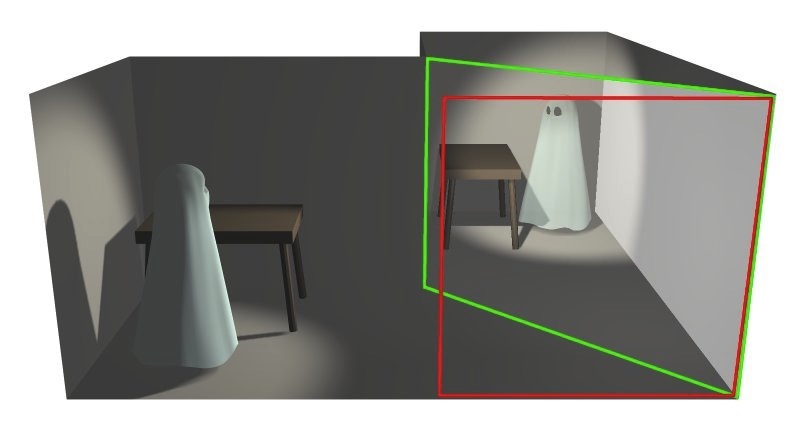
Los hologramas 3D de esta conferencia se crearon mediante la técnica denominada “Pepper’s ghost”, con tres proyectores LCD estándar para generar la visión tridimensional, que se combina con iluminación para dar la sensación de que los objetos e imágenes están flotando en el aire.
El desarrollo de Hamlet ha contado con la colaboración de MSk Lab del Imperial College de Londres, que ha proporcionado los fondos para crear las animaciones, así como la asistencia a la metodología de la investigación.
 Los resultados de este ensayo han sido muy positivos, con una valoración alta en la comprensión de conceptos complejos. Tanto Sugand como Campos han mostrado su satisfacción por un sistema mucho menos costoso que la tecnología 3D, “que mejora la formación de una manera más efectiva para contar con mejores médicos”.
El equipo Hamlet también está en conversaciones para que este, todavía ensayo, pueda convertirse en una herramienta útil de aprendizaje en otros ámbitos relacionados con la medicina, tales como la asistencia médica para interactuar con los pacientes y que comprendan mejor su patología, así como para promover la formación en salud en la sociedad.
[youtube]http://www.youtube.com/watch?v=pljG4ynfIz0&feature=share&list=UUCxLYoW3Xjvi5Xg3IKb_Lbg[/youtube]
Did you like this article?
Subscribe to our NEWSLETTER and you won't miss anything.
Related articles
 Bakersfield College confía en MaxHub para dar la bienvenida a sus alumnos
 WHEREAS 2022: cómo educar cuando el aprendizaje híbrido se convierte en la norma
 HoloDicom visualiza las imágenes DICOM como hologramas 3D en un entorno real
 Imperial College Business School realiza conferencias con hologramas como ponentes
 IESE implements Barco's newest collaborative learning tool
 Epson mostrará en Eskola Digitala cómo la tecnología fomenta nuevos modelos de aprendizaje
 Marriott uses virtual reality in its hotels as a marketing and sales tool
Pamesa Cerámica muestra el valor de la realidad aumentada como herramienta de venta
Marriott uses virtual reality in its hotels as a marketing and sales tool
Pamesa Cerámica muestra el valor de la realidad aumentada como herramienta de venta
 Drones take classrooms as a learning tool at Brains International Schools
 Un videowall construido con MicroTiles es utilizado por la universidad de Stanford como herramienta educativa
 Asefa Seguros utiliza las pantallas de LED&GO como herramienta de comunicación de marca
 Clúster Edutech: “And 83% of teachers support ICT as an educational tool in the classrooms”
 Los usuarios utilizan la videoconferencia como herramienta de productividad
 A professor at the University of La Laguna uses augmented reality to teach pathological anatomy