





Hannover Airport relies on Sony 3LCD laser projectors for its flight simulator
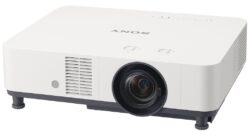
The flight simulator offered by the exhibition dedicated to the world of aviation at Hannover Airport has replaced its old projection system and has installed two Sony VPL-FHZ55 3LCD laser systems, achieving better resolution, a larger field of vision and a lower TCO.
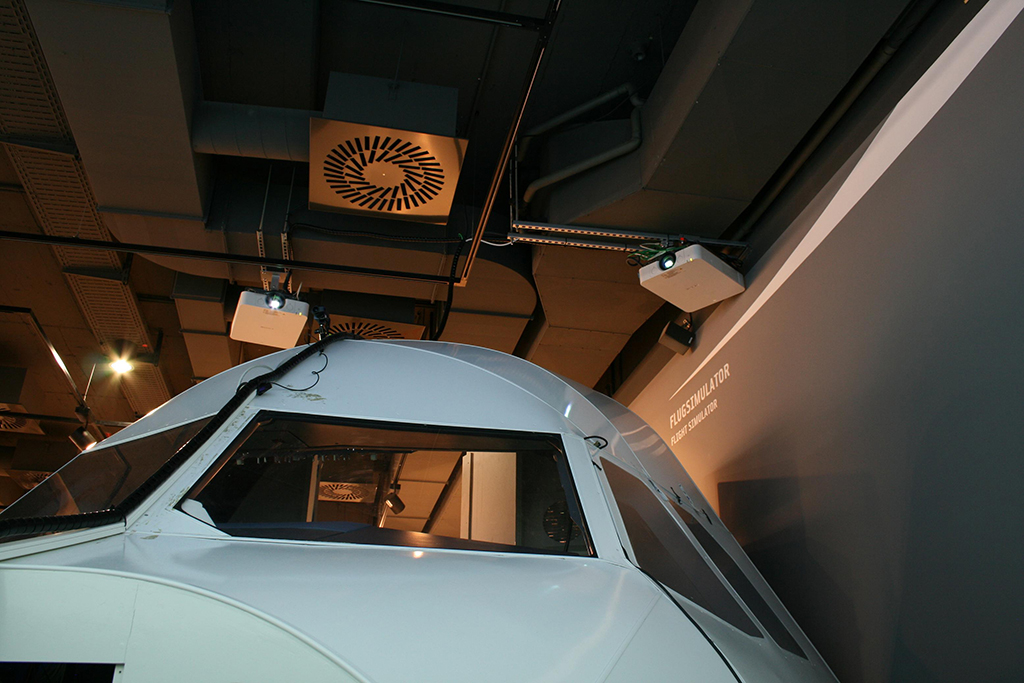
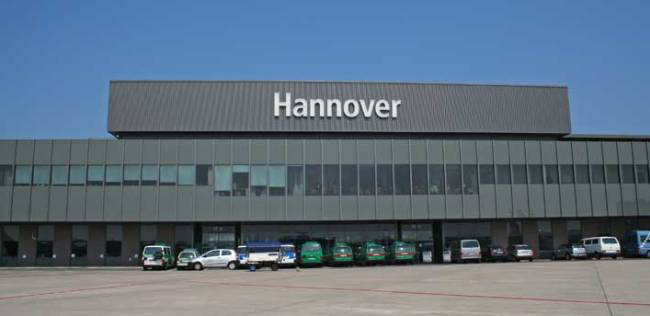
Hannover airport, also known as Hannover-Langenhagen, It is the largest in Lower Saxony and handles air traffic of more than five million passengers per year.. Located between terminals A and B is the exhibition 'The world of aviation', which offers amateur pilots the opportunity to drive virtual reproductions of the Airbus A320 or Boeing B737 with two flight simulators.
From the pilot's seat, in a fully equipped and functional cabin, Aircraft lovers can virtually control these devices for an hour. In addition to the general public, flight simulators can also be used for corporate events and training courses, as well as for doctors and managers to improve their skills in making decisions in stressful situations by playing the role of a pilot.
The first simulator was acquired by Hannover Airport in 2008, a system that used images from three projectors to show the virtual view from the cockpit, which represented significant maintenance costs since the lamps of the three devices had to be replaced frequently and the brightness of the image was not guaranteed.
Given this situation, The airport considered replacing the projection system with another that could keep up with the long periods of operation of the simulator.. It was also necessary to simultaneously reproduce every detail of the runway and sky with sharpness and high contrast., to give greater realism to the sensation of flying.
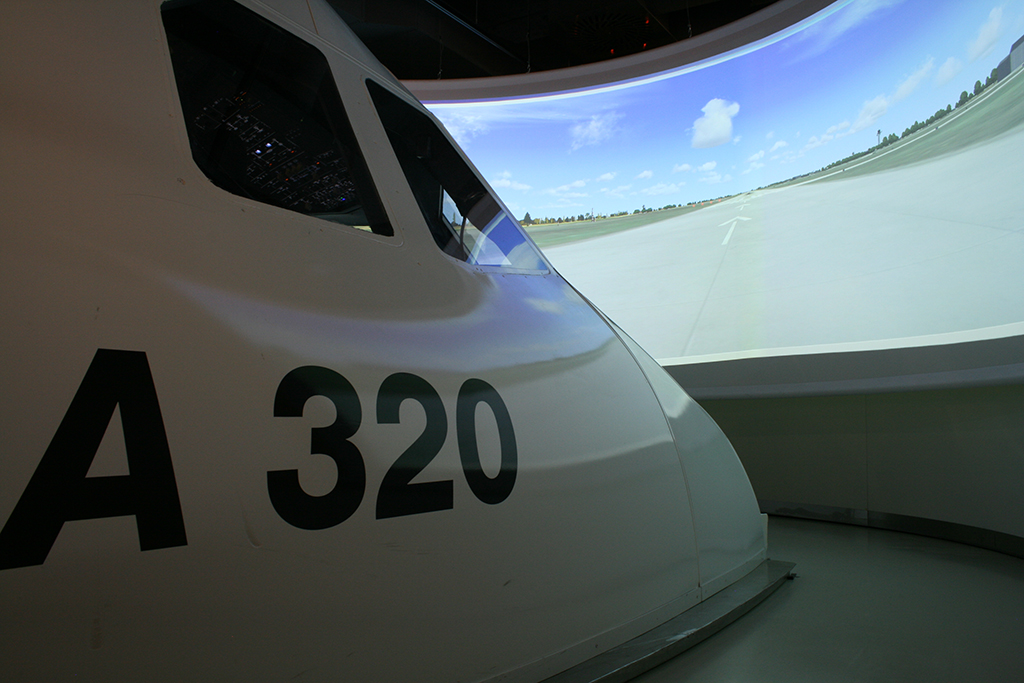
For the panoramic view, The operators installed a concave screen of 6,15 meters wide and 1,80 meters high in the front of the cabin windows. Therefore, The projectors they were looking for had to be able to generate a geometrically correct image on a curved surface.
To respond to the requirements of the exhibition, Sony 3LCD VPL-FHZ55 projectors were chosen, which were supplied by the service provider AVI Studio and collaborated with the manufacturer to carry out the installation of the two pieces of equipment..
Sony 3LCD laser projectors combine a highly efficient laser light source with Sony's latest BrightEra 3LCD panel technology. Whether in Las Vegas at night, Chicago with snow or Hannover with high visibility, Simulation pilots can make decisions based on extremely bright, high-contrast projections with great color accuracy.
Besides, Sony has developed the constant brightness function for the VPL-FHZ55, that allows it to remain 3.000 consistent lumens throughout the life cycle of the laser light source. Thanks to the distortion-free image quality of the concave screen, test pilots enjoy 130 degrees of panoramic views and, therefore, They are considerably closer to reality in the cabin.
Determining factors
There were several factors that determined Hannover Airport to decide on Sony VPL-FHZ55 projectors. First of all, the total operating cost (TCO) It turned out to be more advantageous than that of a conventional light projector. While conventional projector lamps must be replaced after a maximum of one thousand hours, The laser light source of the VPL-FHZ55 can reach 20 000 hours.
Also decisive was the high WUXGA resolution of 1920 x 1200 pixels, since it allows images to be reproduced in Full HD in an area of 6,15 meters wide and 1,80 meters high with only two projectors instead of the previous three.
In combination with a light output of 3000 lumens, Very bright images are produced without individual pixels, despite the width of the screen. The edge fusion process allows individual projections from the two VPL-FHZ55 projectors to be combined seamlessly and with precise color matching to create a stunningly realistic image..
Thanks to this technology, the surfaces of both projections can be overlapped with balanced lighting and, unlike systems placed side by side, create an integrated image across the entire width of the screen. Thanks to image warping, Its geometry on concave surfaces can be corrected without problems to generate a totally natural projection.
Did you like this article?
Subscribe to our NEWSLETTER and you won't miss anything.
Related articles
 Sony introduces the smallest WUXGA 3LCD laser projectors on the market
 Epson EB-PU 2200U: new generation of ultra-light 3LCD laser projectors for installation
 Sony expands its offering of mid-range 3LCD laser projectors
 Maxell expands its range of laser projectors with a 3LCD model of 10.000 lumens
 Christie presents at NAB 2019 the DS line of 3LCD laser projectors
 Panasonic relies on lasers for its entire line of high-brightness projectors
 Christie introduces APS Series of 3LCD laser projectors for small environments
 Christie bets on 3LCD with the new D Series projectors
 Aeroméxico inaugurates its Boeing flight simulator 787 designed with eyevis projectors
 Sony expands its line of professional 3LCD projectors for education and business
Tech Data and Sony explain the benefits of their 3LCD laser projectors in a webinar
Sony expands its line of C-series 3LCD projectors for the educational and corporate sector
Sony brings new S series projectors to Amsterdam, with 3LCD technology, for the educational sector
Sony expands its line of professional 3LCD projectors for education and business
Tech Data and Sony explain the benefits of their 3LCD laser projectors in a webinar
Sony expands its line of C-series 3LCD projectors for the educational and corporate sector
Sony brings new S series projectors to Amsterdam, with 3LCD technology, for the educational sector
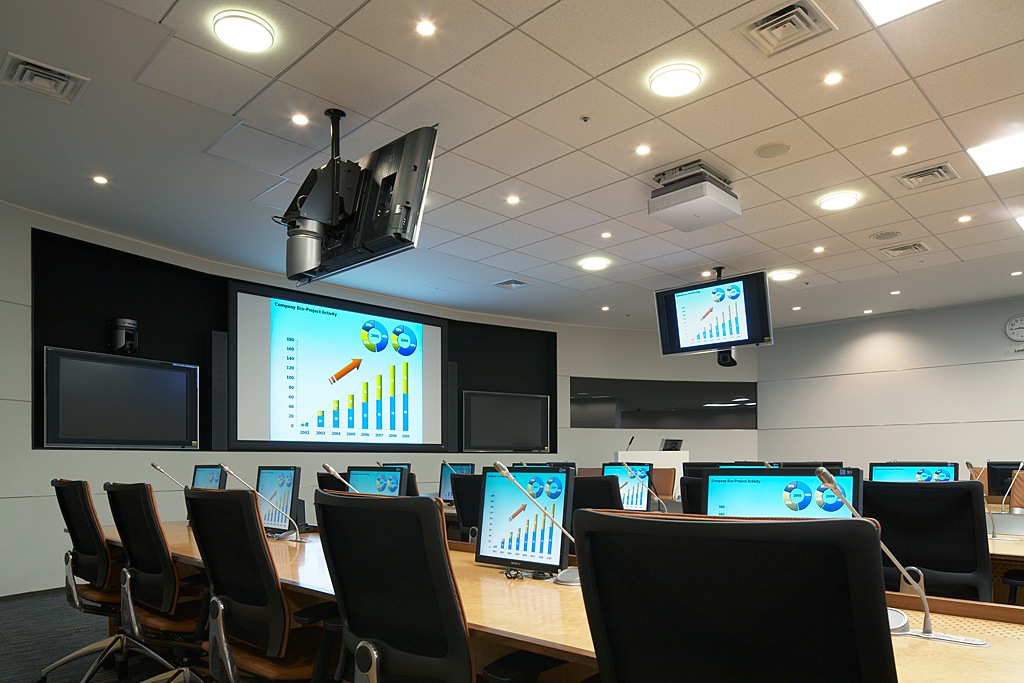 Sony will market two new 3LCD projectors for fixed installations